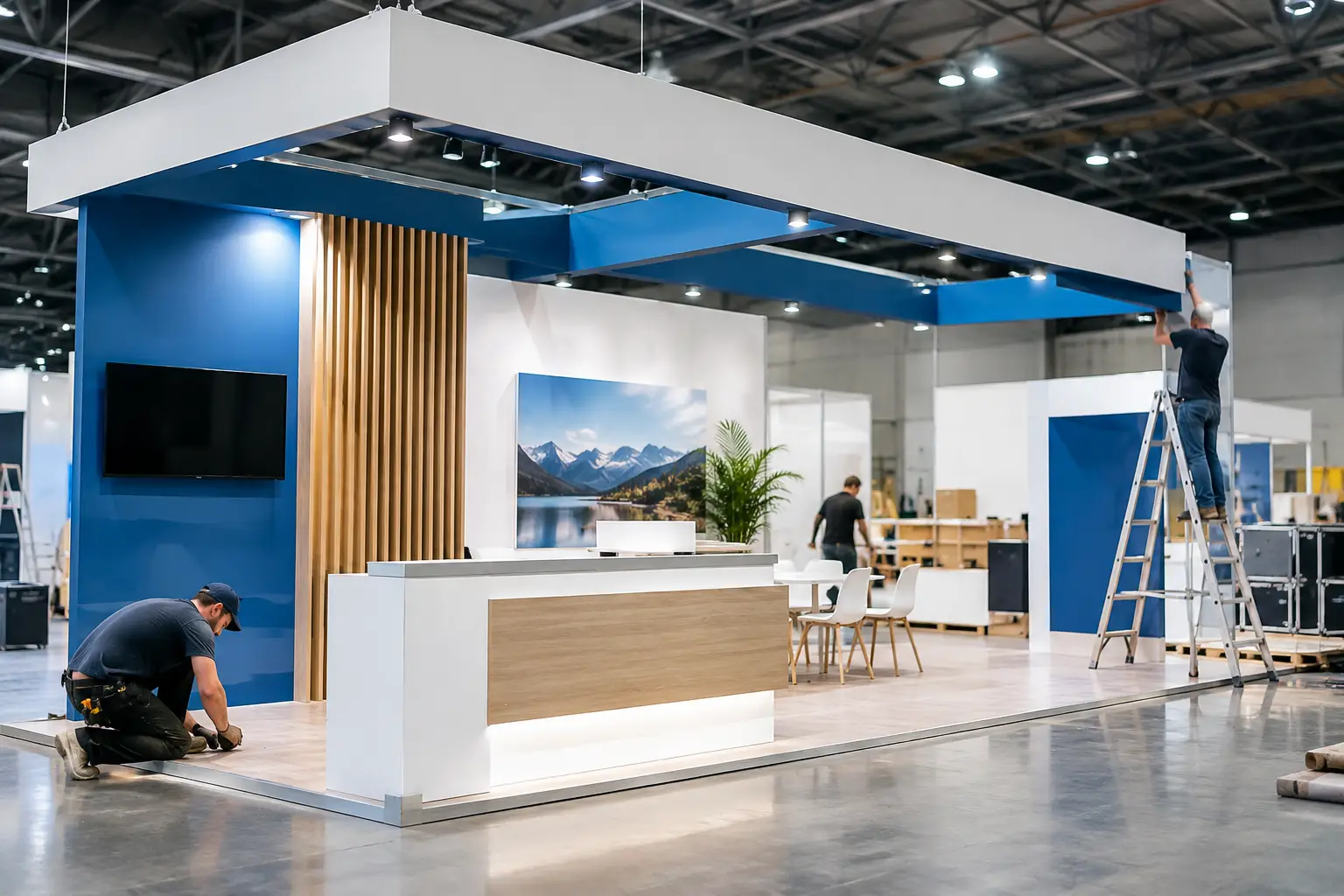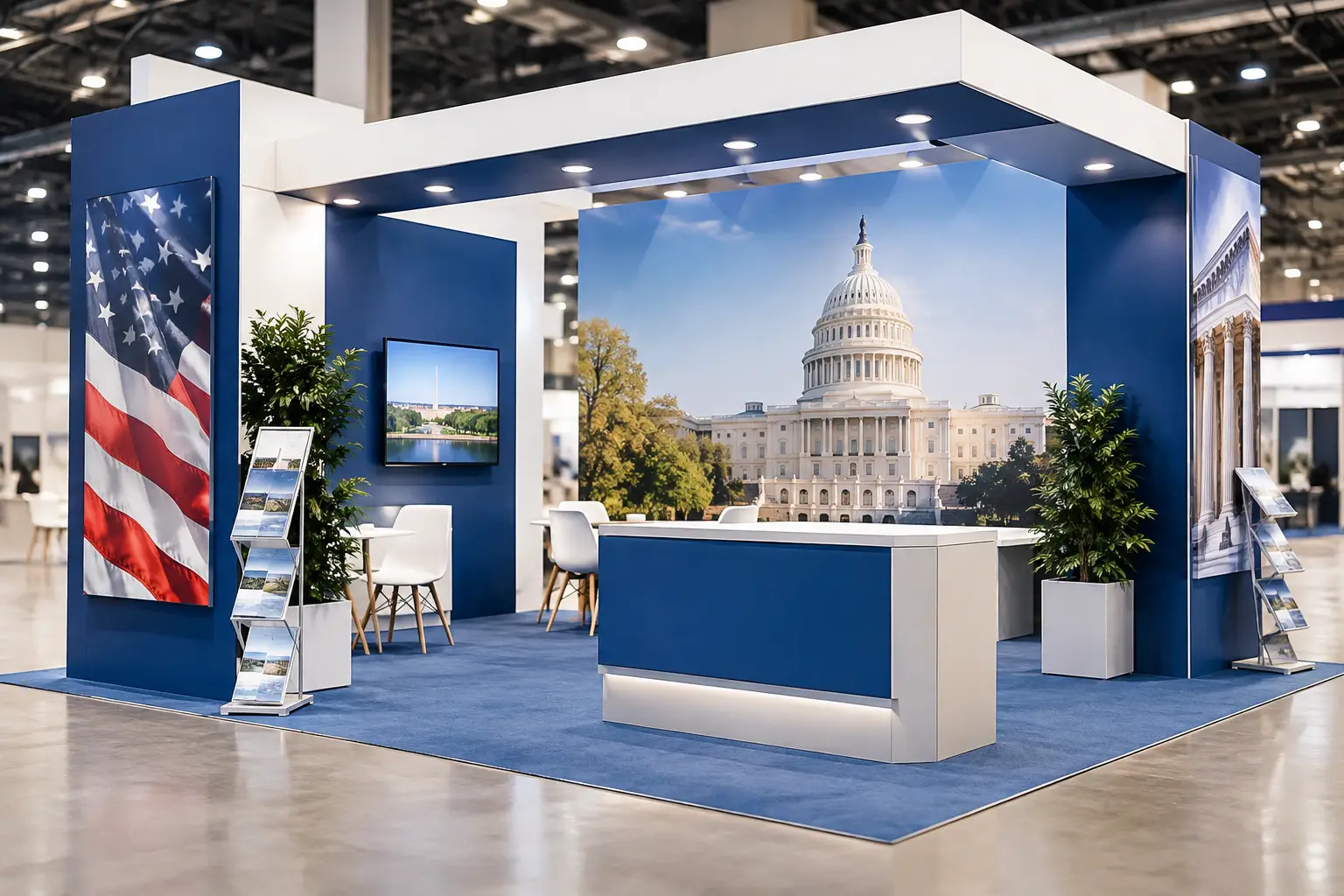



A GITEX stand has only a few seconds to answer a visitor’s unspoken question: is this worth my time? In a hall filled with product launches, live demonstrations, investors, enterprise buyers, and competing technology claims, visual presence alone is not enough. The strongest GITEX exhibitors create an environment that makes their proposition clear, gives their team room to engage, and moves qualified conversations forward.
For marketing leaders and event procurement teams, that requires more than ordering a booth and adding a few screens. It requires an exhibition strategy built around business objectives, audience behavior, operational constraints, and the quality of execution on site.
Start With the Outcome, Not the Stand Size
A larger footprint can create authority, but it does not automatically create better results. Before approving a concept, define what success needs to look like at GITEX. For one company, the priority may be enterprise lead generation. For another, it may be demonstrating a complex platform, launching a new product, meeting regional partners, or strengthening credibility with government and trade stakeholders.
These goals influence the entire stand plan. A lead-generation-focused brand needs an open, inviting layout with fast conversation points and a clear data-capture process. A company selling a high-consideration solution may need semi-private meeting areas, a polished hospitality zone, and space for longer product discussions. A launch-led activation may need a central demonstration stage that can draw and hold a crowd without obstructing circulation.
The most effective brief is specific. Rather than asking for a “modern technology stand,” describe the visitor you want to attract, the message they should retain, the action you want them to take, and the type of interaction needed to get there. That gives your exhibition partner a commercial foundation for the creative work.
Design a GITEX Stand for Movement and Conversation
At a major technology exhibition, traffic is not evenly distributed. Visitors follow visual cues, crowd activity, familiar brands, and whatever appears useful from a distance. Your stand should work at three ranges: across the aisle, at the entrance, and inside the space.
From across the aisle, the architecture and brand message must be recognizable without asking people to read a wall of copy. Strong overhead visibility, confident use of color, and a simple headline can do more than a crowded collection of graphics. For island stands and larger spaces, height and sightlines become even more valuable, subject to organizer and venue rules.
At the edge of the stand, give people a reason to pause. This may be a live product interface, a large LED video wall with purposeful content, a physical product display, or a knowledgeable team member opening the conversation. Screens should support the story, not become decorative noise. A looping video that cannot be understood in ten seconds is unlikely to change visitor behavior.
Inside the space, the layout should separate activity without making the stand feel closed. Public demonstrations, casual discussions, scheduled meetings, and storage all need their place. An open floor plan can increase approachability, but it may reduce privacy for commercial discussions. Enclosed meeting rooms create confidentiality and comfort, but too many can make the stand appear inaccessible. The right balance depends on your sales cycle, product complexity, and expected visitor profile.
Give Live Demos the Space They Deserve
Technology brands often underestimate the operational needs of a live demo. The product must be easy to see, hear, and understand in a noisy exhibition hall. Presenters need enough room to work without blocking traffic. Visitors need a natural place to stand, then an obvious next step once the demonstration ends.
Plan for power, network requirements, backup devices, cable management, and technical support from the beginning. A striking stand cannot compensate for a demonstration that fails, buffers, or leaves prospects unsure what they have just seen. Build in contingency planning, especially when your activation depends on connected software, immersive displays, or high-value equipment.
Build Trust Through Material Quality and Finish
At GITEX, your stand is a physical expression of how your company operates. Uneven finishes, weak lighting, visible cables, poorly aligned graphics, and improvised furniture can undermine even a strong product message. Buyers may not consciously identify every issue, but they notice the overall standard.
This is where design ambition must be matched by fabrication control. Custom-built elements allow a brand to create a distinctive environment, integrate products properly, and use the footprint more effectively than a generic modular solution. They also require disciplined project management, accurate technical drawings, quality checks, and experienced installation teams.
A modular or hybrid approach can still be the right decision when timelines are tight, budgets are controlled, or the stand will be reused across multiple shows. The key is to avoid treating “cost-effective” as a reason to compromise on visible quality. Select finishes, lighting, graphics, and feature areas where visitors will feel the difference, then simplify elements that do not affect the experience.
Sustainable choices can fit this approach well. Reusable structural components, repurposed materials, efficient lighting, and considered packing plans can reduce waste without making a premium stand look temporary. The practical question is not whether every element can be reused. It is whether the stand has been designed to deliver the required impact with responsible material decisions.
Plan the Project Timeline Around Real Dependencies
A successful GITEX project is won well before installation day. Design approvals, stand drawings, venue submissions, fabrication, graphics production, technology testing, logistics, and staffing all have dependencies. Delays in one area can create expensive pressure elsewhere.
Start the process early enough to make decisions rather than react to them. The first phase should establish objectives, footprint, budget parameters, key products, and functional requirements. Once the concept is approved, detailed design needs to account for dimensions, materials, engineering, electrical needs, AV integration, furniture, storage, and visitor flow.
Organizers typically require documentation and approvals for elements such as stand construction, electrical connections, suspended features, and other site-specific requirements. These should not be left to the final week. A dependable stand partner manages this detail alongside design development, so your internal team is not chasing multiple vendors or trying to resolve technical questions while preparing sales teams and campaign activity.
For international exhibitors, logistics deserve equal attention. Freight schedules, customs documentation, local regulations, installation access, and contingency stock should be planned as part of the project, not treated as a final delivery task. In-house fabrication and coordinated on-site teams can reduce handoffs and provide stronger control over quality and timing.
Make Staffing Part of the Exhibition Experience
A high-impact build brings visitors in. The people on the stand determine whether those visitors become opportunities.
Staff should know the stand’s purpose, the priority audience, the demonstration flow, and the qualification questions that matter. They also need a practical system for handling traffic. Not every visitor needs a full sales conversation. Some need a quick introduction, some should be directed to a demonstration, and some require a scheduled meeting with a technical or commercial lead.
Brief the team on how to use each zone. A meeting lounge should not become overflow seating for unqualified visitors. A product demo area should not be left unattended during peak periods. Hospitality should feel welcoming while remaining connected to commercial objectives. If event hostesses are used, they should be properly briefed on the brand, visitor routing, and lead-handling process rather than positioned as a purely visual addition.
Measure More Than Footfall
Footfall can be useful, but it is not a complete measure of exhibition value. A smaller number of qualified conversations may be more valuable than a large crowd that never reaches the sales team.
Track the measures that connect directly to the reason you are exhibiting: qualified leads, scheduled meetings, product demonstrations completed, partner discussions, media interactions, and post-event opportunities created. Decide in advance how leads will be captured, categorized, assigned, and followed up. Speed matters. A promising GITEX conversation loses value quickly if the follow-up arrives weeks later without context.
The stand itself can support this measurement. Clear zones make it easier to understand where engagement happens. Digital registration points can help capture interest. A well-planned meeting schedule prevents senior team members from being consumed by random traffic while priority prospects wait.
Choose a Partner That Can Protect the Plan
GITEX projects involve creative expectations and operational pressure at the same time. The right exhibition partner should be able to translate a commercial brief into a stand that is visually bold, technically sound, and ready when the doors open.
Look for a team that can manage concept design, fabrication, graphics, AV coordination, logistics, installation, and dismantling with clear accountability. Ask how quality is checked before delivery, how changes are handled, and who is responsible on site. A compelling rendering is valuable, but disciplined execution is what visitors actually experience.
LemonTree Exhibitions approaches this work as an end-to-end build process, combining creative stand concepts with in-house production and on-site delivery control. That approach matters when your brand needs a confident presence without adding unnecessary coordination work to your internal team.
Your GITEX presence should leave prospects with more than a photograph of an attractive stand. It should give them a clear reason to remember your company, continue the conversation, and take the next commercial step.