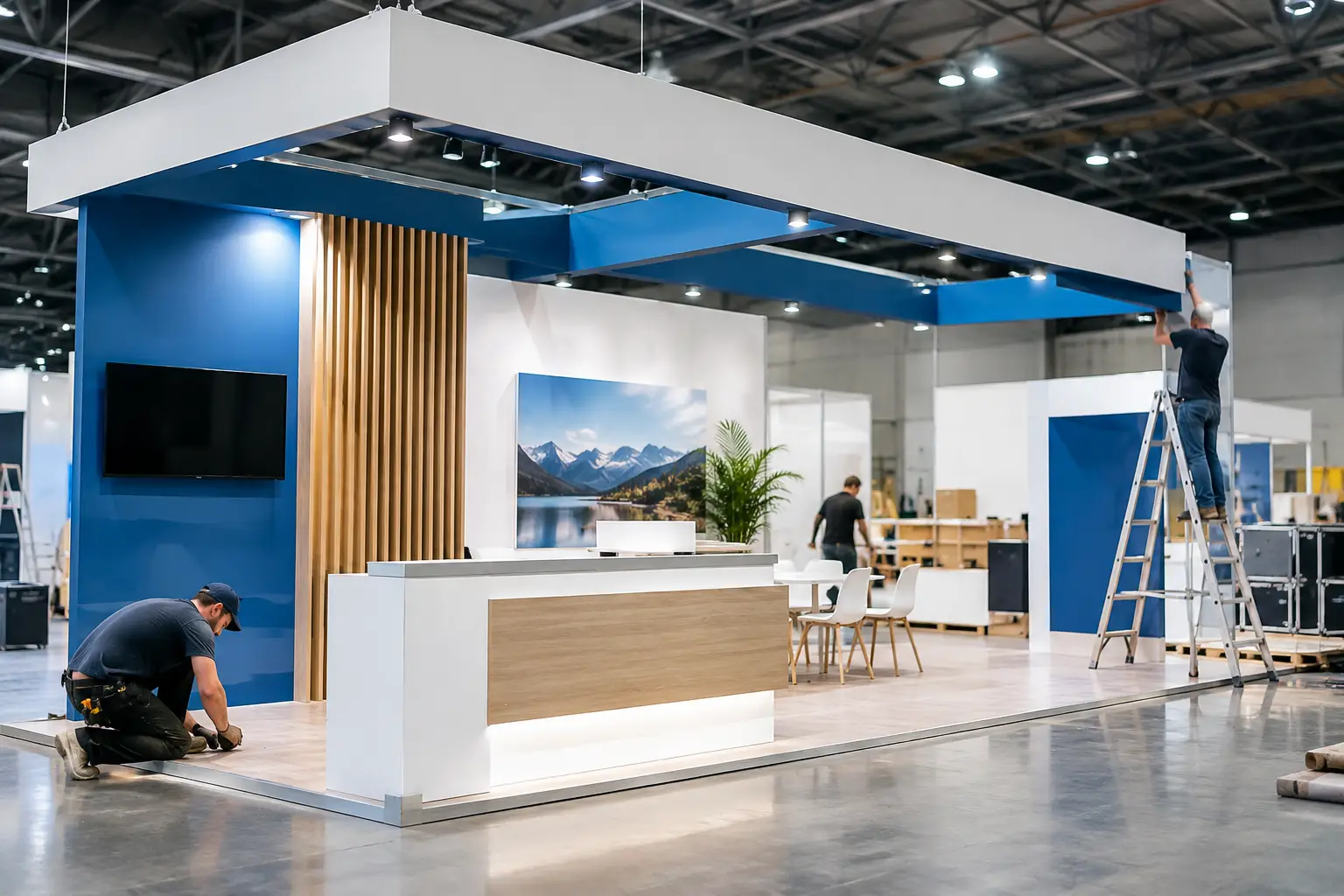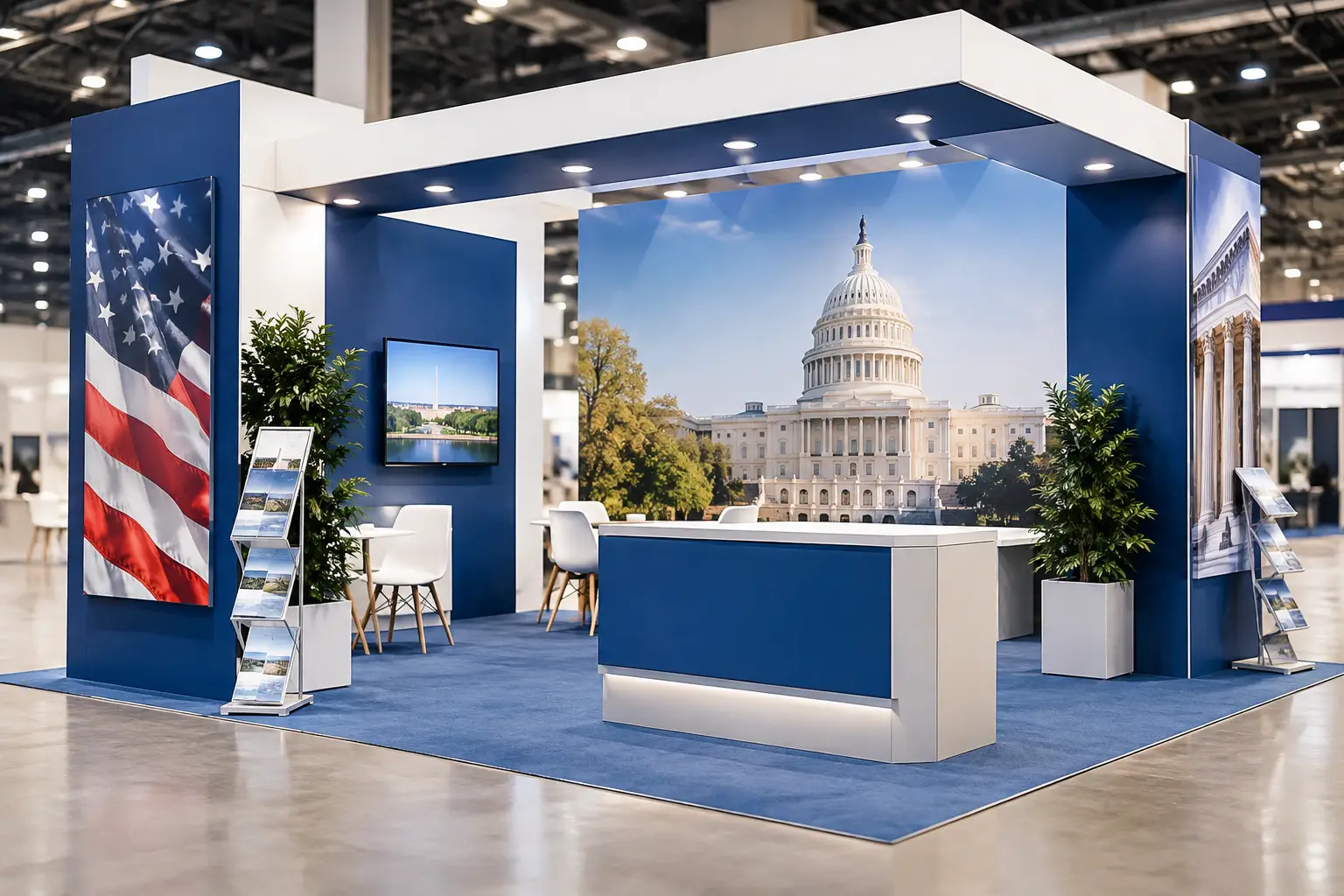


A beautiful stand loses some of its value when most of it is headed for disposal the moment the show closes. For marketing teams under pressure to deliver a memorable presence, sustainable exhibition stand materials offer a practical way to reduce waste without compromising visual impact, build quality, or visitor experience.
The strongest approach is not simply to replace every conventional material with a green alternative. It is to design the entire stand around reuse, responsible sourcing, efficient fabrication, and a credible plan for what happens after dismantling. That creates a better result for the environment and often a more controlled result for budgets, logistics, and future exhibition programs.
Sustainability starts with the stand strategy
A material is only as sustainable as the way it is used. A recyclable panel cut into a highly customized shape, shipped across several borders for one show, and damaged during dismantling may have a weaker overall outcome than a durable component that is used repeatedly over several events.
This is why early planning matters. Before approving the 3D design, teams should establish whether the stand will be a one-time statement, a modular asset for a regional show circuit, or a long-term brand environment that can evolve as campaigns change. The answer determines which materials make commercial and environmental sense.
For example, a large double-decker stand at a major trade show may need engineered timber, metal structures, and carefully specified flooring to meet venue and safety requirements. A smaller technology booth traveling between Las Vegas, Dubai, and Chicago may benefit more from lightweight modular frames, tension-fabric graphics, and reusable counters. Both can be responsible choices when designed for their actual purpose.
Sustainable exhibition stand materials to consider
The most effective material palette balances appearance, durability, safety, availability, and reuse potential. There is no single best option for every brand or venue, but several materials consistently support smarter exhibition builds.
Reusable aluminum frame systems
Aluminum is one of the most useful materials for repeat exhibition programs. Modular aluminum frames can be reconfigured into walls, meeting areas, product bays, arches, and overhead features. Their relatively low weight can also reduce transport complexity compared with heavier, fully built structures.
The real advantage is longevity. A well-maintained frame system can support multiple events while graphics, shelves, lighting, and accessories change around it. Aluminum requires more energy to produce initially, so it delivers its best sustainability value when it is reused many times and eventually recycled through the proper channel.
Responsibly sourced timber and plywood
Timber remains a valuable choice when a stand needs warmth, tailored finishes, curved forms, or substantial architectural presence. It is especially effective for premium hospitality areas, retail-inspired displays, and country pavilions where a generic modular look would not reflect the brief.
Specify responsibly sourced wood or certified plywood where available, and use standard panel sizes to reduce offcuts during fabrication. Designers can also plan joinery and finishing methods that allow components to be recovered rather than destroyed at dismantling. Low-emission paints, water-based coatings, and carefully selected laminates further improve the material story.
Timber is not automatically the low-impact answer. If it is covered in difficult-to-separate finishes and discarded after one show, its benefits fade quickly. Reusable wall sections, counters, and display plinths make a stronger case than highly temporary decorative surfaces.
Tension fabric graphics
Tension fabric has become a dependable alternative to many rigid, single-use graphic panels. It is lightweight, packs efficiently, and can create large, clean visual surfaces with minimal structural bulk. Fabric also works well for back walls, hanging signs, light boxes, partitions, and enclosed meeting rooms.
For a brand running several shows, replacement graphics can be produced without rebuilding the entire structure. The key questions are the fabric composition, ink method, and whether the graphics can be stored and reused. If a campaign date, product message, or language changes every event, fabric still reduces shipping weight, but reuse may be limited.
Recycled and recyclable boards
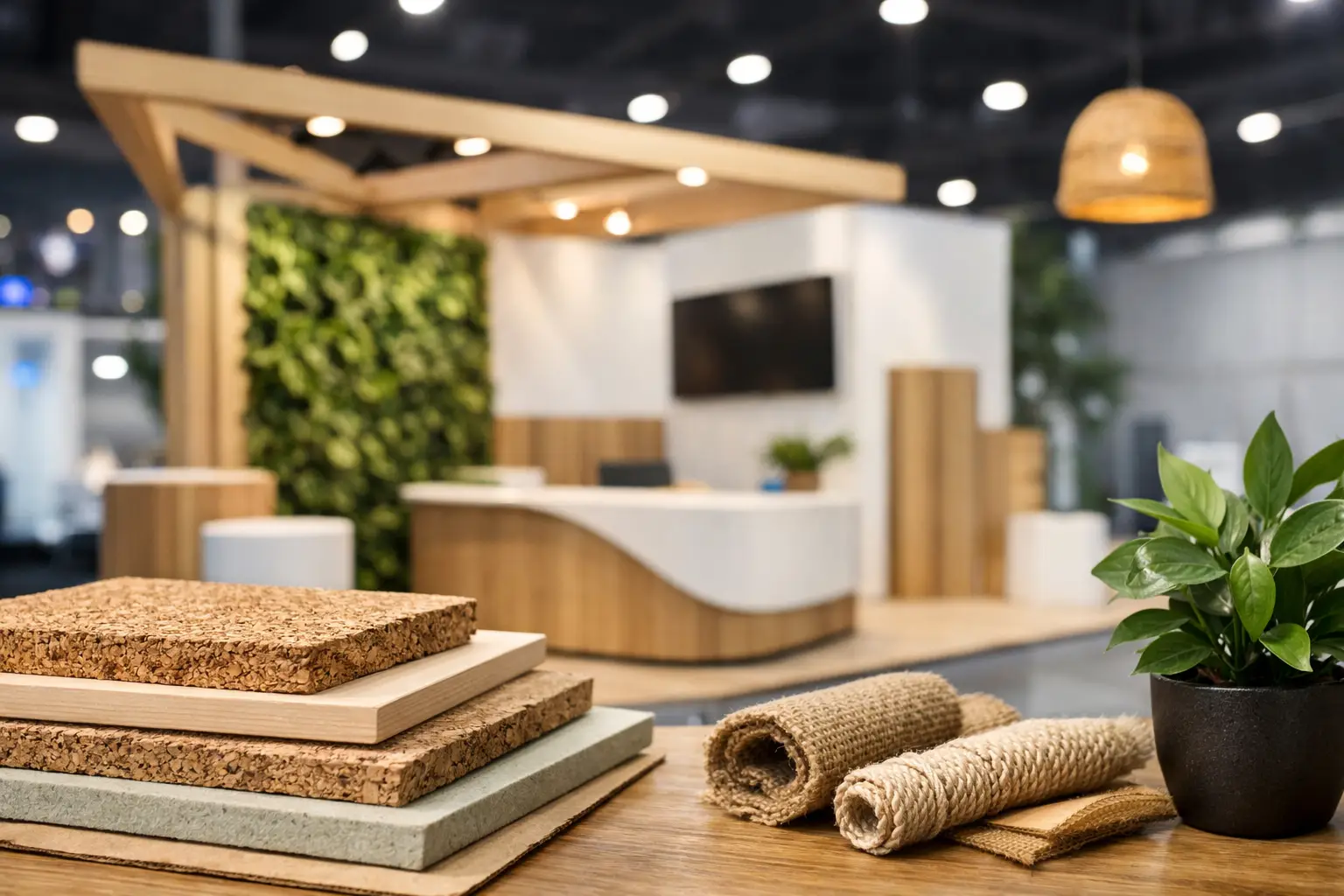
Recycled-content boards, honeycomb paper panels, and recyclable display boards can work well for short-term interior elements, signage, decorative cladding, and non-load-bearing displays. They are particularly useful for brands that need a lightweight solution with a natural, contemporary finish.
These materials need realistic expectations. Paper-based boards are not ideal near high-touch zones, wet areas, or heavy product displays unless they are properly reinforced. They may also require protective coatings that affect end-of-life recycling. A capable fabrication team will match them to appropriate applications instead of treating them as a substitute for every structural element.
Reclaimed finishes and refurbished assets
Sustainability does not always begin with buying a new material. Existing counters, furniture, flooring sections, shelving, and lighting can often be refinished, rebranded, or adapted for another event. Reclaimed wood accents and refurbished furniture add character while helping reduce new material demand.
This is particularly effective for exhibitors with annual participation at events such as GITEX, ADIPEC, Gulfood, or The Big 5. A core kit of well-built assets can be refreshed season after season, giving the stand a new campaign feel without starting from zero.
Design details determine the real impact
The most sustainable material choice can be undermined by poor detailing. Permanent adhesives, excessive vinyl wrapping, mixed-material assemblies, and unnecessary one-off features make recovery difficult. A more considered build uses mechanical fixings where practical, separates materials cleanly, and designs components to be repaired or repurposed.
Flooring deserves special attention because it is often one of the largest material areas on a stand. Raised floors are valuable for hiding cabling and achieving a premium finish, but they should be designed as reusable platforms rather than fabricated anew for every show. Reusable carpet tiles, durable vinyl alternatives, and rental flooring can all be suitable depending on the visual brief and venue rules.
Lighting also affects material decisions. LED fixtures use less power during the event and generate less heat, which can reduce the need for additional cooling in enclosed spaces. More importantly, well-positioned lighting can make simpler, reusable materials look intentional and high-end. A stand does not need layers of disposable decoration to command attention.
Choose materials around the exhibition program
Procurement teams often ask for the most sustainable option before the exhibition strategy is defined. A better question is: what will this stand need to do over the next 12 to 24 months?
If the brand has one flagship event and a large creative budget, it may be worth investing in durable custom elements that can be retained for future launches, showroom use, or regional events. If the program includes several smaller shows in different markets, modularity and transport efficiency should lead the decision. For a country pavilion, standardized bays and shared infrastructure can reduce duplication while still giving each exhibitor a distinct identity.
Venue regulations also matter. Fire ratings, height restrictions, load limits, approved materials, and local disposal systems vary by location. What is suitable at a Dubai exhibition venue may require a different specification in Germany or the United States. Planning with these constraints early prevents last-minute substitutions that can add cost and waste.
Avoid sustainability claims that cannot be supported
A stand should not be described as sustainable simply because it includes bamboo, recycled graphics, or a few reused furniture pieces. Experienced stakeholders will rightly ask what percentage of the build is reusable, where materials came from, how waste was sorted, and what was retained after the event.
The answer does not need to be perfect to be credible. Be specific instead of making broad claims. State that the aluminum frame will be reused for three upcoming events, that existing furniture was refinished, or that timber offcuts were separated for repurposing. Measurable actions build more trust than vague environmental language.
A reliable stand partner should also be candid about trade-offs. Custom brand forms may require new fabrication. Certain pharmaceutical, energy, and automotive product displays need stronger materials and tighter compliance controls. The objective is not to eliminate every new component. It is to make each new component work harder and last longer.
Build the afterlife into the schedule
Dismantling day is where a good sustainability plan proves itself. If teams do not know which parts are being stored, returned, donated, recycled, or disposed of, valuable assets can quickly become waste under the pressure of venue deadlines.
Create an asset plan alongside the fabrication schedule. Identify reusable structures, graphics worth retaining, furniture for refurbishment, and materials that can be sorted after the show. Photograph and label retained elements so they can be located and assessed before the next event.
At LemonTree Exhibitions, this thinking is built into the design-to-dismantling process, helping clients balance bold visual concepts with practical opportunities to recycle and repurpose materials. In-house production also gives the build team closer control over cut plans, storage, quality checks, and material handling.
The most responsible exhibition stand is not the one that looks eco-friendly from a distance. It is the one designed with enough discipline that its best parts are still creating value long after the aisle carpet has been removed.