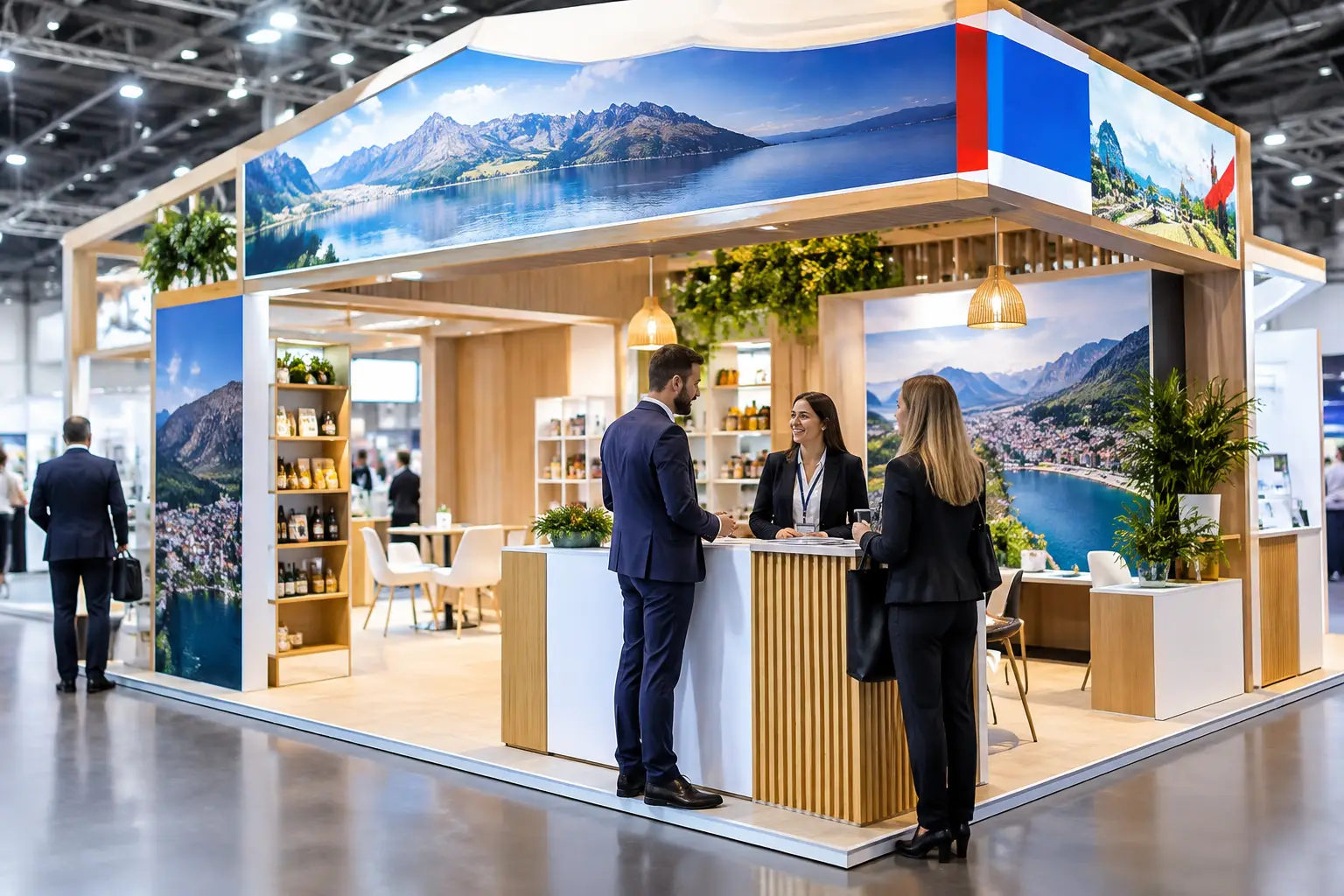



A busy aisle is not proof of success. Trade show engagement begins when the right visitor stops, understands why your brand matters, and has a reason to continue the conversation after the event. For marketing teams investing in space, travel, staff, and a custom stand, that distinction is where exhibition ROI is won or lost.
The strongest booths do not rely on giveaways or loud visuals alone. They combine a clear commercial message with a physical environment that makes interaction easy. Every detail – from the location of a product demo to the first question a host asks – should help move visitors from curiosity to a qualified next step.
Start With the Behavior You Want to Create
Before approving a stand concept, define what a valuable visitor should do at the booth. That might mean booking a technical consultation, watching a live demonstration, comparing product options, meeting a regional sales lead, or scanning a QR code to receive a specification sheet. Without this decision, engagement becomes a vague goal and the booth can become visually impressive but commercially unfocused.
A large product launch may need a theater-style presentation area, clear sightlines, and an LED video wall that can tell the story repeatedly throughout the day. A B2B manufacturer with long sales cycles may need semi-private meeting space where its team can discuss requirements without competing with aisle noise. An exporter entering a new market may need a simple, confident stand that makes credentials, distribution capability, and compliance information immediately visible.
The format depends on the sales motion. High-volume events benefit from fast, repeatable interactions. Complex products, enterprise services, and government-facing offerings require more time and privacy. Trying to serve both needs with one undifferentiated open space often produces neither meaningful conversations nor efficient visitor flow.
Design Trade Show Engagement Into the Booth
A stand should work like a well-planned customer journey, not a backdrop for staff. Visitors need to recognize the brand, understand the offer, find an entry point, and know where to go next. This is why experienced exhibition design begins with circulation and messaging before decorative finishes.
Give people a reason to stop
Your primary message should be understandable from the aisle in a few seconds. Avoid filling every wall with product claims, technical details, and campaign graphics. One strong promise, supported by a striking product, visual, or live moment, is more effective than competing messages.
Height, lighting, color, and architecture can create visibility, particularly in crowded halls. But attention must connect to relevance. A dramatic double-decker stand can signal scale and leadership at a major industry show, yet it only earns its footprint when the lower level is easy to enter and the upper level supports scheduled business meetings. For smaller spaces, a focused product display and a visible demo can create stronger pull than an overbuilt structure.
Make the first interaction low-pressure
Visitors often hesitate to enter a booth when they cannot tell what will happen next. Create approachable zones near the aisle: a working demo, a product sample, a short interactive screen, or an expert presenting a useful insight. These give visitors permission to engage before they commit to a sales conversation.
Reception counters should support orientation, not block access. Position them so visitors can see the products and people behind them. Where appropriate, use a host to greet, qualify, and direct visitors to the right specialist. This is especially valuable when technical teams are limited and senior salespeople need to spend their time on priority prospects.
Build distinct spaces for distinct conversations
An effective booth often has three layers: an open attraction zone, an education or demonstration zone, and a meeting zone. Visitors should be able to move naturally between them without crossing through a private discussion or creating a queue at the entrance.
This is not a rigid formula. At a show where products must be touched or tested, the demonstration area may be the center of the stand. At an energy, pharma, or technology exhibition where conversations involve detailed requirements, meeting rooms may take priority. The key is to allocate space according to the value of each interaction, not simply to maximize the number of displays.
Give Your Team a Conversation System
Even the best stand cannot compensate for an unprepared booth team. Visitors remember whether they felt understood, not just whether the build looked premium. Staff should know the main campaign message, the profiles of priority attendees, and the next action expected from each type of conversation.
A practical opening is a relevant question rather than a generic greeting. “What are you looking to improve in your production line?” or “Are you evaluating suppliers for a current project?” gives a visitor a useful way to respond. From there, staff can decide whether to demonstrate a product, introduce a subject matter expert, or schedule a longer meeting.
Avoid the common habit of treating every badge scan as a lead. Capture context while the conversation is fresh: the visitor’s role, need, timeline, market, product interest, and agreed follow-up. A smaller list of well-qualified contacts with clear notes is more valuable than hundreds of unclassified scans.
For high-traffic shows, assign clear roles. Hosts manage arrivals, product specialists handle demonstrations, sales leaders take qualified meetings, and an event lead resolves operational issues. This structure prevents the all-too-familiar sight of a crowded booth with no one available to speak to the people who matter.
Use Technology to Support, Not Replace, People
Digital tools can improve engagement when they remove friction or make a complicated story easier to understand. LED video walls can establish brand presence and show applications at scale. Touchscreens can help visitors select products, sectors, or use cases. Lead capture tools can route contacts directly to the correct market team.
However, technology should not become an unattended attraction. A screen with too many menus creates hesitation; a virtual experience without a staff member to interpret it can feel disconnected. Every digital touchpoint needs one clear purpose and an obvious human handoff.
The same applies to giveaways and games. They can increase footfall, but they should attract the right audience. A prize draw may suit a broad consumer-facing activation. At a specialized industrial exhibition, a live comparison, technical session, or consultation is more likely to bring decision-makers into a valuable conversation.
Plan Engagement Before the Doors Open
The event experience starts before the show floor opens. Invite existing prospects to specific meeting slots, tell them what they will see, and give account teams a reason to reach out personally. A broad “visit us at booth number” message is rarely enough for senior buyers with full calendars.
Schedule demonstrations at set times when possible. Repetition builds energy and allows visitors to plan a return visit. It also gives marketing teams a natural pre-show message: see the new system in action, meet the product team, or attend a short expert session.
Operational planning matters just as much. Test the demo, power supply, connectivity, audiovisual content, storage, lead forms, and meeting schedule before opening. A premium brand environment loses credibility quickly when a screen fails, samples are unavailable, or staff cannot access the lead capture platform. Dependable execution is part of the visitor experience.
LemonTree Exhibitions approaches stand delivery with this connection between creative impact and practical control in mind. A carefully fabricated environment, installed on time and planned around real visitor behavior, gives brand teams the confidence to focus on conversations rather than last-minute site issues.
Measure What Actually Moved the Business Forward
Footfall can be useful, but it is only an early indicator. Track the measures that reflect your exhibition objective: qualified leads, scheduled meetings, demonstration attendance, opportunities created, proposal requests, pipeline value, and post-show conversion. For a product launch, you may also assess press conversations, partner meetings, or the number of target accounts reached.
Compare these results with the staffing plan and the physical layout. If visitors watched demonstrations but did not convert into meetings, the handoff may need work. If meeting rooms stayed full while the open area was quiet, future designs may need more private capacity and less display space. If the stand drew the wrong audience, revisit the aisle message and engagement mechanic rather than assuming the event itself failed.
Follow-up should begin while the event is still current. Send a relevant response based on the conversation, not a generic email blast. A visitor who asked about a specific application should receive the appropriate product information and a clear proposed next step. Speed matters, but relevance matters more.
The best trade show engagement feels effortless to visitors because it has been planned carefully behind the scenes. Give people a compelling reason to stop, a useful reason to stay, and a specific reason to speak again – then build every part of the stand and staffing plan around that promise.