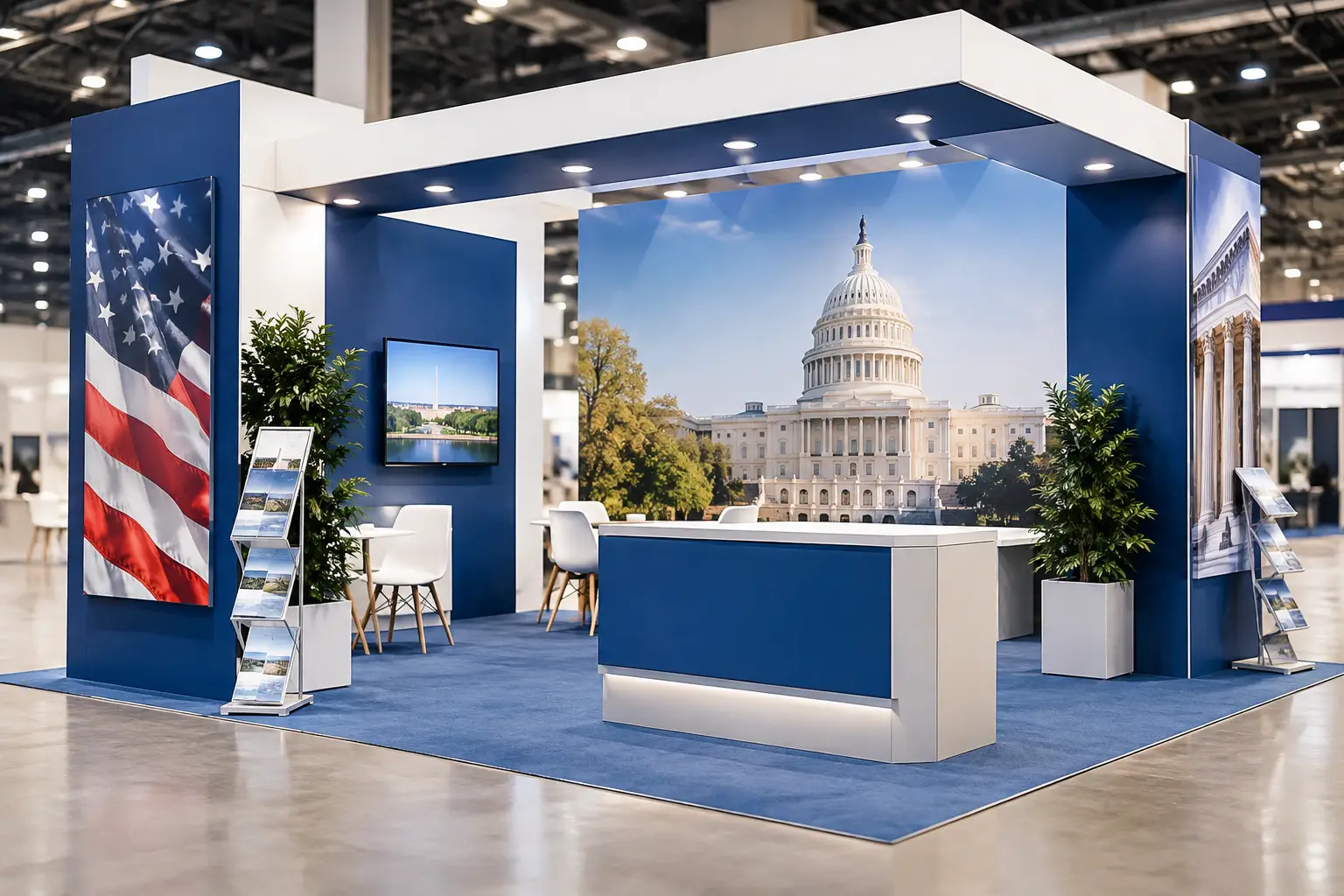



A pharma booth can lose credibility before the first conversation begins. A crowded reception counter, a screen playing unsubstantiated claims, or an exposed meeting table sends the wrong signal to clinicians, distributors, investors, and procurement teams. Effective booth design for pharma expo participation must do more than attract traffic. It must create a controlled, credible environment where people can understand the science, assess the business opportunity, and speak with the right experts.
For marketing and event teams, that creates a different design brief than a typical consumer-focused exhibition. The stand still needs visual impact, but every design decision must support clarity, trust, privacy, and practical lead engagement.
Why Pharma Expo Booths Need a Different Approach
Pharma audiences are rarely looking for spectacle alone. Physicians may want concise clinical information. Hospital buyers may focus on supply reliability and product specifications. Distributors may need market potential, packaging details, and commercial support. Investors and partners may be looking at pipeline strength, manufacturing capability, or regulatory progress.
A single open-plan stand cannot serve all of those conversations equally well. The strongest booth concepts start by identifying who will attend, what each group needs to know, and how much time they are likely to spend at the stand.
This is also an industry where confidence is built through details. Precise graphics, a well-organized product display, knowledgeable staffing, and a calm meeting setting can carry more weight than oversized visual effects. Bold design still has a place, especially in a crowded exhibition hall, but it should make information easier to access rather than compete with it.
Build the Booth Around the Visitor Journey
The best exhibition stands guide visitors naturally from awareness to conversation. Instead of treating the available floor space as one large branding surface, divide it into purposeful areas that reflect how attendees engage.
Create a Clear First Impression
Your headline should answer one immediate question: what does your company help solve? At a pharma expo, broad statements such as “improving lives” may support corporate branding, but they do not give a busy visitor enough reason to stop. A more focused message might establish a therapeutic area, a delivery capability, a manufacturing specialty, or a differentiated service.
Keep the message readable from the aisle. Product names, category identifiers, and high-level benefits should be visible at a distance, while scientific detail belongs deeper inside the stand. This tiered approach prevents the booth facade from becoming a wall of text.
Design an Education Zone, Not a Poster Wall
Visitors often need information before they are ready to speak to a representative. Digital displays, concise infographics, physical product models, and touch-enabled content can help them explore at their own pace.
The format depends on the product and audience. A medical device or delivery system may benefit from a hands-on demonstration. A contract manufacturer may need process visuals, capacity indicators, quality credentials, and sector-specific case examples. A company presenting a new therapy may require a carefully reviewed story that explains the disease area and development journey without crossing approved communications boundaries.
Content should be approved before fabrication begins. Leave enough lead time for medical, legal, regulatory, and brand teams to review graphics, videos, interactive screens, and printed collateral. Last-minute copy changes are one of the fastest ways to create avoidable production pressure.
Protect High-Value Conversations
Not every discussion belongs in the aisle. A booth designed for serious business development needs meeting capacity that matches the expected visitor profile. Semi-private tables may be sufficient for quick distributor conversations, while enclosed meeting rooms are better suited to confidential partnership, procurement, or pipeline discussions.
Privacy does not have to make a stand feel closed off. Frosted partitions, acoustic finishes, considered furniture placement, and controlled entry points can create discretion while maintaining a welcoming presence. On larger spaces, an upper level can separate formal meetings from product engagement below, provided venue rules, sightlines, and staffing plans support the investment.
Give Staff a Functional Base
The most polished stand will underperform if the team has nowhere to store materials, prepare demonstrations, charge devices, or take a brief reset between meetings. A concealed utility area is often overlooked during concept development, yet it protects the visitor-facing experience throughout the show.
Plan for storage, refrigeration where applicable, handwashing or utility requirements if demonstrations demand them, device charging, literature replenishment, and personal belongings. These practical details keep counters clear and staff focused.
Make Compliance Part of the Design Process
Exhibition stand builders are not responsible for approving pharmaceutical claims, but the design process must make compliance easier to manage. This begins with a disciplined content hierarchy and clear ownership of approvals.
Separate corporate messaging from product-specific information where needed. Make distinctions clear between approved products, investigational products, and pipeline communications. If visitors need different information based on professional status or market, consider how the booth layout, staff workflow, or digital access method can support that distinction.
Digital content deserves the same scrutiny as printed graphics. Videos, animations, interactive product selectors, and lead-capture forms can all create risk if they are not reviewed carefully. The goal is not to make the booth cautious or uninspiring. It is to make every claim, visual, and interaction intentional.
There is a trade-off here. Overloading the space with disclaimers can weaken the visitor experience, while hiding essential context can create a more serious issue. An experienced design and project team can reserve the right surfaces and screen areas for necessary information without allowing compliance copy to dominate the brand story.
Materials, Lighting, and Technology Should Reinforce Credibility
The physical finish of a pharma stand sends a message about the company behind it. Clean lines, precise joins, stable flooring, well-fitted display elements, and consistent color quality all contribute to a sense of control. This does not mean every booth must look clinical or minimal. A consumer health brand may use warmer materials and more expressive color, while a biotech company may choose a more architectural look.
What matters is consistency. The materials, graphics, furniture, and technology should feel like parts of one environment rather than a collection of rental items and promotional panels.
Lighting is especially valuable in exhibition halls where the general environment can be flat and visually noisy. Use it to make the brand visible, highlight product zones, and improve comfort in meeting areas. Avoid glare on screens and glossy graphics. For demonstrations, confirm power loads, connectivity needs, screen brightness, and backup plans before the event opens.
LED video walls can create strong stopping power, but they are not automatically the right choice. If the content is repetitive, overly fast, or difficult to view from the aisle, the investment may not convert into better conversations. A smaller, well-positioned screen with purposeful content can be more effective than a large display that overwhelms the stand.
Plan Booth Design for Pharma Expo Success Early
A strong booth design for pharma expo events is built well before the show floor opens. Venue regulations, height limits, suspended signage rules, fire safety requirements, electrical plans, and move-in schedules shape what is realistic. International exhibitors also need to consider shipping timelines, customs documentation, local labor rules, and whether equipment or samples require special handling.
Early planning gives the team room to make smart budget decisions. A custom structure may be the right choice for a major product launch, a flagship congress, or a large international audience. For a smaller regional show, a modular framework enhanced with custom branding, lighting, and targeted digital content may achieve a premium result with better reuse value.
Sustainability should be considered at this stage as well. Reusable structural components, recyclable graphics, rental furniture, and materials designed for repurposing can reduce waste without making the stand look temporary. The key is to decide which elements need to be unique and which can be used efficiently across multiple events.
Choose an Execution Partner That Understands the Stakes
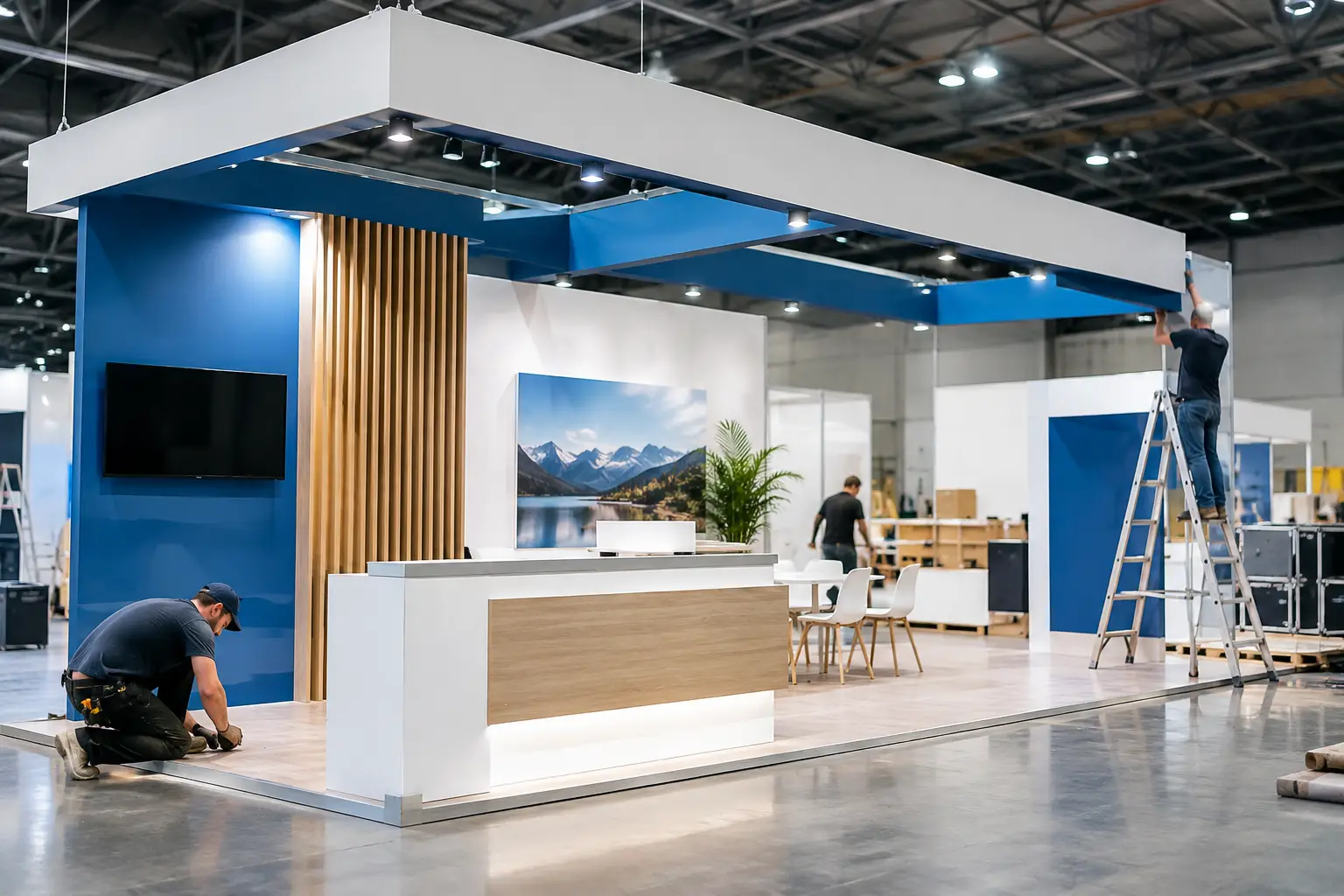
In pharma exhibitions, a beautiful 3D concept is only the starting point. The real test is whether the stand is fabricated accurately, delivered on schedule, installed safely, and handed over ready for the client team to use. Delays and unfinished details are disruptive at any show, but they are particularly damaging when senior stakeholders, product experts, and pre-booked meetings are involved.
Look for a partner that can coordinate design, fabrication, logistics, installation, and dismantling under clear project ownership. Ask how content changes are handled, who manages venue approvals, how quality is checked before dispatch, and what on-site support is available if an issue arises. Those questions reveal far more than a portfolio image alone.
LemonTree Exhibitions brings this control through in-house design, production, logistics coordination, and installation management for projects across major exhibition markets. That integrated approach helps teams protect both creative intent and delivery timelines.
A pharma booth should leave visitors with a simple impression: this is a company that knows its subject, respects the setting, and is prepared to do business. When design, compliance planning, and on-site execution support that impression together, the stand becomes more than a place to display information. It becomes a credible setting for the conversations that move opportunities forward.