

A stand can look impressive in a render and still underperform on the show floor. That usually happens when the format does not match the goal. In the modular vs custom exhibition stands decision, the real question is not which one looks better in isolation. It is which one supports your budget, timeline, message, and event strategy without creating avoidable friction.
For marketing teams, procurement leads, and business owners planning trade show participation, this choice affects more than design. It shapes logistics, reuse potential, lead flow, brand perception, and what your team can realistically execute across one show or an entire annual calendar.
Modular vs custom exhibition stands: what is the difference?
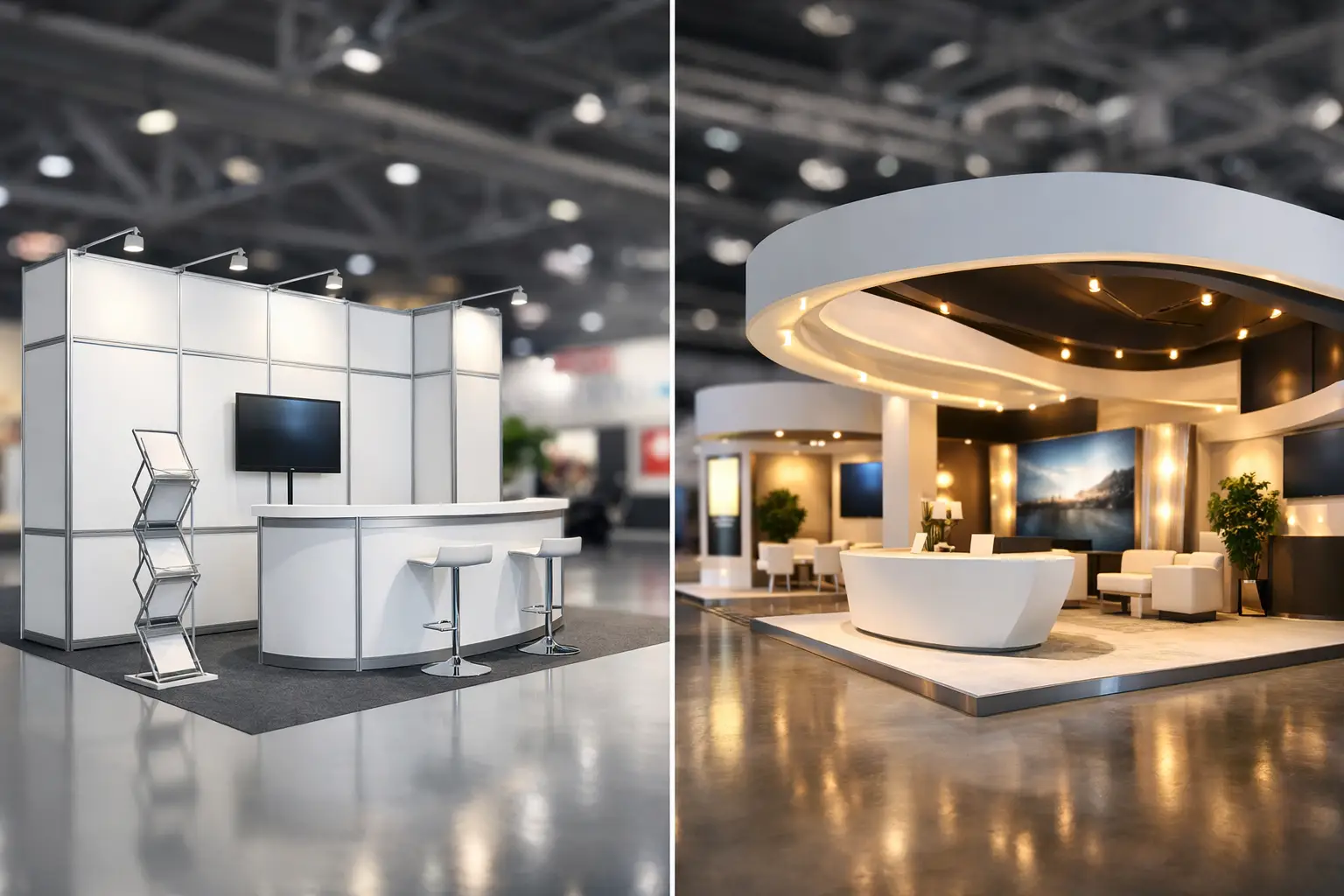
A modular stand is built from a system of reusable components. These structures are designed to be reconfigured across different booth sizes and event formats. The framework stays consistent, while graphics, shelving, counters, lighting, and branded features can be updated or rearranged.
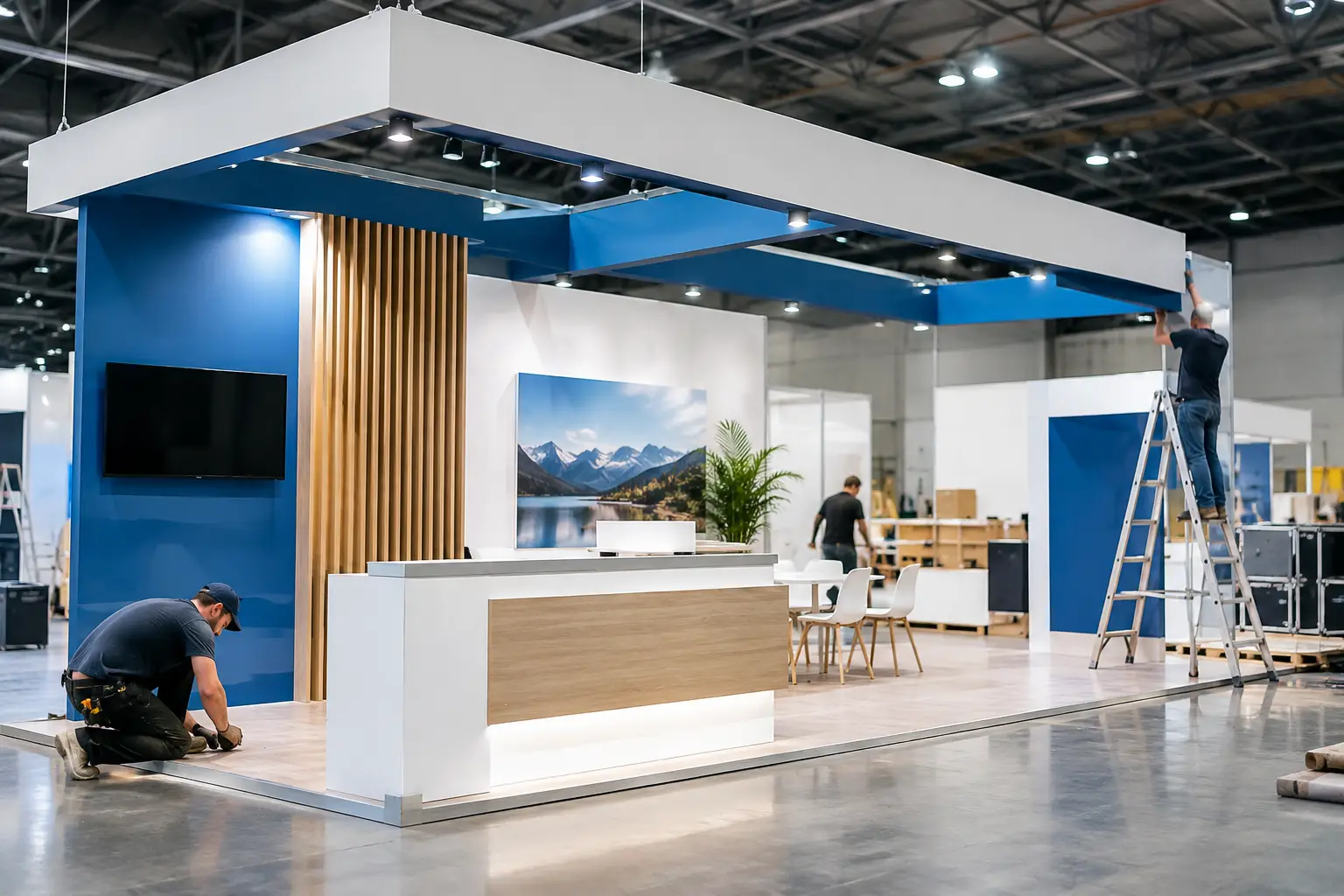
A custom stand is designed and fabricated around a specific brand concept, floor plan, and visitor journey. It gives far more freedom in shape, materials, storytelling, and architectural presence. If you want a distinctive product experience, a statement ceiling feature, a double-height look, or a highly tailored demo zone, custom is usually the stronger route.
That does not mean modular is basic and custom is always extravagant. Good modular stands can feel polished and premium. Poorly planned custom stands can overspend without adding meaningful impact. The right decision comes from how you exhibit, how often you exhibit, and what your stand needs to do beyond simply being seen.
When modular exhibition stands make more sense
Modular works well when efficiency matters as much as appearance. If your team attends multiple shows each year, especially with changing booth sizes, modular gives you flexibility without rebuilding from scratch each time. For brands that need consistency across regions or events, that reuse can deliver strong value.
It is also a smart choice when timelines are tight. Because many elements are pre-engineered, modular builds are generally faster to produce, pack, install, and dismantle. That matters if your event schedule is crowded or approvals are coming in late.
Budget control is another major advantage. While modular is not automatically cheap, it tends to reduce long-term spend if you plan to reuse the stand structure across several exhibitions. Instead of paying for a fresh fabrication every time, you invest in a base system and adapt the graphics and selected features where needed.
This format often suits startups, SME exporters, and brands testing a market. It can also work well for larger companies running regional activations where they need reliable presentation without the cost of a one-off concept for every show.
Still, modular has limits. If your stand must compete in a highly design-led hall, or if your product category depends on a premium physical experience, a modular structure may feel constrained unless it is customized carefully. The best modular stands are the ones that do not look obviously modular.
When custom exhibition stands deliver better results
Custom stands are built for brands that need stronger visual differentiation and tighter control over the visitor experience. If you are launching a product, hosting private meetings, showcasing complex machinery, or building authority at a flagship event, custom usually creates more room to do that well.
This is especially true at major trade shows where competing brands invest heavily in presence. Events such as GITEX, ADIPEC, Gulfood, Big 5, and Automechanika are crowded, high-stakes environments. In those spaces, a custom stand can help a brand feel more established, more intentional, and more aligned with its market position.
Custom becomes even more valuable when the stand needs to solve multiple business objectives at once. You may need open product display, enclosed meetings, hospitality, storage, LED integration, and a clear path for traffic flow. A system stand can sometimes accommodate those needs, but a custom build handles them with fewer compromises.
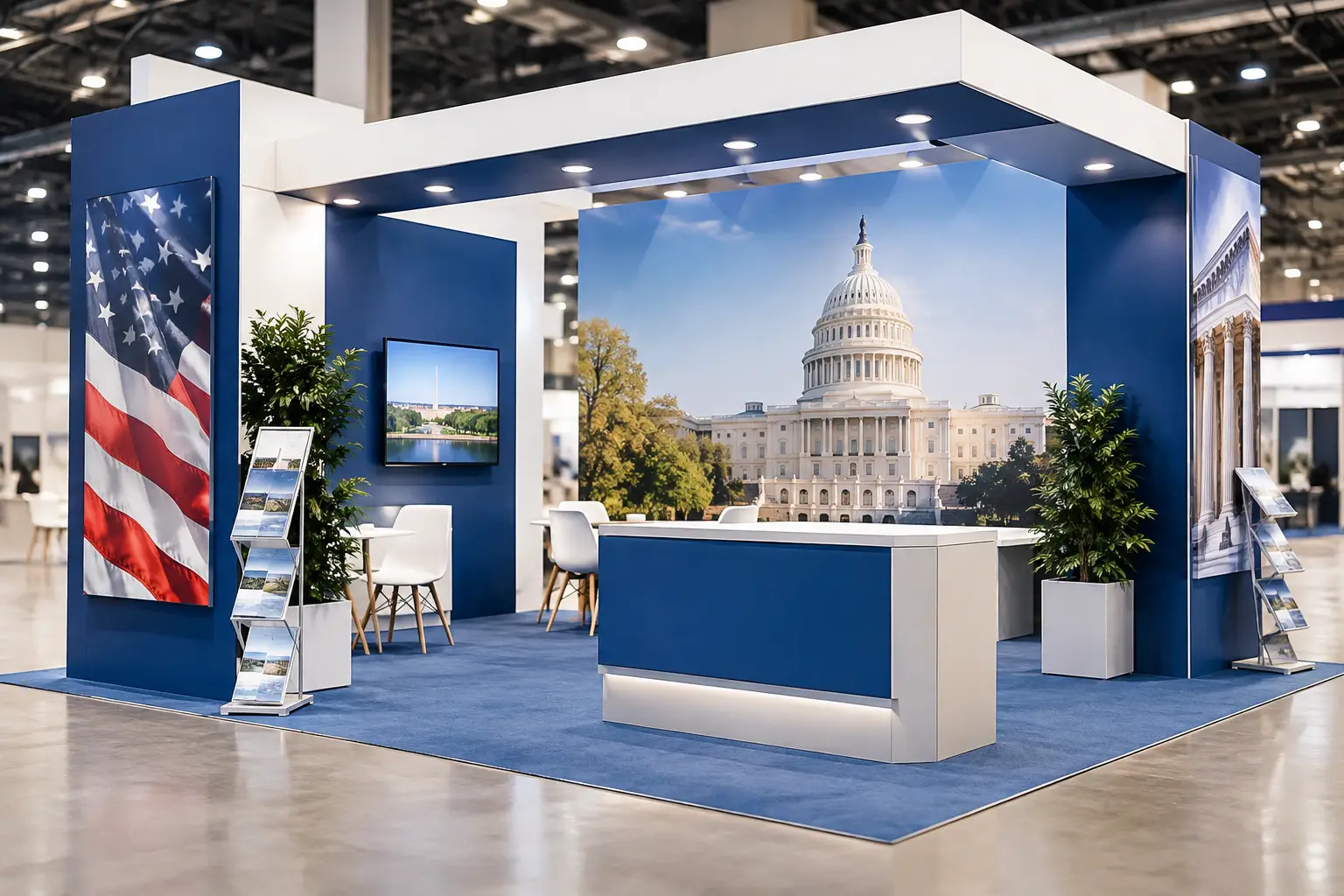
It is also the better fit for country pavilions, larger footprints, and double decker structures where architecture itself becomes part of the message. When government bodies, enterprise brands, and major exporters need a stand that communicates scale and credibility, customization is often not a luxury. It is part of the brief.
The trade-off, of course, is investment. Custom stands require more design development, more fabrication time, and closer coordination between concept, production, logistics, and on-site execution. That is why delivery discipline matters as much as creativity.
Cost is important, but cost per result matters more
Many buyers start with upfront price. That is reasonable, but it can be misleading.
A modular stand often costs less initially and can offer better value over multiple shows. If your booth program is repeatable and your needs stay relatively stable, the economics are attractive. You spread the investment across several events and reduce waste.
A custom stand may cost more, but if it helps you attract stronger foot traffic, host higher-value meetings, or support a major launch, the return can justify the spend quickly. For some exhibitors, one successful event is worth more than a year of modest savings.
The smarter way to evaluate cost is to look at the full picture: design, fabrication, shipping, storage, installation, dismantling, refurbishment, and reusability. Also consider hidden internal costs. If a stand is difficult to manage, adapt, or install, your team pays for that in time and stress.
Brand impact and audience experience
Trade show performance is rarely about aesthetics alone. Visitors respond to clarity, comfort, access, and how easily they understand what your brand is offering.
Modular stands can absolutely support a strong audience experience when branding is disciplined and the layout is well planned. Clean graphic zones, good lighting, focused messaging, and smart product presentation go a long way.
Custom stands offer more control over emotional impact. You can shape entry points, frame key sightlines, integrate materials that reflect your brand, and create a stronger sense of depth and movement. If your category relies on trust, innovation, or premium positioning, that added control can be valuable.
This is where many exhibitors make the wrong call. They assume they need custom because they want to look important. In reality, they may need modular executed exceptionally well. Others choose modular to save money when their event objective actually calls for a more immersive branded environment. The stand should fit the strategy, not the ego.
Speed, logistics, and operational risk
Exhibitions reward good planning and punish last-minute fixes. The more complex the stand, the more important execution becomes.
Modular usually reduces operational risk because the system is standardized and repeatable. Components are easier to transport, easier to assemble, and easier to adapt on site. That lowers the chance of unpleasant surprises, especially for international exhibitors moving between venues and regulations.
Custom requires more coordination, but that does not make it risky by default. It becomes highly dependable when handled by a partner with in-house design, production, logistics, and on-site supervision. That end-to-end control matters because exhibition success is built as much in the workshop and loading dock as on the show floor.
For companies exhibiting across multiple markets, from the Middle East to Europe or the US, this is often the deciding factor. The stand concept must be bold, but the delivery model has to be disciplined.
How to choose between modular and custom exhibition stands
Start with four questions. How often will you exhibit this year? How important is standout impact at this specific event? How fixed or flexible is your budget? And what does the stand need to accomplish beyond attracting attention?
If you attend several shows, need faster turnarounds, and want to reuse assets efficiently, modular is often the practical winner. If you are targeting a flagship event, launching something major, or need a stand tailored around meetings, hospitality, or product engagement, custom is usually the stronger option.
There is also a middle ground. Many exhibitors now choose hybrid solutions that combine modular structure with custom cladding, lighting, feature zones, and digital elements. This approach can balance cost control with a more bespoke brand presence.
That hybrid route is often where the smartest exhibition programs land. It gives marketing teams room to be ambitious while keeping procurement, logistics, and reuse in view.
A capable stand partner should not push one format by default. They should ask what success looks like, how often the stand will be used, what constraints matter most, and where design should work harder. That is how better decisions get made.
At the best exhibitions, visitors never stop to ask whether a stand is modular or custom. They simply feel that the brand is credible, prepared, and worth their time. That is the standard to aim for.