

Trade show visitors decide fast. In a crowded hall, your booth usually gets a few seconds to earn a second look. That is where an LED video wall for exhibition booth design can shift the outcome. It does not just make a stand brighter. It gives your brand movement, scale, and a stronger way to communicate what matters before your team even starts the conversation.
For marketing teams, procurement heads, and business owners, the real question is not whether LED looks impressive. It is whether it helps the booth perform better. The answer depends on how well the screen is planned into the stand, what content it carries, and whether the setup supports your show goals instead of distracting from them.
Why an LED video wall for exhibition booth design works
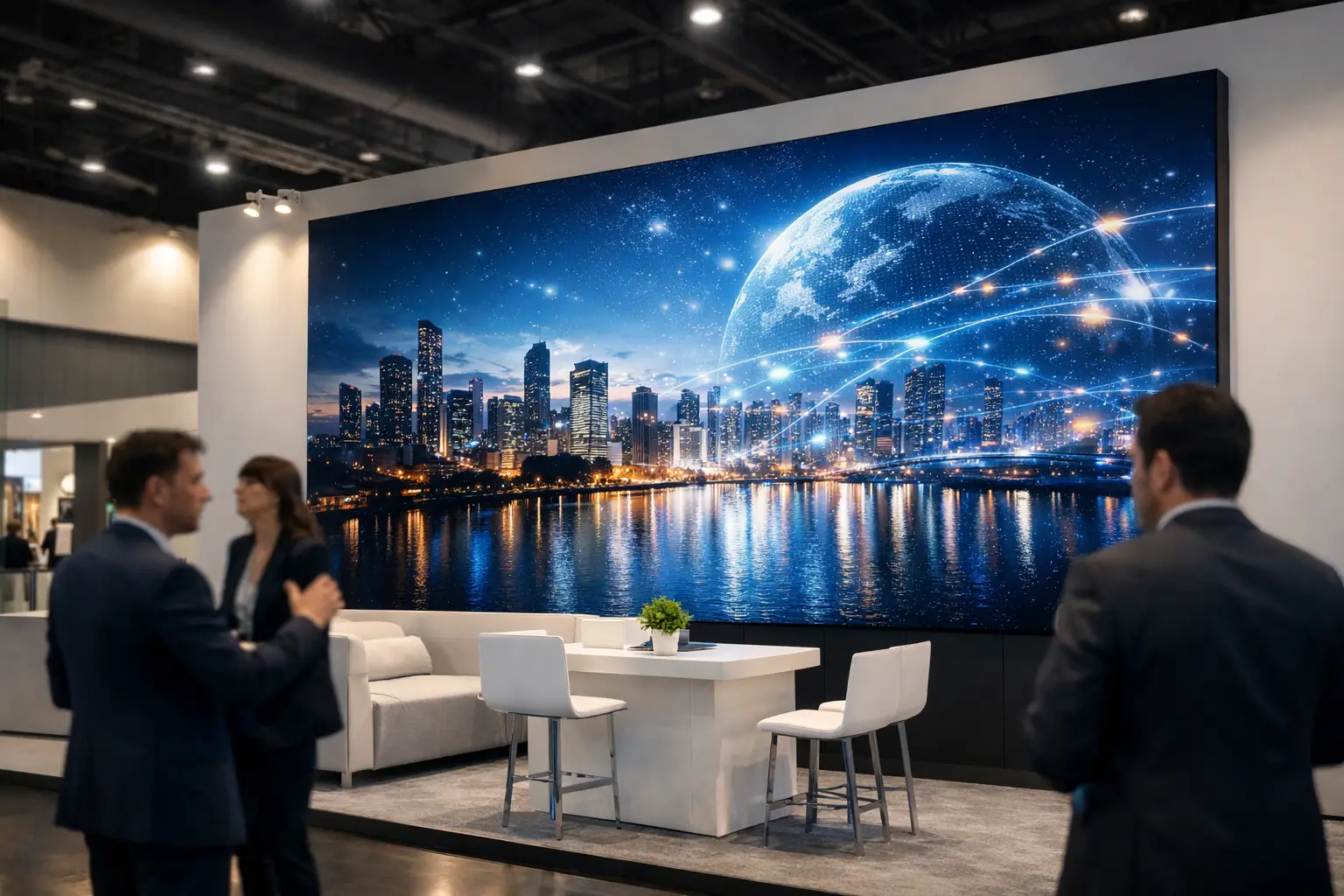
A well-placed LED wall changes how people read your space. Printed graphics are still useful, but they are static. LED lets you rotate product visuals, technical animations, customer proof points, campaign messages, and brand films during the show without rebuilding the stand.
That flexibility matters when your audience is mixed. At one exhibition, you may be speaking to distributors, consultants, procurement leaders, media, and end users. A single digital display can present different messages throughout the day while keeping the booth visually consistent.
It also solves a visibility problem. In large venues such as technology, energy, food, or manufacturing exhibitions, exhibitors compete at long viewing distances. A strong LED display can make the booth readable from farther away, especially when the stand sits in a busy aisle or among larger competitors.
But impact is not only about size. It is about relevance. If the content is too busy, too generic, or poorly timed, the screen becomes expensive wallpaper. The best exhibition LED walls are designed around one simple job – attract attention, support the sales story, and help visitors understand your offer quickly.
When LED is the right fit
An LED video wall is not necessary for every stand. If you are exhibiting in a compact booth with a highly technical product and long one-to-one meetings, a touchscreen or focused graphic system may be enough. In that case, budget may be better spent on product display, meeting space, or live demos.
LED becomes a stronger investment when the event is high traffic, the brand needs to stand out from distance, or the product story benefits from motion. This is especially true for sectors like pharma, technology, energy, automotive, real estate, and FMCG, where product ecosystems, process demonstrations, or large campaign visuals are easier to explain on screen than on print.
It also makes sense for launches. If you are entering a new market, presenting a premium identity, or participating in a major event such as GITEX, ADIPEC, Big 5, or a large pavilion format, the screen can help position the brand at a more serious level.
The trade-off is budget and coordination. LED adds cost, power planning, content management, transport handling, and installation precision. That is why it should be treated as part of the stand strategy, not an add-on ordered at the last minute.
The design decisions that matter most
The first decision is not screen size. It is viewing distance. A screen that looks sharp from 6 feet may not perform from 30 feet, and the opposite is also true. Pixel pitch, brightness, and screen scale should match the hall conditions and the way people will approach the booth.
The second is placement. Some exhibitors put LED on the back wall because it feels obvious. Sometimes that works. Sometimes a side-facing wall, corner wrap, hanging cube integration, or central feature panel delivers better traffic pull. The right answer depends on booth orientation, aisle exposure, and whether the screen is supporting lead generation or brand awareness.
Content format is the third major factor. Fast-cut promotional videos often look energetic in a boardroom and fail on a show floor. Visitors are walking, talking, and processing a lot at once. Exhibition content needs clear hierarchy, bold text, slower transitions, and visuals that make sense even without audio.
That often means shorter loops, stronger product imagery, simplified motion graphics, and messages built around benefits rather than dense information. If the goal is lead capture, the content should prompt a clear next step. If the goal is credibility, the screen should reinforce proof – scale, case studies, manufacturing capability, certifications, or innovation.
LED wall types and what each one does best
Not every LED setup is the same. A flat LED backdrop is the most common and usually the most practical. It gives you a strong visual anchor and works well for brand films, product storytelling, and general visibility.
Curved LED walls create a more premium feel and can soften the architecture of the booth. They work well when the stand concept is immersive or when the brand wants a more fluid, high-end presentation. The downside is cost and slightly more complex installation.
Corner LED walls are effective for island and semi-island booths because they increase visibility from multiple directions. They can make better use of structural surfaces that would otherwise carry standard graphics.
Transparent LED is more specialized. It can look striking in premium environments, especially when layered into glass-like structures or open booth concepts. But it is not always the best choice for readability, so it needs a clear creative reason.
Floor LED and interactive LED can be memorable, but they are best reserved for brands with a strong experiential concept. Without a carefully managed visitor journey, these features can feel gimmicky.
Budgeting without wasting money
The most expensive screen is not always the best screen. Overspecifying resolution for a short viewing distance or renting an oversized wall with weak content is a common waste. A better approach is to define the objective first. Do you need distant attraction, technical explanation, premium presence, or an immersive launch moment?
From there, budget decisions become clearer. You can balance LED investment against booth size, fabrication finish, hospitality space, product display zones, and staffing. In many projects, the strongest result comes from combining one well-integrated LED wall with disciplined architecture rather than trying to turn every surface into a screen.
There is also a planning advantage when design, fabrication, content integration, transport, installation, and dismantling are managed together. It reduces last-minute compromises around cable routing, structure depth, ventilation, and access for on-site service. That is one reason many exhibitors prefer a partner that handles the full build process in-house rather than splitting design and execution across multiple vendors.
Common mistakes exhibitors make
The first mistake is treating LED as decoration. If the display is there only because competitors have one, it rarely earns its cost. It should support a business goal.
The second is running generic corporate videos that were not built for exhibition use. Booth content needs to communicate in seconds, not minutes.
The third is ignoring booth lighting and surrounding materials. LED has to work with the overall environment. If the stand finish, counters, product displays, and meeting areas feel disconnected from the screen, the booth loses coherence.
Another common issue is forgetting operational realities. Power load, control systems, rehearsal, backup media, and on-site troubleshooting matter. At international exhibitions, where build windows are tight and venue regulations are strict, these details are not minor. They are the difference between a polished opening and a stressful morning.
How to know if it is paying off
An LED wall should be measured by more than compliments. Look at practical indicators. Did the booth draw more walk-in traffic? Did visitors stay longer? Were product conversations easier to start? Did the screen help your team explain a technical offer faster? Did the stand support the level of brand positioning you wanted?
For some exhibitors, return is immediate and visible in footfall and lead volume. For others, it shows up in perception – stronger recall, better buyer engagement, and a more credible market presence. That is especially relevant for companies exhibiting in competitive international venues where first impressions shape who stops, who remembers, and who follows up.
The best results usually come from alignment. The stand architecture, LED content, visitor flow, and sales intent should all point in the same direction. When they do, the screen stops being a visual extra and becomes part of the booth’s performance engine.
A strong exhibition booth does not need more noise. It needs clearer communication, sharper presentation, and dependable execution. If an LED video wall helps you do that, it is not a luxury feature. It is a smart commercial tool, and when planned properly, it earns its place on the show floor.