

At ADIPEC, a stand has only seconds to signal whether a visitor should stop, walk past, or bring a decision-maker back later. A strong ADIPEC exhibition stand example is not simply a large branded structure. It is a commercial environment built to communicate technical capability, support serious conversations, and remain dependable through one of the energy sector’s busiest event schedules.
For marketing teams, the benchmark is higher than visual appeal. The stand must make a complex offer understandable, give sales teams the right settings for conversations, and reflect the operational confidence buyers expect from an energy business. That takes disciplined planning as much as creative design.
What an ADIPEC Exhibition Stand Example Gets Right
The most effective stands at ADIPEC present a clear message before visitors reach the reception counter. From the aisle, people should understand who the company serves, what problem it solves, and why its solution matters. This could be offshore reliability, lower-emission operations, digital monitoring, asset safety, or supply-chain performance. Trying to communicate every product line at once usually weakens the impact.
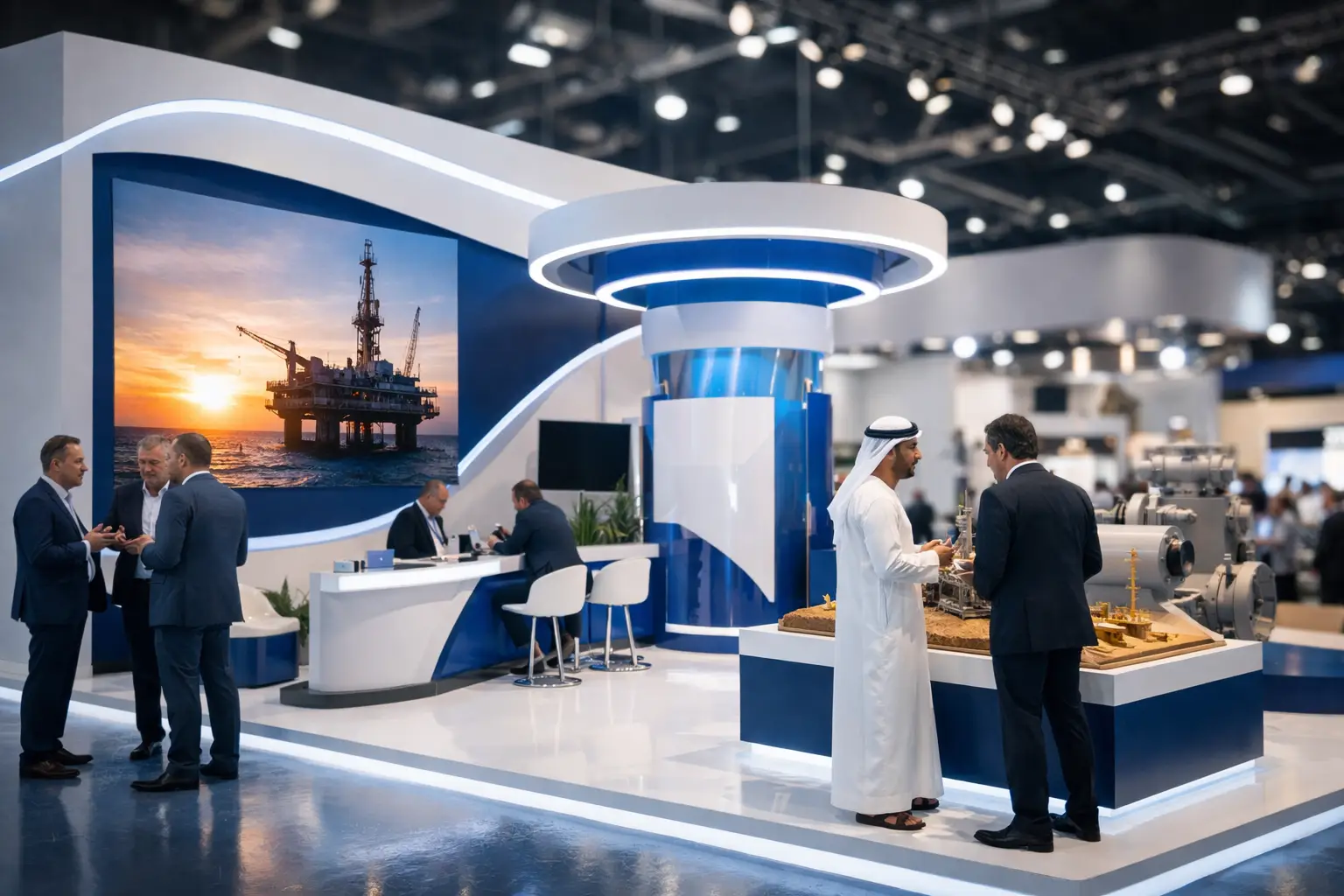
A useful design approach is to create a hierarchy of information. The outer architecture and elevated signage establish the brand. Large-format graphics or LED content introduce the main value proposition. Product displays, demonstrations, and meeting areas handle the detail once a visitor has chosen to engage. Each layer has a job, which prevents the stand from becoming visually crowded.
At a show where engineering expertise and procurement decisions sit side by side, credibility is also physical. Clean finishes, accurate graphic installation, secure display systems, well-managed cables, and properly lit products all influence how a brand is perceived. A bold concept without precise execution can work against a company that sells reliability.
Start With the Business Objective, Not the Structure
Before discussing a double-decker stand, video wall, or unusual ceiling feature, define what success looks like on the show floor. An established technology provider may want private meeting capacity for pre-booked prospects. A manufacturer launching a new component may need live product interaction. A government entity or trade body may need a country pavilion that gives multiple participating companies equal visibility while maintaining one national identity.
These objectives lead to different layouts. A lead-generation stand needs accessible entry points and fast qualification zones near the aisle. A relationship-led stand benefits from hospitality, acoustic control, and meeting rooms that feel private without appearing closed off. A product-focused stand needs generous circulation around demonstrations, with enough power, storage, and staffing space to keep activity running smoothly.
The size of the footprint matters, but it is not the entire answer. A well-planned 54-square-meter stand can outperform a poorly organized 150-square-meter space when its visitor journey is focused. Larger stands create opportunities for lounges, theaters, private rooms, and stronger architectural presence, but they also require greater investment in supervision, content, cleaning, and staff coordination.
Example concept: A technology-led energy supplier
Consider a company exhibiting a predictive-maintenance platform for oil and gas operations. Rather than covering every wall with dense technical claims, the stand could use a high-positioned brand marker and one direct message: reduce unplanned downtime through real-time asset intelligence.
At the open corner, a large LED screen can show short operational scenarios rather than a looping corporate film. A central demo counter lets technical specialists explain the platform in a few minutes. Behind it, two semi-enclosed meeting rooms give account teams a place to discuss site-specific requirements. A compact hospitality area supports longer conversations, while concealed storage keeps brochures, refreshments, staff belongings, and equipment away from public view.
This is an effective ADIPEC exhibition stand example because every area supports the sales process. The screen earns attention, the demo creates understanding, and the meeting space helps move qualified interest forward. The design looks premium because it is organized around a purpose, not because it adds features without a reason.
Design for Visitor Flow and Sales Conversations
Crowded aisles are common at major energy exhibitions. If the entrance is narrow, blocked by furniture, or dominated by a reception desk, visitors may hesitate to enter. Open corners and clear sightlines generally encourage engagement, particularly for stands that rely on demonstrations or high visitor volume.
Reception should support the experience, not become a barrier. Place it where staff can greet guests and manage appointments without obstructing access to the main attraction. Likewise, do not position meeting rooms at the front if they hide products or make the stand feel exclusive. Privacy is valuable, but the stand still needs to invite new business.
Lighting is another practical decision with commercial consequences. General lighting creates a polished baseline, while focused lighting can direct attention to models, machinery, samples, or messaging. LED walls can carry significant visual weight, but their brightness and audio must be managed carefully. A screen that overwhelms nearby conversations may reduce the usefulness of an otherwise strong hospitality zone.
For double-decker stands, the upper level can provide an excellent setting for executive meetings and hosted guests. It also increases the visibility of the brand across the hall. The trade-off is that double-decker builds demand earlier planning, more detailed approvals, stronger operational control, and a layout that justifies the added cost. They work best when the business genuinely needs more meeting capacity or a commanding presence.
Make Technical Content Easy to Absorb
ADIPEC visitors are sophisticated, but they are also time-poor. Long paragraphs and broad claims such as “innovation” or “quality” rarely start a useful conversation. Replace vague language with a specific outcome, a relevant proof point, or a clear demonstration.
For example, a valve manufacturer may display a cutaway product with a concise explanation of its performance in demanding conditions. A digital solutions company may use an interactive screen to show how data moves from field equipment to a decision dashboard. A sustainability-focused business may present a simple visual story showing where its solution reduces waste, energy use, or emissions.
The principle is not to simplify the product beyond recognition. It is to give visitors an accessible first step. Sales engineers can provide the deeper technical detail once interest is established. That balance helps the stand work for senior executives, procurement teams, technical specialists, and first-time visitors alike.
Build for ADIPEC Realities, Not Just the Render
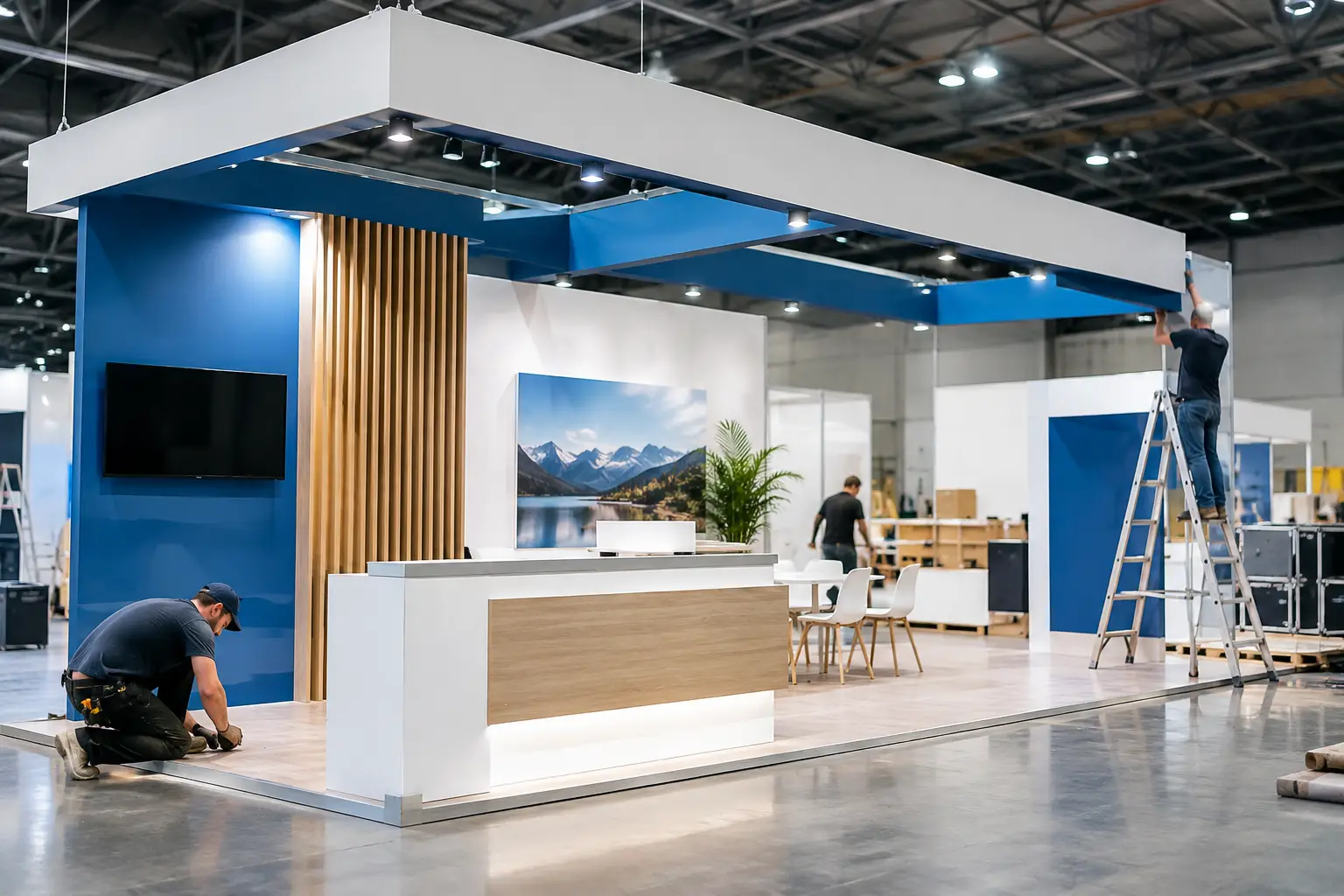
A 3D concept is valuable because it helps stakeholders visualize the space, but it is only the beginning. The finished stand must account for venue regulations, approved materials, structural requirements, electrical loads, rigging where applicable, audiovisual integration, fire and safety standards, and installation schedules. These details should shape the design from the first stages, not become late-stage compromises.
This is where an in-house design and fabrication process brings practical value. When the team designing the stand understands how it will be built, packed, transported, installed, and dismantled, there is less room for costly surprises. It also allows production quality to be checked before materials arrive on site.
Sustainability deserves the same practical approach. Reusable wall systems, repurposed materials, modular components, and durable rental elements can reduce waste without making the stand look temporary. The right choice depends on the concept, the show schedule, and whether elements can be used again at future events. A one-off architectural centerpiece may be justified for a major launch, while repeat exhibitors often benefit from a more adaptable asset strategy.
Plan the Team Experience Too
Even an exceptional stand can underperform if staff are unclear on messaging, meeting protocols, or lead capture. Brief the team on the primary audience, the one or two conversations the stand is designed to start, and how to route visitors between reception, demonstrations, and meeting spaces.
Give staff a place to reset away from customers. Small back-of-house details such as storage, charging points, water access, and a clear schedule for demos can improve energy and professionalism across long show days. If hospitality staff or fair hostesses are part of the plan, they should understand the visitor profile and brand tone, not simply distribute brochures.
The final test is straightforward: can a visitor understand the offer quickly, engage with confidence, and leave with a clear reason to continue the conversation? When that answer is yes, the stand is doing more than looking impressive. It is working as a dependable business tool. For brands planning their next ADIPEC presence, the best place to begin is not with a favorite stand style, but with the conversation that needs to happen on the floor.