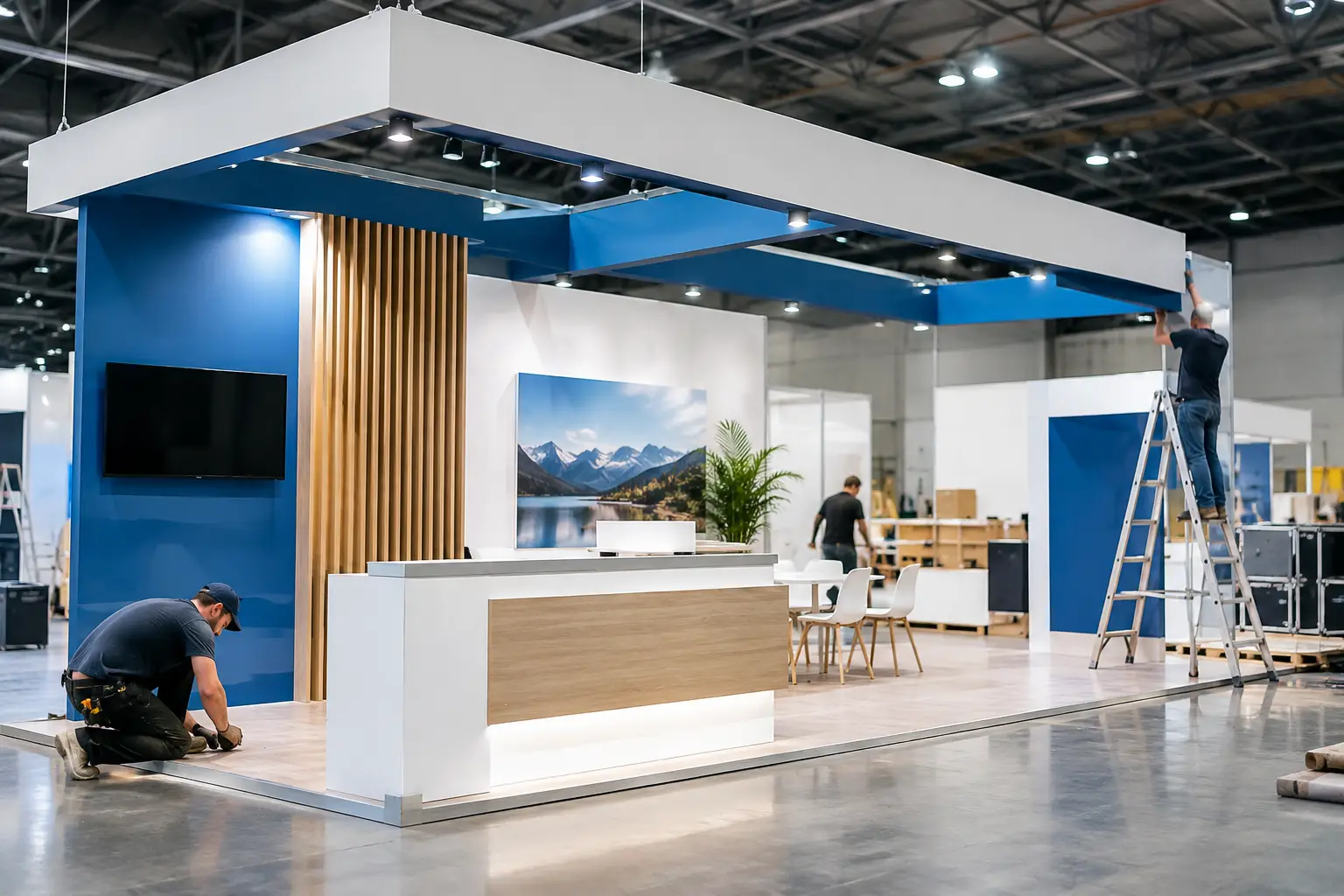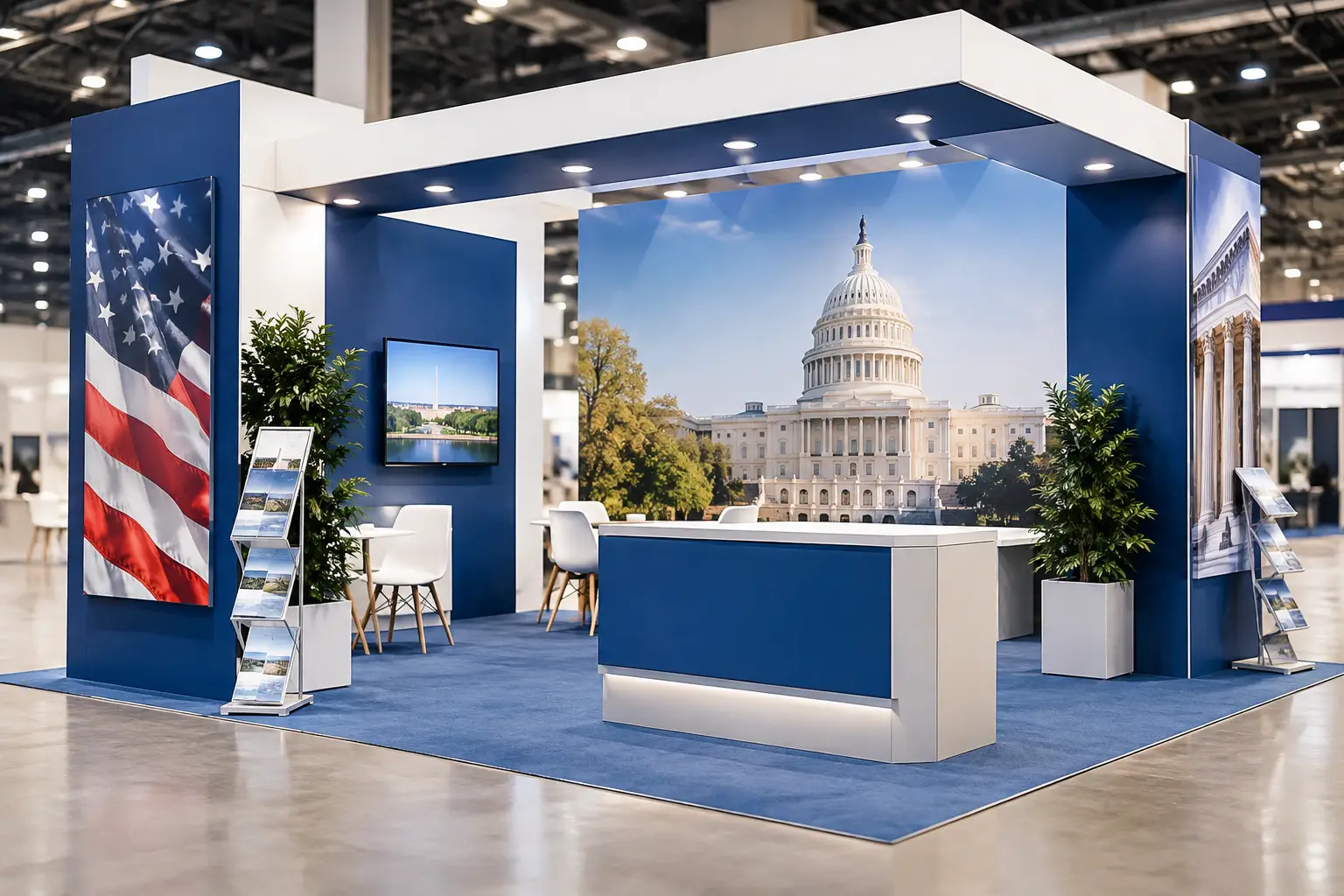

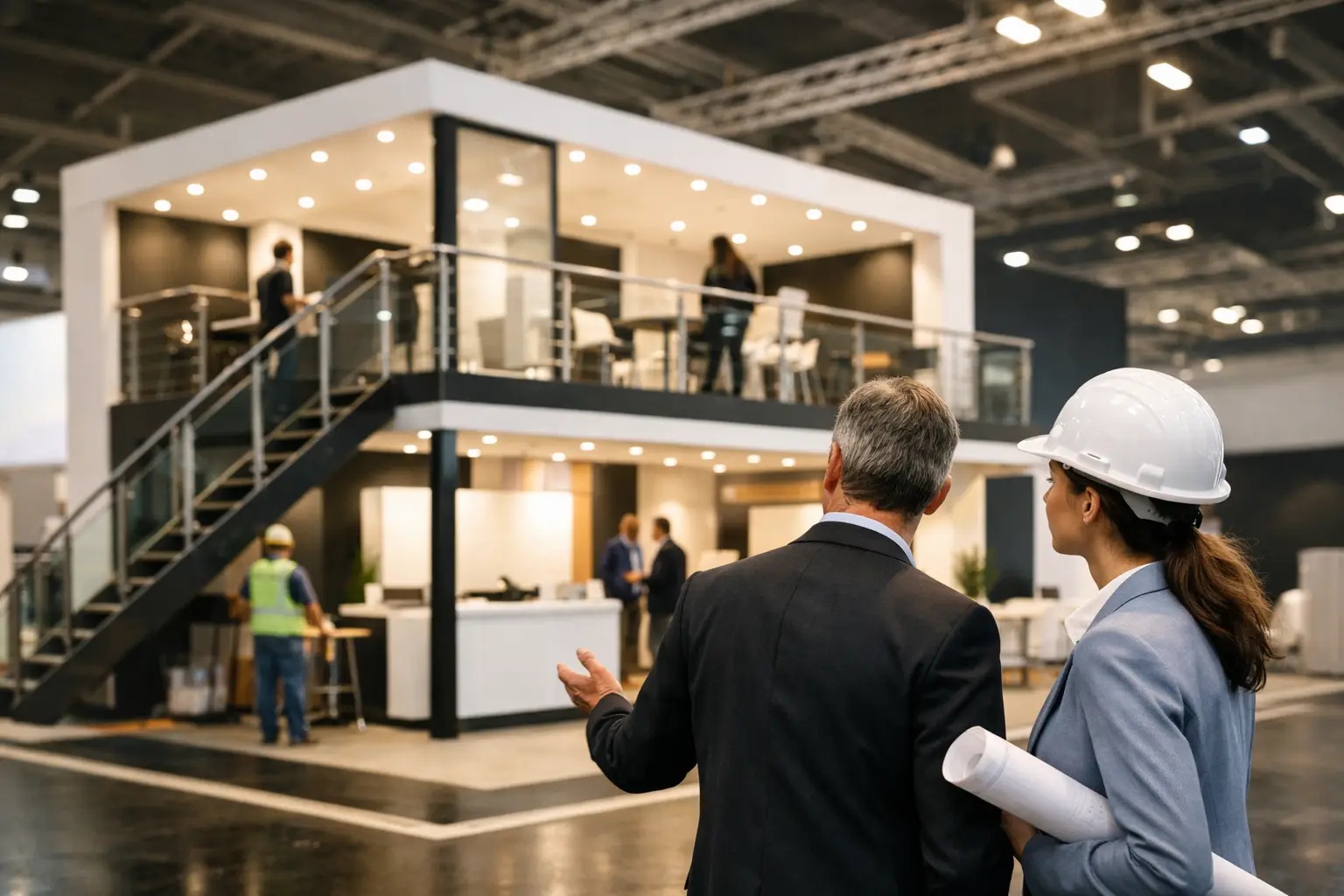

A crowded hall can make even a large booth feel small. That is usually the moment exhibitors start asking whether a double decker exhibition stand builder is the right partner for the next show. The appeal is obvious – more usable space, stronger visual presence, and a premium brand impression – but the real value comes down to how well that extra level is planned, approved, built, and delivered on site.
A double decker stand is not simply a bigger custom booth. It is a structure that has to perform in several ways at once. It must stop visitors in a busy aisle, support meetings and hospitality, comply with venue rules, and still feel aligned with the brand. For marketing teams, procurement managers, and business owners, that means the builder matters as much as the design itself.
What a double decker exhibition stand builder actually does
The best builders do far more than fabricate a two-story structure. They manage the full chain of decisions that determine whether the stand works commercially and operationally. That starts with concept planning and 3D design, but it quickly moves into engineering, material selection, visitor flow, storage planning, branding placement, MEP coordination where required, logistics, installation, and dismantling.
This is where many projects become more complex than expected. A visually impressive concept can still fail if upper deck access feels awkward, if sightlines are blocked, or if the structure creates bottlenecks during high traffic periods. A dependable builder will shape the layout around your show goals, not just around a dramatic rendering.
For some brands, the upper floor is best used for private meetings, VIP hospitality, or product demos away from the crowd. For others, it makes more sense as a visible lounge that reinforces status and scale. Neither choice is automatically better. It depends on your audience, your sales process, and the type of event you are exhibiting at.
When a double decker stand makes sense
Double decker stands tend to deliver the strongest return when floor space is expensive, visitor density is high, and the exhibitor needs to balance public engagement with private conversation. At major trade shows such as technology, energy, construction, food, or industrial exhibitions, that extra level can solve a practical problem while also increasing brand impact.
If your team regularly struggles with too many meetings happening in open view, a second floor can create privacy without shrinking the ground-level experience. If your brand needs to project scale in a hall full of established competitors, vertical presence can help you stand out from a distance. If your product range is broad, the split-level layout can separate storytelling zones more effectively than a single-floor stand.
That said, a double decker format is not always the right answer. Some shows have strict height and approval rules. Some product categories benefit more from open-access ground-level engagement than elevated meeting space. And if your booth objectives are simple lead capture and lightweight display, the extra build cost may not be justified. A good builder should tell you that honestly.
How to evaluate a double decker exhibition stand builder
Experience with standard custom booths is useful, but it is not enough on its own. A double decker exhibition stand builder needs proven capability in structural execution, venue compliance, and deadline control. You are not just buying creativity. You are buying reduced risk.
Start by looking at delivered work, not just concept visuals. Ask whether the builder has handled stands of similar scale and complexity before. A company that regularly executes double decker booths, country pavilions, and large custom environments is usually better prepared for the moving parts involved.
Then look at how the work is managed. In-house design and fabrication can make a significant difference because it reduces handoffs between agencies, vendors, and site teams. That often results in better quality control, faster adjustments, and clearer accountability when deadlines tighten. For exhibitors working across multiple markets or short build windows, this matters more than most realize.
Communication style is another strong indicator. If a builder can explain approvals, engineering, materials, production timelines, and budget options in plain language, that is a good sign. If everything stays vague until late in the process, problems usually appear on site when they are hardest to fix.
Design is only half the decision
A stand can look bold in a proposal and still underperform on the show floor. The strongest double decker projects balance design ambition with commercial purpose. The staircase should feel naturally placed, not inserted as an afterthought. The upper deck should support a clear use case. Branding should be visible from distance and from key approach angles. Storage, pantry, AV, and staff movement should be considered early, not squeezed in later.
This is especially important for brands exhibiting high-value products or handling senior-level meetings. If the second level is meant for business conversations, privacy, acoustics, hospitality, and comfort become part of the sales environment. A premium result comes from details being resolved before fabrication begins.
Materials also affect performance. Heavier or more complex finishes may create a stronger visual effect, but they can add cost, increase build time, or limit reuse. Lighter systems may offer more flexibility, especially for brands exhibiting across several countries. There is rarely one perfect specification. The right answer depends on the event calendar, budget priorities, and whether the stand needs to be adapted for future shows.
Budgeting for value, not just size
One of the most common mistakes in procurement is treating a double decker stand as a standard booth with an added upper floor. The budget is shaped by far more than square footage. Engineering, structural calculations, venue approvals, staircase design, load-bearing requirements, finishes, lighting, AV integration, and installation complexity all play a role.
That does not mean the format is automatically excessive. In some exhibitions, building upward can be more efficient than paying for significantly larger floor space. It can also help a brand get more out of a premium location by using the footprint more intelligently. The key is to assess value against objectives.
A practical builder will show where to invest and where to simplify. For example, a client may benefit more from a strong architectural frame, clean branding, and well-zoned meeting areas than from too many decorative elements. Another exhibitor may need the opposite if the stand is intended to make a market-entry statement. Budget decisions should support outcomes, not vanity.
Why execution control matters on show day
Trade shows are unforgiving. Delays, missing components, last-minute compliance checks, and on-site adjustments can affect the final result fast. With a double decker structure, those risks are amplified because the build involves more coordination and more points of approval.
This is where operational discipline becomes visible. A builder with a clear production schedule, experienced site team, and strong supervision process can protect both quality and timing. A builder relying heavily on fragmented outsourcing often has less control when pressure rises.
For exhibitors attending major international shows, this matters even more. Venue rules differ. Technical paperwork may be stricter. Build windows may be tighter. A partner with experience across markets can anticipate those variables earlier and avoid unnecessary surprises. That is one reason many global exhibitors prefer full-service partners that manage concept, fabrication, logistics, installation, and dismantling under one roof.
LemonTree Exhibitions, for example, has built this model around in-house control because it gives clients better consistency, faster turnaround, and tighter cost management across complex custom projects.
Questions worth asking before you appoint a builder
Before signing off on any proposal, ask how the builder approaches structural approvals, what parts of production are handled in-house, how design revisions are managed, and who leads on-site execution. Ask what contingency planning looks like if venue rules change or if timelines compress. Ask whether materials can be repurposed for future events if sustainability or cost efficiency is a priority.
The answers should feel specific, not rehearsed. A strong partner will be transparent about what is fixed, what is flexible, and where trade-offs exist. That honesty is often a better sign of professionalism than an overpromised pitch.
Choosing a double decker exhibition stand builder is really about choosing control. The right partner gives you more than extra floor area. They give you a structure that supports meetings, attracts the right attention, reflects brand quality, and gets delivered without drama. When that happens, the second level does more than elevate the booth – it elevates the entire exhibition strategy.