

A great booth can lose its edge fast when the build quality slips, deadlines move, or on-site execution turns messy. That is why choosing the right exhibition stand fabrication company is not a design decision alone. It is a commercial decision that affects brand perception, lead generation, team confidence, and the return you get from the event.
For marketing managers, procurement teams, and business owners, the challenge is rarely finding a vendor that can produce attractive renders. The real test is finding a partner that can turn those concepts into a stand that is structurally sound, brand-accurate, delivered on time, and managed without constant escalation. The difference between a smooth show and an expensive headache usually comes down to what happens behind the visuals.
What an exhibition stand fabrication company actually does
Many buyers use the terms design company, booth contractor, and fabricator interchangeably. In practice, the scope can vary a lot. Some companies focus mainly on design and outsource production. Others fabricate well but rely on external teams for logistics, installation, or graphics. That model can work, but it often introduces coordination gaps.
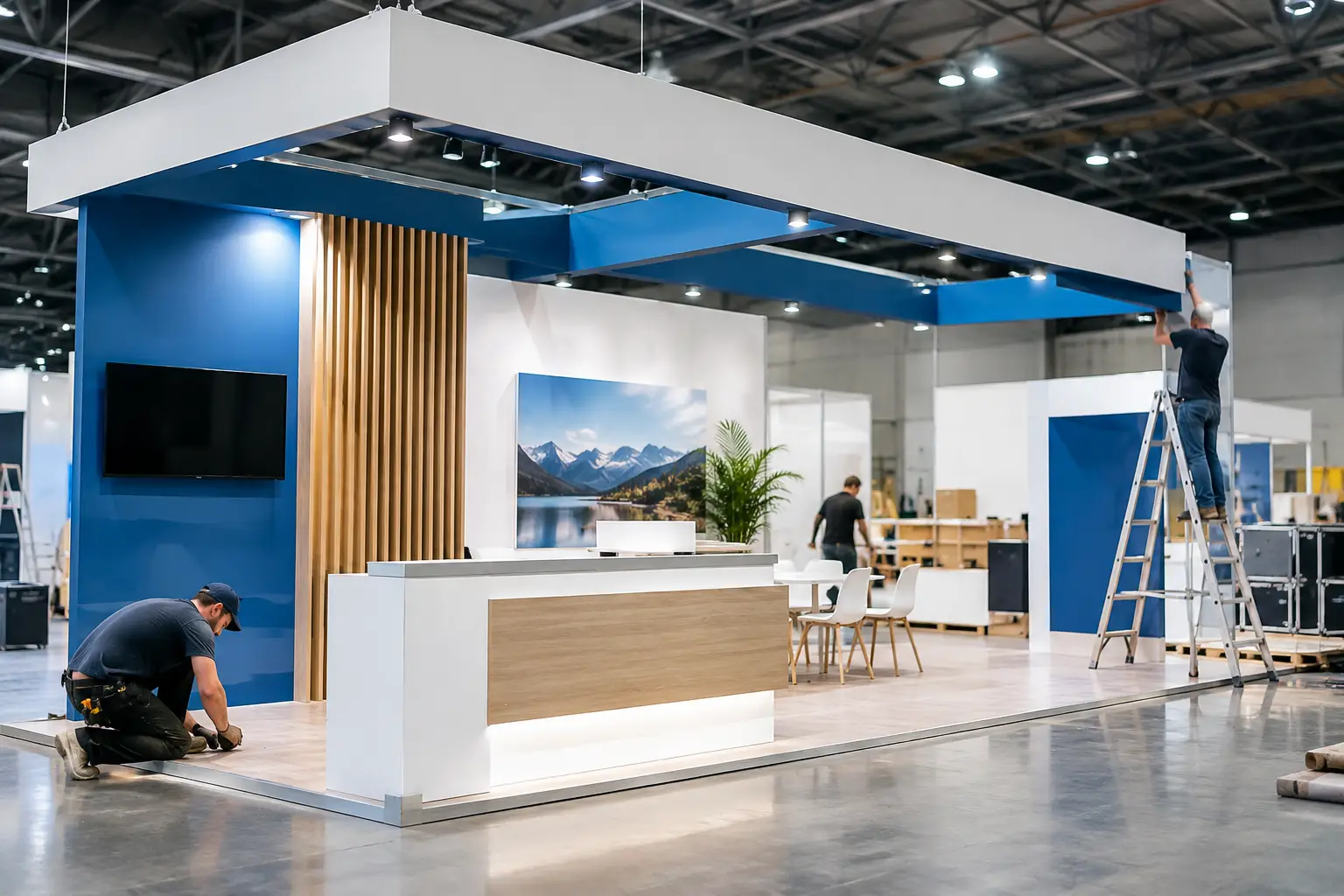
A true exhibition stand fabrication company handles the physical execution of the stand with precision and accountability. That includes production planning, material selection, structural fabrication, finishing, graphic application, electrical integration, packing, transport coordination, installation, and dismantling. If you are building a double decker stand, a country pavilion, or a large custom space above 100 square meters, that operational control matters even more.
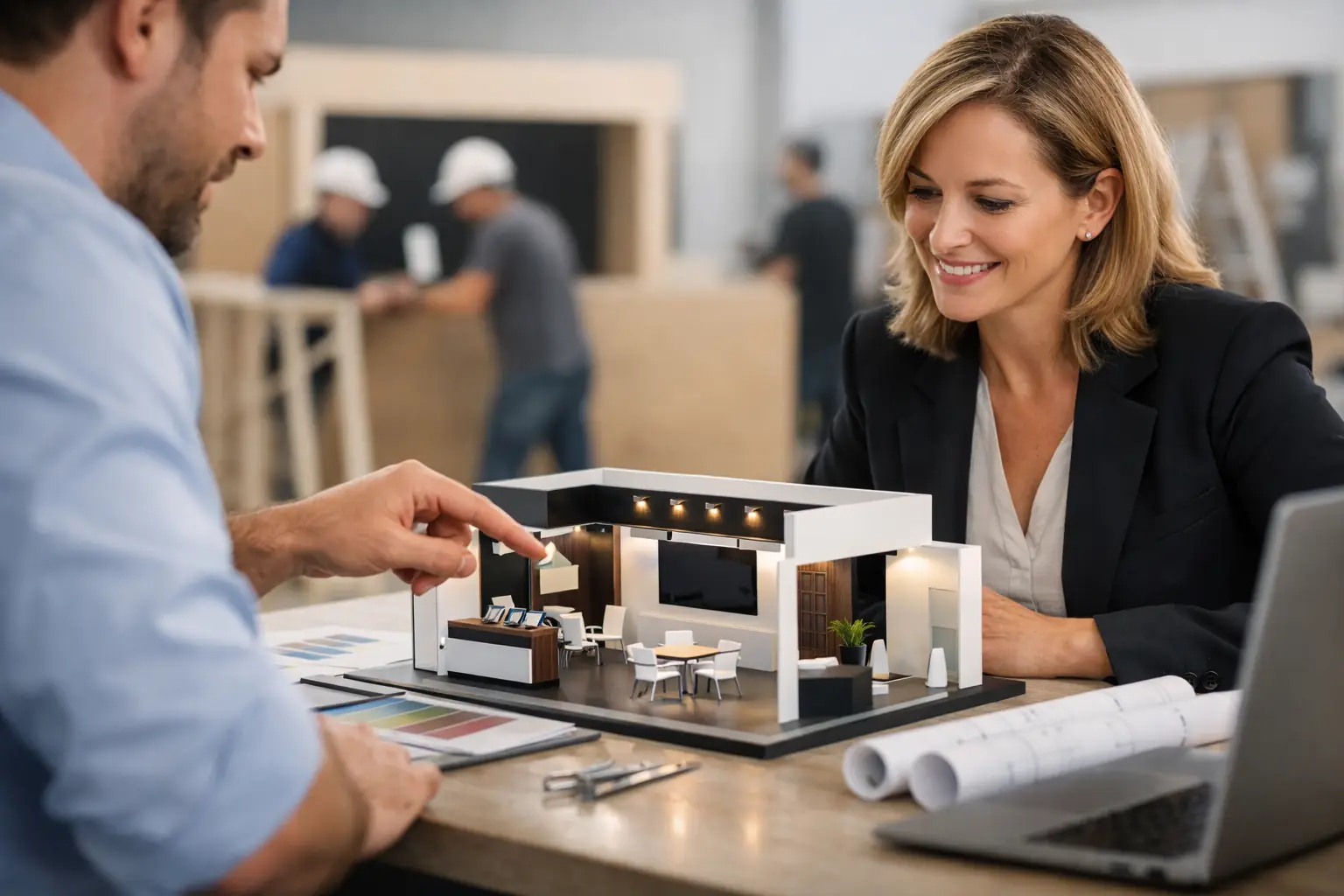
This is where in-house capability becomes a serious advantage. When the same company manages design interpretation, workshop production, quality checks, and on-site execution, there is less room for mismatch. Timelines tend to be tighter, quality is easier to monitor, and changes are easier to absorb without creating a chain reaction across multiple vendors.
Why the lowest quote is rarely the smartest choice
Budget pressure is real, especially for companies managing multiple trade shows across regions. But exhibition stand pricing is one of those areas where a cheap quote can become expensive quickly.
A lower number may reflect lighter materials, rushed finishing, outsourced labor, limited project management, or exclusions that only appear later. Graphics, lighting, rigging coordination, venue paperwork, dismantling, and storage are common areas where costs get pushed outside the initial estimate. You may save upfront and still end up paying more in rework, delays, or last-minute approvals.
The better question is not, Who is cheapest? It is, Who is most likely to deliver what we approved, within budget, without drama? That requires transparency. A dependable partner will explain what is included, where variables may affect cost, and how they manage value engineering without weakening the stand.
How to evaluate an exhibition stand fabrication company
The strongest companies are not just creative. They are disciplined. When you review options, look beyond portfolios and ask how the work actually gets delivered.
Start with fabrication depth, not just design polish
Rendered concepts can look impressive, but fabrication is where ideas either hold up or fall apart. Ask whether the company has its own workshop, who supervises production, and how they handle finishing quality. A stand may look premium in a proposal, but if edges, paint, laminate, lighting, and graphic alignment are inconsistent, visitors notice.
This is especially important for brands exhibiting in sectors like technology, pharma, energy, automotive, or government. In these environments, buyers often expect a polished physical presence that reflects operational credibility. Poor fabrication sends the opposite signal.
Look for project management that reduces your internal workload
A booth build should not become a full-time side job for your marketing team. Good project management means clear timelines, fast revisions, proactive issue handling, and one accountable point of contact.
Ask how approvals are managed, how often status updates are shared, and what happens if venue requirements change late in the process. The answer will tell you whether the company is reactive or genuinely prepared.
Review experience by event type and scale
Not every builder is equipped for every format. A company that handles small shell-scheme enhancements may not be the right fit for a 12-meter custom build, a multi-brand pavilion, or a two-story structure. Likewise, a team that does well with large custom stands may not always be cost-efficient for smaller exhibits.
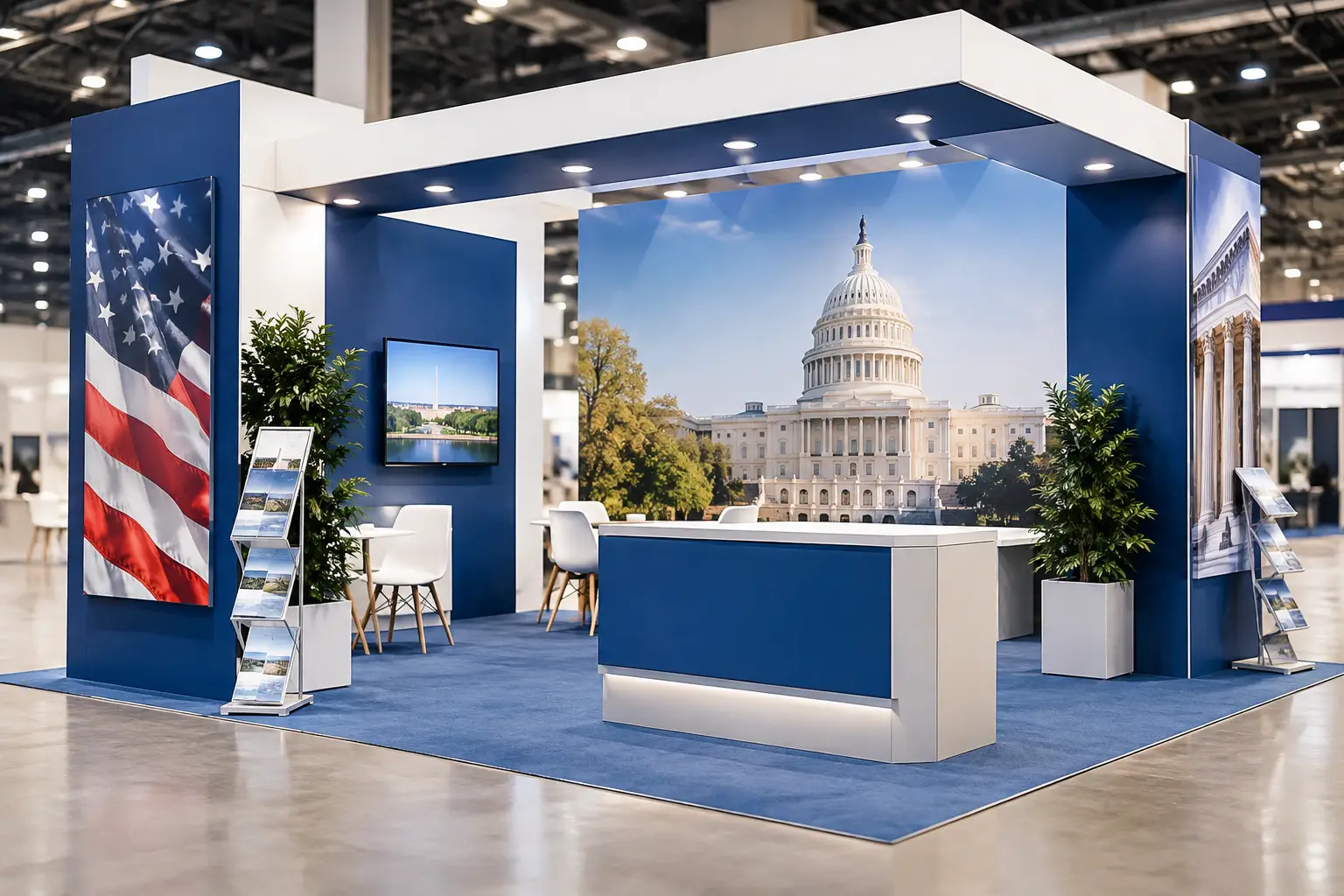
Look for relevant experience. If you are exhibiting at major trade shows such as GITEX, ADIPEC, Gulfood, Big 5, or international events in markets like Germany or the US, it helps to work with a team that understands the pace, compliance expectations, and site realities of those venues.
Check how much is handled in-house
Outsourcing is not always a problem, but too many handoffs create risk. Design outsourced here, graphics produced there, installation managed by freelancers somewhere else – that model can make accountability blurry.
An in-house design studio and fabrication workshop usually mean more control over quality, lead times, and cost. It also gives clients more confidence when urgent modifications are needed close to show dates.
Questions worth asking before you sign
A capable exhibition stand fabrication company should be comfortable answering direct questions. Ask how they approach budgets, deadlines, and contingency planning. Ask who owns the process from design approval to final handover. Ask how they handle venue regulations, electrical requirements, load-in schedules, and dismantling.
It is also worth asking how they support brand consistency across multiple shows. For companies exhibiting in different countries, this can be a major operational issue. You may need one brand language adapted across booth sizes, venue rules, and local formats without losing impact.
Sustainability is another area where the right questions matter. If your company has ESG goals, ask whether the stand can be designed for reuse, whether materials are repurposed, and how waste is managed after the event. Sustainable exhibition practices are not only about materials. They also involve smarter planning and longer asset life.
Red flags buyers often miss
Some warning signs are obvious, like slow responses or vague quotes. Others are easier to overlook.
One is overpromising on timelines without asking enough technical questions. A serious builder will want to understand your booth size, venue rules, services required, branding elements, visitor flow goals, and any special features such as LED walls, demo zones, storage, hospitality counters, or meeting rooms. If the proposal comes back too fast and too generic, be cautious.
Another red flag is a portfolio that shows variety in visuals but no evidence of delivery scale. You want proof of actual builds, not just concepts. Installation photos, repeat clients, and evidence of work across industries are often more useful than polished mockups.
There is also the issue of support during show week. Some vendors perform well until production starts, then become difficult to reach once on-site pressure builds. That is when reliability matters most. The companies worth keeping are the ones that stay responsive when timing is tight and decisions are live.
What strong execution looks like in practice
When the right partner is in place, the process feels controlled. Design aligns with brand goals. Fabrication reflects the approved concept. Materials are fit for purpose. Graphics are sharp. Lighting supports the product story. Installation runs to schedule. Snagging gets resolved quickly. Your internal team can focus on the event instead of chasing updates.
That operational calm is not accidental. It comes from systems, workshop capability, experienced supervision, and teams that understand both creative ambition and venue reality. For exhibitors running across markets or handling high-stakes launches, that balance is what turns a stand from a cost line into a business asset.
LemonTree Exhibitions has built its reputation on exactly that balance – bold creative thinking backed by in-house production, disciplined execution, and reliable delivery across international trade show markets.
The best choice is the company that protects your outcome
A stand is not successful because it looks good in a rendering or because the quote came in under budget. It is successful when it attracts the right attention, supports your team on the floor, reflects your brand properly, and gets delivered without putting unnecessary pressure on your people.
So when you shortlist your next exhibition stand fabrication company, focus on the full picture. Look for design capability, yes, but also workshop depth, project ownership, cost clarity, and proof of delivery under real event conditions. The best partner is the one that makes your brand look stronger and your job easier at the same time.
That is usually the company you remember long after the show floor is gone.