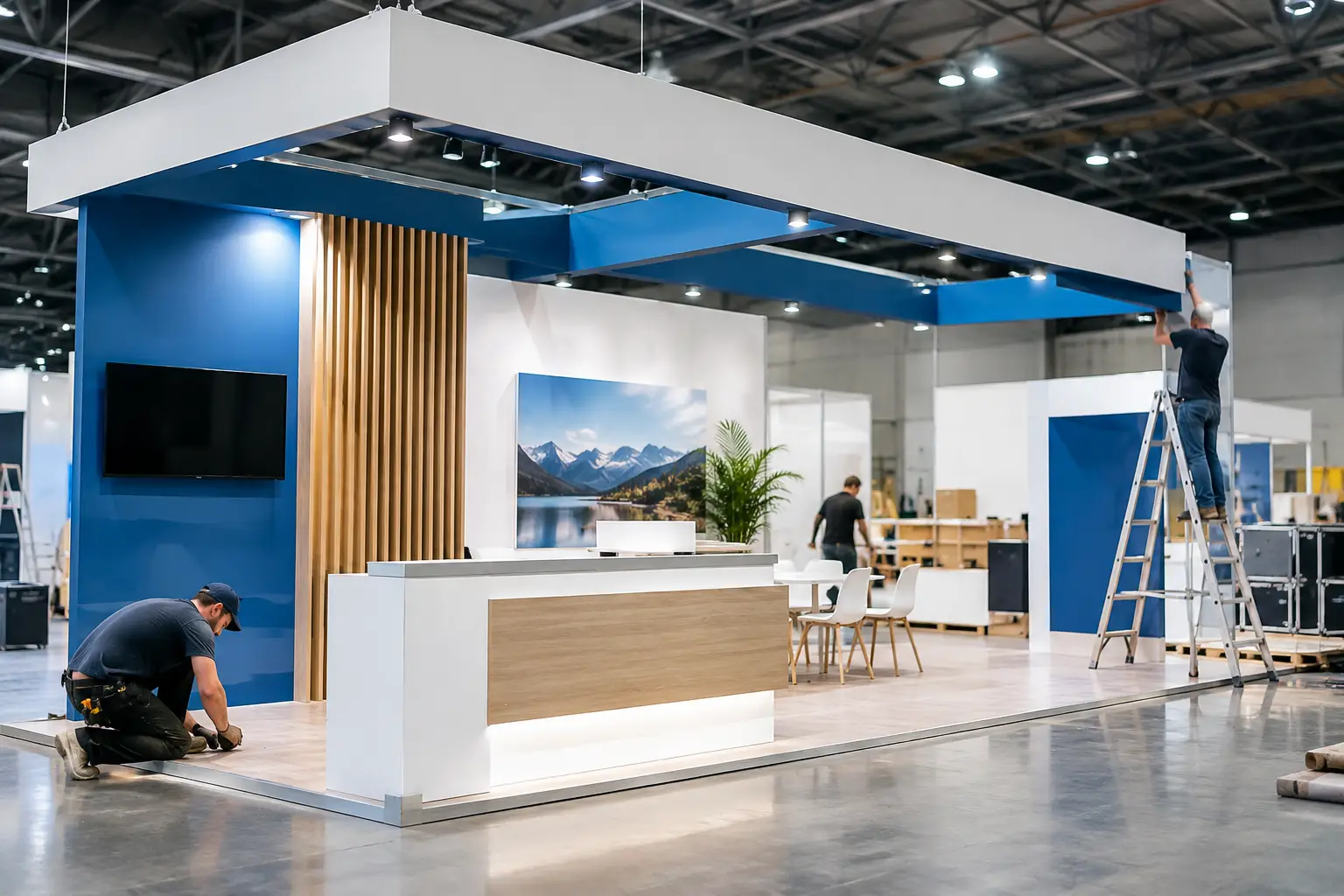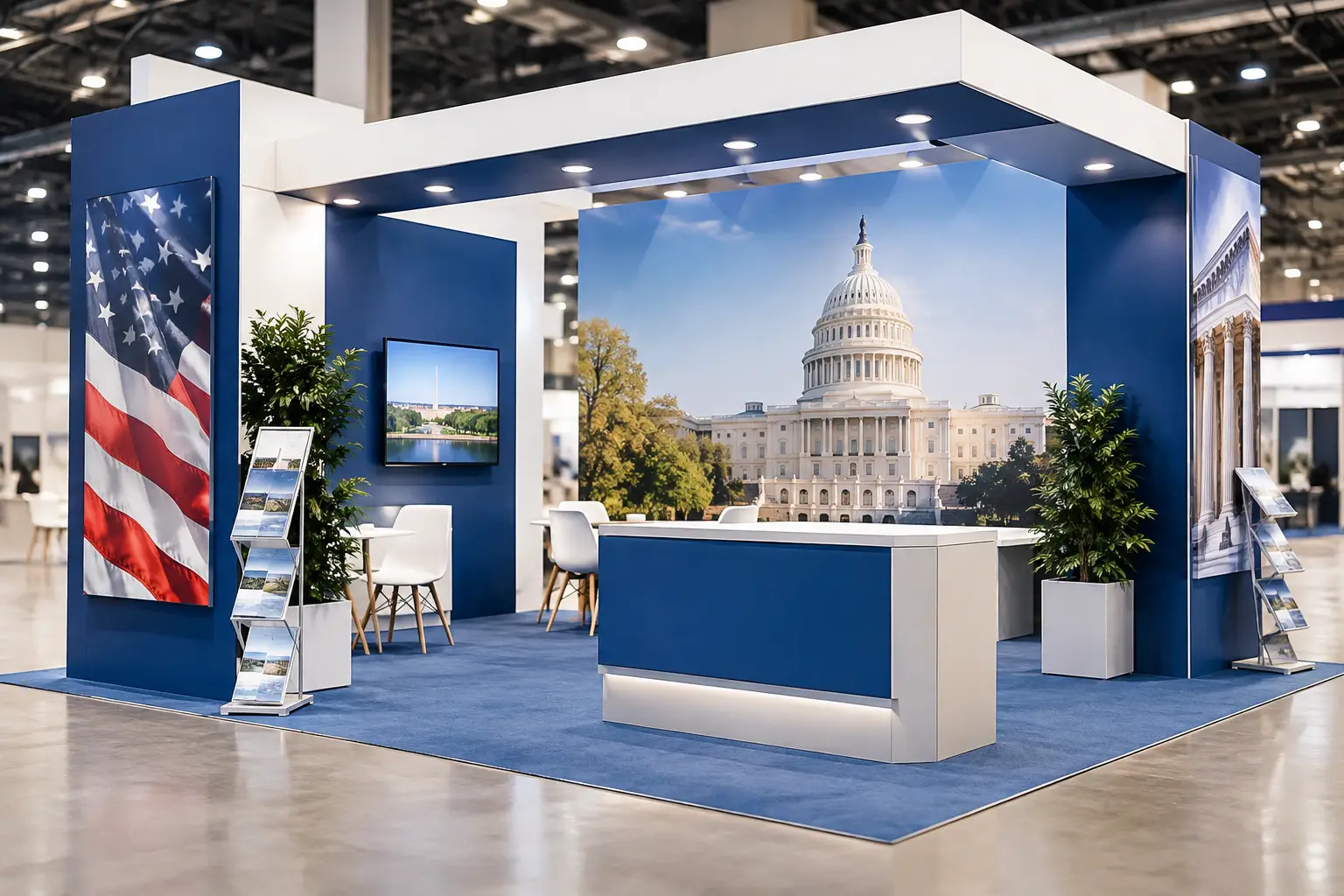

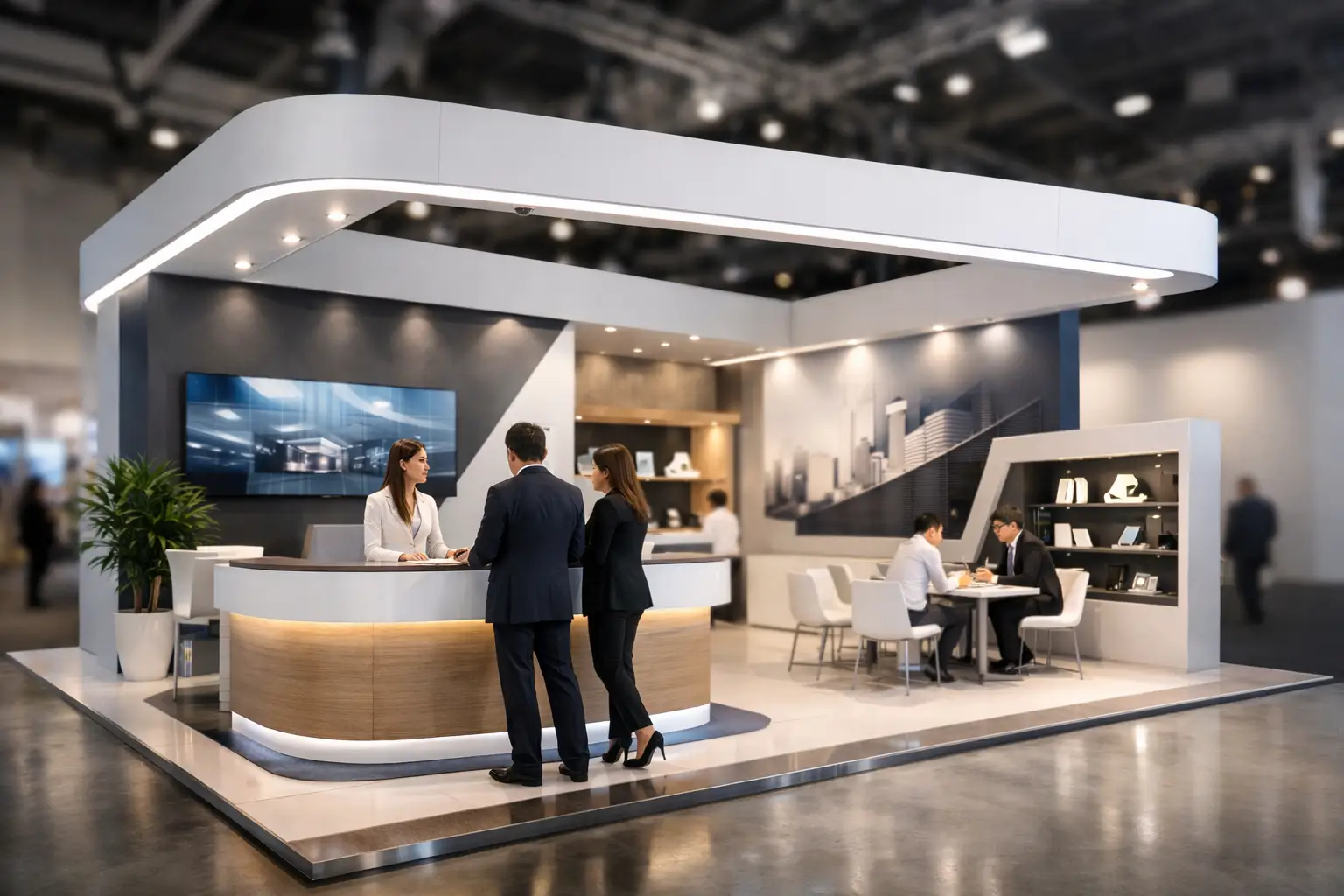

A booth rarely fails because the branding looked weak on a laptop screen. It fails when the real build feels cramped, the visitor flow breaks down, the product display gets lost, or the structure that looked impressive in theory becomes impractical on the show floor. That is exactly why 3d exhibition booth design services matter. They turn early ideas into something you can test, question, improve, and approve before fabrication starts.
For marketing teams, procurement leads, and business owners, that early visibility changes the whole project. You are not just buying a design. You are reducing guesswork around layout, sightlines, material planning, messaging hierarchy, and build feasibility. When the booth has to perform at a major trade show, that level of control is not a nice extra. It is part of getting the result right.
What 3D exhibition booth design services actually do
At the simplest level, 3D design lets you see your exhibition space before it is built. But strong 3d exhibition booth design services go much further than producing an attractive render. The real value is in how the design is developed around business goals, visitor behavior, and practical execution.
A good 3D concept should answer several questions early. Will the booth stop people in a busy hall? Can visitors immediately understand what your company offers? Is there enough room for product display, meetings, demos, and storage without the stand feeling crowded? Can the design be fabricated on time and within budget? If those questions are still unresolved after the concept stage, the visuals are not doing their job.
That is why experienced exhibition partners treat 3D design as a planning tool, not just a sales visual. The rendering is important, but the thinking behind it matters more.
Why 3D design matters before fabrication begins
Trade show execution gets expensive when decisions are made too late. A misplaced LED wall, a reception desk that blocks movement, or a meeting area with poor privacy can all be corrected on paper far more easily than on the production floor. The purpose of 3D design is to find those issues when changes are still fast and affordable.
This is especially important for brands exhibiting in premium environments such as technology expos, industrial shows, food exhibitions, energy events, or government-led pavilions. In those settings, every square foot has to work hard. The booth needs presence, but it also needs operational logic. Visitors should know where to enter, what to look at first, and where meaningful conversations happen.
3D visualization also helps internal alignment. Marketing may want stronger branding, sales may need more meeting space, and procurement may be watching cost closely. A clear 3D concept gives all stakeholders something concrete to review. That tends to shorten approval cycles and reduce last-minute redesigns.
What strong booth design looks like in practice
A high-performing exhibition booth is usually balancing three things at once: brand impact, visitor experience, and build discipline. If one of those is missing, the stand may look impressive but still underperform.
Brand impact is about visibility and memory. That includes structure height, lighting, graphic placement, screen integration, and how the booth stands out from neighboring exhibitors. Visitor experience is about movement and usability. Can people step in comfortably, find product zones quickly, and stay long enough to engage? Build discipline is where experienced delivery teams make a difference. A concept has to translate cleanly into fabrication, transport, installation, and dismantling.
This is where a full-service partner has an advantage. When design, production, and site execution are managed together, the 3D concept is more grounded in reality. There is less risk of approving something that later needs to be diluted because of cost, material, or venue constraints.
How 3d exhibition booth design services support better ROI
Most exhibitors do not measure ROI by aesthetics alone. They care about leads, meetings, product attention, partner visibility, media moments, and overall brand perception. Design contributes to all of that, but only when it is built around commercial intent.
For example, a product-led manufacturer may need machinery placement to become the focal point, with enough clearance for safe viewing and conversation. A technology brand may prioritize demo counters, integrated screens, and open engagement areas. A government pavilion may need to balance national branding with fair visibility for multiple participating companies. These are different objectives, and the booth design should reflect that from the first concept stage.
Good 3D planning supports ROI by making those priorities visible early. You can test whether the booth gives enough room to your highest-value activities. You can decide if double decker space is justified. You can compare a bold custom concept against a more efficient modular direction. The right answer depends on goals, budget, and event scale.
What to look for in a 3D design partner
Not all exhibition design providers approach 3D work with the same level of rigor. Some are strong at visuals but weak in delivery. Others can build efficiently but offer generic concepts that do little for brand impact. The right partner can do both.
Look first at whether the company understands your event environment. Designing for a major international trade show is different from designing for a smaller regional expo. Hall regulations, build timelines, visitor expectations, and competitive pressure all vary. A partner with multi-market experience will usually spot issues earlier and recommend smarter space planning.
Next, assess whether the design process is consultative. You want a team that asks about objectives, products, target visitors, staffing, lead generation plans, and required utilities – not just booth size and logo files. That signals they are designing for outcomes, not simply producing a graphic interpretation.
It also helps to work with a company that fabricates in-house. That tends to improve cost control, speed, and quality consistency. When the design studio and production team are closely aligned, materials, finishes, structural details, and installation planning are handled with fewer surprises. For exhibitors working across multiple countries or under tight event schedules, that operational control matters.
Common decisions that 3D design helps solve
Many of the most important exhibition decisions are difficult to judge from a floor plan alone. 3D design makes them easier to evaluate.
One is openness versus privacy. An open booth may attract more walk-in traffic, but it can reduce space for serious conversations. Another is screen usage. Large LED elements can add energy and visibility, but if they dominate the booth without supporting the message, they become expensive decoration. Storage is another common blind spot. Teams often underestimate the need for hidden functional space until the event begins.
There is also the question of scale. Bigger is not automatically better. A 100-plus-square-foot stand with weak zoning can feel less effective than a smaller, sharply planned booth. Likewise, premium finishes and complex architecture can create impact, but only if they support the brand story and fit the event audience.
These are exactly the kinds of trade-offs a well-developed 3D concept should bring into the open.
The advantage of end-to-end execution
The strongest exhibition projects are usually the ones where creative ambition and operational control stay connected from start to finish. A compelling 3D design is valuable, but its real strength shows when the final booth on the show floor looks and functions as promised.
That is why many experienced exhibitors prefer working with a single partner that handles concept design, fabrication, logistics, installation, and dismantling. It simplifies communication and creates accountability. If adjustments are needed, there is no confusion between designer, contractor, and installer. The project moves faster and with fewer gaps.
For brands exhibiting across markets such as Dubai, Saudi Arabia, India, Germany, or U.S. venues like Las Vegas and Chicago, this becomes even more relevant. Venue rules differ, timelines tighten, and the cost of delays rises quickly. A design that has already been developed with execution in mind is far more likely to hold its quality under real event conditions.
LemonTree Exhibitions works in that model – combining 3D concept development with in-house production, logistics, and on-site delivery – which helps clients move from idea to show-ready booth with clearer control over quality, timing, and budget.
A smart booth starts before the build
The best exhibition stands do not happen because someone approved an attractive render and hoped for the best. They happen because the design process solved problems early, aligned stakeholders, and gave the build team a clear path to execute. That is the practical value of 3D design.
If your next event matters to pipeline, brand positioning, or market visibility, treat the concept stage as a working stage, not a formality. The earlier you can see the booth as visitors will experience it, the better your decisions tend to be – and the stronger your presence will feel when the doors open.