

A trade show booth Saudi decision-makers remember is rarely the one with the most decoration. It is the booth that makes a clear commercial case in seconds, welcomes the right conversations, and performs exactly as promised from opening morning through dismantling. For brands exhibiting in Riyadh or Jeddah, the challenge is to combine visual ambition with disciplined local execution.
Saudi Arabia’s exhibition calendar is expanding quickly across construction, energy, technology, healthcare, real estate, retail, and government-led development. That creates opportunity, but it also raises the standard. Visitors are exposed to major international brands, polished country pavilions, and increasingly sophisticated brand environments. A generic backwall and brochure counter can make even a strong product look underprepared.
Start With the Business Outcome, Not the Stand Style
The best booth brief begins with what your team needs the exhibition to achieve. Lead generation, distributor meetings, product demonstrations, investor conversations, recruitment, and brand visibility each demand a different floor plan. A booth designed for high-volume scanning and short demonstrations should not be planned like a private meeting environment for senior stakeholders.
Before approving a concept, agree on the audience, the one message visitors should retain, and the action you want them to take. That clarity guides every decision, from the position of the reception desk to the scale of the LED wall.
For example, a machinery supplier may need a protected product zone, a working demonstration area, and tables for technical discussions. A technology brand may gain more value from an immersive screen experience, interactive demos, and a meeting lounge that lets sales teams qualify opportunities without leaving the stand. The physical design should support the sales process, not compete with it.
Design for Visibility and Conversation
Exhibition halls are busy, visually loud environments. Your booth has only a few moments to earn attention, particularly on a crowded aisle. Strong visibility usually comes from a disciplined combination of height, lighting, architecture, and messaging rather than from adding more graphics.
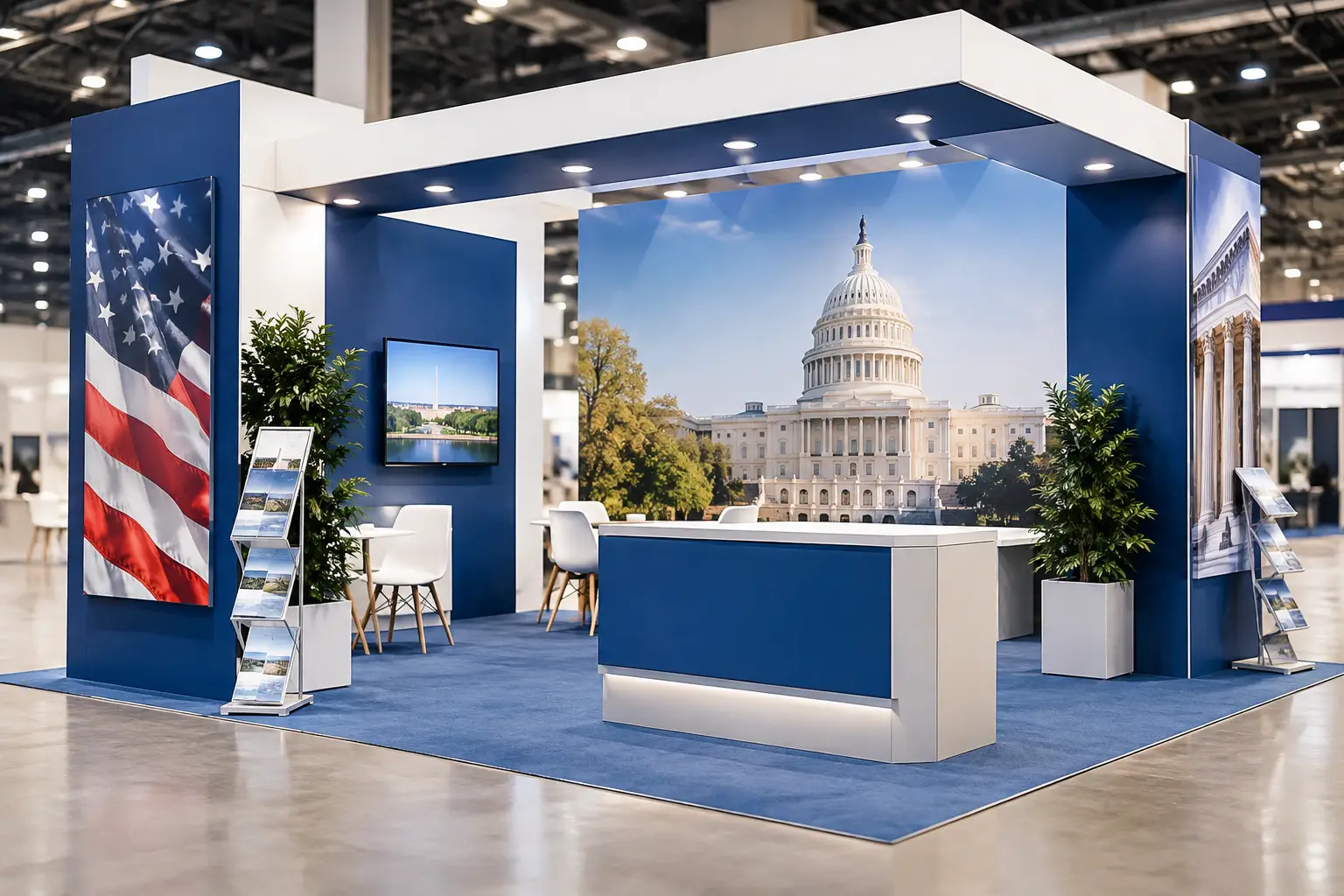
A bold overhead feature, clean illuminated branding, or a well-composed LED video wall can create a visible landmark from across the hall. But visibility without clarity is wasted spend. Visitors should be able to understand who you are and why they should stop before they reach the edge of the space.
Give each zone a job
A successful booth creates a natural progression: attract, engage, explain, and convert. The open frontage should invite visitors in. Product displays and demonstrations should be easy to access. Semi-private tables can support serious conversations, while enclosed meeting rooms are useful when contracts, technical specifications, or confidential discussions require discretion.
This is where scale matters. A compact 18-square-meter space can still feel premium when the circulation is open and the message is focused. At 100 square meters or more, the risk shifts: large stands can become fragmented if there is no clear central idea connecting hospitality, displays, meeting zones, and brand storytelling.
Double-decker stands can add presence and provide valuable private meeting capacity, but they are not automatically the right choice. They require appropriate venue approval, higher structural coordination, and a budget that accounts for more than the upper floor. Use a second level when privacy, hospitality, and elevated brand impact have a defined commercial purpose.
Build cultural relevance into the visitor experience
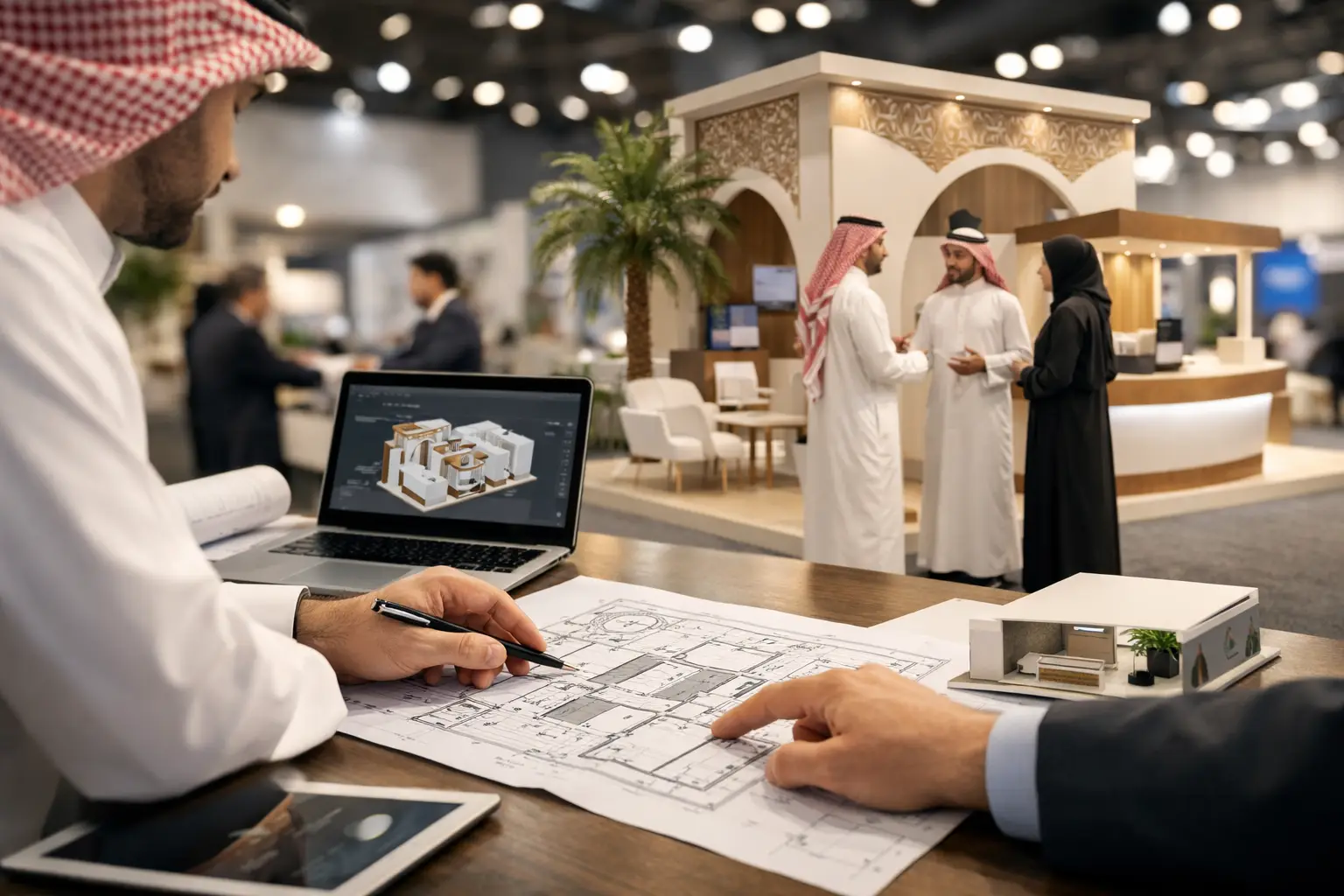
Saudi exhibitions bring together local business leaders, regional buyers, international exhibitors, and government stakeholders. A visitor experience that feels considered will outperform a design that could be placed unchanged in any market.
For many brands, bilingual Arabic and English communication is a practical starting point. Arabic copy should be professionally developed and designed with the same care as the English content, not inserted as an afterthought. Hospitality planning also matters. Comfortable seating, well-managed meeting spaces, and professional staff create the conditions for longer, more productive conversations.
The exact approach depends on the sector and event audience. A consumer-focused activation may call for higher energy and hands-on engagement, while an industrial or government-facing event may benefit from a more composed environment that demonstrates capability, credibility, and attention to detail.
Plan the Trade Show Booth Saudi Execution Early
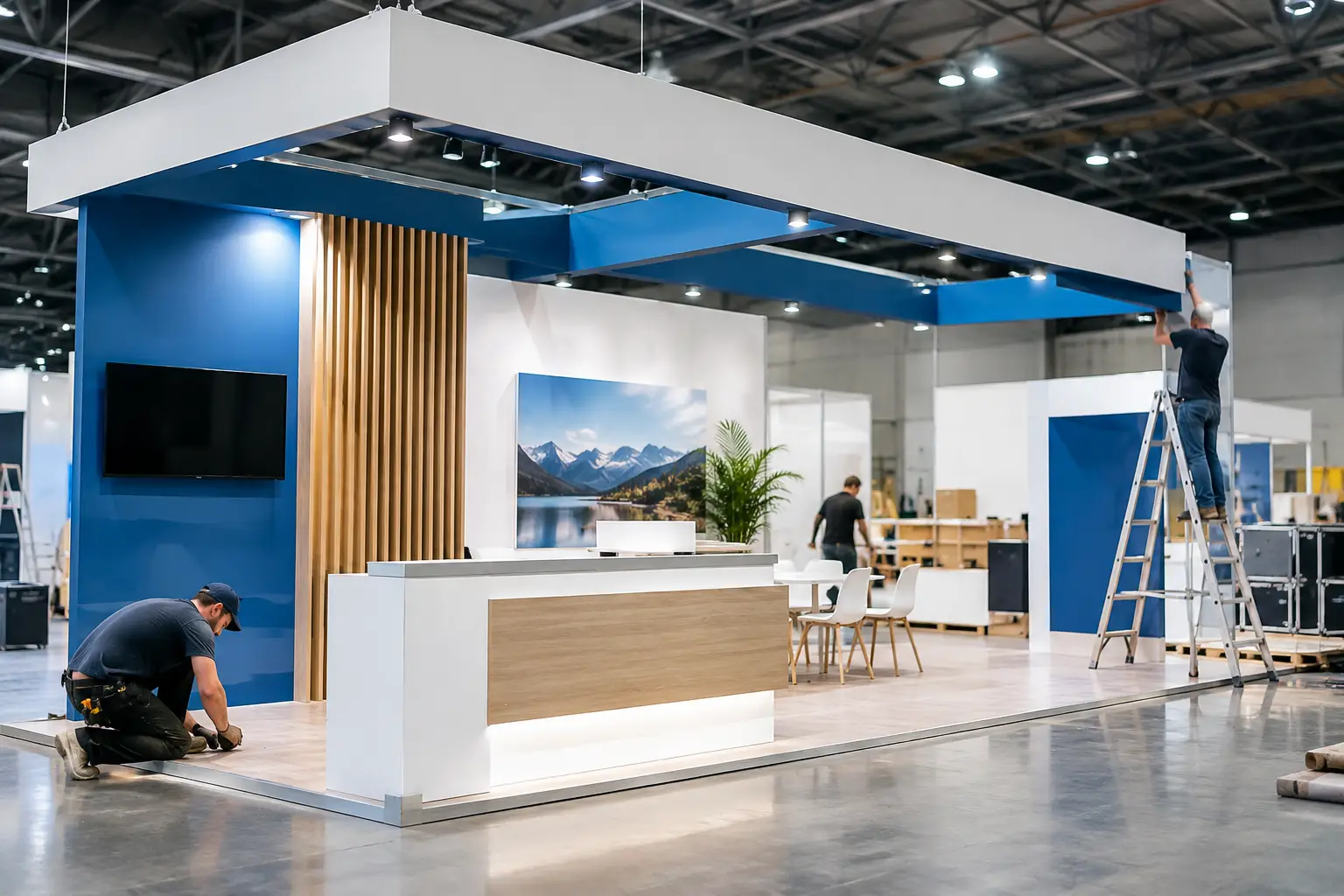
The most impressive render is only useful if it can be fabricated, transported, installed, and approved on time. This is why booth planning should begin well before the exhibition date, especially for custom structures, large LED installations, double-decker stands, and pavilion projects.
Venue technical manuals, organizer requirements, hall access windows, electrical orders, rigging permissions, fire and safety rules, and stand-height restrictions can all affect the design. A late adjustment to any one of these can increase cost or reduce the impact of the finished stand.
A capable exhibition partner handles these details as part of the project, not as a separate problem handed back to the client. The design team should understand buildability. The production team should receive clear drawings and material specifications. Logistics and site supervisors should work from the same schedule and installation plan.
This end-to-end control is particularly valuable when your internal marketing team is coordinating product launches, executive travel, customer invitations, and campaign activity at the same time. You need timely decisions and clear reporting, not uncertainty around who owns the next step.
Budget for the Elements Visitors Actually Notice
A custom booth budget is influenced by size, design complexity, material finishes, AV requirements, furniture, graphics, structural engineering, labor, and show services. The right budget is not necessarily the highest one. It is the one that places investment where it changes the visitor experience and protects execution quality.
Do not spend heavily on intricate finishes in areas visitors will barely see while underfunding lighting, content, staffing, or the meeting environment. Similarly, a large LED wall should have a content plan before it is specified. Static slides on an oversized screen rarely justify the cost. Motion graphics, product stories, customer proof, and scheduled demonstrations make the technology earn its place.
For repeat exhibitors, modular or reusable elements can reduce waste and improve long-term value. Reusable does not have to mean repetitive. A strong structural system can be refreshed with new graphics, media, product displays, and layout adjustments for different events. It is a practical approach for teams building a consistent presence across Saudi Arabia, the UAE, and other key markets.
Choose a Partner That Can Control the Details
A booth supplier is not simply a fabricator. They become an extension of your event team during a high-pressure period. Evaluate their capability beyond the concept visuals. Ask how design changes are managed, where fabrication takes place, who handles on-site installation, how quality is checked before delivery, and what support is available if something changes at the venue.
Experience in the relevant event format matters as well. A country pavilion requires coordinated exhibitor branding, visitor flow, shared service areas, and consistent finishes across multiple spaces. A premium corporate stand may need executive hospitality and exact product presentation. A startup may need the greatest possible impact from a compact footprint and a tightly controlled budget.
LemonTree Exhibitions approaches these projects through in-house design, fabrication, logistics coordination, installation, and dismantling, giving clients one accountable team from first concept to final handover. That structure helps protect quality, timing, and budget while leaving brand teams free to focus on the conversations that happen on the show floor.
Make the Booth Work After the Doors Open
A finished stand is the beginning of the event, not the finish line. Brief your staff on the visitor journey, qualifying questions, lead capture method, meeting schedule, product demo timing, and escalation path for high-value prospects. The strongest environment will underperform if the team is unclear on how to use it.
Measure more than footfall. Track qualified conversations, scheduled meetings, demonstration attendance, lead quality, follow-up conversion, and feedback from the sales team. Those results will show whether next year’s investment should go toward a larger footprint, stronger content, more meeting capacity, or a more focused visitor experience.
The next Saudi exhibition is a chance to make a visible commercial statement. Give the project enough time, build around a specific business goal, and insist on the executional control that turns a strong idea into a stand your team can confidently invite customers into.