


A stand designer cannot design for a business objective they have not been given. The difference between a visually attractive booth and a hard-working exhibition environment often comes down to the quality of the brief. Knowing how to brief stand designers means giving them enough commercial, brand, and operational context to make smart decisions before fabrication begins.
For marketing teams, this is not extra paperwork. A well-prepared brief reduces redesign rounds, protects the budget, speeds up approvals, and gives every stakeholder a clearer picture of what success looks like on the show floor.
Start With the Outcome, Not the Structure
It is tempting to begin with requests such as “we need a 30-by-30-foot booth” or “we want a double-decker stand.” Those facts matter, but they do not tell a designer what the space must achieve.
Start with the exhibition objective. Are you launching a product, generating qualified leads, hosting private meetings, recruiting distributors, strengthening relationships with existing customers, or building brand visibility in a crowded hall? One stand can support several goals, but they need to be prioritized. A product launch may require a commanding demonstration zone and LED content. A relationship-led event may need comfortable hospitality and enclosed meeting rooms. A lead-generation brief should make registration, product discovery, and staff movement easy.
Be specific about what success will be measured against. That could be 150 sales conversations, 40 booked demos, 20 distributor meetings, a target number of scans, or a stronger presence than key competitors. These measures help designers allocate space to the areas that can produce a business result, rather than simply filling the footprint with furniture and graphics.
Give Designers a Clear Picture of Your Audience
A stand should be built around the people you want to attract, not a generic idea of trade show visitors. Explain who will attend and what they need from the interaction.
For example, a pharma company may need a calm, credible setting where technical conversations can happen without distraction. An industrial manufacturer may need room to display large equipment, explain complex processes, and host engineering teams. A technology brand may need multiple short demo points that prevent queues. A government pavilion has a different responsibility again: it must give participating companies fair visibility while presenting one coherent national identity.
Include the likely seniority and role of visitors. Procurement managers, distributors, technicians, investors, government delegates, and end users do not respond to the same message or layout. Also share what your team wants visitors to do first. Should they see a flagship product, watch a presentation, speak with an expert, scan a code, or sit down for a meeting? That desired first action should shape the visitor journey from the aisle inward.
Share the Brand Direction Without Limiting Good Ideas
Designers need access to the current brand toolkit: logo files, approved colors, typefaces, image libraries, campaign visuals, tone-of-voice guidance, and any mandatory messaging. If your company has brand rules set by a global headquarters, provide them early rather than after a concept is approved.
However, a useful brief does more than attach a brand guideline document. Explain how the brand should feel in this particular setting. You may want a bold, premium presence that signals category leadership, or a warm, accessible environment that invites longer conversations. Perhaps the goal is to look technically precise, sustainable, innovative, or established. These qualities give the design team a creative direction while leaving room for practical solutions.
Competitive references can be valuable when used carefully. Show examples of stands you admire and explain why: perhaps the openness, clear product storytelling, hospitality area, lighting, or confident use of scale. Also state what you want to avoid. Asking for a direct copy of another booth rarely serves the brand, but identifying preferences helps the team interpret your expectations accurately.
How to Brief Stand Designers on Space and Site Conditions
The venue manual and floor plan are among the most important documents in the brief. Provide the stand number, dimensions, open sides, ceiling height, hall entrance routes, technical service points, rigging restrictions, and organizer deadlines. A concept that looks impressive in a rendering must still comply with venue regulations and be practical to install safely.
Tell the designer what is confirmed and what is still under discussion. If the footprint may change, say so. If the stand is positioned near a café, a main entrance, a competitor, or a major aisle, include that information. These details affect sightlines, noise levels, meeting-room placement, signage height, and how the stand should draw people in.
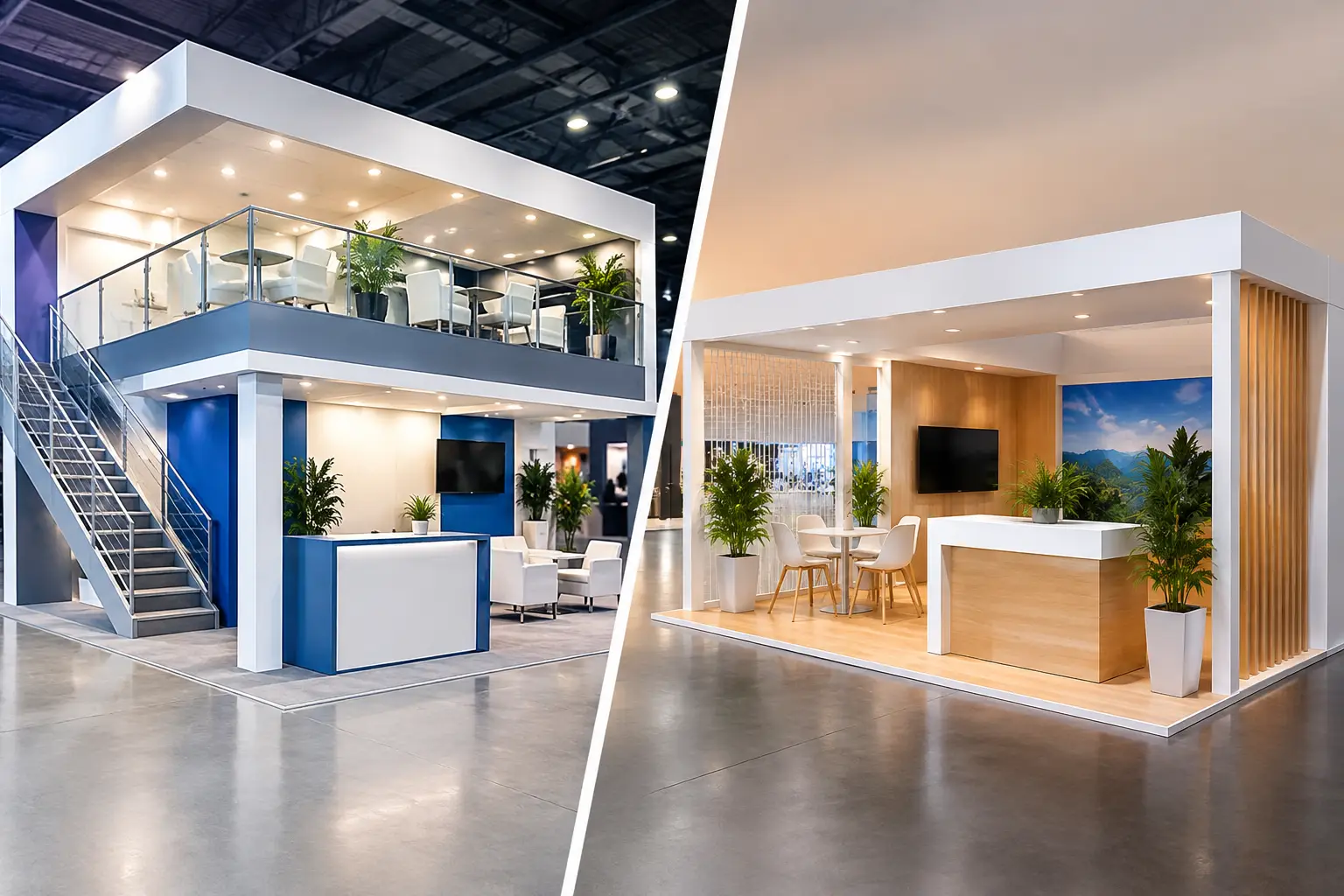
It is also useful to discuss the expected traffic pattern. A corner booth with two open sides calls for a different layout than a peninsula, island, or in-line space. For large stands and double-decker structures, crowd flow, access points, and visibility from a distance become even more critical. The designer needs to plan for both the first impression from the aisle and the experience once visitors enter.
Define Functional Requirements Early
Functional requirements are where design ambition meets exhibition reality. Set out what must be included, such as product displays, live equipment, sampling counters, demonstration stations, a reception desk, storage, pantry facilities, lockable cupboards, accessible routes, private meeting rooms, lounge seating, or staff workstations.
The key is to distinguish between essential requirements and nice-to-have additions. Every additional room, screen, counter, or product plinth consumes space, power, budget, and installation time. On a smaller footprint, a focused message and an open layout often perform better than trying to accommodate every internal request.
If products are being displayed, provide their dimensions, weights, power needs, safety requirements, delivery method, and whether they need to be handled by visitors. For live demonstrations, explain the equipment required, content format, expected session length, and number of people watching at one time. These practical details affect floor loading, wiring, ventilation, sightlines, and staffing positions.
Do not overlook back-of-house needs. Teams need somewhere to store brochures, personal belongings, refreshments, replacement graphics, and cleaning supplies. A stand that photographs beautifully but leaves staff with nowhere to work will quickly feel disorganized during a busy show.
Be Direct About Budget and Decision Boundaries
A realistic budget is one of the most useful pieces of information you can share. It enables the designer to propose the right construction method, materials, AV approach, furniture level, and scope from the outset. Without a budget range, teams may spend time developing a concept that is difficult to value-engineer without compromising its core idea.
Clarify what the budget includes. Is it only the stand build, or does it also cover graphics, furniture, LED walls, electrical services, internet, rigging, venue fees, logistics, staffing, cleaning, storage, and dismantling? Exhibition budgets can become unclear when these costs are split across different departments or suppliers.
There are trade-offs. A highly custom feature can create a memorable focal point, but it may require more fabrication and transport. A larger LED wall may improve content impact, but only if there is a content plan worth showing. Reusable structural elements can support sustainability and long-term cost efficiency, although the design must still feel fresh for each event. A dependable stand partner should explain these choices clearly, not simply recommend the most expensive option.
Set a Working Process Before the Design Starts
The strongest briefs identify who approves what, and by when. Name one day-to-day contact, the final decision-maker, and any stakeholders from procurement, sales, brand, regional leadership, or technical operations. Too many uncoordinated reviewers can turn small design changes into costly delays.
Agree on the approvals process for the initial concept, 3D design, technical drawings, artwork, samples, and final build. Provide brand assets and product information on schedule, particularly where large-format graphics or video content are involved. Late artwork can affect printing, installation sequencing, and overall quality control.
It also helps to be candid about non-negotiables. If a board member expects a private meeting suite, if legal copy must appear on product graphics, or if your sustainability policy limits single-use materials, make it visible in the first brief. Designers can solve constraints far more effectively when they know them early.
Ask Questions That Improve the Proposal
A capable exhibition partner should challenge the brief in constructive ways. Ask how the visitor journey will support your commercial goal, what risks the venue conditions create, which elements will deliver the strongest visual impact, and where the scope could be simplified without weakening the experience.
You should also ask how the stand will be managed from fabrication through dismantling. Design quality is only one part of exhibition success. Production capability, material control, logistics planning, venue coordination, on-site supervision, and responsiveness when something changes matter just as much. For international events, local regulations and tight move-in windows can make this operational discipline decisive.
At LemonTree Exhibitions, the design conversation is connected to in-house production and on-site delivery from the beginning. That approach helps turn a creative concept into a buildable, budget-aware stand that arrives ready to perform.
A good brief does not need to dictate every color, fixture, or floor finish. Its job is to give the design team a clear commercial target, an honest set of constraints, and the confidence to make purposeful creative choices. When that foundation is in place, your stand becomes more than a space at an exhibition – it becomes a credible setting for the conversations your business came to have.