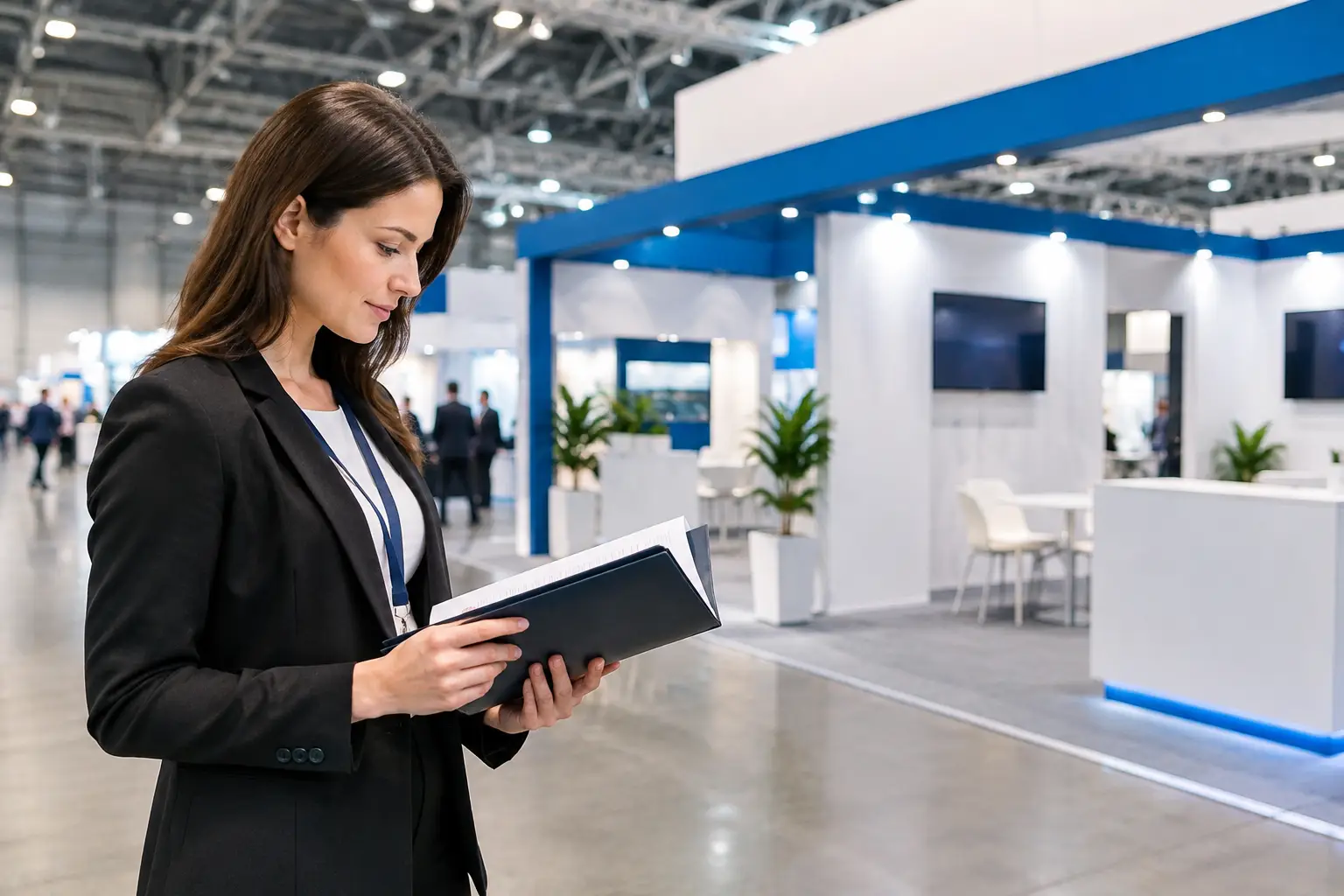


A premium booth can attract attention from across the aisle, but the people inside it determine whether that attention becomes a qualified conversation, a booked meeting, or a missed opportunity. Knowing how to select event staffing is therefore not an administrative task. It is a commercial decision that directly affects lead quality, visitor experience, and the return on your exhibition investment.
For marketing teams and procurement leaders, the goal is not simply to fill a booth with friendly faces. It is to build a team that can represent the brand credibly, guide the right visitors into the right conversations, and keep the space working at peak pace throughout the show.
Start With the Outcome You Need From the Booth
Staffing decisions become clearer when they begin with the exhibition objective. A company launching a technical product needs a different mix of people than a brand focused on distributor recruitment or a government body managing a country pavilion. Define what success looks like before deciding how many people to hire.
If lead generation is the priority, your team needs confident greeters, product presenters, and sales-qualified representatives who can identify buying intent quickly. If the goal is thought leadership, prioritize staff who can support scheduled demonstrations, host senior meetings, and handle detailed industry questions. For a hospitality-led booth, guest management, scheduling, and polished service may carry equal weight.
Avoid the common assumption that more staff automatically creates a better visitor experience. An overcrowded booth can feel disorganized, while a small team can become overwhelmed during peak hours. The right headcount depends on booth size, expected footfall, the number of meeting areas, demo stations, and the complexity of your visitor journey.
How to Select Event Staffing by Role, Not Job Title
The word “hostess” is often used broadly at exhibitions, but effective event staffing requires more precise role design. A capable brand ambassador may be excellent at welcoming visitors and collecting initial information, yet not be the right person to explain a complex manufacturing process or answer questions about compliance requirements.
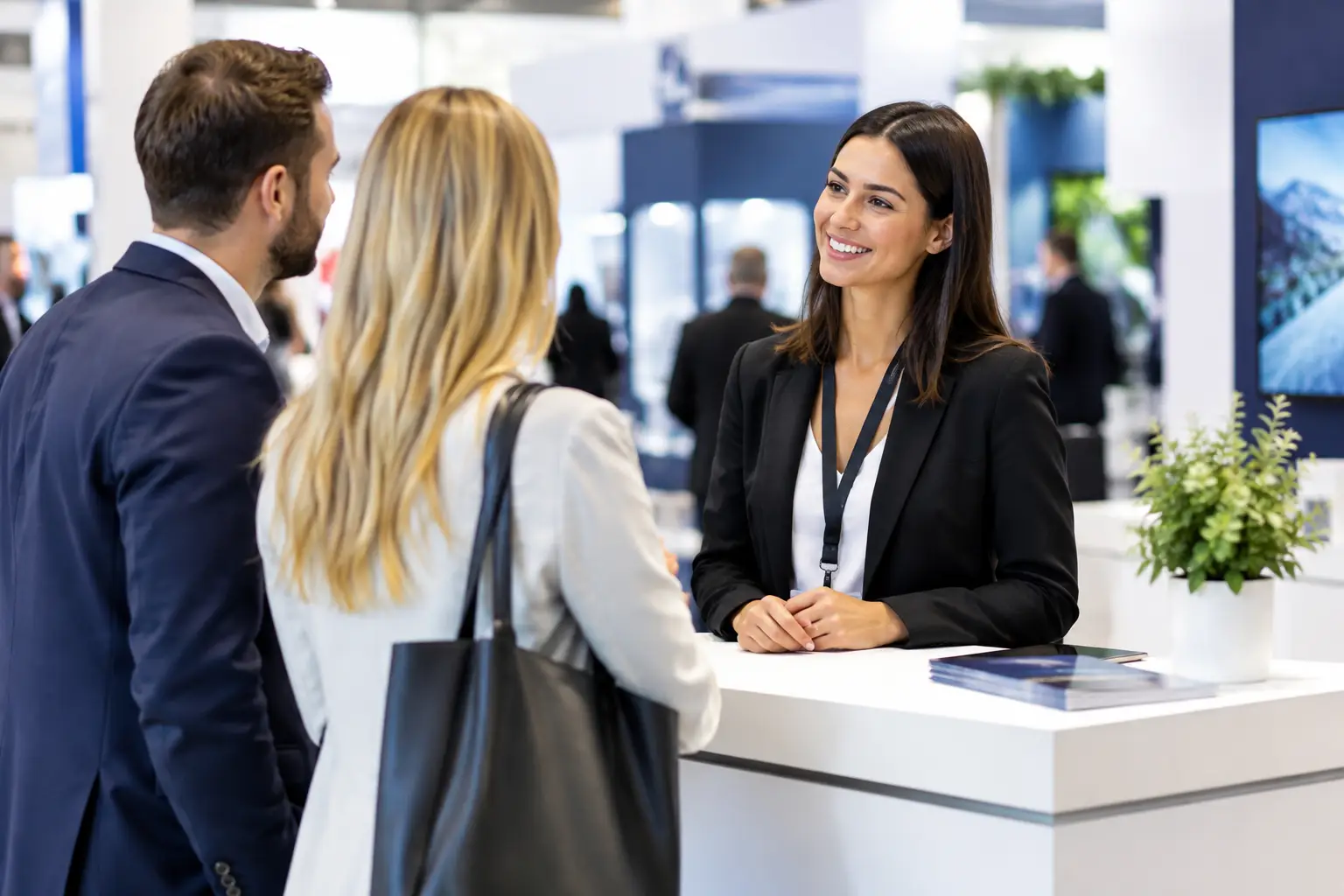
Build each role around a clear responsibility. Front-of-booth staff should make visitors feel acknowledged within seconds, deliver a concise opening line, and direct them to the right zone or representative. Product demonstrators need confidence on camera, strong presentation skills, and enough technical preparation to explain benefits without relying on jargon. Meeting hosts should manage appointments, welcome senior guests, and protect the time of your sales leadership.
Your internal team also has a role to play. The most credible technical and commercial conversations often require product managers, regional sales leaders, or channel partners from your organization. External event staff should strengthen their performance, not replace expertise where the stakes are high.
For a large booth, double-decker structure, or country pavilion, appoint an on-site staffing lead. This person should coordinate breaks, attendance, shift changes, dress standards, and fast responses to unexpected gaps. Without a designated lead, minor issues can quickly become visible to visitors.
Look Beyond Appearance and Communication Skills
Presentation matters in a customer-facing environment, but it is only one part of the selection process. The strongest event professionals combine polished communication with situational awareness. They read the pace of the booth, notice when a visitor is waiting, recognize when a sales conversation should not be interrupted, and remain composed when the floor gets busy.
For B2B exhibitions, assess candidates for professional maturity and brand fit. Can they speak comfortably with procurement managers, engineers, distributors, or senior executives? Can they listen before giving a rehearsed pitch? Are they likely to represent a premium brand with consistency over a long exhibition day?
Language capability can be equally important. At international shows in Dubai, Riyadh, Las Vegas, Chicago, or Germany, visitors may expect support in more than one language. Select multilingual personnel when the audience justifies it, but verify fluency for business conversations rather than relying on a basic language claim. The ability to greet someone in a language is useful. The ability to qualify a lead, explain a product category, and make a graceful handoff is far more valuable.
Cultural awareness also deserves attention. Greeting styles, business etiquette, and expectations around hospitality vary by market and industry. Experienced local staffing support can help international exhibitors avoid small errors that weaken an otherwise carefully planned brand presence.
Test Product Readiness Before the Show Opens
A polished team cannot compensate for weak briefing. Staff who do not understand the value proposition tend to default to vague statements, distribute brochures indiscriminately, or pass every question to an internal colleague. That creates friction for visitors and wastes the time of your sales team.
Provide a briefing that is practical, focused, and specific to the event. Staff should know your company introduction, priority products or services, ideal visitor profiles, key differentiators, and the action you want visitors to take. They should also understand what they should not promise, especially for regulated industries such as pharma, energy, or industrial technology.
A good briefing includes live practice. Ask staff to deliver a 20-second introduction, handle a common objection, and direct a visitor to the appropriate expert. Test them on the qualifying questions that matter to your sales team, such as project timeline, company type, buying role, region, or product requirement.
Keep the script flexible. Visitors can tell when every conversation follows the same rigid sequence. Give staff a clear framework, then let them adapt their opening according to the visitor and the pace of the floor.
Plan Staffing Around Visitor Flow and Booth Design
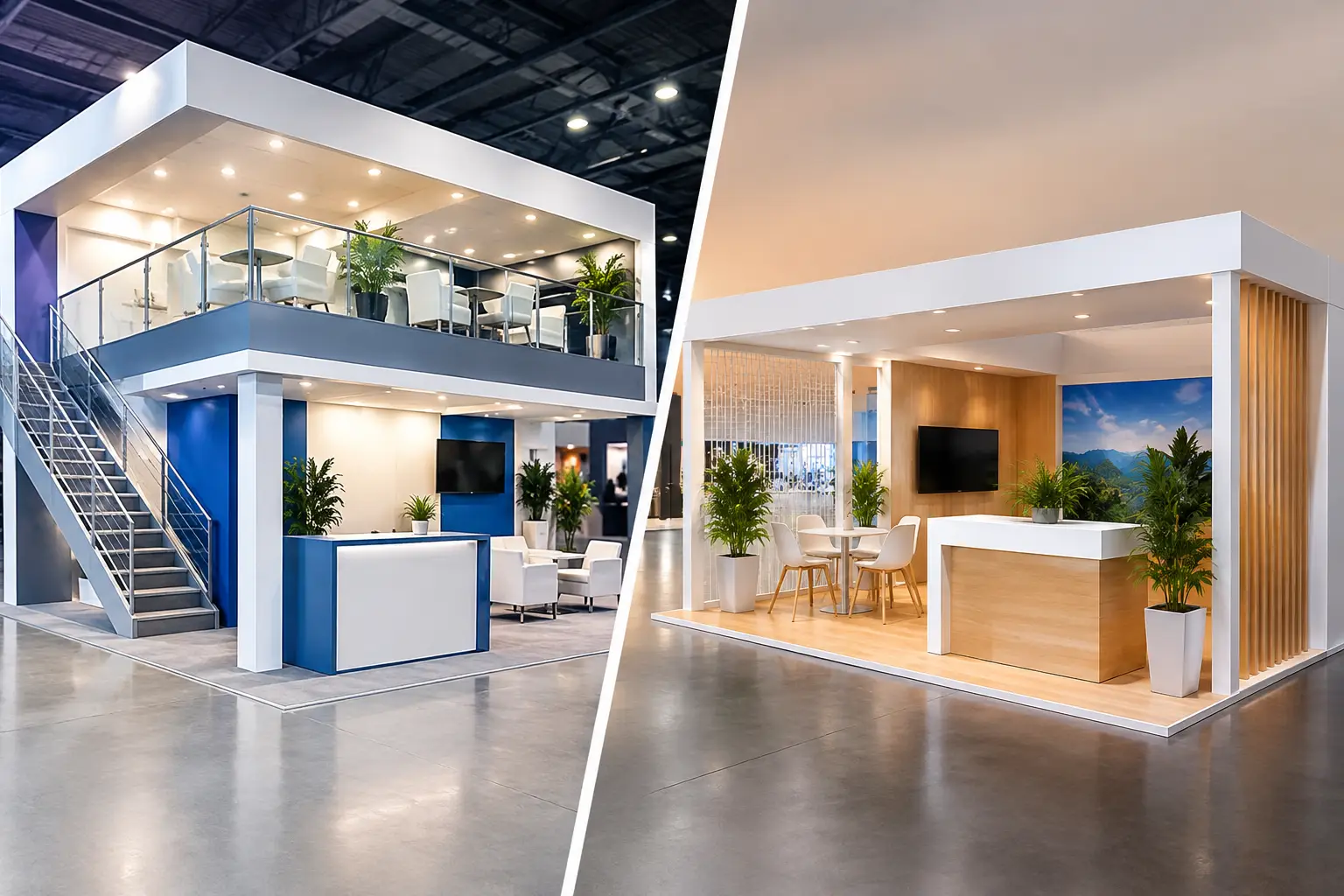
Your staffing plan should work with the stand layout. A bold custom booth with an LED wall, live demo counter, product display, hospitality lounge, and private meeting room has several engagement points. Assigning staff only by headcount, rather than by zone, leaves parts of the experience unattended.
Map the visitor journey from approach to follow-up. Who welcomes the visitor? Who delivers the initial pitch? Where does a product demonstration take place? Who qualifies the lead and records the details? Who escorts a serious prospect to a meeting area? When those handoffs are planned, the interaction feels attentive rather than transactional.
Consider sightlines as well. Staff should not block product displays, stand with their backs to aisles, or cluster at the reception counter. Their placement needs to support the architecture, not compete with it. This is particularly important for stands above 100 square meters, where visitors can easily miss key zones if there is no visible human guidance.
Peak periods require deliberate coverage. Schedule breaks in rotation, not all at once, and retain sufficient capacity during opening hours, lunch periods, and any scheduled product demonstrations. For multi-day exhibitions, fatigue is real. Rotate demanding presentation roles so energy and quality stay consistent on the final day.
Vet the Staffing Partner as Carefully as the Team
A staffing agency or exhibition partner should be able to explain how it recruits, briefs, supervises, and replaces personnel if a problem arises. Generic profiles and last-minute confirmations are warning signs, especially when the exhibition is central to a product launch or market-entry campaign.
Ask for role-relevant candidate profiles and conduct interviews for senior-facing, technical, or multilingual positions. Confirm arrival times, dress code, shift lengths, break coverage, venue access requirements, and a backup plan for absences. If your booth builder, event staffing provider, and internal marketing team are working separately, establish a single on-site point of contact before build-up begins.
Coordination matters because staff need to understand the physical space they will occupy. They should know where materials are stored, how the meeting room is booked, where leads are captured, who handles hospitality, and whom to contact if a screen, display, or demo unit needs attention. An end-to-end exhibition partner can simplify these connections by aligning stand operations and staffing from the start.
Measure More Than the Number of Leads
Lead volume is useful, but it can be misleading if the leads are poorly qualified. Review the results with your sales team after the show. Which conversations progressed? Did staff capture the information needed for follow-up? Were visitors routed to the correct representatives? Did meeting attendance match the schedule?
Also gather feedback from the people who worked the booth. They will often identify practical improvements, such as a confusing entry point, an unclear opening question, insufficient demo coverage, or a period when the meeting area became overloaded. These details help refine both the stand plan and staffing model for the next event.
The right event team makes a well-designed booth feel active, informed, and welcoming from the first visitor to the final follow-up. Select people for the work they must perform, prepare them for the conversations that matter, and give them an operating plan they can execute with confidence.