

A strong presence at ADIPEC Abu Dhabi is not won by the largest booth alone. It is won in the seconds when a decision-maker understands what your company does, why it matters to their operation, and why they should stop to speak with your team. For energy businesses competing in a crowded, high-value environment, the exhibition stand has to work as a brand platform, meeting space, product demonstration zone, and lead-generation engine at once.
ADIPEC brings together senior stakeholders from across the energy ecosystem, including operators, EPC firms, technology providers, service companies, government bodies, investors, and supply-chain partners. That scale creates opportunity, but it also raises the standard. A generic booth, a delayed build, or an unclear visitor journey can waste a substantial share of the investment before the first conversation begins.
Why ADIPEC Abu Dhabi Demands a Different Approach
At many trade shows, foot traffic is the primary goal. At ADIPEC, the quality of the conversations matters just as much as volume. A marketing manager may need visibility for a new technology launch, while a business development team may need quiet space for scheduled meetings with prospective partners. A government or trade body may need a pavilion that gives multiple companies a coherent national identity without making individual exhibitors disappear.
The stand strategy should reflect that commercial reality. Start by defining the one or two outcomes that matter most: market entry, major-account meetings, product education, distributor recruitment, thought leadership, or pipeline growth. These priorities determine the right footprint, layout, messaging, technology, and staffing model.
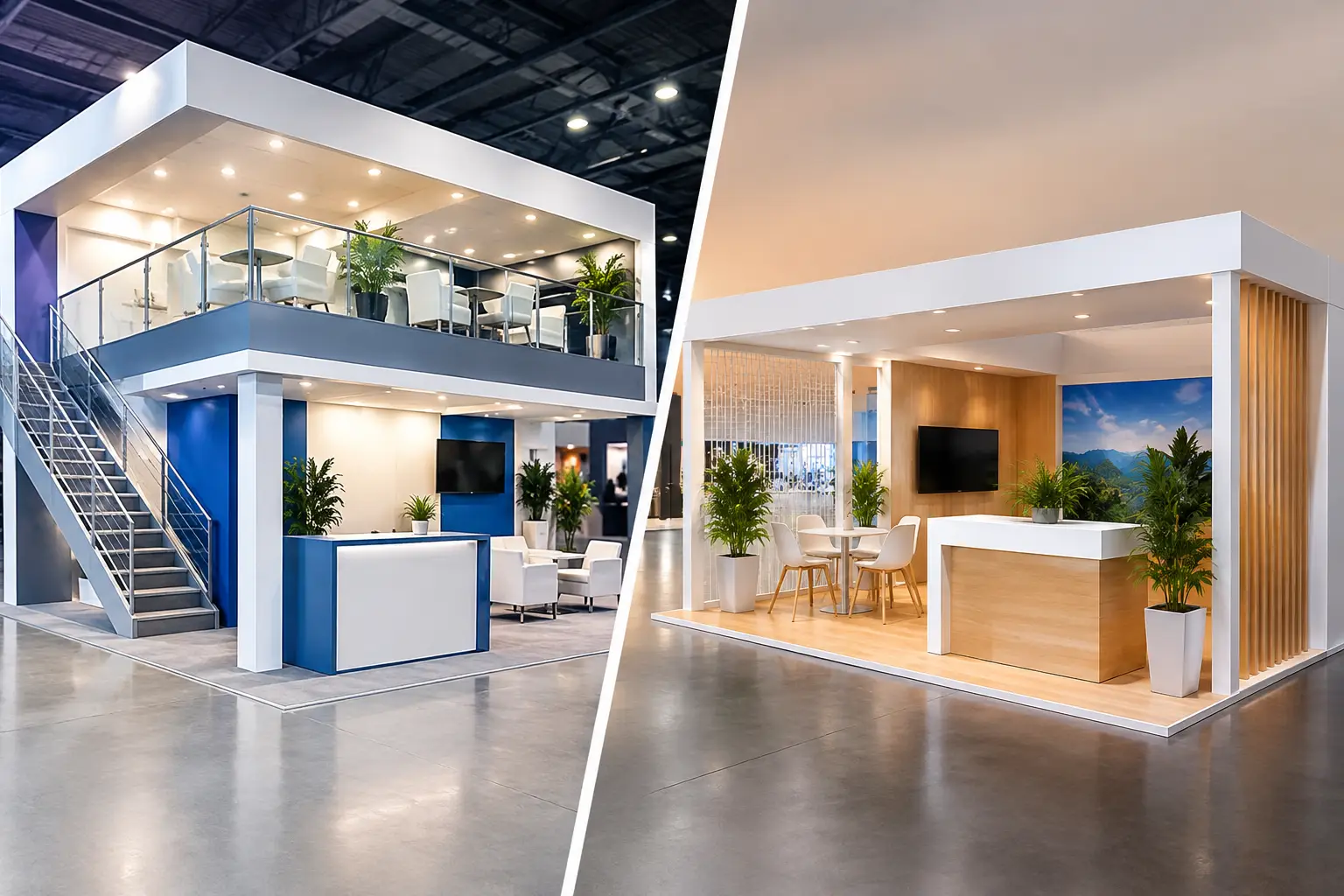
A 36-square-meter stand can outperform a much larger space if it is designed around a focused proposition and a disciplined visitor flow. Conversely, a large custom stand may be the right choice when your team is hosting private meetings, displaying heavy equipment, demonstrating digital platforms, or reinforcing market leadership. The right answer depends on your objectives, not a fixed rule about booth size.
Build the Stand Around Visitor Intent
Visitors do not experience an exhibition stand as a floor plan. They experience it as a sequence: what catches their eye, what they understand at a glance, where they can stop, and what gives them a reason to speak with your team.
Your first visual message should be clear from the aisle. Avoid filling elevated signage with every product category, certification, and corporate statement. At a busy energy exhibition, concise messaging earns attention. A strong headline, an immediately recognizable visual, and one clear proof point are more effective than a wall of copy.
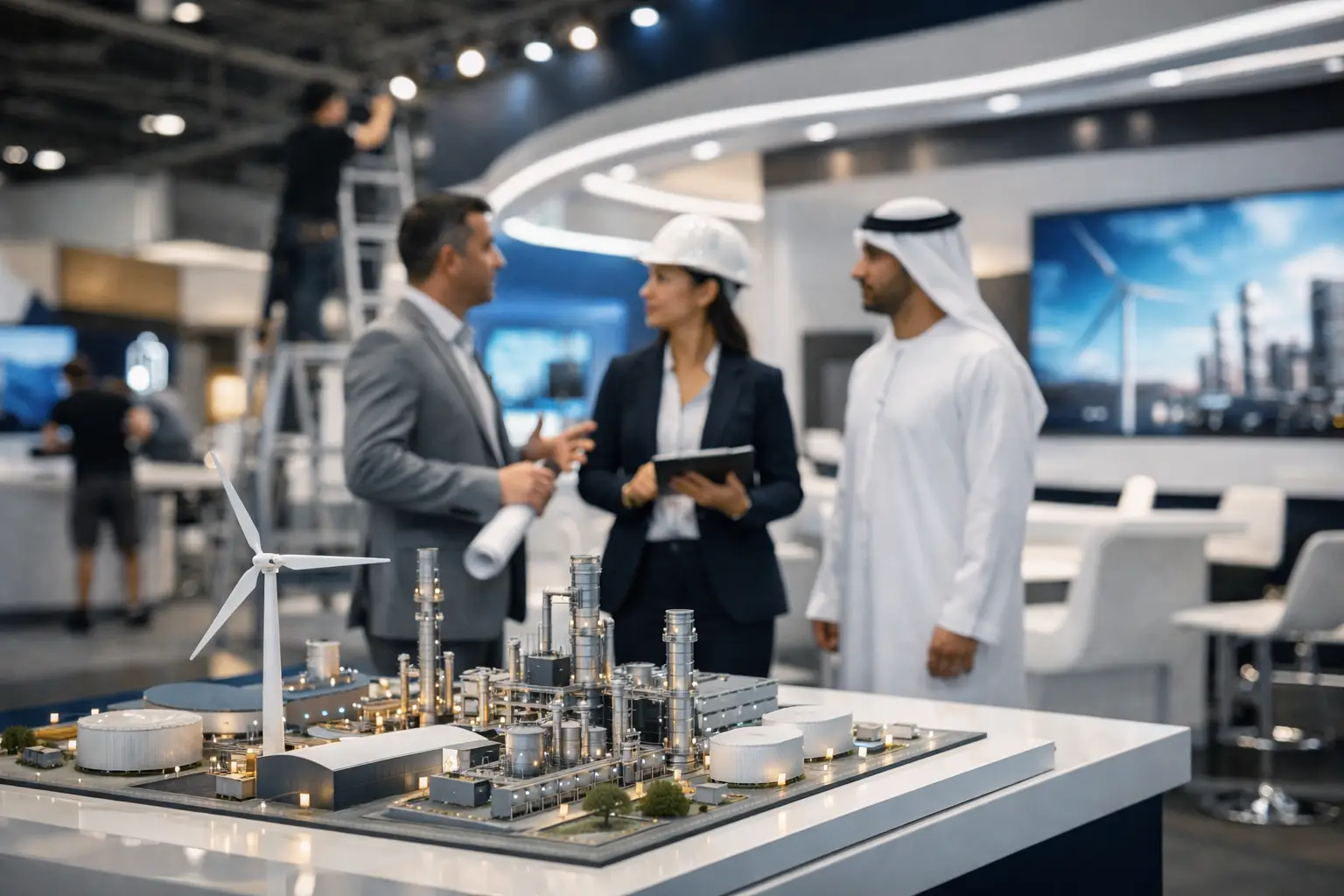
Once a visitor enters, the stand should offer a reason to stay. This could be a live equipment demonstration, a working product interface, an LED video wall showing a complex process in context, or a concise case-study presentation. Screens are useful only when they clarify the value proposition. A looping corporate video with no sound, no narrative, and no team member nearby is rarely a lead-generation tool.
Then create appropriate places for different kinds of conversations. An open hospitality point supports quick introductions. Semi-private tables work for technical discussions. Enclosed meeting rooms are valuable when commercial negotiations, project details, or confidential partnerships are on the agenda. For companies with a full calendar of pre-arranged meetings, this space is not an upgrade. It is operationally necessary.
Design for openness and control
Energy brands often want an impressive, architectural stand while still needing easy access from multiple aisles. The trade-off is real. Too many walls can make a stand look substantial but discourage entry. Too much openness can create visual clutter and leave teams without private meeting capacity.
A good custom build balances both. It uses height, lighting, material finishes, and branding to establish presence while keeping entry points obvious. It also makes storage part of the plan from day one. Bags, brochures, refreshments, staff belongings, and technical equipment need a home. If they do not have one, they will end up in visitor-facing areas.
Start Planning Earlier Than You Think
For ADIPEC Abu Dhabi, stand planning is not simply a design task. It is a chain of design approvals, technical drawings, fabrication, venue requirements, freight coordination, installation schedules, and on-site handover. Delaying one part of that process can limit choices later, especially for premium materials, custom structures, integrated AV, and specialist labor.
The most effective process begins with a detailed brief. Share your floor plan, stand dimensions, open-side configuration, brand guidelines, product requirements, budget range, and commercial goals. If you are exhibiting with a regional or global team, establish who has final approval early. Conflicting feedback in the final production window is one of the most common causes of avoidable cost and delay.
A free 3D concept design can be useful at the initial stage because it allows stakeholders to assess sightlines, branding visibility, meeting capacity, and display features before fabrication begins. But a polished rendering is only the start. The production partner should also be able to translate that concept into buildable details, manage venue documentation, coordinate logistics, and install the stand to the agreed schedule.
For international exhibitors, local execution is particularly valuable. Shipping every stand component from another region can add cost, customs complexity, and contingency risk. Local or regional fabrication may offer better control of timing and on-site responsiveness, although the final choice depends on design consistency requirements, reuse plans, and the materials involved.
Budget for the Experience, Not Just the Structure
A stand budget should account for more than walls, flooring, and furniture. The visitor experience depends on lighting, power distribution, graphics, AV content, connectivity, furniture quality, hospitality needs, staffing, cleaning, lead capture, and contingency planning.
The lowest build quote is not always the lowest total cost. A proposal may appear competitive because it excludes elements that will later be required for operation or venue compliance. Ask for clear scope details and identify what is included in fabrication, installation, dismantling, graphics, lighting, AV equipment, storage, and project management.
Material selection also deserves a practical conversation. Premium finishes can make an immediate difference in perceived brand quality, particularly in meeting areas where senior visitors spend time. Yet not every surface needs to be expensive. A dependable stand builder will help allocate budget where visitors notice it most: the brand facade, reception point, product display, meeting environment, and lighting.
Sustainability can also be managed without weakening the design. Reusable structural elements, modular components, recyclable graphics, and repurposed materials can reduce waste. The best approach is usually planned reuse, not an afterthought once the event is over.
Staff the Booth Like a Commercial Team
Even an exceptional stand cannot compensate for an unprepared team. Before the show, agree on who will greet visitors, who will deliver product demonstrations, who can handle technical questions, and who can move a qualified prospect into a scheduled meeting.
A simple qualification process prevents valuable contacts from getting lost in a generic scan list. Teams should capture the visitor’s role, company, project horizon, stated need, and agreed next step. If the lead process asks too many questions, staff will skip it during peak traffic. If it captures only a name and email address, the sales team will lack context after the event.
Fair hostesses and event staff can help keep reception, hospitality, visitor direction, and basic data collection consistent. They should support the commercial team, not replace product knowledge. The most credible conversations at ADIPEC still come from people who understand the market and can explain the business value of the solution.
Measure What Happened After the Aisles Clear
Lead numbers are useful, but they are not the final score. Review the event against the objectives set before the build began. How many target accounts visited? How many scheduled meetings took place? How many opportunities reached a defined sales stage? Which demonstration, message, or stand zone generated the strongest engagement?
This review improves the next exhibition investment. It may show that a larger meeting room is needed, that an interactive demonstration attracted better prospects than a static display, or that the team needs a clearer qualification script. It may also reveal that the most valuable leads came from pre-event invitations rather than walk-up traffic.
For brands exhibiting in the UAE energy market, execution confidence matters. LemonTree Exhibitions combines custom stand design, in-house fabrication, logistics, installation, and dismantling so teams can focus on the conversations that justify the event investment. That control becomes especially valuable when timing, finish quality, and on-site responsiveness are all under scrutiny.
The best ADIPEC presence gives visitors a clear reason to stop and your team a clear setting to turn that interest into business. Plan around those two outcomes, and every design decision becomes easier to make.