

Sticker shock usually happens after the first booth concept lands in your inbox. A team budgets for a clean, branded presence, then realizes the trade show booth design cost is shaped by far more than graphics and square footage. Structure, venue rules, logistics, show services, reuse potential, and install complexity all influence the final number.
That is why experienced exhibitors do not ask only, “What will this booth cost?” They ask, “What are we trying to achieve, how often will we exhibit, and what level of impact do we need?” A 10×10 startup booth at a regional expo and a double-decker build at a major international show are completely different investments, even if both are technically exhibition stands.
What drives trade show booth design cost
The biggest cost driver is booth size, but size alone never tells the full story. A simple 20×20 stand with standard walling and printed graphics may be relatively efficient to produce. A 20×20 custom booth with overhead hanging features, integrated LED walls, storage, product display zones, and hospitality seating can cost several times more because the engineering, fabrication, transport, and labor demands increase quickly.
The second major factor is design intent. Custom booths are built to express a brand clearly and perform well on the show floor. That means visitor flow, visibility from a distance, product demonstration needs, meeting space, and lead capture all affect the design. If your objective is to launch a product, host private buyer meetings, and display machinery, the booth must do more than look attractive. It needs to work hard operationally.
Materials also make a meaningful difference. Laminates, woodwork, metal framing, fabric graphics, acrylic elements, flooring finishes, lighting systems, and AV integration all carry different production costs. Premium finishes create stronger visual impact, but they should be selected with purpose. Not every booth needs high-gloss surfaces, custom ceiling treatments, or large-format digital screens. Sometimes strategic lighting and disciplined branding deliver better ROI than expensive decorative details.
Typical budget ranges by booth type
If you are trying to estimate trade show booth design cost, broad ranges can help, but they should be treated as planning guidance rather than fixed pricing.
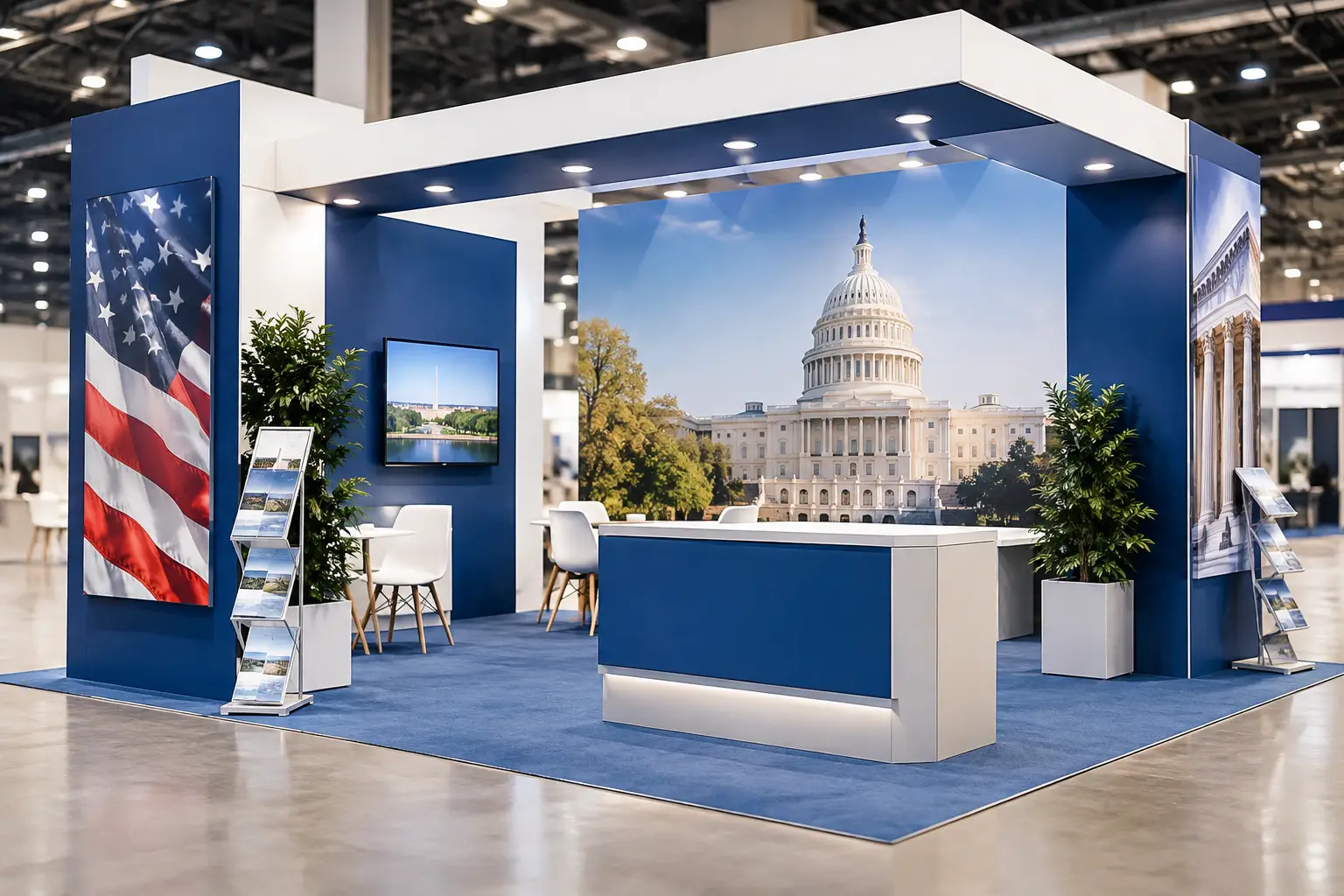
A smaller custom booth, such as a 10×10 or 10×20, often starts in the lower five-figure range for design, fabrication, graphics, and basic installation scope. Mid-size custom booths, such as 20×20 or 20×30, can move into the mid to high five-figure range depending on AV, ceiling elements, storage, and meeting areas. Large-format booths, island stands, double-decker structures, and country pavilions can move well beyond that because structural engineering, approvals, logistics, and on-site labor become much more intensive.
Rental-based systems usually lower the upfront spend, especially for brands testing a market or exhibiting once or twice a year. Fully custom builds tend to cost more initially but may be more efficient over time if parts can be reused, refreshed, or adapted across multiple events. This is where cost should be evaluated against exhibition frequency, not just one show.
Why booth size is only part of the budget
Many exhibitors start with a square-foot estimate and assume the rest will follow. In reality, two booths with the same footprint can have very different budgets.
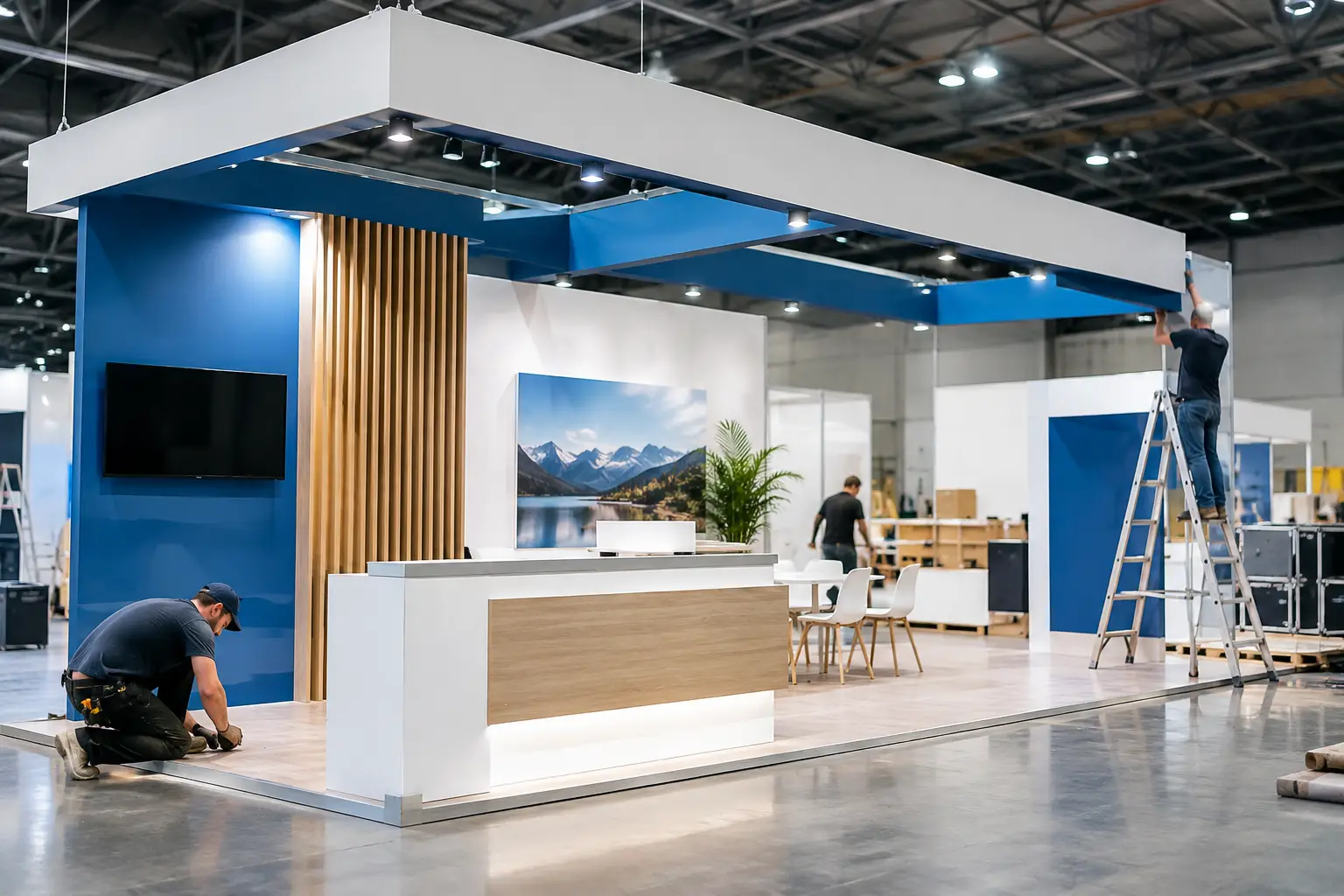
A 30×30 booth with open meeting tables, printed back walls, and light product shelving is not comparable to a 30×30 booth with enclosed conference rooms, suspended signage, raised flooring, integrated lighting tracks, and a live demo station. The second booth requires more design hours, more fabrication, more transport volume, more installation labor, and often more coordination with the organizer.
Venue regulations can also raise costs. Some shows require engineering certificates, specific height approvals, fire-rated materials, rigging coordination, or restricted build windows. Major venues in markets such as Dubai, Las Vegas, Chicago, and Germany can each have their own operational standards and union or contractor requirements. A booth that is easy to execute in one city may cost more in another because labor conditions and show services differ.
Design fees, production, and hidden line items
When clients evaluate trade show booth design cost, they sometimes focus on the visible structure and forget the supporting scope behind it. A professional booth budget often includes concept development, 3D design, technical drawings, project management, fabrication, graphics production, packing, shipping, installation, dismantling, and storage if required.
Then there are organizer and venue charges. Power connections, internet, rigging, cleaning, material handling, forklift support, badge access, and utility consumption are often billed separately from the stand builder’s quote. These costs can be substantial, particularly at large international shows.
Furniture, hostess staffing, pantry equipment, floral styling, digital displays, and lead capture systems may also sit outside the core build budget. None of these are unexpected to an experienced exhibitor, but they are easy to underestimate during early planning. That is why a low headline quote can be misleading if it excludes operational essentials.
Custom build vs rental: which is more cost-effective?
This depends on your exhibition calendar and brand goals. Rental systems are practical for companies entering a new market, attending one-off events, or needing speed and flexibility. They can still look premium when designed well, especially if the branding, lighting, and layout are handled with care.
Custom builds make more sense when brand differentiation is central to the show strategy. If you are exhibiting at flagship events, hosting distributors, launching products, or competing in a crowded category, a custom booth can create a stronger business environment. It also gives you control over visitor flow, product storytelling, storage, hospitality, and meeting quality.
The best answer is not always fully custom or fully rental. Many brands use a hybrid approach – custom focal elements combined with modular structures or reusable framework. This keeps the booth distinctive while controlling rebuild costs over multiple events.
How to budget smarter without weakening the booth
The smartest way to control cost is to decide early what the booth must accomplish. If your sales team needs qualified meetings, build around meeting functionality. If product interaction matters, prioritize display access and demonstration zones. If visibility is the issue, invest in height, lighting, and bold brand architecture.
Trying to do everything usually inflates cost without improving results. A booth packed with features can feel cluttered and operationally difficult. Clear priorities lead to better design decisions and better spending.
Reuse is another major lever. Booths can be designed with adaptable components, replaceable graphics, and modular sections that work across different footprints. Brands exhibiting in multiple markets often save considerably by planning for reuse from day one rather than commissioning one-off builds every time.
It also helps to involve your stand partner early. Late design changes are expensive. So are rushed approvals, last-minute AV upgrades, and redesigns after organizer regulations are reviewed. A dependable design and build partner will challenge assumptions early, flag cost implications, and help you spend where it counts.
What a realistic brief should include
If you want accurate pricing, the brief needs more than booth dimensions. It should cover the event name, venue, booth size, whether the space is island or inline, your goals, products to display, storage needs, meeting requirements, technology needs, and whether the booth should be reusable.
Budget guidance also matters. Some clients hesitate to share a number, but a realistic range helps the design team propose the right solution. Without that context, you may receive concepts that are either underpowered for your goals or far above what procurement can approve.
A good partner will not simply ask for your budget and spend to the ceiling. They will help align design ambition with business objectives, timeline, and long-term use. That is where operational discipline protects your investment.
The right question is value, not just price
A booth is not a retail fixture sitting in one location for years. It is a temporary branded environment built under deadline, shipped, installed under venue rules, expected to perform for sales and marketing, then dismantled on schedule. That makes trade show booth design cost part creative decision, part logistics equation, and part commercial strategy.
For procurement teams, that means the cheapest quote is rarely the safest decision. For marketing teams, the most dramatic concept is not always the smartest one either. The right booth is the one that fits your goals, your show calendar, and the level of brand presence your audience expects.
At LemonTree Exhibitions, we have seen the best results come from clients who treat booth budgeting as part of event strategy, not an afterthought. When the design, build quality, logistics, and show objectives are aligned from the start, cost becomes easier to control and much easier to justify.
If you are planning your next event, start with the business outcome you need on the show floor. The budget conversation gets much clearer from there.