

A great booth can attract the right buyers before your team says a word. A poorly managed one can drain budget, miss deadlines, and create stress that shows up on the show floor. That is why choosing the right trade show booth company is not just a design decision. It is an operations decision, a brand decision, and often a revenue decision.
For marketing teams, procurement leads, and business owners, the challenge is rarely finding a vendor that can produce attractive renderings. The real challenge is finding a partner that can turn those ideas into a stand that is on-brand, on time, on budget, and ready for the realities of a live event.
What a trade show booth company should actually do
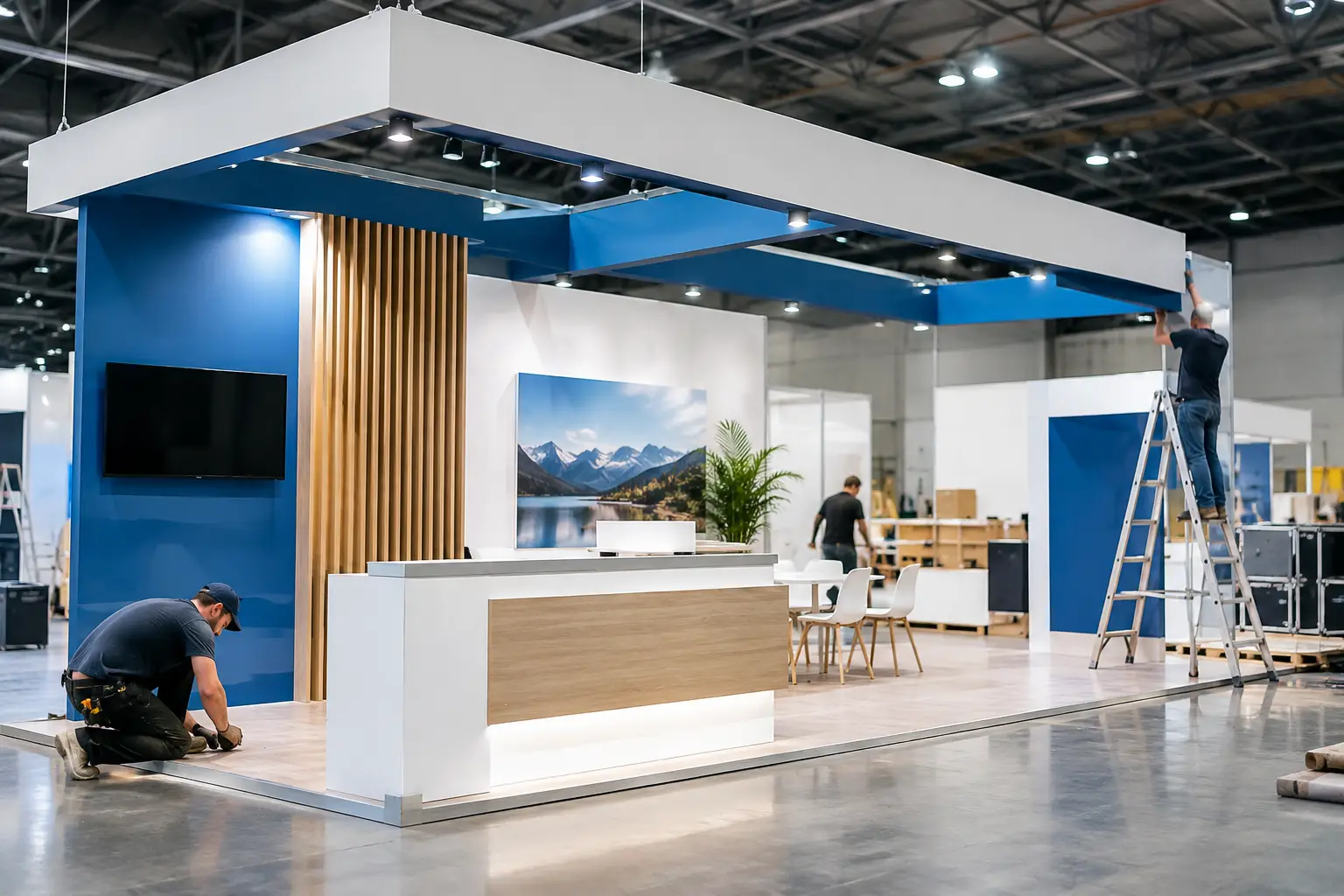
Many suppliers can design a stand. Fewer can manage the full cycle without handoff issues. A capable trade show booth company should handle concept development, technical drawings, fabrication, graphics, logistics, installation, and dismantling as one coordinated process.
This matters because exhibition projects rarely fail at the concept stage. They fail in execution. A design may look excellent in a presentation and then run into venue restrictions, material delays, unclear approvals, or installation issues. When too many parts are outsourced, accountability gets blurry very quickly.
An end-to-end partner reduces that risk. It also shortens decision cycles because design, production, and project management are aligned from the start. If your team is preparing for major industry events or managing multiple regional exhibitions, that coordination becomes even more valuable.
How to evaluate a trade show booth company beyond the pitch
The first thing to examine is not the mood board. It is delivery capability. Ask where the booth is fabricated, who manages the build, how revisions are handled, and what happens if a venue changes a technical requirement late in the process.
A strong company will answer with specifics, not general promises. They should be able to explain their workflow, approval stages, production timelines, and on-site responsibilities in clear terms. Confidence is useful, but process is what protects your event.
Portfolio matters too, but context matters more. A company that has built a few attractive small booths may not be the right fit for a 100 sqm custom stand, a double deck structure, or a country pavilion with multiple stakeholder approvals. The scale, complexity, and type of build should match your own event needs.
It is also worth asking how often they build in your target market. A booth company with practical experience at major exhibitions in sectors like technology, energy, pharma, FMCG, or manufacturing will understand the pace, compliance requirements, and exhibitor expectations better than a general fabricator with limited event exposure.
Look for operational control, not just creative ambition
Bold design is valuable. It gets attention and helps your brand stand apart in a busy hall. But design without production control can create expensive problems.
That is why in-house capabilities matter. When a booth company controls its own design studio and fabrication workshop, quality control is tighter, turnaround is faster, and last-minute changes are easier to manage. You are not waiting for updates from three different vendors who each own only one piece of the process.
This does not mean outsourced support is always a problem. In some markets, local partnerships are necessary and practical. But the key question is who remains accountable. If the answer is unclear, expect friction later.
Ask how they manage cost, not just how they quote it
Exhibition budgets can move quickly once graphics, AV, lighting, furniture, staffing, rigging, and venue services are added. A professional booth partner should help you understand the full cost picture early, not present a low headline number that grows with every meeting.
Transparent budgeting is a sign of experience. So is the ability to suggest alternatives. Maybe a custom feature wall delivers the same visual impact as a more expensive suspended element. Maybe modular components can be reused across a multi-show calendar. Maybe a double decker stand makes sense for meeting capacity, or maybe it adds cost without enough return.
Good partners do not push the biggest build. They guide you toward the smartest one.
The trade-offs between local and international booth partners
If your event schedule spans multiple countries, choosing between a local supplier and an international exhibition partner is not always straightforward. A local builder may offer useful venue familiarity and lower transport costs. An international partner may provide better brand consistency, stronger central project management, and smoother coordination across several shows.
It depends on your objectives. If you are exhibiting once in a single city, a capable local team may be enough. If you are managing a regional or global event program, consistency becomes a larger priority. In that case, working with a company that already delivers across markets can save time and reduce repeated briefing, redesign, and procurement cycles.
This is especially relevant for companies that exhibit in places like Dubai, Riyadh, Mumbai, Las Vegas, or Chicago, where timelines are tight and show expectations are high. The booth itself is visible, but the real value often comes from how calmly the partner handles what is not visible.
What the best booth companies ask you first
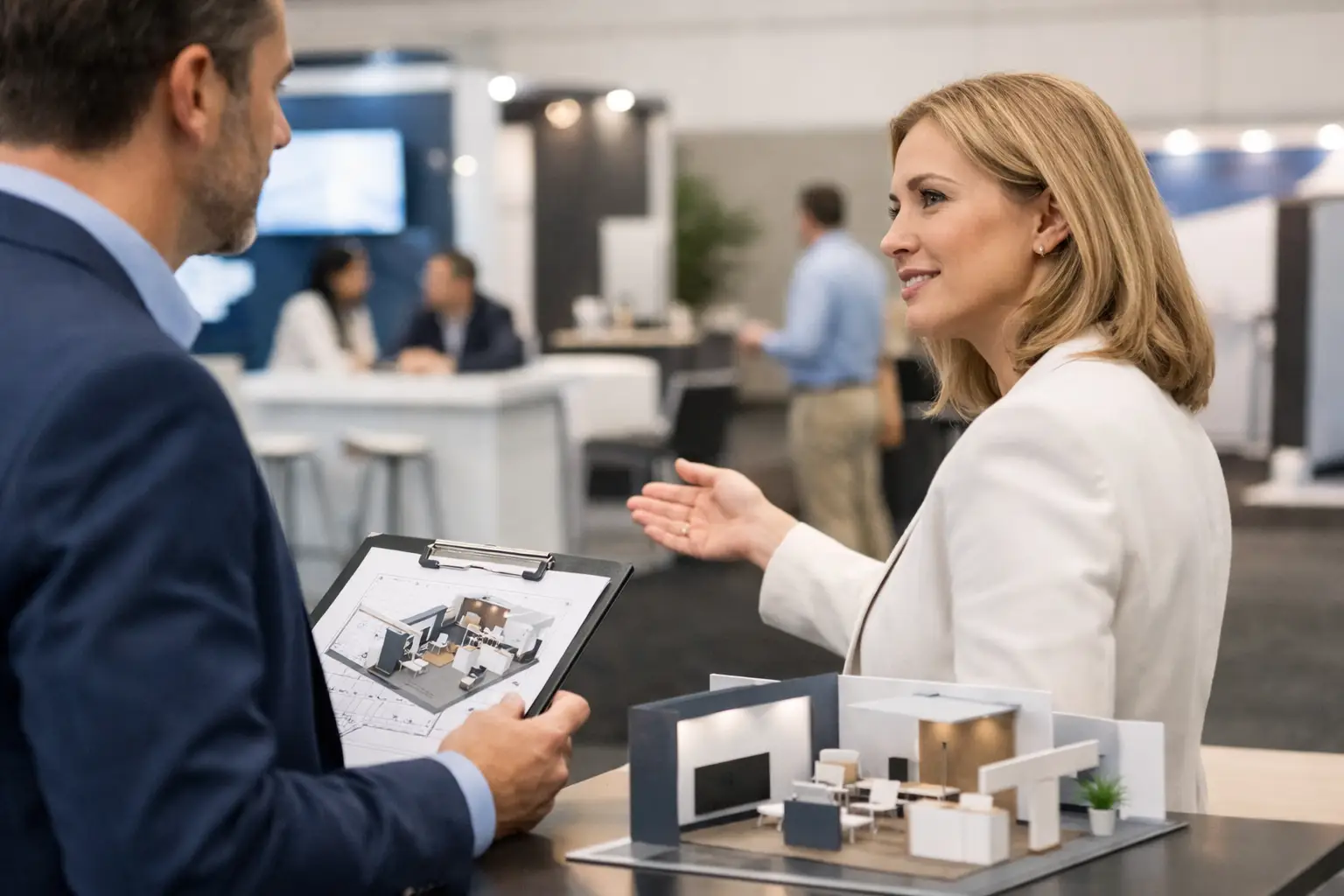
A reliable partner will not begin by asking what style you like. They will start with your goals. Are you launching a product, meeting distributors, generating leads, hosting private meetings, or building market presence? Those goals shape layout, visitor flow, storage, screen placement, hospitality zones, and messaging hierarchy.
If a company jumps straight to colors and shapes without understanding your commercial objective, the process is already off track.
They should also ask practical questions about booth size, event regulations, target audience, product display needs, approval deadlines, and past exhibition challenges. These questions are a sign that they are designing for performance, not just presentation.
Signs you may be choosing the wrong partner
Some warning signs are easy to miss early on. Slow communication during the proposal stage usually does not improve later. Vague answers on materials, structure, and logistics often signal weak internal control. Unrealistically low pricing may mean key services are excluded or quality is being compromised.
Another common issue is overpromising on design complexity without discussing engineering, venue approvals, or build time. Exhibition structures live in the real world. They must be safe, practical, and installable within venue schedules. If a concept seems too effortless on paper, ask how it will actually be delivered.
You should also pay attention to revision discipline. Changes are normal in exhibition planning, but chaos is not. A dependable company has a clear process for design updates, signoff, production freeze, and on-site coordination.
What a strong partnership looks like in practice
The best booth projects feel controlled from the client side, even when the execution behind them is complex. Your team knows what is happening, what is approved, what comes next, and who owns each decision.
That level of clarity usually comes from a company with real volume and real systems behind it. A partner delivering hundreds of exhibition projects a year across different sectors tends to understand where delays happen, where budgets slip, and where on-site issues tend to emerge. That experience shows up in planning discipline as much as in finished craftsmanship.
It also shows up in responsiveness. When deadlines tighten, graphics change, or a product sample arrives late, you want a team that adapts quickly without losing control of quality.
This is where a full-service builder such as LemonTree Exhibitions can make a measurable difference for brands that need both creative impact and dependable execution across markets. Not every project needs a complex international setup, but when scale, speed, and consistency matter, that depth of capability becomes a real advantage.
Choose for the show floor you want, not the proposal you liked
A booth proposal is easy to admire in a meeting room. The real test comes during fabrication, freight coordination, venue move-in, final lighting focus, and the first hour of visitor traffic.
So when you evaluate a trade show booth company, look past the renderings. Look at process, accountability, speed of response, cost clarity, and relevant experience. The right partner will help you make better decisions before the show begins and protect your brand when the pressure is highest.
If you choose well, your booth does more than look impressive. It works hard, supports your team, and gives your brand the kind of presence people remember after the hall clears.