

A busy trade show floor gives you only a few seconds to make an impression. That is why knowing how to design an exhibition booth is not really about picking colors and walls. It is about building a space that stops the right visitors, starts the right conversations, and supports your commercial goals from the first sketch to dismantling day.
The strongest booths are not designed as isolated creative pieces. They are designed as working business tools. For a marketing manager, that may mean stronger brand recall and cleaner messaging. For a sales team, it may mean better lead flow and more qualified conversations. For procurement, it means a booth that is delivered on time, on budget, and without last-minute surprises. Good design has to satisfy all three.
Start with objectives before you design an exhibition booth
The first mistake many exhibitors make is jumping into layout ideas before defining the job the booth needs to do. If your objective is product launch visibility, the design should create impact from a distance and give the product center stage. If your goal is lead generation, you need a layout that welcomes traffic, supports short interactions, and gives staff room to qualify visitors quickly. If the event is focused on distributor meetings or government delegation visits, privacy and hospitality may matter more than open traffic.
This is where a lot of expensive booth decisions either pay off or go to waste. A striking structure can still underperform if it does not match the event strategy. A smaller booth can outperform a larger one if the message, flow, and visitor journey are well planned.
Before any concept work begins, define the audience you want to attract, the top three messages you want them to remember, and the action you want them to take. Everything in the booth should support those answers.
Understand the exhibition environment
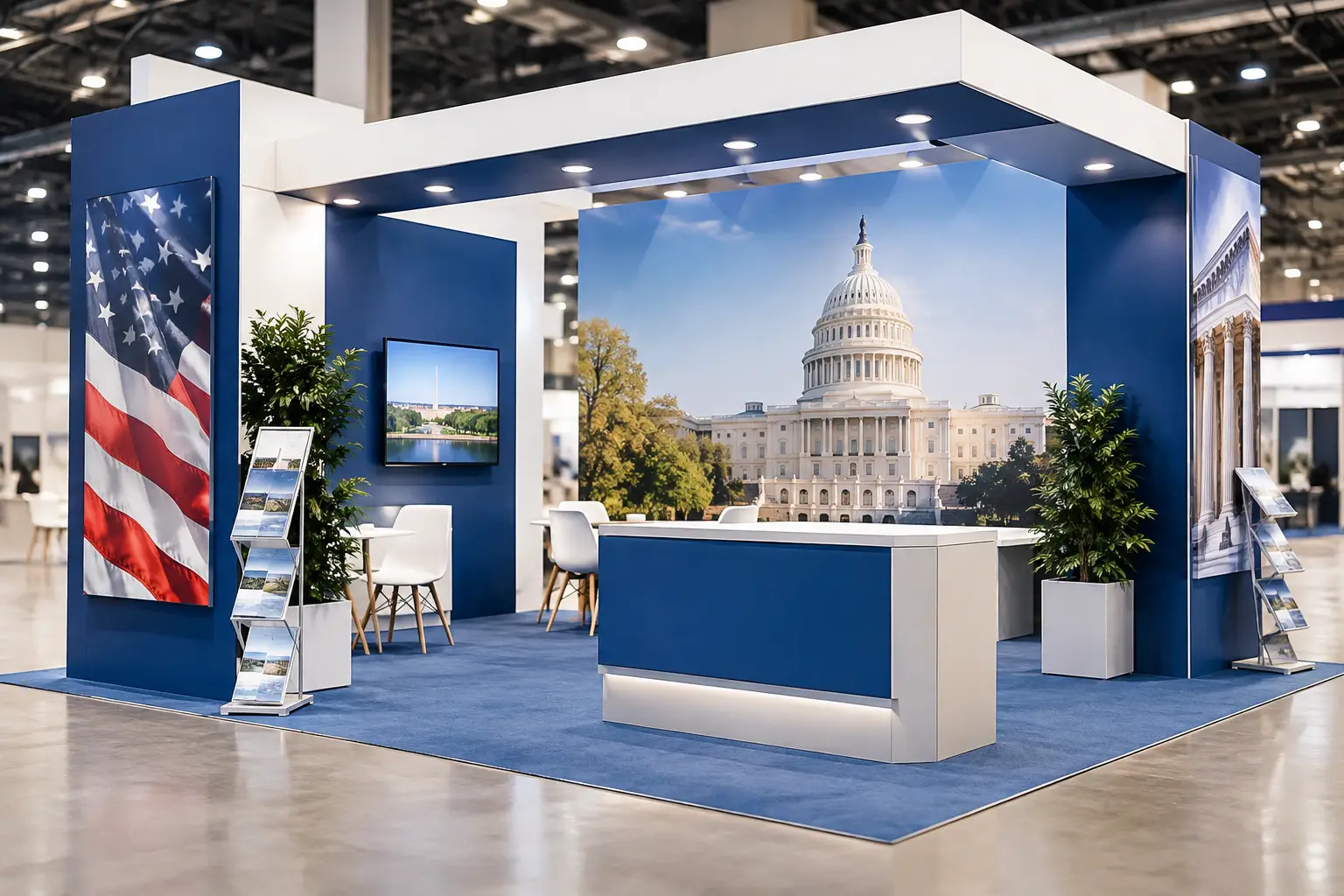
A booth does not exist in a vacuum. Hall layout, neighboring exhibitors, aisle width, venue regulations, and visitor traffic patterns all shape the right design approach. A corner stand gives you more openness and more angles for branding. An inline booth demands sharper front-facing communication. An island stand offers visibility from all sides, but it also requires stronger circulation planning so the space feels inviting rather than chaotic.
It also matters which industry event you are attending. At a major technology show, visitors often expect digital interaction and strong visual energy. At a pharma or industrial manufacturing event, clarity, trust, and product explanation may matter more than spectacle. A design that works at GITEX may not be the best fit for a heavy equipment expo or a government pavilion.
That is why experienced exhibitors plan the booth around the event context, not just the brand guidelines.
Build the concept around one clear idea
The best booth designs are easy to understand at a glance. Visitors should not have to work hard to figure out who you are, what you do, or where to go next. A clear concept ties together architecture, graphics, lighting, product display, and visitor flow into one focused experience.
That concept might be built around innovation, sustainability, precision, speed, heritage, or market leadership. The exact theme depends on your brand and your audience. What matters is consistency. If the structure says premium but the graphics feel cluttered, the message weakens. If the branding is strong but the booth experience feels generic, recall drops quickly.
A good concept is bold enough to be noticed and disciplined enough to stay useful.
Keep brand messaging visible and fast to read
Trade show visitors scan before they stop. Your primary message needs to be readable from a distance, with supporting information available once people step closer. That usually means prioritizing one headline message, one visual anchor, and a limited number of supporting claims.
Trying to communicate everything at once is one of the fastest ways to lose attention. Product ranges, certifications, technical capabilities, export markets, and service lines all matter, but not all at the same moment. The booth should lead with the message most likely to attract the right audience, then reveal more detail in stages.
Plan the layout around visitor behavior
When thinking about how to design an exhibition booth, layout is where strategy becomes real. A booth should guide movement naturally. People need a reason to enter, a place to pause, and a clear path to engage with products or staff.
Open layouts tend to increase approachability, especially when lead generation is a priority. More enclosed layouts can work well for confidential discussions, premium hospitality, or high-value B2B meetings. Neither is automatically better. It depends on your objectives, your audience, and the type of conversations you expect.
Reception counters should not block entry. Meeting zones should feel accessible, not hidden. Product displays should be positioned where they can trigger interest without creating bottlenecks. Storage should be integrated early, because operational clutter can quickly damage a premium look.
For larger stands, zoning helps. Public engagement areas, product demo areas, semi-private meeting spaces, and back-of-house storage all need to work together. For smaller booths, the challenge is discipline. Every element must earn its place.
Use materials, lighting, and technology with purpose
Visitors notice finish quality faster than many brands expect. Clean fabrication, well-fitted graphics, tidy edges, and thoughtful material choices send a strong message about reliability. If your booth looks rushed, visitors may assume your business is too.
Material selection also affects budget, transport, durability, and installation time. Custom finishes create impact, but they should be chosen with practical delivery in mind. Reusable components can improve long-term value if you exhibit often across multiple regions.
Lighting is just as important as structure. It shapes mood, highlights products, improves readability, and helps your booth stand out in a crowded hall. Poor lighting can flatten even a strong design. Good lighting adds depth and focus without overwhelming the space.
Technology should support engagement, not distract from it. LED walls, touchscreens, and product demos can work extremely well when they reinforce the core message. But screens without a clear content strategy often become expensive background noise. If you add technology, make sure it improves understanding, interaction, or lead capture.
Design for operations, not just appearance
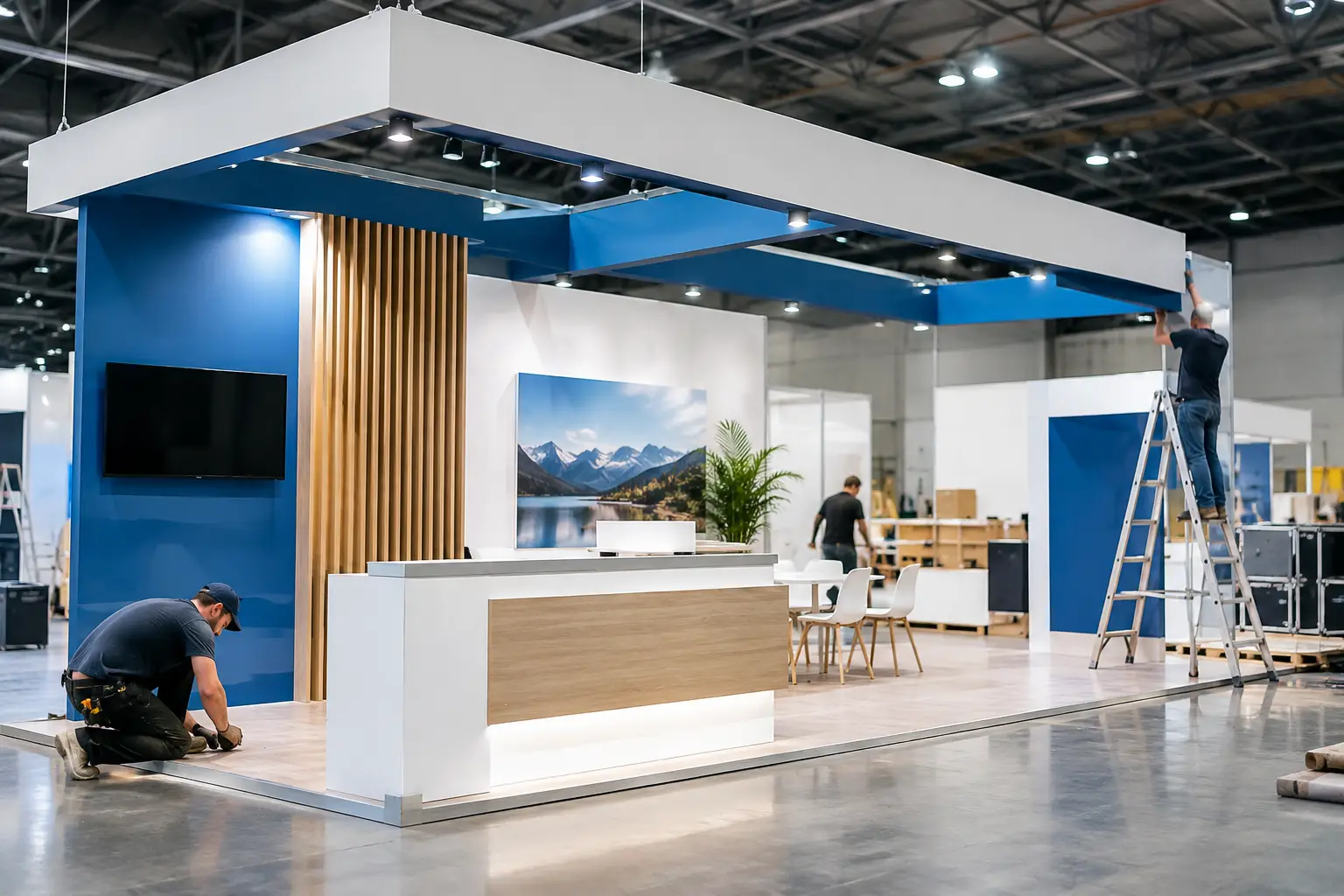
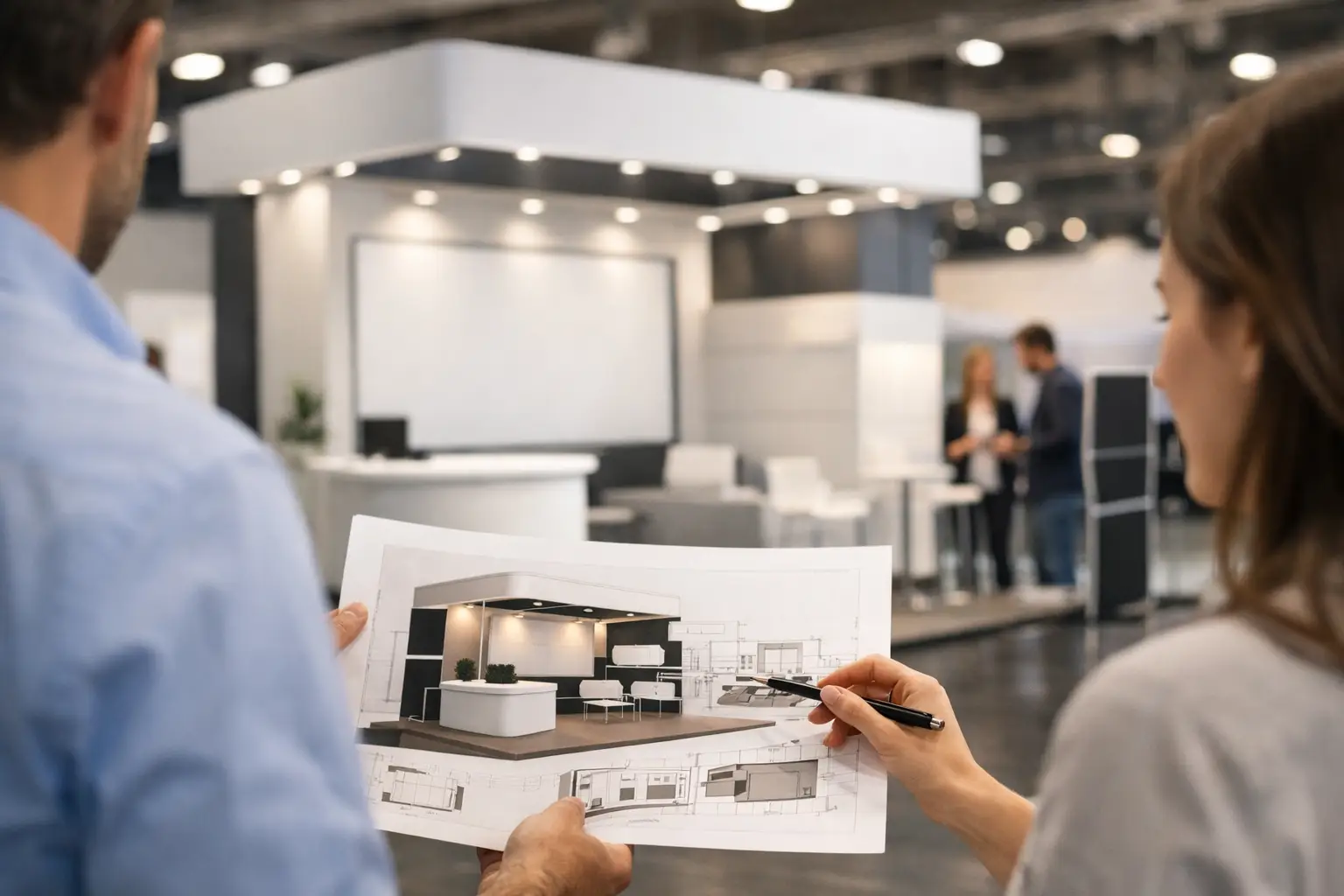
This is the part many first-time exhibitors underestimate. A booth may look excellent in a 3D render and still fail on-site if operational details are ignored. Power load, rigging approvals, ceiling height restrictions, venue rules, storage needs, cleaning access, shipping schedules, and installation windows all affect what is realistically possible.
That is why experienced booth design always includes execution planning early. Design ambition matters, but so does buildability. A dependable exhibition partner will challenge ideas that look impressive on paper but create unnecessary risk in production or at the venue.
This balance between creative impact and operational control is where strong outcomes happen. It is also where end-to-end delivery teams usually outperform fragmented vendor setups.
Budget smartly without shrinking the idea
Budget pressure is real, especially for brands exhibiting across multiple markets. The goal is not to spend less at all costs. The goal is to spend where it changes outcomes.
Large hanging features may be worth it if visibility is the main challenge. Premium meeting areas may justify the cost if senior buyers are your target. A smaller footprint with stronger graphics, lighting, and messaging can often outperform a larger but underplanned booth.
When budget decisions come up, ask which elements directly improve attraction, engagement, or conversion. Cut what looks impressive but does not support those results. Keep what strengthens visitor flow, brand clarity, and staff effectiveness.
A good exhibition booth is not the one with the most features. It is the one that works hardest per square foot.
Test the booth from the visitor’s point of view
Before production starts, review the design as if you were attending the event for the first time. Can you tell what the company does within a few seconds? Is there a natural reason to enter? Are products or services easy to understand? Is there enough space for staff to speak comfortably with visitors? Does the booth feel premium, approachable, and relevant to the audience?
It also helps to test the design against real scenarios. What happens during peak traffic? Where do quick conversations happen? Where do longer meetings happen? Where are brochures, samples, giveaways, and staff belongings stored? These questions may sound small, but they shape the overall experience.
For international exhibitors, local execution matters too. The best concept still depends on responsive project management, fabrication quality, and on-time installation. That is one reason many global brands choose partners who can manage design, production, and site delivery under one roof. LemonTree Exhibitions has built its reputation on exactly that balance of creativity and control across global show markets.
How to design an exhibition booth that performs after opening day
Design does not stop when the booth is built. Your staff, content, and follow-up process determine whether the space actually delivers return on investment. Even a well-designed booth can underperform if the team is passive, the messaging is inconsistent, or lead capture is weak.
The booth should support your people. Give them clear zones for greeting, presenting, and meeting. Make sure digital content loads quickly and plays reliably. Keep the space easy to maintain throughout the day. A booth that looks sharp at 10 a.m. but tired by mid-afternoon is not doing the full job.
The real measure of booth design is not how impressive it looks in photos. It is whether the right people stop, engage, remember your brand, and move one step closer to doing business with you.
If you approach booth design as a business tool rather than a decoration exercise, better decisions follow naturally – and so do better exhibition results.