

A striking stand concept can win approval in a presentation. What matters on the show floor is whether that concept is built accurately, installed safely, lit properly, and ready before the first visitor arrives. Knowing how to choose a stand builder is therefore not simply a design decision. It is a decision about brand risk, budget control, visitor experience, and the performance of your exhibition investment.
For marketing teams, procurement leaders, and exporters, the right partner should make a complex project feel controlled from the first briefing through dismantling. The wrong one can leave your team managing last-minute changes, unclear costs, and a stand that looks different from the rendering.
Start With the Outcome You Need From the Show
Do not begin by asking a builder for a quote based only on floor area. Start with the commercial purpose of your participation. Are you launching a product, meeting distributors, demonstrating machinery, hosting private client conversations, or building awareness in a crowded category? Each objective changes the stand brief.
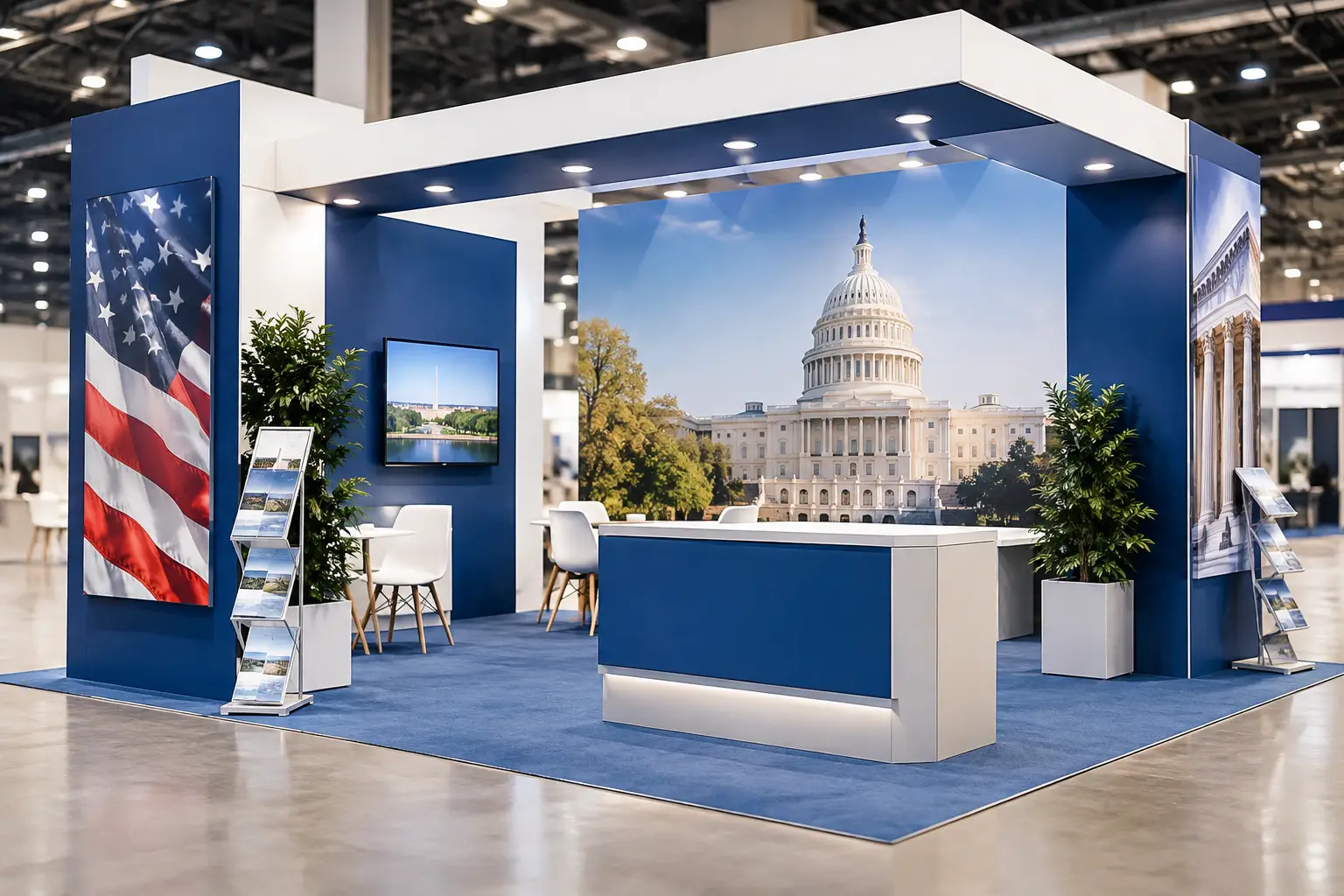
A technology brand may need demonstration zones, integrated screens, and lead capture points. A pharma company may need a calm, premium environment with discreet meeting areas. An equipment manufacturer may need load-bearing structures, clear sightlines, and space for working product displays. For a country pavilion, the project must balance a shared national identity with distinct, functional spaces for multiple exhibitors.
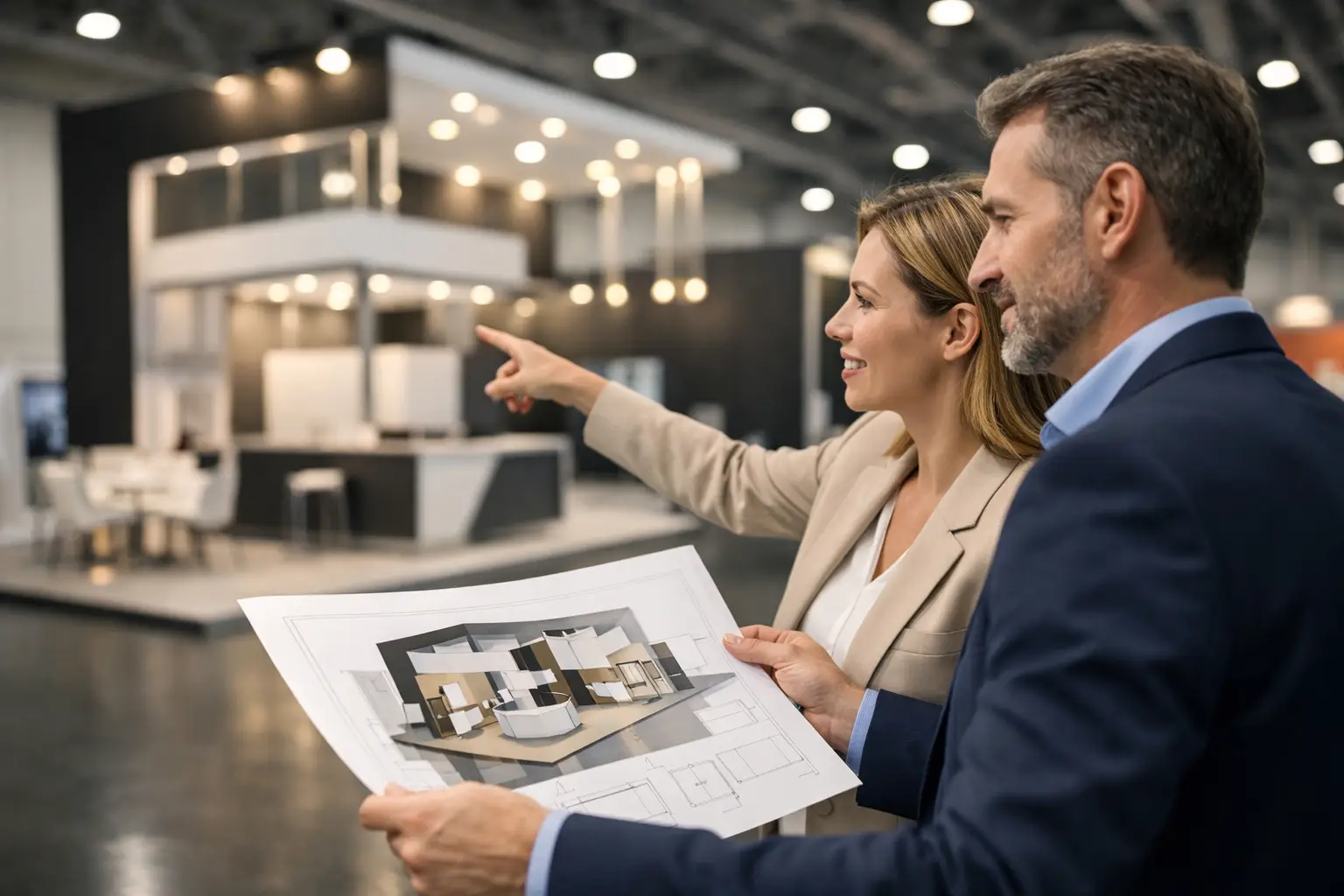
A dependable stand builder asks questions before proposing a design. They should want to understand your audience, show goals, product dimensions, staffing plan, hospitality requirements, brand guidelines, and budget range. A beautiful stand that does not support the conversations your sales team needs to have is not a successful stand.
How to Choose a Stand Builder Beyond the Design Render
A strong portfolio matters, but polished renderings are only one part of the assessment. Exhibition construction involves venue rules, engineering, electrical coordination, logistics, material sourcing, installation schedules, and on-site problem solving. Ask prospective builders to show how they manage the complete process, not just their visual concepts.
Look for evidence that they have delivered projects comparable to yours in scale and complexity. If you are planning a 100-square-meter space, a double-decker structure, a product-heavy display, or a pavilion, evaluate relevant examples rather than a collection of small modular booths. The builder should be comfortable discussing practical details such as access timings, ceiling heights, storage, rigging requirements, fire regulations, power loads, and visitor flow.
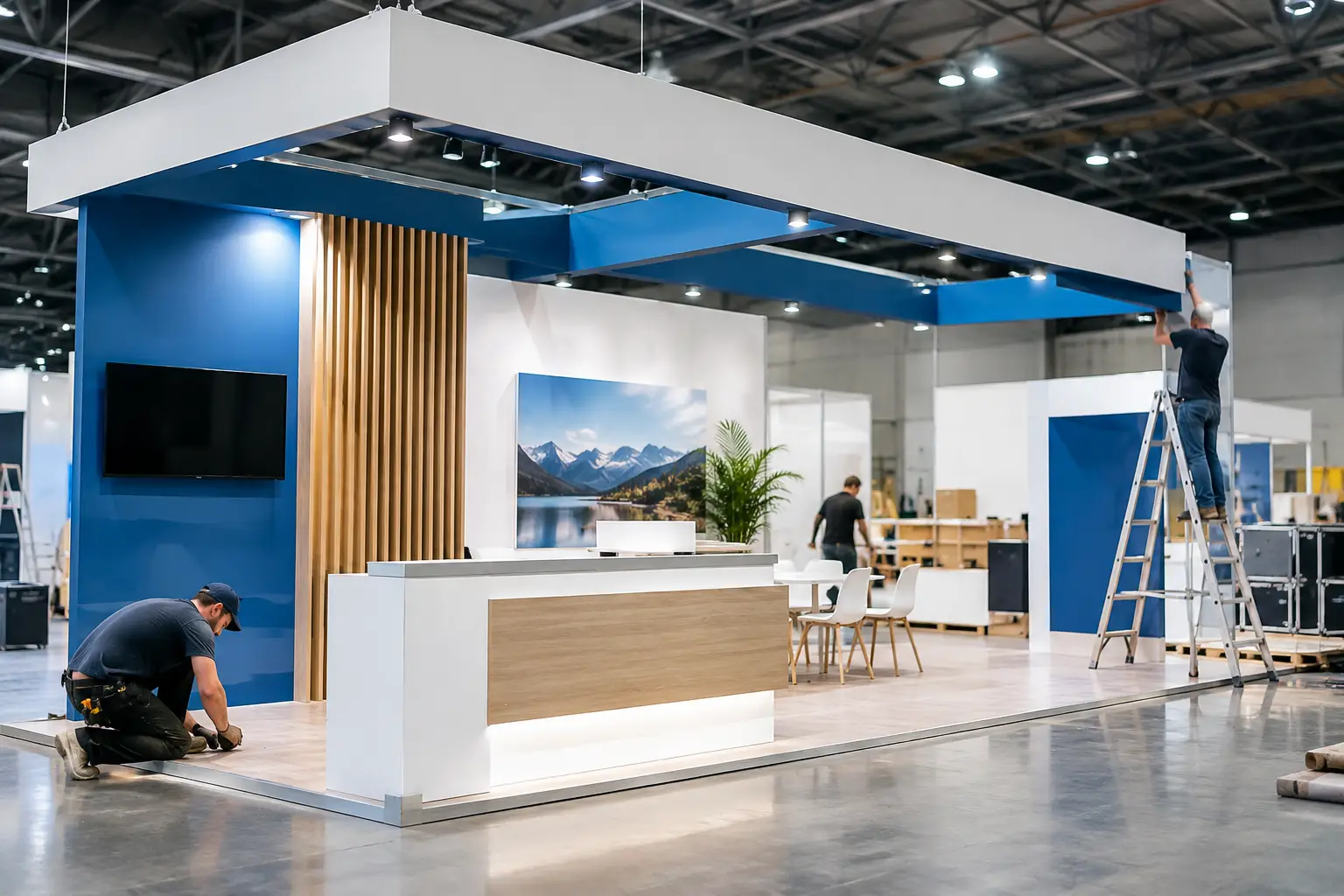
It is also useful to ask what the final installed stand looked like compared with the approved design. High-quality builders take pride in execution because details matter: clean finishes, precise graphics, stable joinery, consistent lighting, concealed cabling, and furniture that fits the layout rather than filling empty space.
Check Whether Production Is Truly Under Their Control
The exhibition industry often involves multiple subcontractors. That is not automatically a problem, particularly for international events, but you need clarity about who owns the outcome.
A builder with an in-house design team and fabrication capability usually has stronger control over quality, timelines, and changes. Designers can work directly with production teams to resolve buildability concerns early. Project managers have better visibility into material availability and fabrication progress. If an adjustment is needed during installation, the team can respond without waiting for several third parties to align.
Ask direct questions: Who fabricates the stand? Who manages logistics? Who supervises installation at the venue? Who is your single point of contact if an issue arises? A clear answer indicates operational discipline. A vague answer may signal a fragmented delivery model.
For international exhibitions, local knowledge is equally valuable. A builder may have an excellent workshop in one market but limited control in another. Confirm whether they have trusted local teams, established supplier networks, and experience with the specific venue. A partner that has delivered in Dubai, Riyadh, Mumbai, Las Vegas, Chicago, or major European venues will understand that every exhibition ecosystem has its own procedures and deadlines.
Compare Scope, Not Just the Headline Price
The cheapest quotation is often the most expensive option once exclusions start appearing. Exhibition budgets can be affected by venue services, electrical connections, internet, hanging points, permits, drayage, storage, furniture, graphics, AV equipment, cleaning, and after-hours labor. A responsible proposal makes the scope easy to understand.
When comparing builders, check whether each quote includes design development, technical drawings, fabrication, transportation, installation, dismantling, project management, and on-site supervision. Then identify what remains outside the price. You do not need every venue cost bundled into one figure, but you do need a transparent view of likely spend.
Be cautious when a quote is significantly lower than comparable proposals. It may reflect lower-grade finishes, reduced staffing, missing services, or assumptions that will later become variations. Equally, a higher price is not automatically better. Ask the builder to explain where your money is going and what business value each major element provides.
A client-first partner will also help you distinguish between investments visitors will notice and costs that can be reduced without harming the experience. For example, a well-planned lighting scheme and large-format visual focal point may create more impact than adding decorative elements that do not support the visitor journey.
Assess Project Management Before You Sign
Exhibition deadlines are fixed. There is no realistic extension when the hall opens the next morning. That makes communication and accountability as important as creativity.
Ask how the builder runs a project after the order is confirmed. You should expect a defined schedule covering design approval, artwork deadlines, production milestones, logistics, venue submissions, installation, and handover. Your team should know when decisions are required and who is responsible for each action.
The best project managers are proactive rather than reactive. They flag issues early, explain options clearly, and protect the approved brief when last-minute requests appear. This matters most when several internal stakeholders are involved, such as brand teams, product managers, sales leaders, agencies, and procurement.
During the selection process, pay attention to the speed and quality of communication. Are questions answered precisely? Are revisions documented? Does the team challenge impractical requests constructively? The way a builder manages a proposal is often a useful preview of how they will manage your show.
Make Safety, Compliance, and Sustainability Part of the Brief
A premium appearance has no value if the structure is unsafe or fails venue approval. Your builder should understand local regulations, structural requirements, fire-rated materials, electrical safety, and the documentation required by organizers. This is particularly critical for double-decker stands, suspended elements, enclosed rooms, and large LED installations.
Sustainability deserves the same practical approach. Ask whether materials can be reused, repurposed, or recycled after the show, and whether the design can incorporate rental elements where appropriate. Fully custom does not have to mean wasteful. The right mix of reusable framework, durable finishes, and modular components can reduce disposal while retaining a distinctive brand presence.
The trade-off is that sustainable choices sometimes require earlier planning or a slightly different construction method. A good builder will explain those choices honestly rather than making vague environmental claims.
Ask for References That Match Your Priorities
References are most useful when they relate to the outcome you care about. If speed is critical, ask about delivery under tight timelines. If you are exhibiting overseas, ask about cross-border coordination. If executive stakeholders expect a premium finish, ask about quality control and on-site responsiveness.
You can also ask a builder what went wrong on a past project and how the team resolved it. Live events are unpredictable. Freight delays, venue restrictions, revised floor plans, and technical failures can occur. The valuable measure is not whether a team claims perfection, but whether it has the experience and ownership to protect your presence when pressure rises.
LemonTree Exhibitions approaches this work as an end-to-end responsibility, combining creative stand design with in-house production, logistics coordination, installation, and dismantling across global exhibition markets. That level of control helps keep design ambition aligned with practical delivery.
Choose a Partner Your Team Can Trust on Site
The final decision often comes down to confidence. You need a builder that understands your commercial goals, respects your budget, communicates clearly, and has the operational depth to deliver what it promises. A bold concept is valuable, but it must be supported by dependable craftsmanship and disciplined execution.
Choose the partner that gives you the clearest plan, the most relevant evidence, and the strongest sense of accountability. When show doors open, your team should be focused on visitors and opportunities, not managing the stand builder.