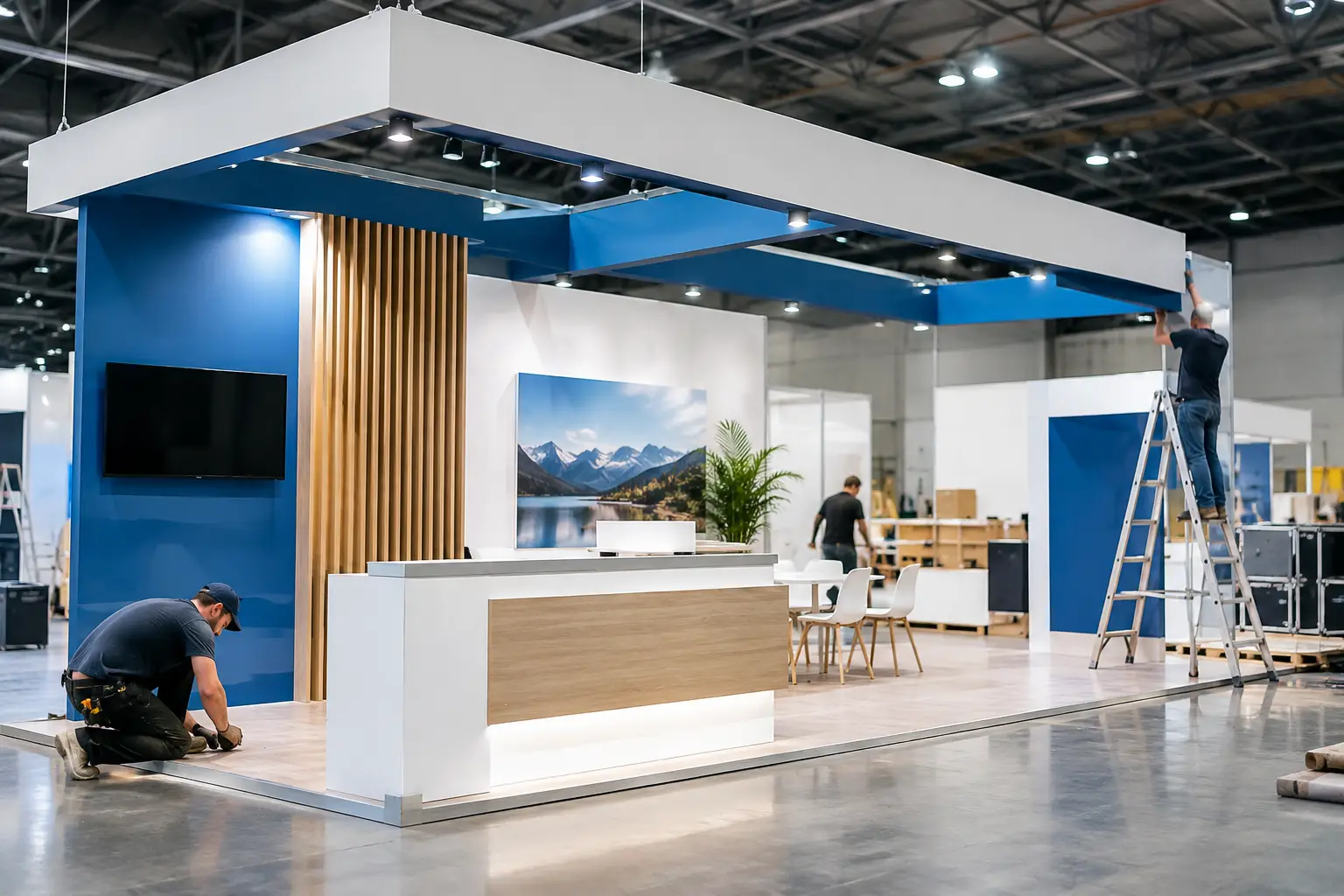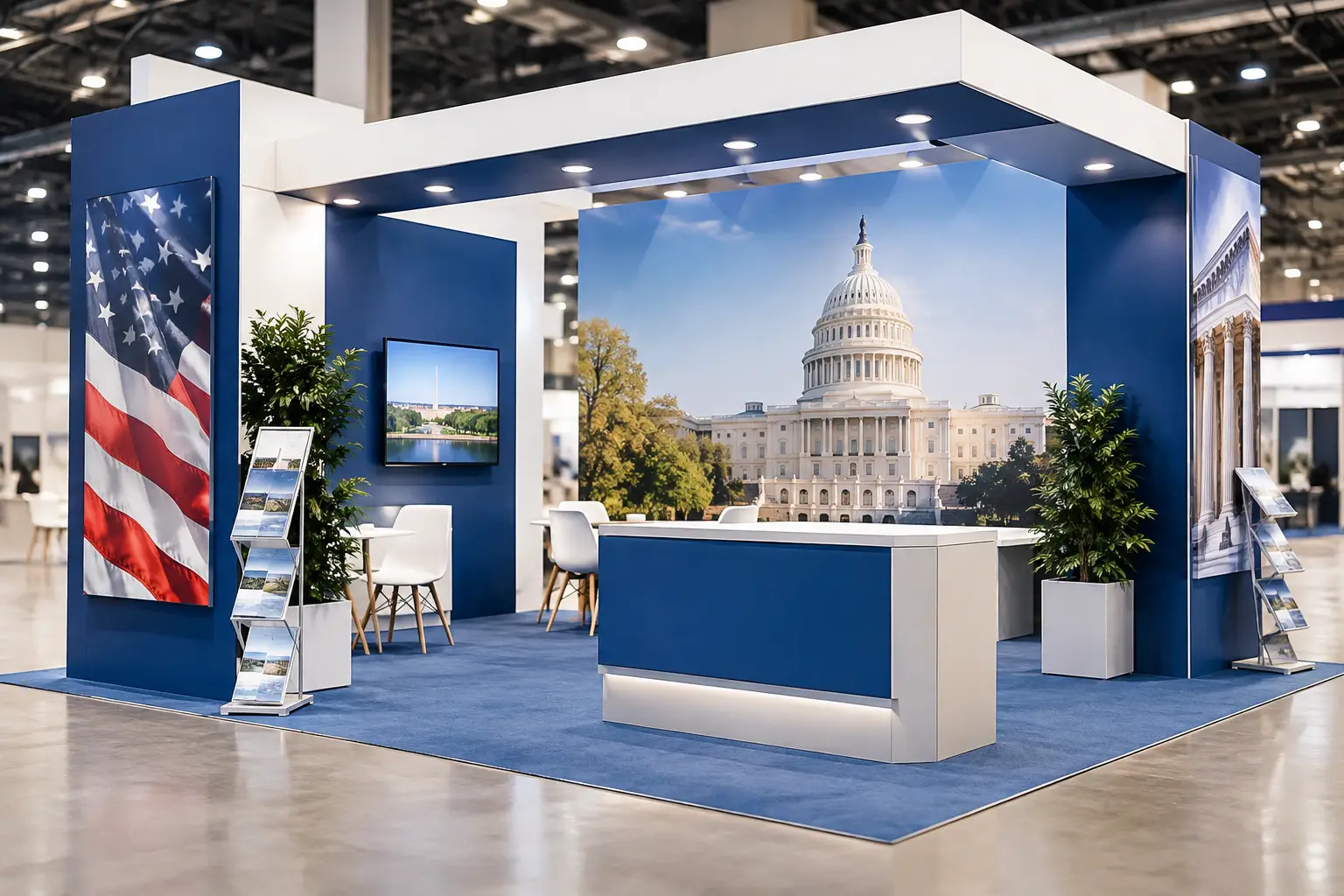

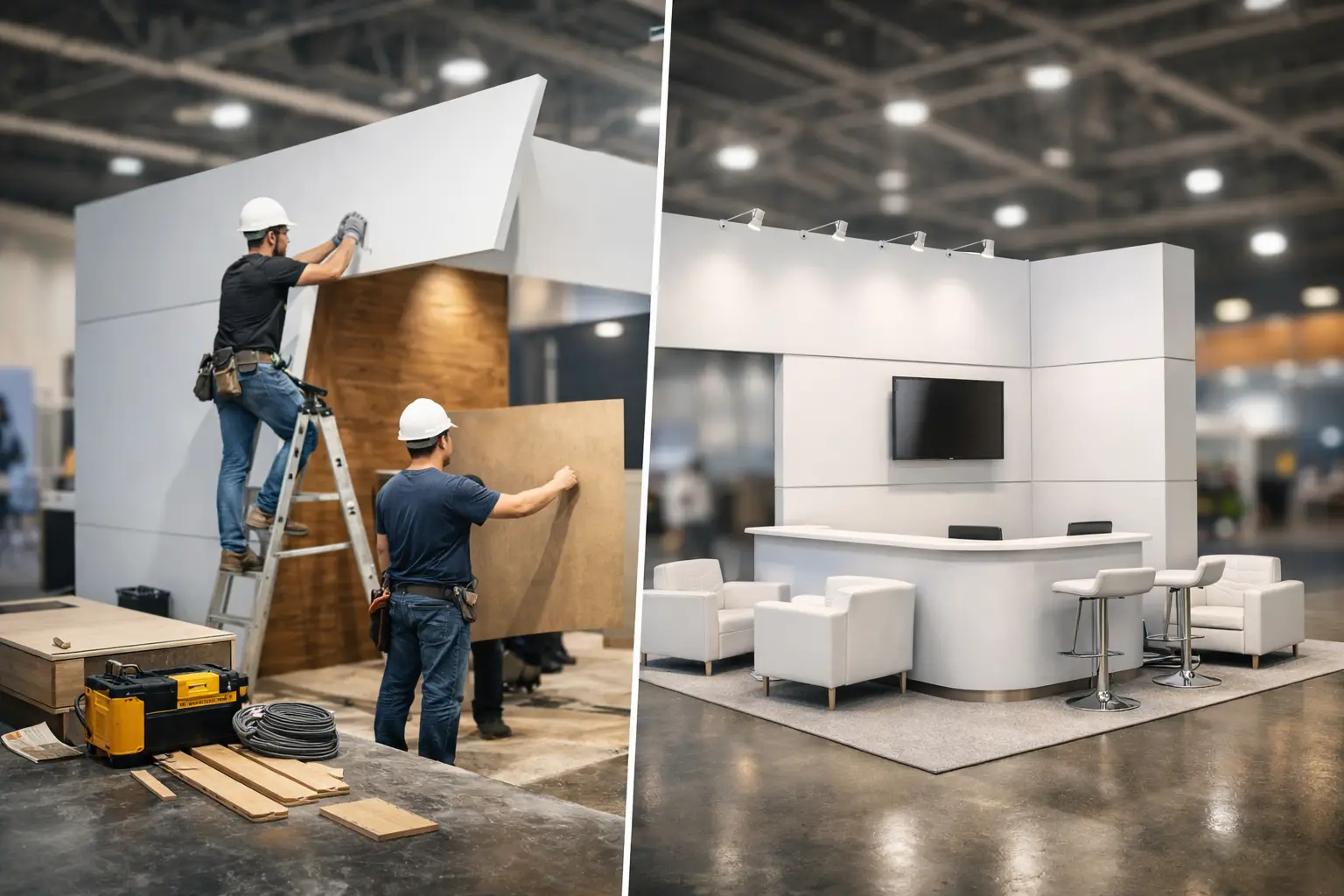

A 20-by-30-foot booth can either make your brand feel like the destination on the show floor or like one more supplier competing for a glance. The custom booth builder vs booth rental decision shapes far more than the look of your space. It affects budget control, visitor flow, lead-generation potential, installation risk, and how consistently your brand appears across events.
For marketing teams and procurement leaders, the right answer is rarely a simple choice between premium and practical. A rental booth can be a smart commercial decision. A custom-built stand can be the stronger investment when the event carries high stakes, the brand requires a distinct presence, or the program extends across several markets. The key is matching the format to the job the booth must do.
What a Custom Booth Builder Delivers
A custom booth builder designs and fabricates an exhibition environment around your objectives, footprint, brand identity, products, and visitor journey. Rather than adapting your graphics to a pre-existing frame, the structure is developed to support the experience you want attendees to have.
That may mean a product demonstration zone that draws a crowd without blocking conversations, a semi-private hospitality area for senior meetings, an elevated double-decker lounge, or an LED video wall visible from a main aisle. For complex B2B products, a custom environment can turn a technical sales conversation into a clear, memorable story.
The value is not only visual. A dependable builder manages the operational details that determine whether a bold concept works on site: structural approvals, electrical planning, material selection, fabrication, packing, transport, installation, and dismantling. For exhibitors traveling to major events in Dubai, Riyadh, Mumbai, Las Vegas, or Frankfurt, that executional control reduces the burden on an internal team already managing launch plans, sales schedules, and stakeholder expectations.
Custom does not always mean building an entirely new booth from scratch for every event. A thoughtful stand can be designed with reusable components, interchangeable graphics, and adaptable zones. This creates a more tailored presence while keeping future participation costs in view.
When Booth Rental Is the Better Business Case
Booth rental is often the right route when speed, flexibility, or first-year cost matters most. Rental systems typically use modular structures, standard furniture, display units, counters, lighting, and graphic panels configured for the space you have booked.
For a company testing a new trade show, entering a new territory, or exhibiting with a small team, renting avoids the upfront cost of owning a structure. It also eliminates storage, maintenance, refurbishment, and long-term inventory management. If your booth requirements change significantly from one event to the next, that flexibility can be valuable.
Rental does not have to look generic. Strong design direction, well-produced graphics, purposeful lighting, clean product presentation, and the right furniture can create a polished result. The limitation is that the underlying architecture may be shared with many other exhibitors. When differentiation is essential, standard dimensions and off-the-shelf components can restrict what is possible.
A rental booth is particularly effective for smaller footprints, one-off appearances, supporting events, recruitment fairs, or early-stage market entry. It can also serve as a practical backup strategy when timelines are unusually compressed.
Custom Booth Builder vs Booth Rental: The Real Differences
The most useful comparison is not ownership versus renting alone. It is the level of control you need over brand impact, functionality, and reuse.
Brand distinction and visitor experience
A rental booth begins with available inventory. A custom stand begins with your desired outcome. If your objective is to create a high-traffic product launch, host distributor meetings, demonstrate machinery, or reinforce a premium market position, custom design gives you more freedom to shape sightlines, circulation, storage, hospitality, and visual hierarchy.
This matters at crowded shows where competitors often occupy similar-sized spaces. A distinctive ceiling feature, tailored display system, purposeful lighting plan, or large-format digital content can make the stand easier to find and more likely to be remembered.
Rental can still support a strong brand presence, especially when the message is simple and graphics do the heavy lifting. But if every functional requirement must fit into a modular template, compromises usually appear in the details: limited storage, awkward meeting areas, a less visible product display, or a layout that does not guide visitors naturally.
Upfront cost and total program cost
Rental generally has a lower initial cost. That makes it attractive when there is one show, an uncertain event calendar, or a tight approval cycle. However, the lowest quote is not always the lowest total cost. Confirm what is included for design, graphics, furniture, lighting, electrical work, delivery, installation, dismantling, venue fees, and damage coverage.
A custom stand requires more initial investment because it involves original design and fabrication. Yet it can become more cost-effective over multiple appearances, especially when the structure is designed for repurposing. The economic case improves when you can retain key components and update graphics or modular sections instead of starting over.
A useful question is not, “What does this booth cost?” Ask, “What will this exhibition program cost across the next two or three events, and what result does each format give our sales team?”
Timeline and operational risk
Rental systems can move quickly because many components are already in stock. For late confirmations or a modest space, that speed is a genuine advantage.
Custom work needs sufficient lead time for design approvals, engineering where required, fabrication, finishing, pre-build checks, and logistics. That is not a weakness when it is planned properly. It is the process that protects quality. A builder with in-house design and production can respond faster to changes and maintain closer control over materials, workmanship, and final fit.
For international exhibitions, local rules add another layer. Height limits, hanging restrictions, fire regulations, venue service orders, and union or contractor requirements can affect both cost and design. A capable exhibition partner anticipates these conditions before fabrication begins rather than finding workarounds during installation.
Sustainability and reuse
Rental can reduce the need to manufacture a new structure for a single appearance, but reusable inventory is only one part of the sustainability picture. Transportation, graphics production, short-life finishes, and end-of-show disposal also matter.
A custom booth can be the responsible choice when it is designed for a long life. Reusable frames, durable surfaces, replaceable graphics, and material recovery plans help reduce waste while preserving a premium result. The best approach is often a hybrid: retain the branded architectural elements that matter most and rent standardized furniture or equipment locally.
How to Choose for Your Next Event
Start with the commercial purpose of the show. If the event is a major annual platform where you launch products, meet strategic buyers, host partners, or compete for market leadership, the case for a custom stand is stronger. Your booth should support the sales process, not merely occupy the contracted floor space.
Then look at frequency. A company attending one regional event may benefit from rental flexibility. A company exhibiting repeatedly at industry-defining shows should assess the lifecycle value of a reusable custom asset.
Finally, consider the consequences of a weak presence. At a high-value event, a stand that cannot accommodate meetings, display products properly, or stand out from surrounding competitors can cost more in missed opportunities than it saves in build budget.
For many exhibitors, the answer is neither fully custom nor fully rental. A hybrid approach can combine a custom branded centerpiece, tailored display zones, and reusable graphics with rented furniture, AV equipment, or modular structural elements. This keeps investment focused on the elements visitors will remember.
LemonTree Exhibitions approaches this decision from both a creative and operational perspective, helping clients build only what their event strategy justifies. The goal is a stand that looks ambitious, works hard for the sales team, and arrives ready to perform.
Before approving a format, ask your exhibition partner to show how the layout supports visitor flow, conversations, product interaction, storage, and future reuse. The right booth is the one that gives your team the confidence to spend less time managing the stand and more time creating valuable business on the show floor.