

At a busy trade show, floor space disappears fast. If your team needs private meeting rooms, product display zones, hospitality space, and strong brand visibility, a double deck exhibition stand can solve several problems at once – but only if the structure is planned with clear business goals behind it.
For many exhibitors, the appeal is obvious. You gain a second level without needing a much larger footprint on the show floor. That can transform how your booth works. But a double deck build is not automatically the right move for every brand, every venue, or every budget. The smart decision comes down to function, compliance, visitor flow, and the commercial value of the extra space.
What a double deck exhibition stand actually gives you
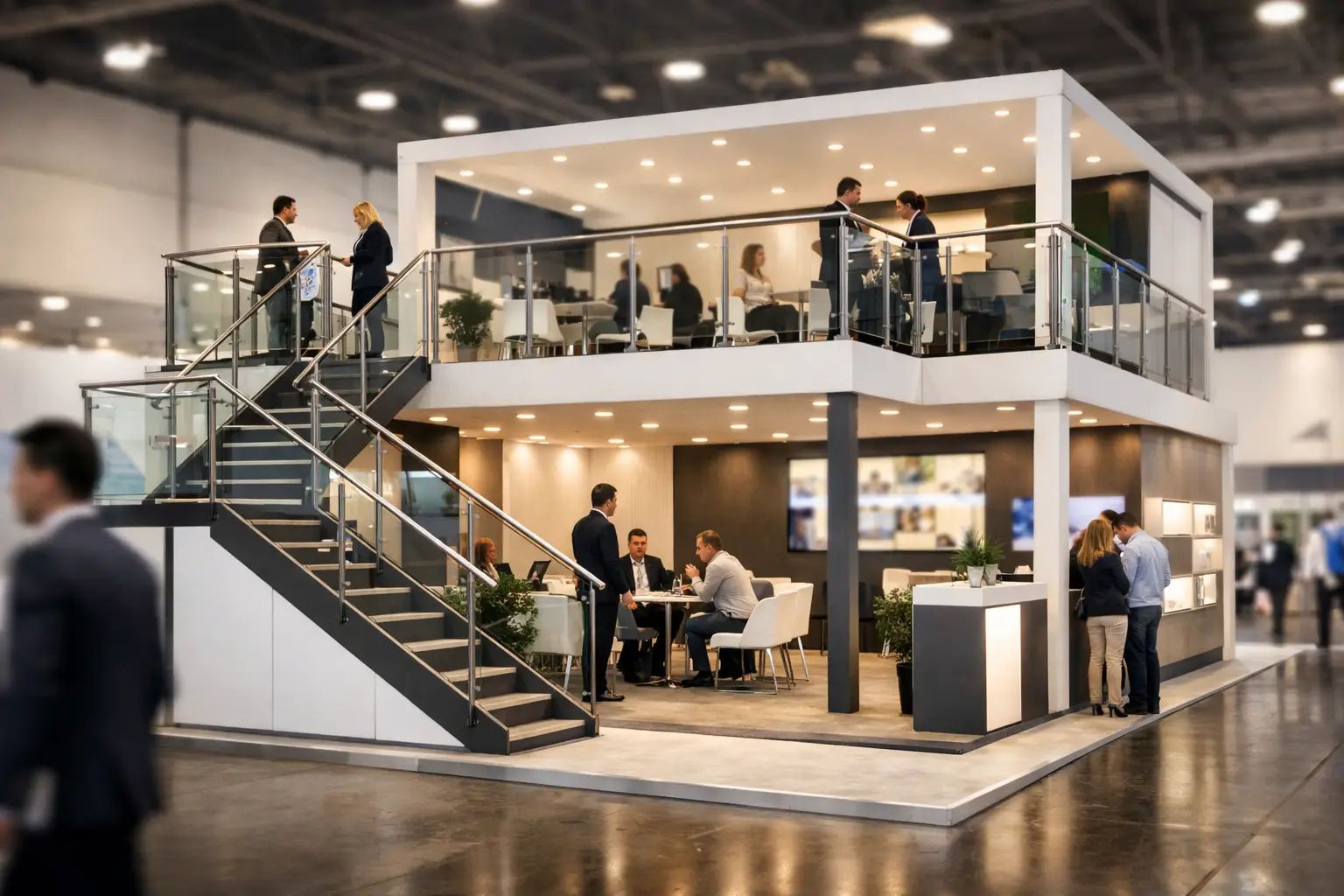
A double deck exhibition stand is more than a larger booth. It is a way to separate experiences within the same footprint. The ground floor can handle traffic, product engagement, demonstrations, and brand storytelling, while the upper deck creates a quieter environment for meetings, VIP hosting, or focused conversations.
That split matters. At major industry events, the ground level is usually noisy and crowded. If your sales team is trying to close deals or discuss technical specifications, that environment can work against you. An upper level creates distance from the show floor without taking your team away from the stand.
The visual impact is another reason brands choose this format. Height draws attention. In halls filled with standard booths, a well-designed double deck stand can improve long-range visibility and help visitors identify your location quickly. For exhibitors investing heavily in events like GITEX, ADIPEC, Gulfood, or Big 5, that visibility can be a practical advantage, not just a design preference.
When a double deck stand makes sense
The best use case is simple: you need more than one type of space, and every square foot must work harder.
This format often suits brands with large product portfolios, multi-region teams, or a sales process that requires both open engagement and private discussion. It is especially useful for sectors such as technology, manufacturing, energy, pharma, automotive, and real estate, where exhibitor conversations range from casual lead generation to serious commercial negotiation.
A double deck exhibition stand also makes sense when your booth needs to host stakeholders, distributors, or government delegations. If hospitality is part of your event strategy, the upper level can provide a more controlled setting. That said, if your show objective is simple product sampling or high-volume walk-up interaction, a single-level booth may perform better because it removes barriers and keeps the experience more immediate.
It also depends on footprint size. Double deck structures tend to make the most sense when the base area is already substantial. If the footprint is too small, adding a staircase and structural requirements can reduce usable ground-floor space more than expected. Bigger is not always better. Efficient planning is better.
The real trade-off: impact versus complexity
This is where many decisions become clearer. A double deck stand offers more presence and more usable zones, but it also brings more engineering, more approvals, and more coordination.
Venue regulations are a major factor. Not every exhibition hall permits double deck structures, and those that do usually require detailed structural drawings, load calculations, fire and safety compliance, and approval well before move-in. Ceiling height, rigging limitations, and evacuation rules all affect what is possible.
Then there is build complexity. A multi-level stand involves heavier fabrication, more precise installation, and tighter on-site sequencing. Deadlines matter more because there is less room for improvisation during setup. If your exhibition partner is relying heavily on outsourced production or fragmented contractors, that can create risk.
This is why experienced exhibitors usually look beyond the render. The design needs to be attractive, yes, but also practical to fabricate, transport, install, and dismantle within the venue schedule. A beautiful concept that struggles through approvals or site execution is not a good investment.
Budget expectations and what drives cost
The question most procurement and marketing teams ask is fair: does the extra level justify the extra spend?
In many cases, yes – but only when the stand supports a clear exhibition strategy. The cost of a double deck exhibition stand is higher than a single-level custom booth because of structural engineering, additional fabrication, staircase construction, material volume, compliance documentation, and installation labor. Finishes, AV integration, LED walls, meeting room specifications, and hospitality features can increase the budget further.
However, cost should be measured against output. If the upper deck allows your team to conduct high-value meetings throughout the show, host channel partners properly, or create a premium brand environment that improves lead quality, the return can justify the investment. On the other hand, if the second level is underused and becomes little more than a visual statement, the numbers are harder to defend.
A reliable stand partner should help define where the investment goes and where it can be controlled. Material choices, modular planning, reuse potential, and fabrication efficiency all influence budget without necessarily compromising impact.
Design priorities that matter more than size
The strongest double deck stands are organized, not overcrowded. When exhibitors get excited about the extra level, they sometimes try to fit too much into every corner. That usually hurts both function and visitor experience.
Start with circulation. Visitors should understand where to enter, where to engage, and where to speak with your team. If the staircase feels hidden or awkward, the upper deck may go underused. If the ground floor is blocked by structural elements or enclosed meeting rooms, traffic can stall.
Branding should work at distance and at eye level. Height helps, but only if the graphics, architecture, and lighting are designed for visibility across the hall. The upper fascia, hanging features, and illuminated brand elements need to be considered together.
Meeting space also needs honest planning. Some brands ask for too many private rooms and not enough open interaction. Others leave the upper deck too open and lose the privacy they wanted in the first place. The right balance depends on your sales process, average meeting length, and expected visitor profile.
Technology should support the objective, not compete with it. Large LED walls, interactive displays, and presentation zones can add energy, but they must fit the booth narrative. If every surface is demanding attention, your message gets diluted.
Why execution matters as much as concept
Double deck structures reward disciplined project management. There are more technical checks, more supplier coordination, and more pressure on timelines. That means the partner you choose must be strong in both design and delivery.
For exhibitors working across multiple markets, this becomes even more important. Different venues and organizers have different rules, and local execution standards vary. A builder with in-house design, fabrication, logistics, installation, and dismantling control can reduce friction at every stage. It also improves accountability when approvals tighten or site conditions change.
This is where experienced companies such as LemonTree Exhibitions add value beyond the booth itself. End-to-end management helps clients move from concept to show floor with fewer surprises, tighter quality control, and better cost visibility – especially on larger custom and double deck projects.
Questions to ask before you commit
Before approving the build, it helps to pressure-test the idea internally. Ask whether the second level supports a measurable objective. Ask how many meetings you realistically expect to host there. Ask whether the venue permits the structure and whether your timeline allows enough room for approvals and fabrication.
Also ask what happens after the show. Can elements be reused? Can the structure be adapted for future events? Is the investment tied to one appearance, or can it support a broader exhibition calendar?
These questions do not slow the process down. They make the stand better.
A smart choice for the right brief
A double deck exhibition stand is at its best when it solves a space problem, sharpens brand presence, and creates better conditions for commercial conversations. It is not the right answer for every exhibitor, but for brands with serious trade show objectives, it can turn a busy footprint into a high-performing business environment.
The best results come when ambition is matched by planning. If your team is considering a multi-level booth, think beyond the headline impact and focus on how the space needs to work from the first visitor to the final meeting. That is usually where the real value shows up.