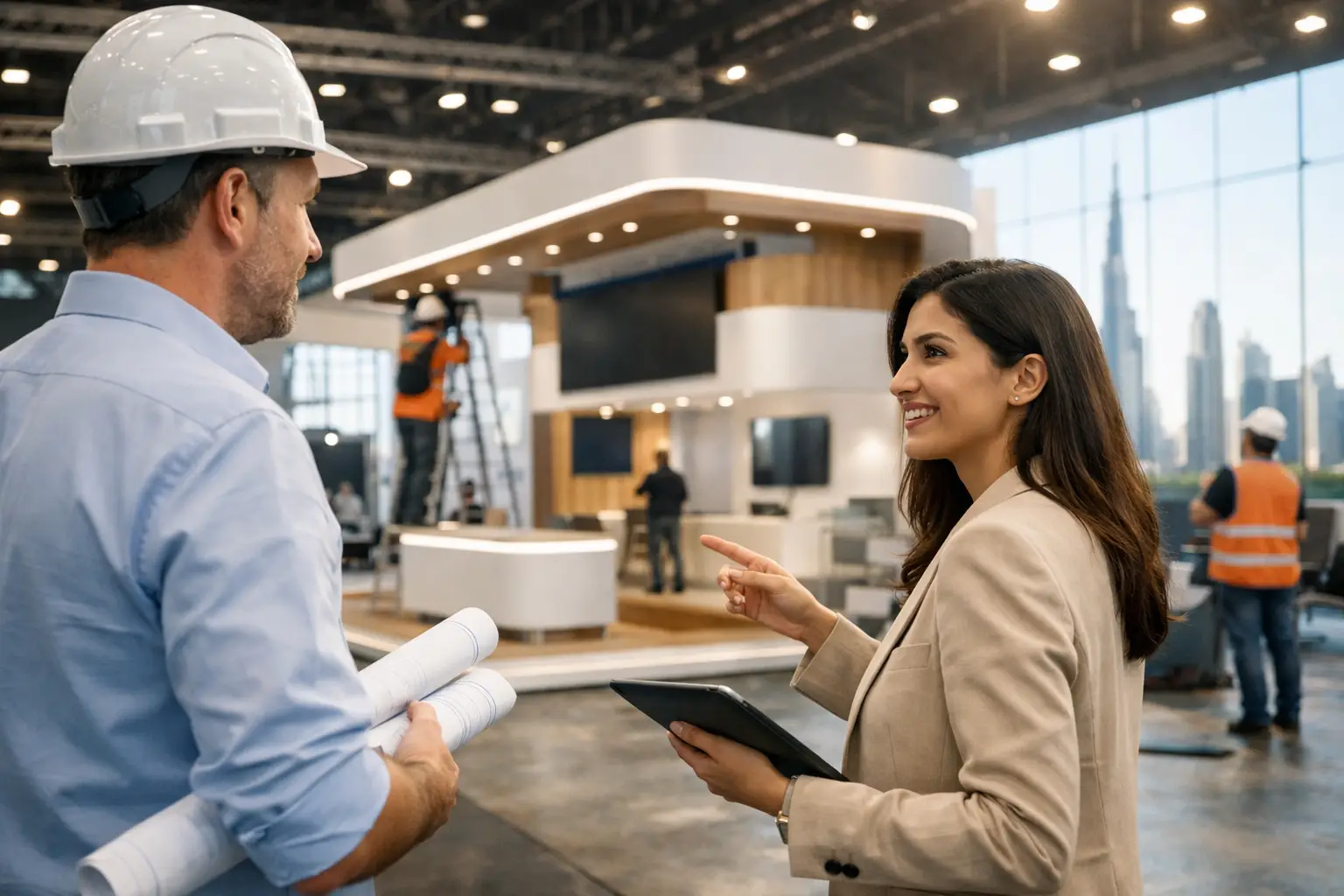


At the Middle East Energy Show, attention is earned in seconds, but meaningful business is won through planning. Energy buyers, project teams, distributors, government representatives, and technology partners arrive with packed schedules and serious agendas. Your stand needs to make your offer clear, give the right people a reason to stop, and create a practical setting for conversations that move opportunities forward.
For marketing and procurement teams, this is not simply a design exercise. It is a coordinated project involving brand positioning, visitor experience, product demonstration, utilities, approvals, fabrication, logistics, installation, and on-site readiness. The strongest exhibition presence is bold enough to be noticed and disciplined enough to work under real show-floor conditions.
What Makes the Middle East Energy Show Different
Energy exhibitions reward clarity over noise. Visitors may be comparing power equipment, cable solutions, automation platforms, renewable technologies, energy storage, digital monitoring systems, and infrastructure capabilities in the same day. A visually impressive stand is valuable, but it must immediately answer a more important question: what does your business help customers achieve?
That answer changes by company. A manufacturer may need to demonstrate reliability and scale. A technology provider may need to make a complex platform easier to understand. An exporter may need to establish credibility with regional distributors. A government or trade body may need a country pavilion that helps multiple companies look coordinated while preserving their individual identities.
The trade-off is straightforward. An open, highly accessible stand can attract more traffic, while enclosed meeting rooms can support confidential, high-value discussions. The right balance depends on your sales model, the complexity of your offer, and the level of decision-maker you expect to meet.
Start With Commercial Goals, Not Stand Features
Before approving a layout, define what a successful show looks like. “Brand awareness” is rarely enough to guide a design or staffing decision. Set priorities that can shape the project, such as qualified meetings booked, demonstrations delivered, distributor conversations started, leads captured, or product launches supported.
A clear objective prevents common mistakes. If your team needs to demonstrate a technical product, a large decorative reception counter may add little value compared with a functioning demo zone. If senior leadership is hosting strategic clients, private hospitality and a controlled meeting area may matter more than maximizing open floor space.
Align four decisions early: your visitor profile, the message they should remember, the action you want them to take, and the proof that supports your claim. That proof could be an operating product, a case study, certification, a large-format technical visual, or a knowledgeable team member who can explain the application in practical terms.
Design for Fast Understanding and Better Conversations
A good stand does not ask visitors to work hard. From the aisle, they should be able to identify your brand, category, and central proposition. Once inside, the environment should guide them naturally from initial interest to product understanding and then to a useful conversation.
Make the first five seconds count
Your highest branding, primary graphics, and LED content should be readable at a glance. Avoid filling every surface with specifications, product names, and campaign statements. Energy-sector audiences value detail, but they need a reason to seek it out first.
Use one central message, supported by a small number of proof points. For example, a company focused on grid resilience might lead with reliability, then support it with installation scale, compliance credentials, and a product demonstration. This approach is more effective than presenting every capability with equal weight.
Create zones with a job to do
Most successful stands combine several functional areas: an open attraction point, product or demo displays, a welcome and lead-capture point, semi-private discussion space, and storage for daily operations. The proportion of each area should match your objective.
For a smaller booth, multifunctional design is often the smarter investment. A presentation wall can also serve as a visual backdrop for conversations. A compact consultation table can host product discussions without requiring a fully enclosed meeting room. For larger spaces, a double-decker structure can add meeting capacity and visual authority, but only when the extra height and build cost support a clear commercial need.
Respect the realities of technical displays
Energy products often involve heavy equipment, live demonstrations, screens, lighting, and detailed data. These requirements affect flooring load, power distribution, cable routing, ventilation, safety planning, and access for installation. Address them at the design stage, not when the stand is already being built.
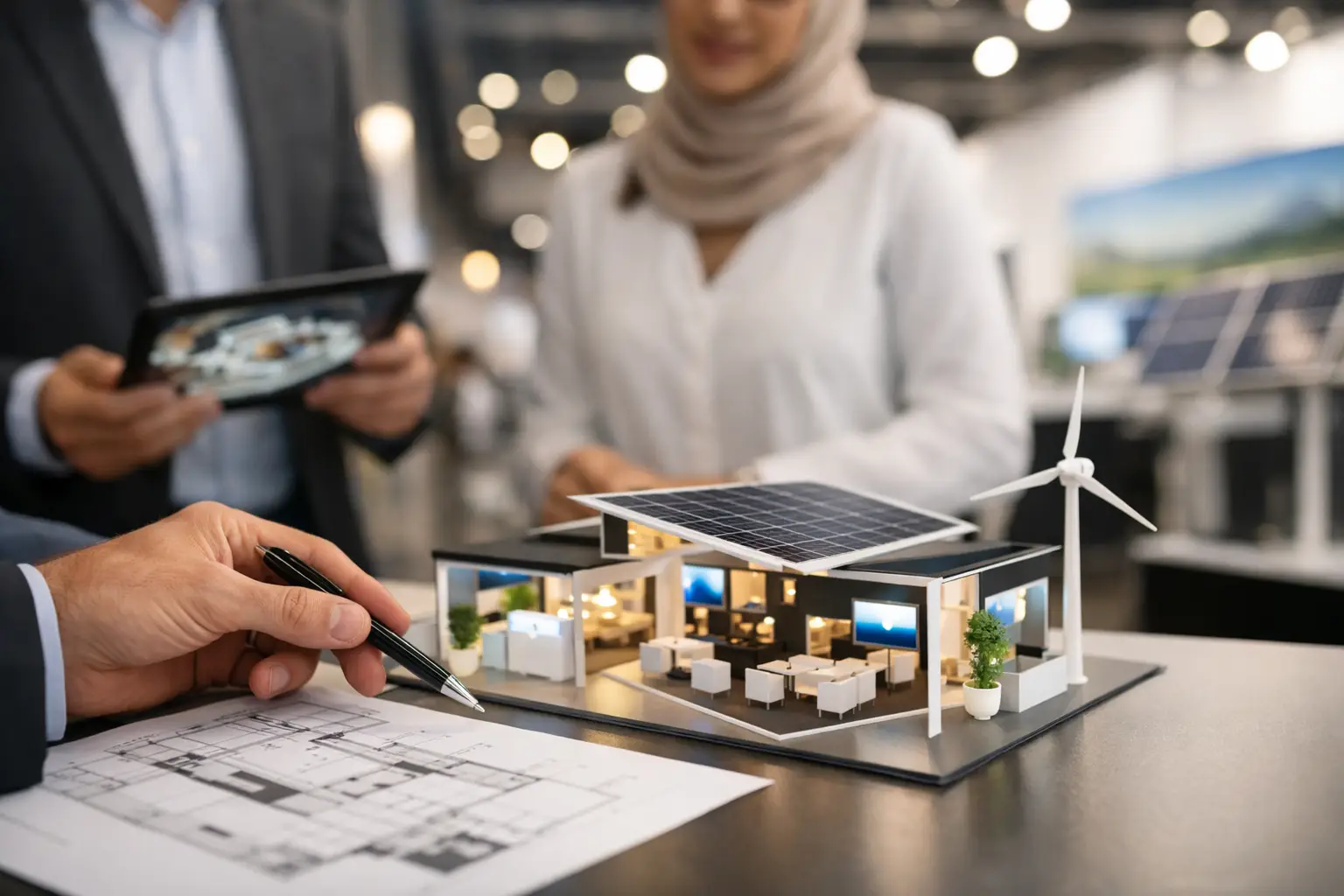
A realistic product display can be highly persuasive, but full-scale equipment is not always the best choice. It depends on shipping cost, floor loading, handling restrictions, and whether the product can be understood through a cutaway model, digital demonstration, or smaller component display. The most effective solution is the one that makes the value proposition tangible without creating unnecessary risk or cost.
Plan the Build Early Enough to Protect Quality
Exhibition deadlines arrive quickly, especially when approvals, custom fabrication, imported materials, and show-site services are involved. Late design changes can affect more than the artwork. They can alter structural engineering, electrical planning, production schedules, transport arrangements, and installation time.
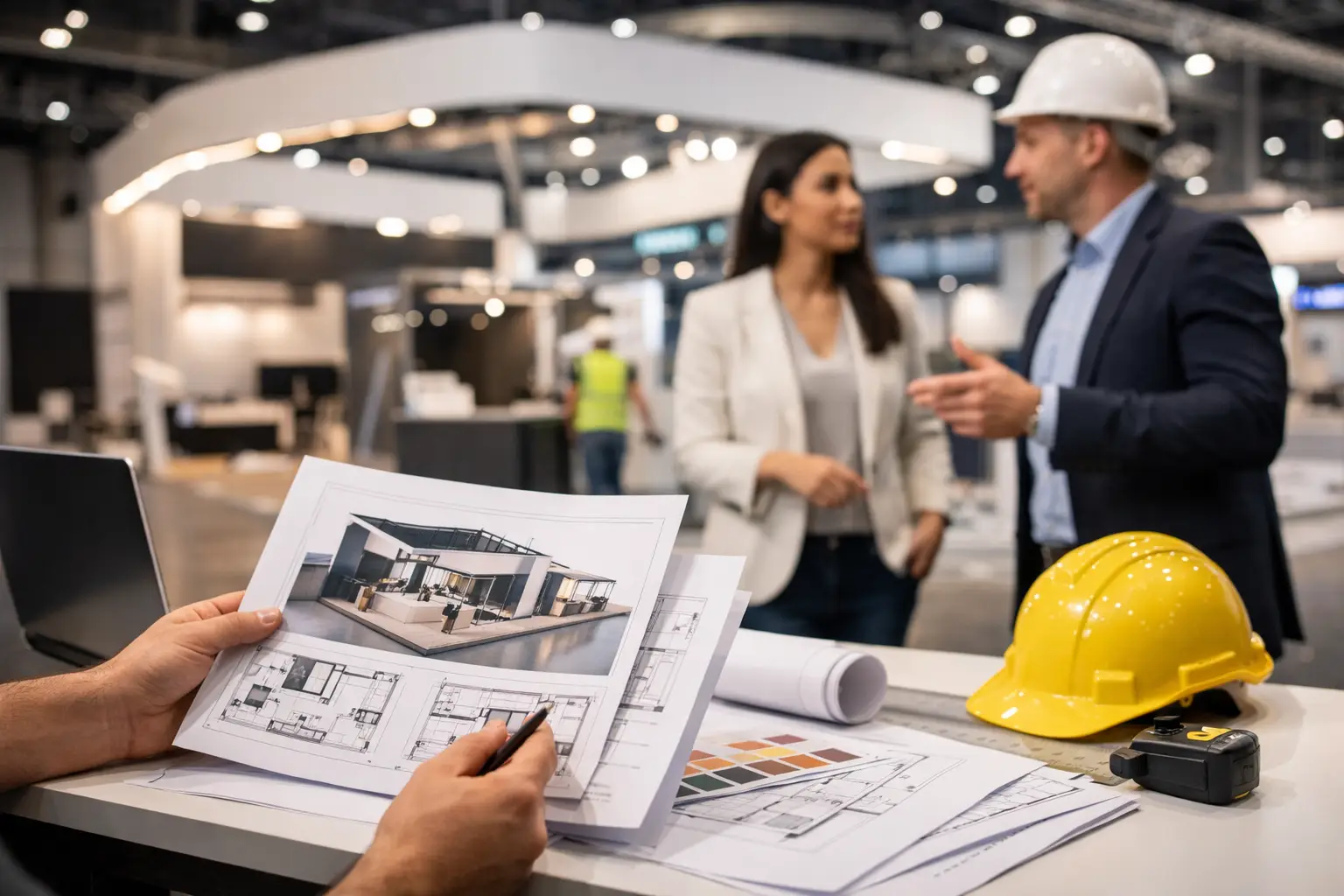
An experienced stand partner should bring structure to the process. That includes a clear 3D concept, detailed production drawings, material samples where relevant, a defined scope for AV and electrical work, and a realistic handover plan. It also means identifying venue regulations and technical submission requirements before they become expensive surprises.
For international exhibitors, local execution matters. A stand that looks excellent in a presentation can still fail if its build team is unfamiliar with the venue, access rules, contractor procedures, or local timelines. End-to-end delivery reduces handoffs between designers, fabricators, logistics providers, and installation crews. That control is particularly valuable when the stand includes LED video walls, elevated structures, custom joinery, or complex product displays.
LemonTree Exhibitions manages design, fabrication, logistics, installation, and dismantling in-house, helping exhibitors retain control over quality, timing, and budget from the first concept through show opening.
Budget Around Impact, Not Just Square Footage
Floor space is only one part of the exhibition budget. A lower-cost shell scheme can work for straightforward participation, but it may limit your ability to create a distinct environment, integrate demonstrations, or host serious meetings. A custom stand gives greater control over layout and brand impact, but requires early planning and a disciplined scope.
The most useful budget conversation separates essential investments from optional enhancements. Essential items may include structural build, graphics, flooring, lighting, furniture, electrical connections, storage, and installation. Optional elements can include premium finishes, large LED walls, hospitality, interactive technology, double-decker construction, or custom product models.
Do not judge value only by the stand’s appearance. Consider how the environment supports lead quality, meeting volume, staff efficiency, and visitor confidence. A modestly sized stand with a strong message, dependable lighting, well-trained staff, and a purposeful meeting setup can outperform a much larger space that lacks a clear visitor journey.
Staff the Stand as Carefully as You Design It
The stand team determines whether attention turns into opportunity. Technical experts are essential for serious product questions, but they may not be the best first point of contact for every passerby. A trained host or front-of-house representative can welcome visitors, qualify interest, manage meeting schedules, and direct each person to the right team member.
Brief staff on more than product facts. They should understand the priority visitor types, the qualifying questions to ask, the message to communicate, and the lead-capture process. Agree on how quickly leads will be followed up after the show. A visitor who requested a technical quotation should not receive the same generic message as someone who stopped for a brochure.
Also plan practical details: where the team stores personal items, how breaks are managed, who checks screens and demos each morning, and who has authority to resolve issues on site. These small operational decisions protect the polished experience your investment is meant to create.
A Strong Middle East Energy Show Presence Is Built Before Opening Day
The best stands feel effortless because the hard work happened early. They are visually clear, commercially focused, technically sound, and ready for the realities of a busy exhibition floor. They give visitors a reason to approach, give your team the setting to have better conversations, and give decision-makers confidence that your brand can deliver.
Start with the outcome you need from the show, then let every design and operational choice support it. That is how a stand becomes more than a display – it becomes a dependable business tool.