

A crowded hall at GITEX, Big 5, ADIPEC, or Gulfood gives brands only a few seconds to earn attention. The right exhibition stand builder in Dubai does more than create an attractive structure. They turn your floor space, objectives, products, and brand story into an environment that brings the right visitors into a productive conversation.
For marketing leaders and procurement teams, selecting a builder is not simply a design decision. It is an execution decision with real commercial consequences. A stand that arrives late, looks different from the approved render, or lacks the practical details needed for product demonstrations can undermine months of exhibition planning. The stronger choice is a partner that combines creative ambition with disciplined production, site knowledge, and clear accountability.
Start With the Outcome, Not the Stand Style
Before reviewing concepts, define what success needs to look like on the show floor. A technology company launching a platform may need private meeting areas, live-screen demonstrations, and a clear visitor flow. An industrial manufacturer may need space for machinery, engineering discussions, and lead qualification. A government trade body may need a country pavilion that gives multiple exhibitors equal visibility while presenting one cohesive national identity.
Those needs shape the brief more effectively than a request for a “premium stand.” Premium can mean different things depending on the event, audience, location, and budget. At a high-traffic show, bold visibility and fast visitor movement may matter most. At a specialist B2B exhibition, considered hospitality, meeting privacy, and product storytelling may deliver greater value.
Give prospective builders practical inputs: stand size and location, event rules, key products, audience profile, required meeting capacity, utilities, technology needs, and budget range. A dependable partner will use those details to challenge assumptions where needed, not just decorate a footprint.
What an Exhibition Stand Builder in Dubai Must Control
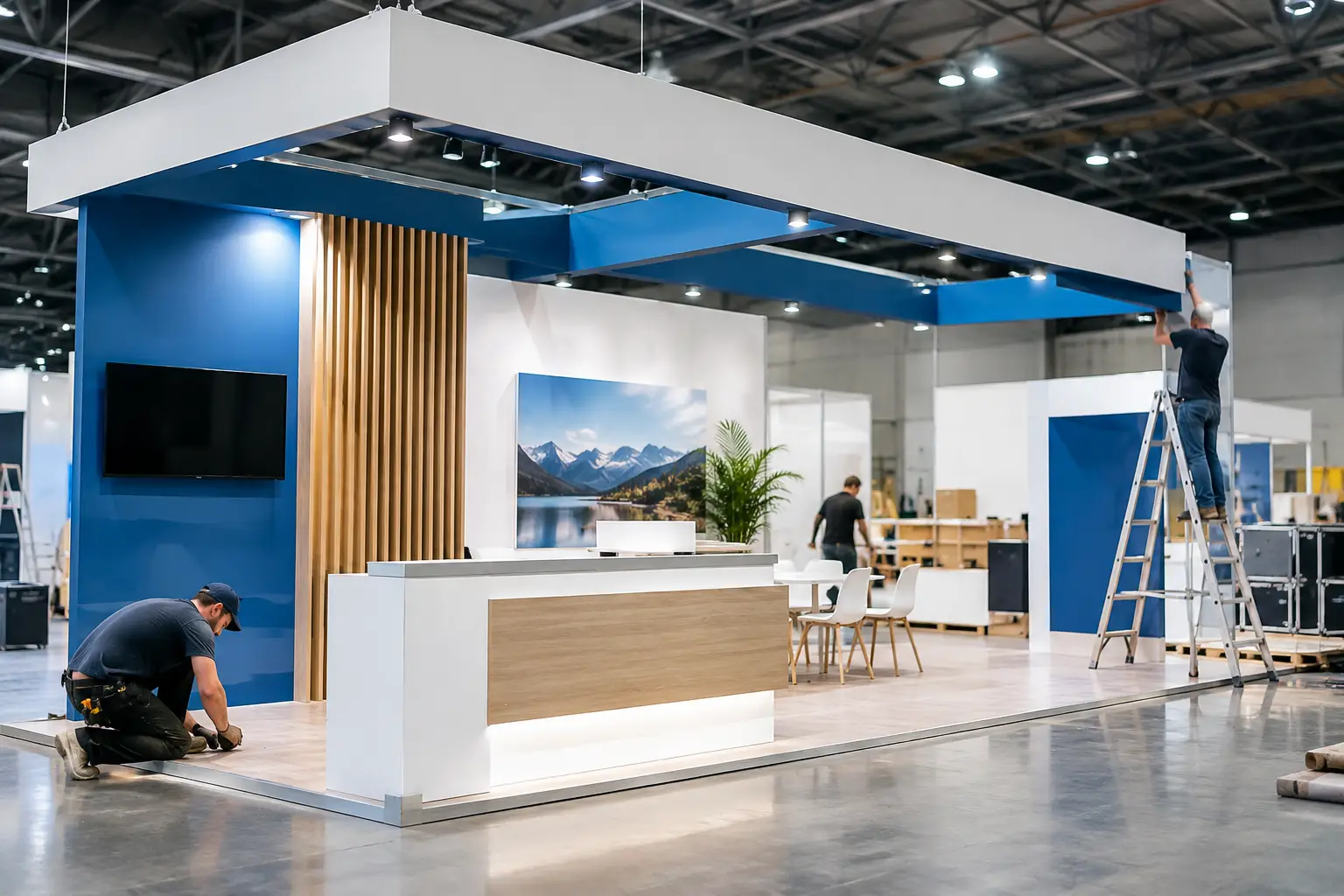
Dubai is a global exhibition destination with demanding venues, tight installation windows, and high expectations from international audiences. A capable exhibition stand builder in Dubai should have control over the full delivery chain: concept development, technical drawings, fabrication, logistics, installation, and dismantling.
This matters because exhibition projects are built under fixed deadlines. There is rarely room to recover from unclear ownership between a designer, a third-party workshop, a logistics provider, and an on-site contractor. When several vendors are involved, a small change in graphics, lighting, or structural specifications can become a costly issue at the venue.
In-house design and fabrication create a stronger line of responsibility. The team developing your 3D concept can coordinate directly with the people producing it. That reduces interpretation gaps, supports faster decisions, and makes quality checks more meaningful. It can also improve cost control, particularly when a project requires custom joinery, integrated LED video walls, suspended features, or a double-decker structure.
Ask who will manage the project on site and who has authority to make decisions during installation. A polished proposal is useful, but the exhibition experience is won or lost during fabrication and build-up.
Look Beyond the First 3D Render
A 3D design should create excitement, but it should also prove that the builder understands how a stand works. Review the concept with operational questions in mind. Where do visitors enter? What draws attention from the main aisle? Can staff speak to prospects without blocking traffic? Is storage sufficient for brochures, giveaways, personal items, and supplies? Where do cables, screens, and lighting components go?
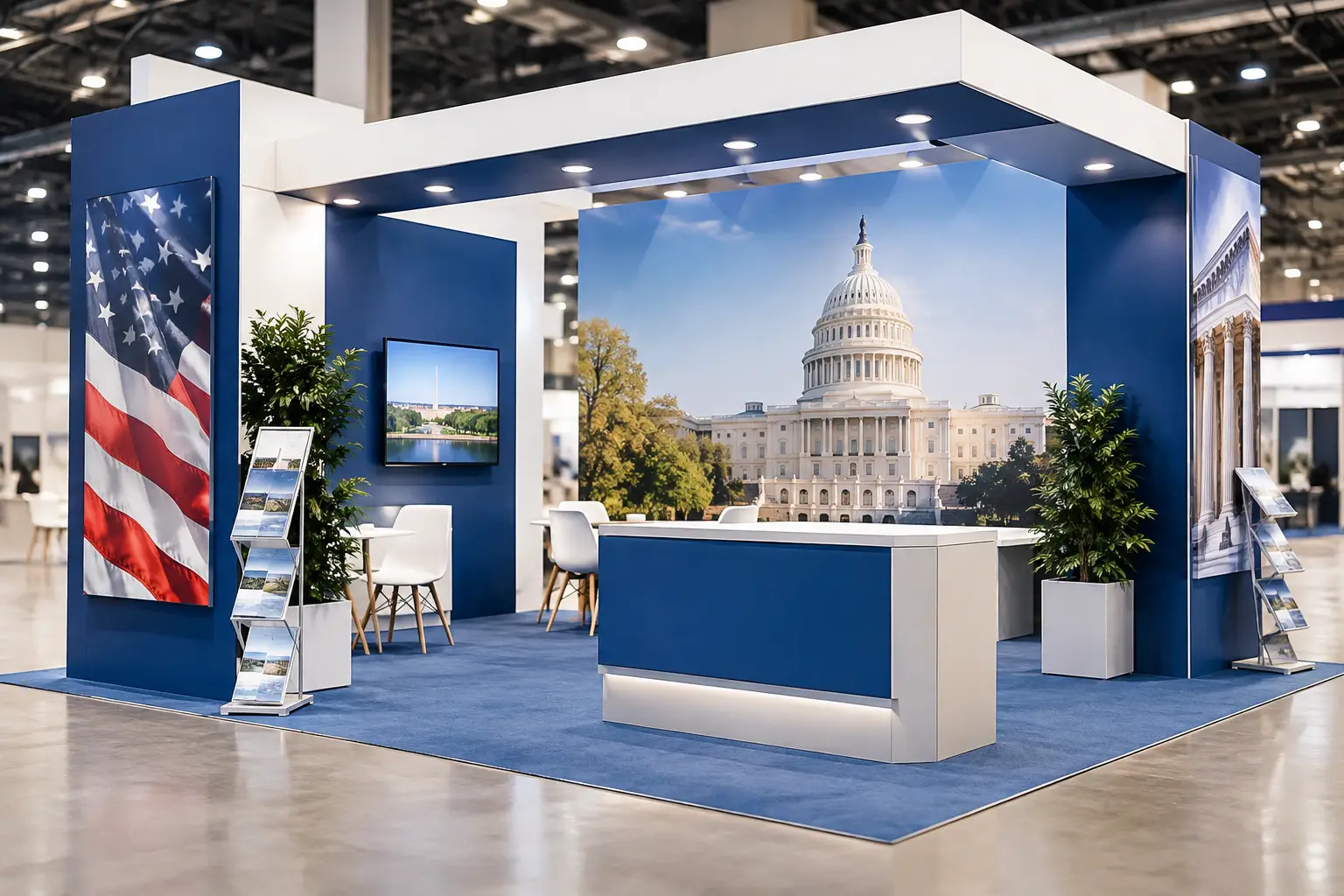
The most successful designs establish hierarchy. Your primary message should be visible at a distance. Your products or demonstrations should give people a reason to stop. Meeting areas should support the level of privacy your sales team needs. A stand can be visually impressive and still be ineffective if visitors cannot quickly understand what your company offers.
Material choices also deserve scrutiny. High-gloss finishes, intricate detailing, and extensive custom elements can create impact, but they may increase cost and fabrication time. Modular components can be efficient and adaptable, especially for brands exhibiting frequently, yet a fully modular approach may not achieve the distinctive presence needed for a flagship launch. The right balance depends on the importance of the show and the lifespan you expect from the assets.
Check Experience That Matches Your Exhibition Format
Not every builder is equally suited to every project. A 12-square-meter startup stand has different demands from a 150-square-meter brand environment, a double-decker build, or a multi-brand country pavilion. Request examples that closely resemble your project in scale, complexity, and sector.
For large spaces, examine how the builder handles visitor circulation, roof structures, hospitality zones, storage, and brand visibility from multiple approaches. For double-decker stands, confirm experience with venue approvals, structural engineering, safety requirements, and upper-level access. For pavilions, evaluate whether the team can create a unified experience while allowing each participating company to retain its own identity.
Sector understanding matters too. A pharma exhibitor may require a clean, precise setting for scientific conversations. An energy company may need to communicate technical credibility at scale. An FMCG brand may prioritize sampling and high-volume engagement. Builders do not need to be industry experts, but they should recognize the different ways audiences evaluate products and trust brands.
LemonTree Exhibitions has delivered more than 200 projects annually across international shows and sectors, from focused custom stands to large pavilions and double-decker structures. That breadth is valuable when a project calls for both design confidence and practical control under pressure.
Make Budget Conversations Specific Early
A credible budget discussion separates fixed needs from optional enhancements. Core costs typically include design development, fabrication, graphics, furniture, lighting, flooring, transport, installation, dismantling, and venue-related requirements. Technology, specialist finishes, rental items, hospitality services, and event staffing may sit outside a basic build scope.
Do not select solely on the lowest initial estimate. A low price can omit elements that later appear as additions, such as power distribution, storage, graphic production, or on-site supervision. Instead, compare proposals line by line and ask what has been included, excluded, assumed, or provisionally allowed for.
Transparency is especially important when timelines are short. Last-minute design changes are sometimes unavoidable, but they should be priced and approved clearly. A builder that explains cost implications early protects both your budget and the working relationship.
Test Their Planning and Communication Process
Strong exhibition delivery feels organized well before the truck reaches the venue. Once a concept is approved, there should be a defined path through technical development, material selection, production, graphics sign-off, logistics planning, and installation scheduling.
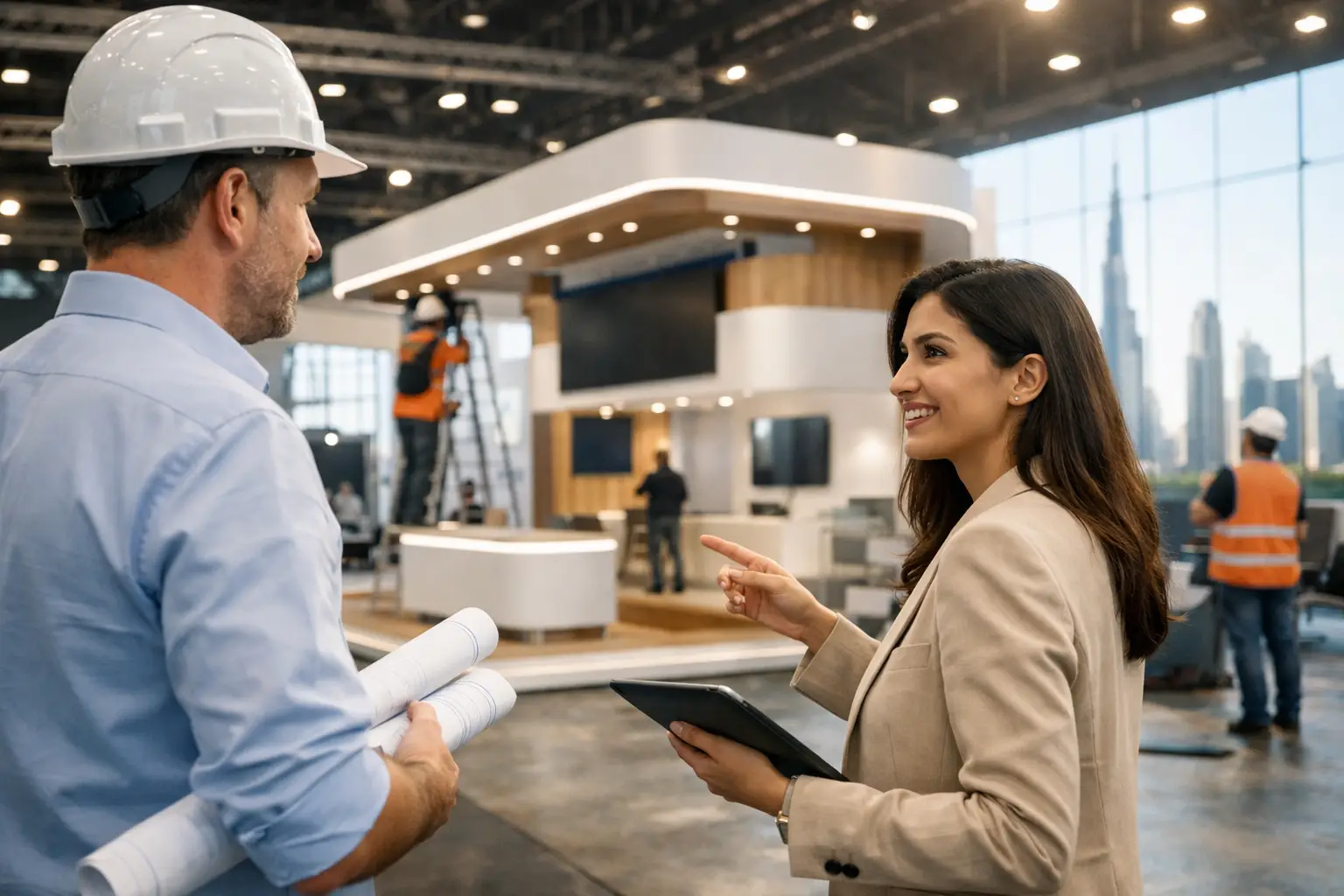
Ask how often you will receive updates, who your day-to-day contact will be, and how approvals are managed. Marketing teams need visibility without being buried in technical detail. Procurement teams need documentation, clarity on scope, and confidence that risks are being managed. The best partner adjusts communication to both needs.
Responsiveness is not merely a courtesy in this work. It affects the quality of decisions. If your product dimensions change, a screen specification is updated, or an event organizer alters a regulation, the builder must assess the impact quickly and present practical options.
Consider Sustainability as a Design Discipline
Sustainable exhibition design is not limited to choosing recyclable materials. It starts with designing intelligently: reusing suitable structural elements, selecting durable finishes, minimizing unnecessary waste, and planning for dismantling and material recovery.
For brands attending multiple shows, reusable components can reduce both environmental impact and future production costs. However, reuse should not force every exhibition to look identical. A skilled builder can retain key structural assets while updating graphics, feature elements, layouts, and messaging for each market.
Ask how materials are repurposed after an event and whether the stand can be designed with a second life in mind. The answer may influence your choice of finishes, flooring, lighting, and furniture. Sustainability works best when it is considered at concept stage rather than added as a last-minute claim.
Visit the Workshop or Review the Build Standard
If possible, visit the fabrication workshop before committing to a major project. You will learn more from workmanship, organization, finishing standards, and quality-control practices than from a portfolio alone. If an in-person visit is not practical, request detailed images of previous builds, including close-ups of joinery, graphics, lighting integration, and finished meeting areas.
Also ask how the team handles pre-build checks. A stand should be reviewed before dispatch wherever feasible, particularly when it includes custom lighting, video walls, integrated product displays, or complex branding. Finding problems in the workshop is manageable. Finding them on opening morning is not.
Choose a Partner Built for the Show Floor
The best builder will not push the most elaborate idea or the cheapest solution. They will recommend the approach that supports your objectives, respects the venue, protects the budget, and gives your team a confident place to do business.
When comparing proposals, look for evidence of creative thinking backed by operational discipline. A stand should attract attention, but its real job is to support the conversations that happen after people step inside. Choose the partner that treats every detail, from the first concept to dismantling, as part of your brand’s performance on the show floor.