

A 3m x 3m booth can put your brand in front of serious buyers, but only if the space does more than display a logo. So, what are shell scheme booths, and are they the right format for your next trade show? They are prebuilt, standardized booth structures supplied by an exhibition organizer, typically designed for exhibitors that want a ready-to-use space without commissioning a fully custom stand.
For a first-time exhibitor, a smaller product launch, or a compact presence at a high-cost show, a shell scheme can be a sensible commercial decision. The key is understanding exactly what you are getting, what you can change, and where a standard structure may begin to limit your brand impact.
What Are Shell Scheme Booths?
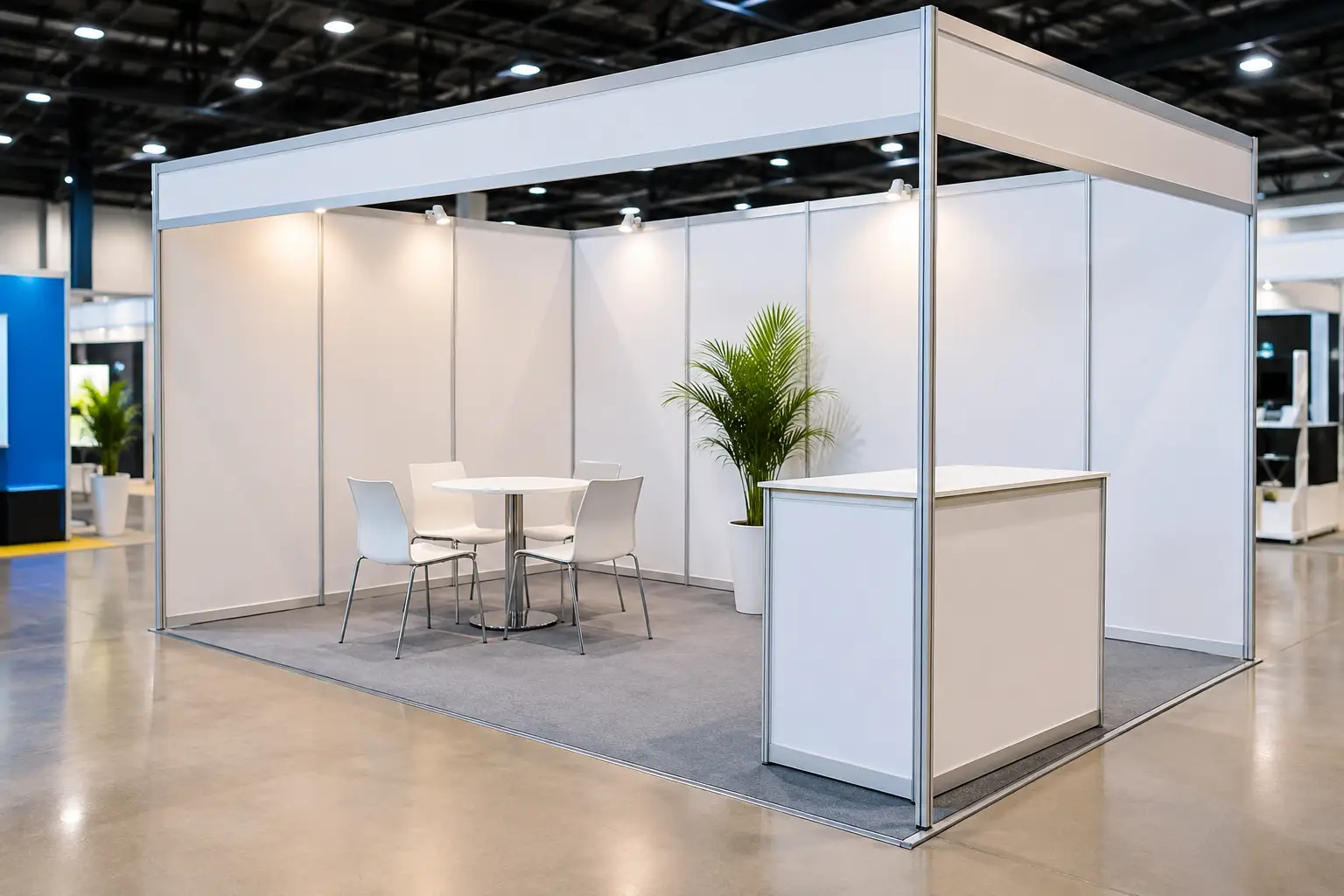
A shell scheme booth is a modular exhibition space built from standardized aluminum frames and wall panels. It is usually sold as part of an exhibitor package by the event organizer. Rather than receiving an empty marked-out area on the show floor, known as raw space, you receive a basic booth structure that is already installed before you arrive.
The familiar format is an enclosed booth with white or neutral wall panels, a fascia board carrying the exhibitor name and booth number, basic carpet, lighting, and a power connection. Dimensions vary by show, but 3m x 3m and 3m x 4m spaces are common.
Think of it as the exhibition equivalent of a fitted room. The essential structure is in place, but the visual identity, customer experience, product presentation, and staffing strategy are still yours to shape.
What is normally included
Inclusions differ between venues and organizers, so the exhibitor manual should always be the final reference. A standard shell scheme package often includes wall panels, aluminum framework, fascia name signage, basic spotlights, carpet, and a limited electrical outlet or power allowance.
Furniture, upgraded lighting, printed graphics, shelving, screens, storage, internet, additional electricity, and cleaning are commonly charged separately. This is where budgets can become unclear. A low base package price can rise quickly once the booth needs to support product demos, lead capture, hospitality, or premium branding.
Why exhibitors choose shell scheme booths
Shell schemes make participation more accessible because the primary construction is handled by the organizer. There is no need to design and fabricate a complete stand from the ground up, arrange major structural approvals, or manage a full installation crew for a simple presence.
They are especially practical when speed, budget control, and repeat participation matter more than architectural originality. An exporter testing a new market, for example, may prefer a well-executed shell scheme at an international trade fair before investing in a larger custom environment.
They also reduce operational pressure. The booth is generally ready for branding and furnishing during move-in, which leaves the exhibitor team free to focus on merchandise, presentations, sales materials, and meeting schedules. For companies attending multiple events in markets such as Dubai, Las Vegas, or Chicago, that simplicity can be valuable.
The trade-off: convenience versus differentiation
A shell scheme gives you a starting point, not a finished brand environment. Because neighboring exhibitors receive the same panels, fascia, and carpet, an untouched booth can disappear into a row of nearly identical spaces.
This does not mean shell schemes are low quality by definition. It means the design challenge is more focused. Every visible element must work harder: the front-facing message, color use, product hierarchy, lighting, counter placement, and the way visitors are welcomed into the booth.
There are also physical constraints. Shell scheme walls may have restrictions on drilling, painting, mounting weight, or removing panels. Ceiling height is usually limited, and large overhead signs or tall structures may not be permitted. If your campaign relies on a walk-in product theater, a full hospitality lounge, a private meeting room, or large-scale video architecture, raw space and a custom-built stand may be the better fit.
How to make a shell scheme booth look intentional
The strongest shell scheme booths do not try to hide that they are compact. They use the format intelligently, creating a clear reason for visitors to stop and an easy path for conversations to begin.
Start with one message people can read quickly
Trade show aisles are busy, and visitors make decisions in seconds. Lead with one benefit-led statement rather than filling every panel with company history, product specifications, and multiple slogans. Your brand name should be easy to locate, but the message should explain why a buyer should care.
For example, a manufacturing company might lead with a performance claim, while a software provider may lead with the business result its platform delivers. Supporting details can sit lower on the wall, in printed materials, or on a screen for qualified visitors.
Treat graphics as part of the build
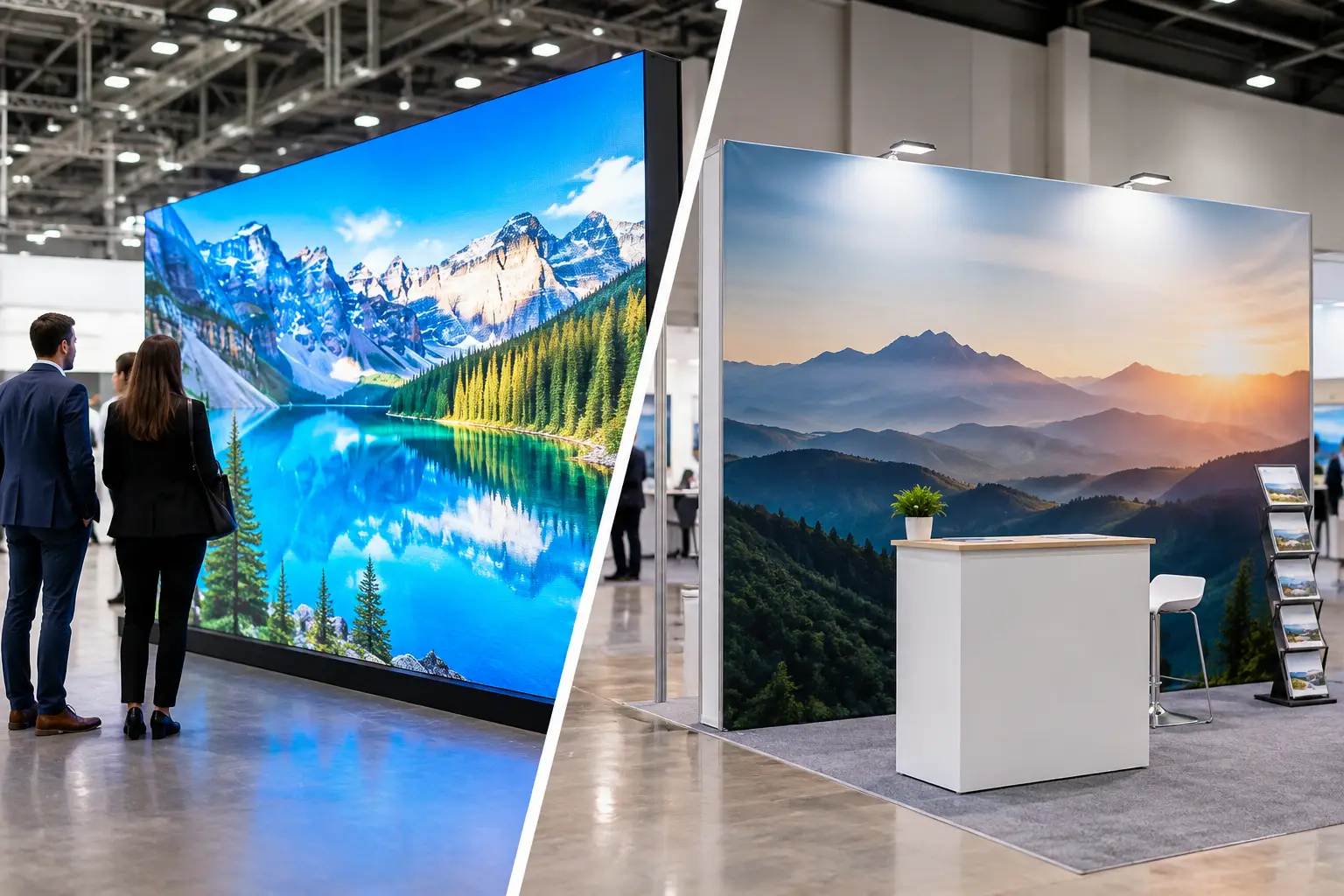
Printed graphic panels, fabric wraps, or precisely sized overlays can transform standard walls into a cohesive branded setting. Measurements matter. Poorly fitted graphics, exposed panel gaps, or a cluttered collage of posters can make even a premium brand appear unprepared.
Use high-resolution artwork, reserve enough clear space around key messages, and ensure the palette is consistent with your wider campaign. If products are visual, use one or two strong images at scale rather than many small images competing for attention.
Plan the space around a visitor action
Decide what you want people to do once they enter: view a product, watch a demonstration, book a meeting, sample an item, or speak to a technical expert. Then arrange the booth around that action.
A counter placed directly across the entrance can create an unnecessary barrier. In a small footprint, placing the counter to one side can open the front and make the booth feel more welcoming. If you need storage, build it into a branded counter or use a compact closet solution rather than leaving cartons in view.
Upgrade the details visitors notice
Basic organizer lighting rarely flatters products or graphics. Targeted spotlights, clean cable management, a quality counter, and coordinated furniture can materially improve the impression of the booth. The best upgrades are not always the largest ones. A well-lit hero product and a polished meeting point can generate more value than additional decorative elements.
Do not overlook staffing. A thoughtfully designed booth still needs people who can greet, qualify, and guide visitors. Clear roles, consistent attire, and a simple lead-capture process make a compact booth feel organized and commercially focused.
When a custom shell scheme package makes sense
There is a useful middle ground between accepting the organizer package as-is and building a full raw-space stand. A custom shell scheme package retains the supplied structure but adds brand-specific graphics, furniture, display units, lighting, digital screens, and tailored layout planning.
This approach works well for exhibitors with 9 to 24 square meters who need a credible, premium presence but do not require major structural engineering. It can also be an efficient choice for companies running multiple regional shows and seeking consistent visual standards across locations.
At LemonTree Exhibitions, this often means treating the existing shell as a controlled canvas: confirming organizer regulations, designing around panel dimensions, producing brand elements accurately, and managing installation so the booth is ready when the doors open. The objective is not simply to decorate a standard booth. It is to create a space that supports real conversations and measurable lead generation.
Questions to ask before booking
Before committing to a shell scheme, review the technical manual and clarify the practical details with the organizer. Ask whether you can cover wall panels, hang graphics, add lockable storage, use your own flooring, or install a monitor. Confirm the exact internal dimensions, fascia sign allowance, permitted build height, electrical capacity, and move-in schedule.
Also ask what sits around your allocated space. A corner shell scheme has more open frontage and usually offers stronger visibility than a booth positioned between two exhibitors. Near an entrance, seminar theater, café, or major feature zone can be advantageous, but heavy foot traffic only helps if your message is visible and your team can engage visitors quickly.
Finally, price the finished booth, not just the floor package. Include graphics, furniture, power, audiovisual equipment, logistics, on-site labor, and post-show handling. This comparison will show whether a shell scheme is genuinely the best value or whether a modest custom stand provides a better return.
A shell scheme booth is a practical format, not a compromise by default. With disciplined planning and purposeful design, even a small standardized space can carry a bold brand presence and give the right visitors a compelling reason to stop.