

The water, energy, technology, and environment exhibition (WETEX) is not a show where a standard product display will carry the conversation. Visitors arrive to assess serious solutions for infrastructure, decarbonization, water security, smart utilities, and cleaner operations. Your stand needs to make a complex offer understandable within seconds, then give technical and commercial decision-makers a reason to stay.
For energy companies, environmental technology providers, manufacturers, government bodies, and exporters, WETEX is a high-value opportunity to build credibility in a market where delivery capability matters as much as innovation. The brands that perform well are clear about who they want to meet, what proof they can show, and how their physical space supports a productive sales conversation.
Why WETEX Requires a Different Exhibition Approach
WETEX brings together audiences with long buying cycles and high expectations. A visitor may be comparing water treatment systems, renewable energy equipment, digital monitoring platforms, EV infrastructure, or waste-management solutions. They are rarely looking for a generic brand introduction. They want to see relevance to a project, operating environment, regulation, or investment decision.
That changes the job of an exhibition stand. It must attract attention from the aisle, but it also has to organize information efficiently. A visually bold structure without a clear message can create traffic that does not convert. On the other hand, a technically detailed stand with no visual hierarchy can be overlooked entirely.
The right balance depends on your offer. A company launching a compact, easily demonstrated technology may benefit from a working product zone at the front of the booth. A business selling large-scale infrastructure or engineering services may need a premium meeting environment, project visuals, and an LED presentation that explains its capabilities at scale. Neither approach is automatically better. The stand should reflect how buyers evaluate your solution.
Setting Clear Objectives for the Water, Energy, Technology, and Environment Exhibition
Before approving a design, define what success means beyond visitor numbers. For many exhibitors, the priority is qualified lead generation. For others, it may be distributor recruitment, government engagement, partner meetings, market entry, or visibility for a new sustainability commitment.
These objectives affect every practical decision. If lead capture is the priority, build the visitor journey around demonstrations and short consultation points. If senior meetings matter most, protect enough enclosed or semi-private space for conversation without making the booth feel closed off. If you are introducing a new category, dedicate prominent space to a simple explanation of the problem you solve.
A strong exhibition brief should answer a few commercial questions early: Who is the primary visitor? What should they understand in the first five seconds? What proof will make them trust the claim? What action should they take before leaving the stand?
When those answers are clear, design becomes more focused and procurement becomes easier to manage. It also prevents a common problem: adding too many products, messages, screens, and graphics because every internal stakeholder wants equal visibility.
Build the message around proof, not broad claims
Sustainability is central to WETEX, but broad statements about being green or innovative no longer carry much weight. Buyers respond better to specific evidence. Show a measurable reduction in energy use, water loss, emissions, maintenance time, or total operating cost. Use project maps, before-and-after metrics, certifications, case-study imagery, and product data where relevant.
The goal is not to cover every wall with text. It is to give visitors enough confidence to start a useful discussion. Short, large-format claims work best from the aisle. Deeper technical material can sit on digital screens, meeting tables, or staff-led presentations.
Design a Stand That Moves Visitors Naturally
An effective WETEX stand has a clear sequence. It starts with visibility, leads into understanding, and ends with a conversation or next step. This sounds straightforward, yet layouts often fail when feature walls, meeting rooms, product displays, and storage are added without considering how people will actually move through the space.
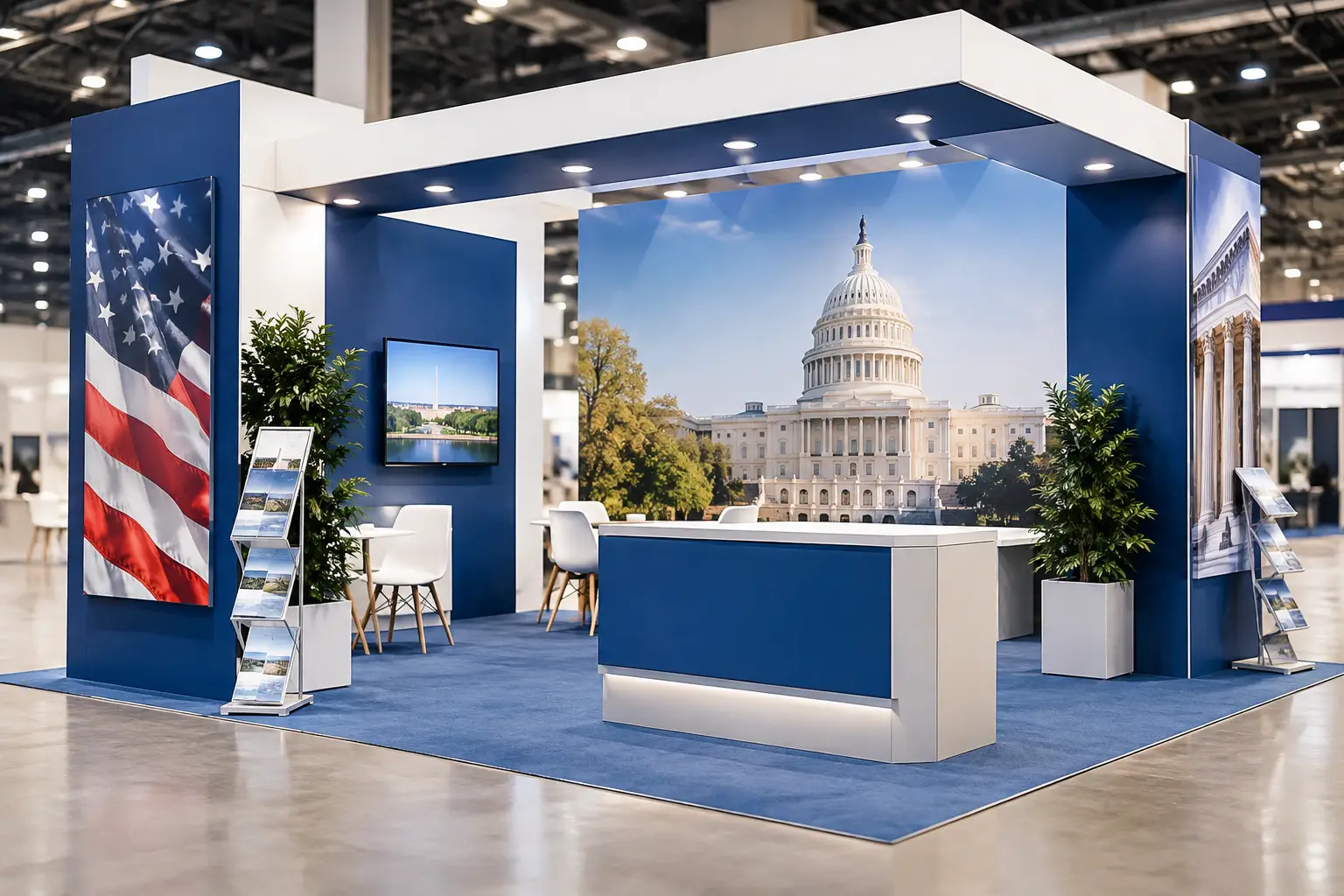
Open sides usually improve accessibility, especially for smaller footprints. A focal point such as a suspended sign, tall architectural feature, or LED wall can help visitors identify the booth from a distance. At ground level, product displays and demonstration zones should be positioned where attendees can approach without blocking the entrance.
For larger spaces, zoning is essential. The public-facing area can introduce the brand and technology, while a more controlled zone supports detailed conversations. Double-decker stands can create a stronger presence and offer valuable private meeting space, but they are not always the best investment. They require sufficient budget, structural planning, and a strong reason to bring visitors upstairs. If your team expects short, high-volume conversations, a well-planned single-level stand may deliver better flow.
Lighting also deserves early attention. Water, clean energy, and environmental brands often rely on white, blue, green, or natural material palettes. These can look premium, but only when lighting is designed to create contrast and depth. Product illumination, controlled screen brightness, and well-lit meeting areas make the space feel active rather than clinical.
Make Technology Useful, Not Decorative
WETEX exhibitors have a natural reason to use digital tools, yet technology should earn its floor space. A large LED video wall is valuable when it shows operational footage, animated process flows, project scale, or a concise brand film that can be understood without sound. It is less useful when it runs generic visuals that compete with the sales team.
Interactive screens can help visitors explore product ranges or select industry-specific applications. They work particularly well when your portfolio is too broad for a single printed message. However, self-service technology should not replace human engagement. A screen can introduce the right topic; trained staff should move the conversation toward the visitor’s requirement, timeline, and next action.
Physical models remain powerful for technical brands. A cutaway component, scaled plant model, or touchable material sample often creates more memorable engagement than another presentation screen. The best approach may combine both: a physical product or model supported by motion graphics that explain what cannot be seen.
Plan Sustainability Into the Build, Not Just the Messaging
At an environment-focused exhibition, the materials and lifecycle of your stand are part of the brand experience. Reusable structures, modular components, recyclable graphics, energy-conscious lighting, and practical material choices can reduce waste without making the booth look temporary.
There are trade-offs. A fully custom-built feature may create stronger visual impact for a major launch, while a modular system may be more cost-effective for a multi-show program. The decision should be based on brand objectives, reuse potential, and the value of the event, not on a one-size-fits-all sustainability claim.
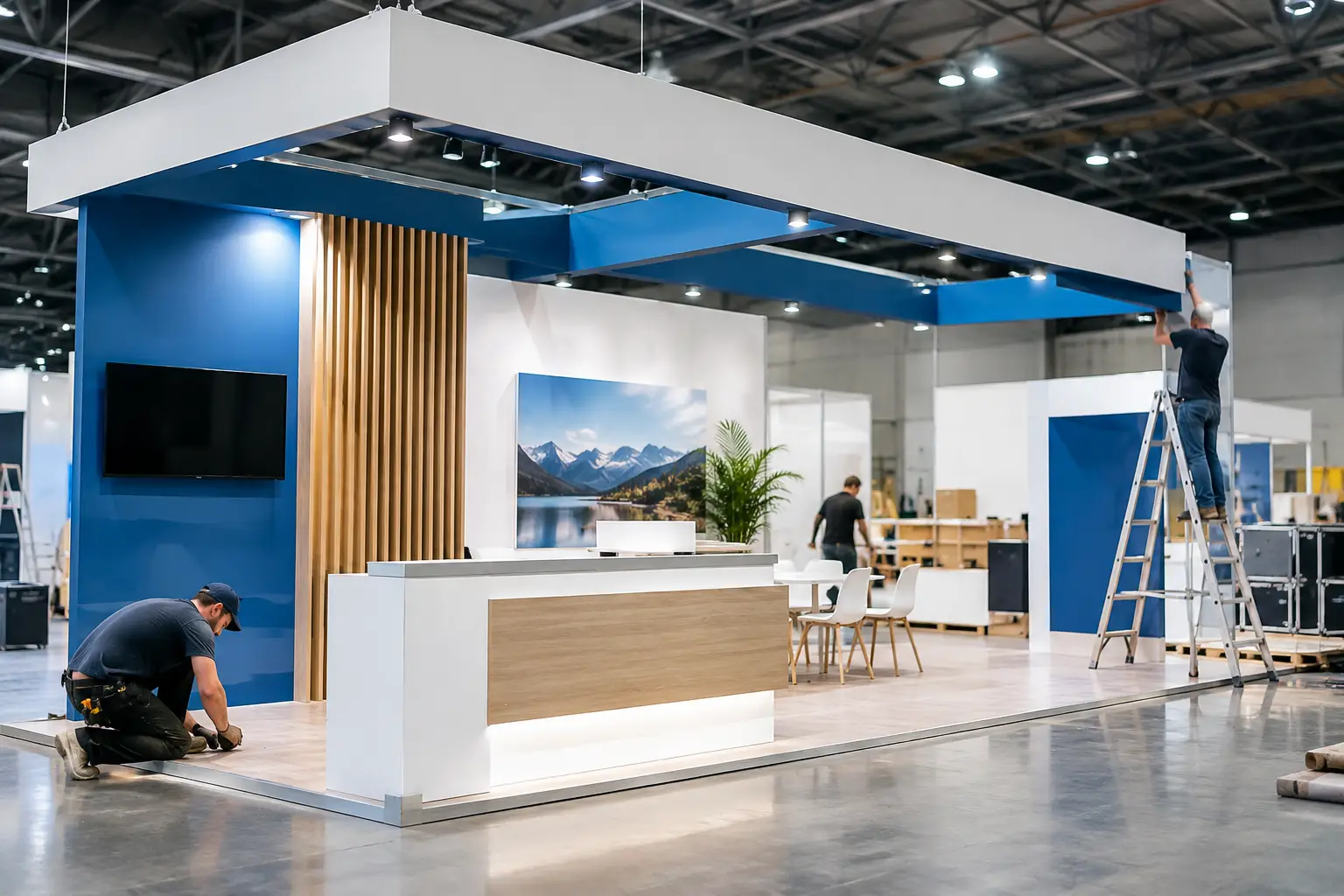
Work with a stand partner that can plan fabrication, logistics, installation, and dismantling as one controlled process. This is particularly important in Dubai, where venue rules, technical approvals, delivery windows, and on-site coordination can influence both schedule and cost. An ambitious concept is only valuable if it can be built safely, installed on time, and finished to the expected standard.
Prepare Your Team for Better Conversations
A premium stand gives your team the right setting, but staff performance determines the visitor experience. Avoid assigning everyone the same role. Some team members should greet and qualify visitors, while product specialists handle detailed technical discussions and senior representatives take scheduled meetings.
Brief the team on three essentials: the key visitor profiles, the priority messages, and the lead follow-up process. They should be able to explain the company value proposition in a short conversation, then adapt it for a utility buyer, consultant, contractor, investor, or distributor.
Hospitality also matters, especially for longer meetings. It should feel purposeful rather than separate from the sales experience. A well-placed hospitality counter can encourage visitors to pause, while private seating gives account teams room to build trust. Fair hostesses and event staff can support visitor management, but they need a clear briefing so every interaction remains on-brand.
Protect Execution With Early Planning
The strongest WETEX stands are usually planned early. Early design development gives your team time to refine the message, reserve the right technical features, manage approvals, and avoid costly last-minute changes. It also makes it easier to balance aspiration with budget.
LemonTree Exhibitions approaches this as an end-to-end delivery challenge, not simply a construction job. A considered 3D concept, in-house fabrication control, logistics coordination, installation, and dismantling should work together to protect quality at every stage. That discipline is especially valuable when a stand includes custom structures, LED walls, complex product displays, or high-level meeting environments.
Bring a clear commercial story to WETEX, then give it a physical setting that visitors can understand, trust, and remember. When the design supports the conversation instead of distracting from it, your booth becomes more than a presence on the show floor – it becomes a practical platform for the business you want to win.