

A country pavilion can attract a crowd from across the hall or disappear into event noise. That difference rarely comes down to size alone. Strong country pavilion design works because it translates national identity, exhibitor needs, and visitor movement into one coherent environment that feels credible, inviting, and commercially useful.
For trade bodies, export councils, and government-backed delegations, the brief is usually more complex than a standard booth. You are not promoting one company. You are presenting a market, a manufacturing base, a trade story, and a group of businesses with different priorities under one roof. That means the pavilion has to do several jobs at once without looking fragmented.
What makes country pavilion design different
A private exhibitor stand can focus on one message, one visual language, and one conversion path. A pavilion is different because it must support multiple brands while still feeling like a single destination. It needs to represent the country clearly, help each exhibitor get noticed, and manage foot traffic in a way that prevents the space from becoming chaotic.
That is where many pavilions struggle. Some lean too heavily on symbolic visuals and forget functionality. Others become rows of identical counters with a country logo overhead, which may be efficient but rarely memorable. The strongest pavilions sit in the middle. They create a clear national presence while giving each participant enough flexibility to engage buyers in a serious way.
A good design team starts by asking practical questions before sketching anything. How many exhibitors are joining? Are they selling products, samples, or services? Will there be VIP meetings, live demos, tastings, or government visits? Is the objective lead generation, brand positioning, export promotion, or all three? The answers shape the layout far more than decorative choices do.
The real job of a country pavilion
At a major show, visitors make decisions in seconds. They need to understand what the pavilion represents, whether it is relevant to them, and where to go next. If that journey feels unclear, traffic drops and exhibitor satisfaction follows.
The real job of a pavilion is to make discovery easy. Buyers should be able to identify the country at a glance, understand the sectors represented, and move naturally between exhibitors without missing key participants. At the same time, the pavilion should offer enough structure for formal engagement, whether that means hosted meetings, product displays, media moments, or official delegations.
That requires a design approach that is both creative and disciplined. Bold overhead branding may draw attention, but if the inner layout creates dead zones or bottlenecks, the pavilion underperforms. Likewise, efficient planning is valuable, but if the design lacks presence, exhibitors lose out on visibility. This balance is where experience matters most.
National identity should feel modern, not theatrical
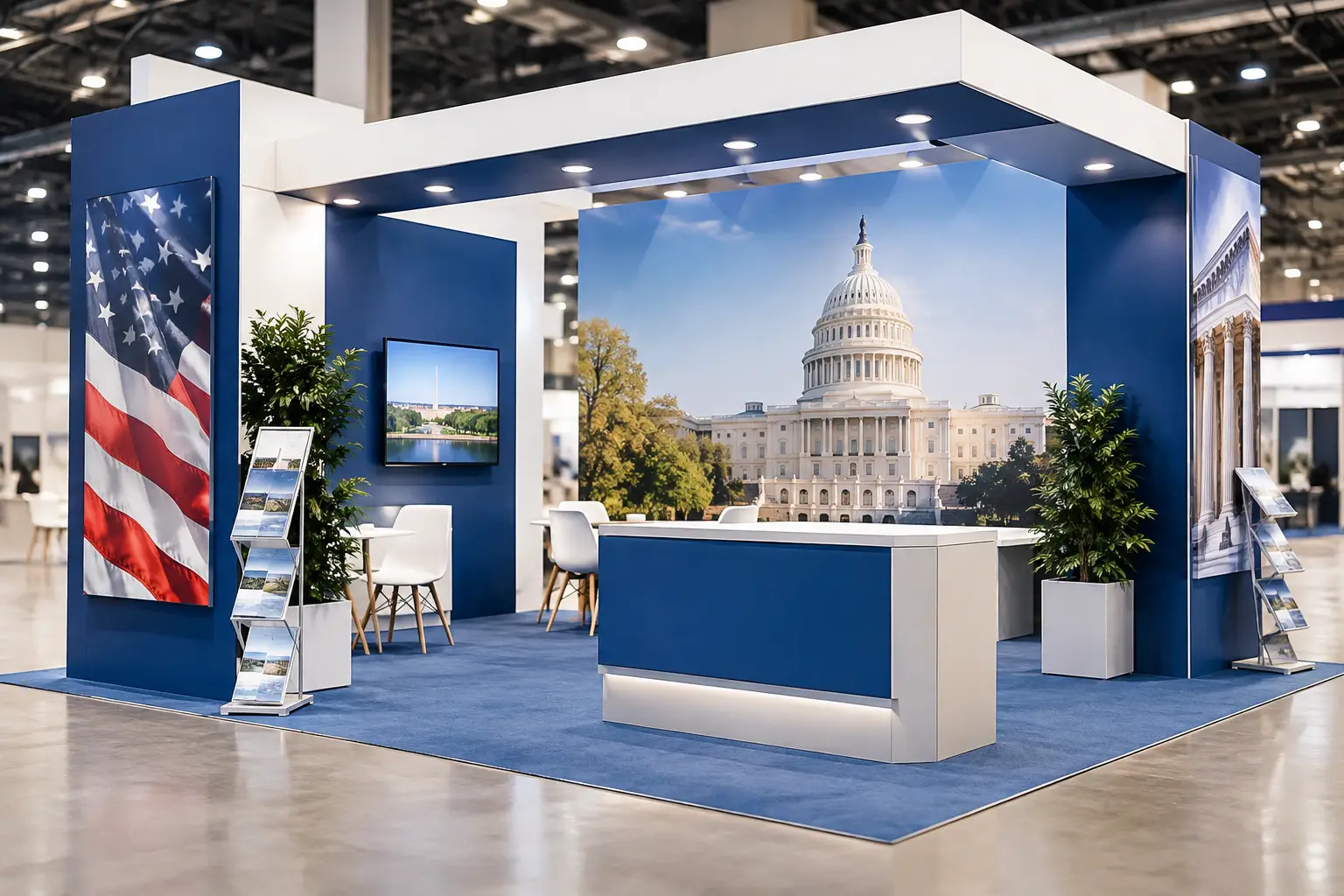
One common mistake is treating national branding as a stage set. Flags, monuments, and cultural motifs can be useful, but too much literal symbolism can make the space feel dated or superficial. International buyers generally respond better to a pavilion that presents the country as capable, current, and commercially serious.
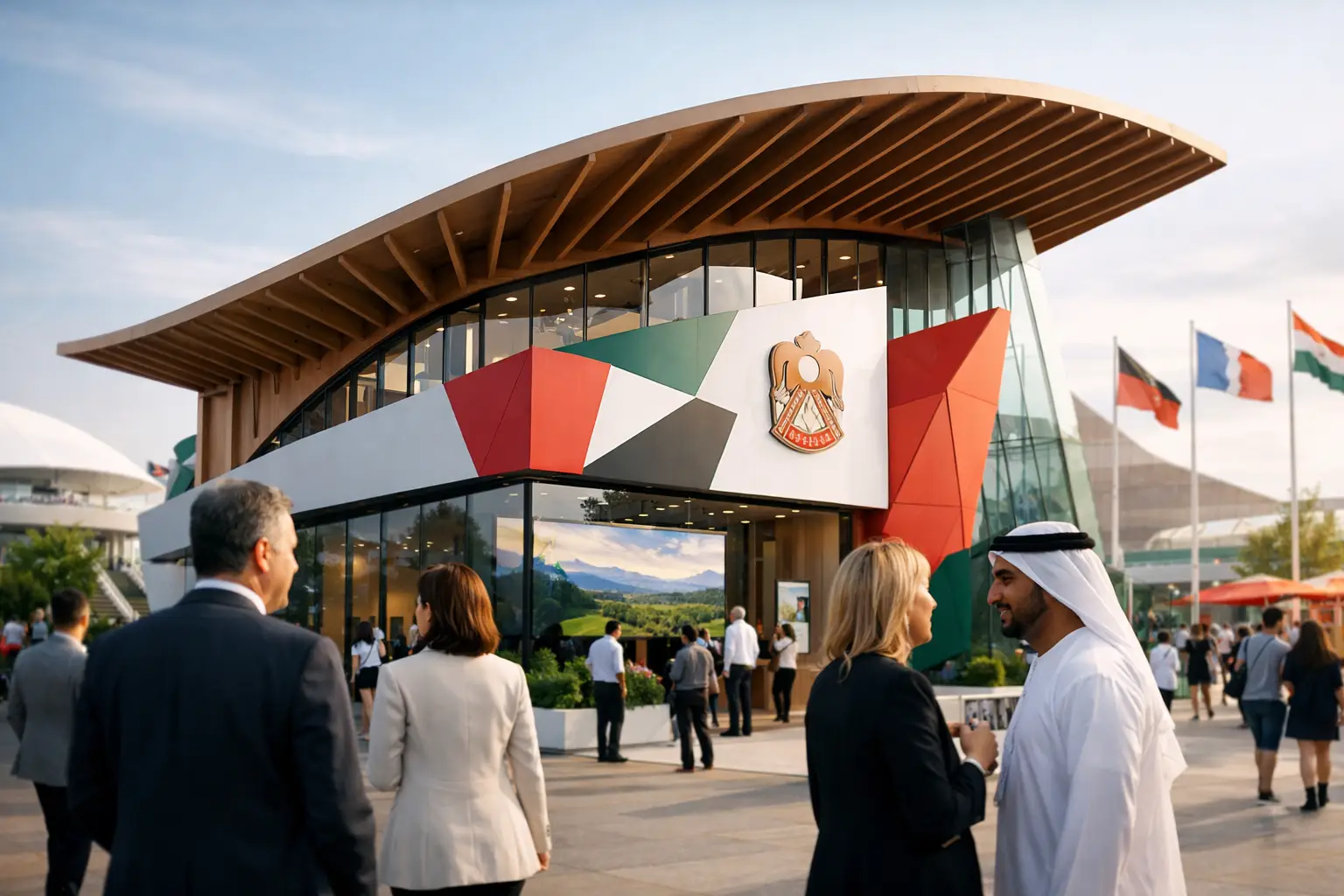
That does not mean removing identity. It means expressing it with control. Color palettes, materials, graphic systems, digital storytelling, and architectural cues can communicate heritage and credibility without overwhelming the exhibitors themselves. In sectors like technology, pharma, manufacturing, or energy, a cleaner and more contemporary approach usually lands better than decorative excess.
Exhibitor equality matters more than most organizers expect
In almost every pavilion, some participants have larger budgets, stronger brands, or more aggressive display needs than others. If that imbalance is not managed early, the whole pavilion suffers. Smaller exhibitors feel hidden, premium exhibitors feel constrained, and the environment starts to look inconsistent.
Smart layouts create a fair visual framework while allowing selective upgrades. That might mean standardized fascia systems, uniform signage rules, and shared hospitality, combined with flexible product display areas or branded graphics at the individual booth level. The goal is not to make every exhibitor identical. It is to make the pavilion feel organized, credible, and commercially balanced.
Planning a country pavilion layout that performs
Layout is where strategy becomes visible. The pavilion should first solve circulation, then visibility, then engagement. Many organizers do this in reverse and end up fixing traffic problems on-site.
Open frontage usually helps, especially at high-traffic shows. A pavilion that feels accessible from multiple sides tends to pull in more visitors than one with heavy boundary walls. Within that open plan, zoning becomes critical. Product-heavy exhibitors may need edge positions for fast engagement, while meeting-focused brands can sit deeper inside if wayfinding is strong.
Shared spaces also deserve more attention than they often get. Reception desks, lounge areas, storage, pantry zones, and meeting rooms are not secondary decisions. In a pavilion environment, they directly affect exhibitor experience and operational flow. If hospitality is undersized or storage is poorly placed, staff quickly feel the strain.
Country pavilion design for visitor flow and meetings
The best country pavilion design recognizes that not all traffic has equal value. Large crowds can look impressive, but serious buyers need room to stop, ask questions, and hold private conversations. A pavilion packed wall to wall with displays may create activity, yet still fail commercially if meaningful meetings are difficult to host.
This is why the layout should support both browsing and business. Wide aisles, visible exhibitor identification, and clear sector grouping help casual visitors navigate. Semi-private meeting zones, acoustically calmer corners, and premium seating support decision-makers who need a more focused interaction. It depends on the show and the audience, but in most B2B environments, meeting quality matters as much as footfall.
Build practicality is part of the design
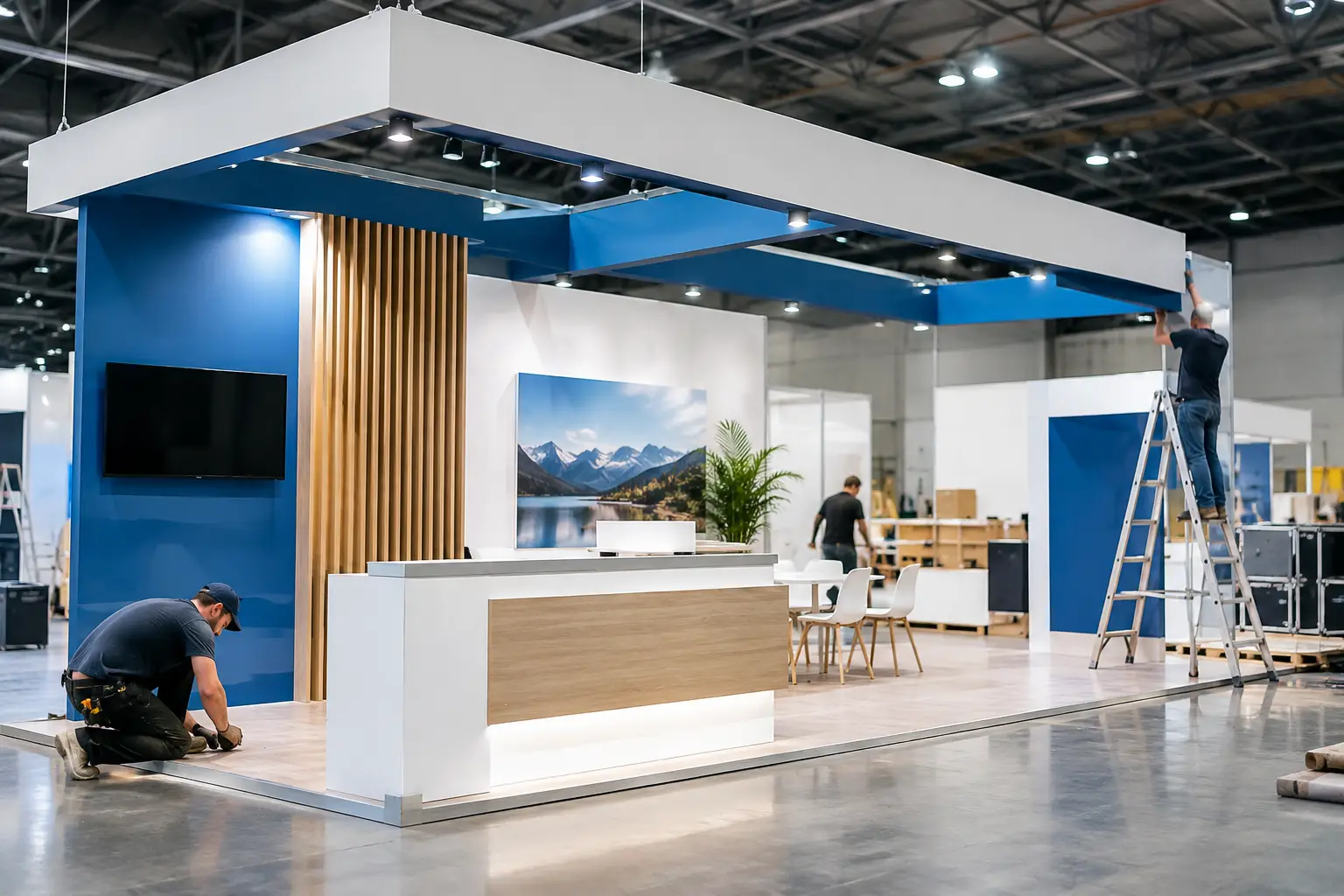
A pavilion can look excellent in a 3D render and still become a headache on the show floor. International events have strict rules, compressed move-in schedules, varying venue regulations, and real logistical pressure. That is why build practicality should be considered from day one, not handed off after the concept is approved.
Material selection, modularity, transport efficiency, structural compliance, and installation sequence all affect budget and timeline. This is especially relevant for delegations exhibiting across multiple markets. A pavilion system that can be adapted, reused, or partially repurposed offers better long-term value than a one-off design that is expensive to rebuild every season.
There is also a sustainability angle here, but it should be approached honestly. Reusable elements, efficient fabrication, and material recovery are worthwhile. At the same time, not every event allows full reuse, and not every reusable system suits a premium brand presentation. The right answer depends on frequency of participation, transport routes, venue rules, and the visual standard expected.
Why execution control matters
Country pavilions involve more stakeholders than standard stands. Government representatives, exhibitor teams, show organizers, approval bodies, and on-site contractors all influence the outcome. That makes coordination just as important as design quality.
When design, fabrication, logistics, and installation are managed in one workflow, there is usually better control over details that affect the final result – finishes, signage consistency, lighting quality, storage integration, and last-minute exhibitor adjustments. For organizers, this reduces risk. For exhibitors, it creates a smoother experience and a stronger impression on the floor.
This is one reason experienced build partners matter so much at major exhibitions in markets like Dubai, Riyadh, Mumbai, Las Vegas, or Germany, where venue standards are high and timelines are tight. A striking pavilion is valuable, but a striking pavilion delivered late or with on-site compromises is a problem no organizer wants.
What decision-makers should ask before approving a concept
Before signing off on a pavilion design, it helps to pressure-test the concept against a few commercial realities. Does the design clearly represent the country without overshadowing the exhibitors? Will every participant get fair exposure? Are there enough spaces for serious meetings? Can the pavilion be installed efficiently within the venue schedule? And just as important, does the design still make sense once branding, products, staffing, power points, storage, and hospitality are fully added?
These questions often reveal whether a concept is genuinely exhibition-ready or simply presentation-ready. The difference matters.
For organizations planning a pavilion, the most successful projects usually come from early alignment between strategy, design, and execution. That is where a dependable partner adds real value. Teams like LemonTree Exhibitions see this firsthand across multi-exhibitor builds: the best pavilions are not just visually bold, they are carefully organized to help every stakeholder succeed.
A strong pavilion should leave visitors with a clear impression of the country and give exhibitors a better platform to do business. If the design achieves both, the space does more than look good for a few days. It starts working long before the show opens and keeps paying off after the floor closes.