

A trade show stand has a short window to do serious work. Before a visitor reads a brochure or speaks to a sales representative, they have already judged whether your brand looks established, relevant, and worth approaching. Choosing the right exhibition stall fabricator Mumbai businesses can depend on is therefore not a purchase decision based on attractive renderings alone. It is a decision about execution, visitor experience, budget control, and the confidence to arrive at the venue ready for opening hour.
Mumbai is home to major industry exhibitions and national-scale B2B events, while also serving as a launch point for brands exhibiting across India and overseas. That makes local production capability valuable, but it is only one part of the equation. The strongest fabrication partner combines creative thinking with disciplined project management from the first brief to final dismantling.
Start With the Outcome, Not the Stand Size
The first question should not be, “How many square meters are we taking?” It should be, “What must this exhibition achieve?” A product launch needs demonstration space and clear sightlines. A lead-generation campaign needs inviting meeting zones and a layout that keeps conversations moving. A large enterprise presence may need private discussion rooms, hospitality areas, storage, and an architecture that supports multiple product stories without feeling crowded.
When the commercial objective is clear, stand design becomes more purposeful. A 36-square-meter booth can outperform a much larger space if it gives visitors a reason to stop, understand the offer quickly, and speak with the right people. Conversely, a large stand can lose impact when it tries to display everything and communicates nothing clearly.
A capable fabricator should ask practical questions early: Who is the primary visitor? What action should they take? Which products need hands-on access? How many meetings will happen at once? What assets are essential, from LED video walls to samples, screens, and demo stations? Those answers shape the concept far more effectively than a generic catalog of booth styles.
What a Dependable Exhibition Stall Fabricator in Mumbai Controls
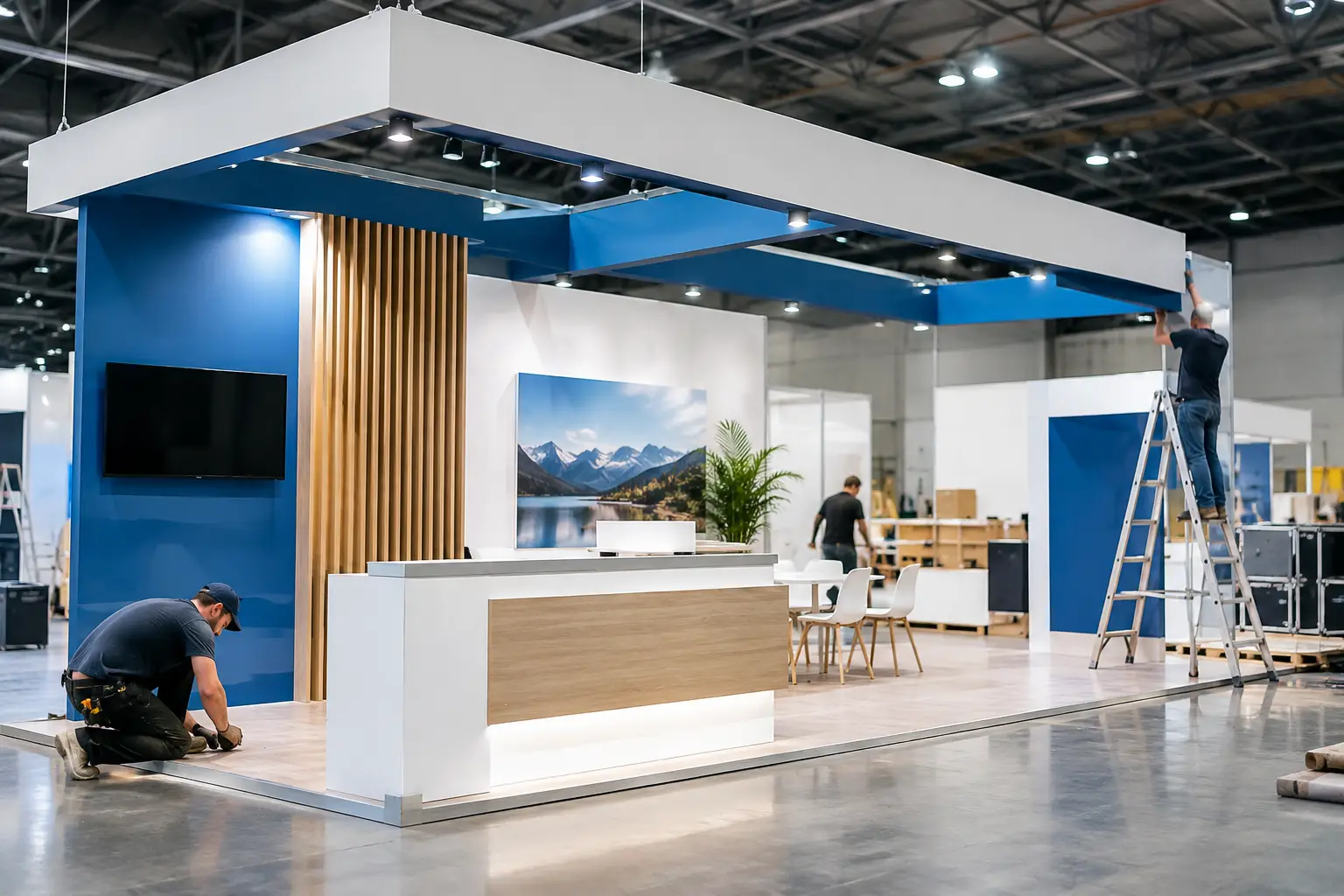
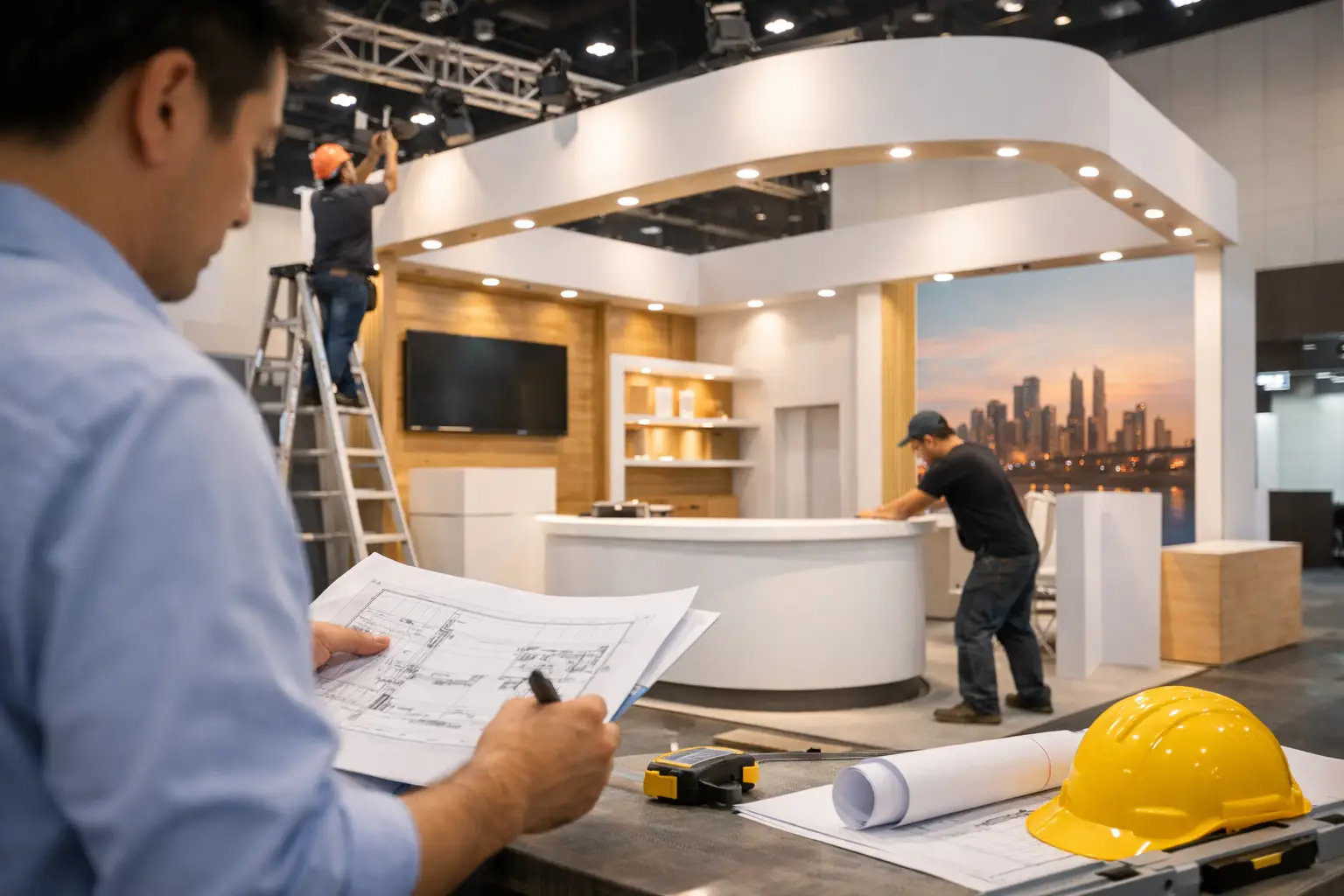
Exhibition work has a visible side and an operational side. Visitors see finishes, lighting, graphics, and the quality of the environment. Behind that experience are technical drawings, material sourcing, workshop schedules, venue approvals, electrical coordination, transportation, installation crews, and a plan for last-minute adjustments.
The right partner owns both sides. When design and fabrication are managed separately, small changes can become expensive delays. A display wall may look simple in a 3D visual but require additional structural support. A revised product placement may affect wiring, storage, lighting angles, or visitor circulation. In-house design and workshop teams can resolve those issues quickly because the people designing the stand understand how it will actually be built.
This control matters especially for premium custom stands, double-decker structures, country pavilions, and stands with integrated technology. These projects involve more stakeholders and more opportunities for details to slip. A fabricator that coordinates the complete process can keep creative intent intact while protecting timelines and budgets.
Evaluate More Than the 3D Design
A polished 3D concept is necessary, but it is not proof of delivery capability. Ask to see examples of completed projects that are comparable in size, complexity, and industry. If you need a hospitality-led stand for an energy event, review real examples of meeting spaces, finishes, and traffic management. If your plan includes product demonstrations, look for evidence that the builder can integrate screens, counters, power, storage, and branding without clutter.
It also helps to understand where the work is produced. A dedicated fabrication workshop gives a team more control over joinery, finishing, pre-build checks, and quality inspection. It can also reduce dependence on multiple subcontractors, which is often where schedules become difficult to manage.
Experience across venues is another useful indicator. Each organizer has its own rules for height, rigging, fire safety, electrical work, loading access, and build-up schedules. A partner familiar with the exhibition environment can anticipate approval requirements rather than treating them as a surprise near the show date.
Budget Transparently for What Visitors Actually Notice
A lower initial quotation is not always the lower-cost option. It may exclude elements that are essential to the final experience, such as premium finishes, lighting, graphics installation, furniture, cleaning, electrical connections, or on-site supervision. The result is a stand that appears less refined than expected or a budget that grows through late additions.
Request a clear scope that separates design, fabrication, graphics, AV, furniture, logistics, installation, and dismantling. This does not mean every project needs the most expensive material or the largest LED wall. It means each choice should be intentional. For example, a brand with a visually complex product may benefit from a large digital display, while a business selling high-value industrial equipment may gain more from a quiet, well-designed consultation area.
Reusability should also be part of the conversation. Modular elements, reusable counters, adaptable light boxes, and carefully stored graphics systems can offer value across multiple shows. Custom fabrication remains important for creating distinction, but not every component needs to be built from scratch each time. The best approach depends on how frequently you exhibit, how often your campaign changes, and whether the booth must travel to other cities or countries.
Design for Visitor Behavior, Not Just Photography
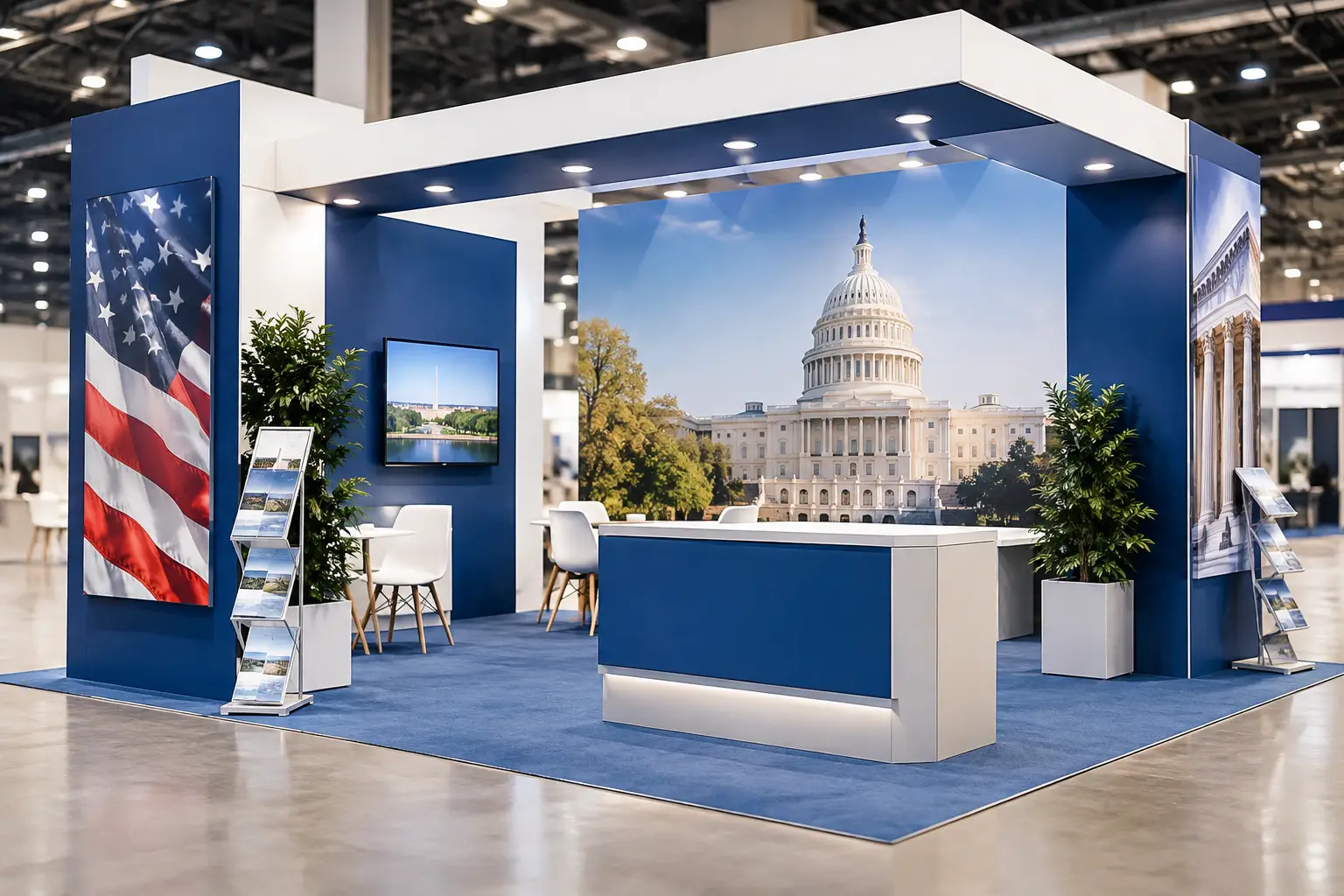
The most effective exhibition stands photograph well because they work well. They have a clear front-facing message, visible entry points, logical product zones, and enough breathing room for people to pause. They also make your team more effective by providing useful storage, meeting space, and a layout that supports natural conversations.
Avoid treating every wall as a billboard. Visitors moving through a busy hall will not read dense copy. They notice a strong brand cue, a compelling product visual, a concise message, and an active experience. Your stand should help them understand what you do in seconds, then give them reasons to stay longer.
Lighting is often underestimated. It guides attention, improves product presentation, and changes the perceived quality of materials. The same is true of flooring, edge finishing, and graphic alignment. These details may not appear individually in a budget spreadsheet, but together they decide whether a stand feels premium or temporary.
Build a Realistic Timeline
A confident exhibition build is planned backward from opening day. The schedule should allow time for concept development, revisions, organizer approvals, production drawings, fabrication, graphic printing, pre-install checks, logistics, and venue build-up. Compressed schedules are possible, but they reduce options and can increase costs when materials or labor must be expedited.
For a custom stand, early engagement gives your team more room to refine the story instead of making rushed compromises. It also allows the fabricator to identify value-engineering opportunities before production begins. A smart revision made during design is far easier than a costly change on the show floor.
At LemonTree Exhibitions, this end-to-end discipline brings design, fabrication, logistics, installation, and dismantling under one accountable team. With projects delivered across India and international exhibition markets, the focus remains the same: build a brand environment that looks bold, functions reliably, and is ready when your visitors arrive.
Ask Who Will Be Accountable On Site
Even a well-planned project benefits from responsive on-site management. Ask who will supervise installation, how issues will be escalated, and whether the same team that understands the approved design will be available during build-up. This is particularly important when schedules overlap with product deliveries, staffing coordination, or last-minute marketing updates.
The answer reveals how a fabricator works under pressure. Exhibition deadlines do not move simply because a graphic needs replacing or a power point has changed location. Dependable teams arrive prepared, communicate clearly, and resolve practical problems without creating unnecessary stress for the client team.
Choose a partner that treats your booth as a working sales environment, not just a construction job. When design ambition is matched by workshop control, transparent planning, and accountable delivery, your exhibition presence can earn attention for the right reason: it gives your brand a credible place to start valuable conversations.