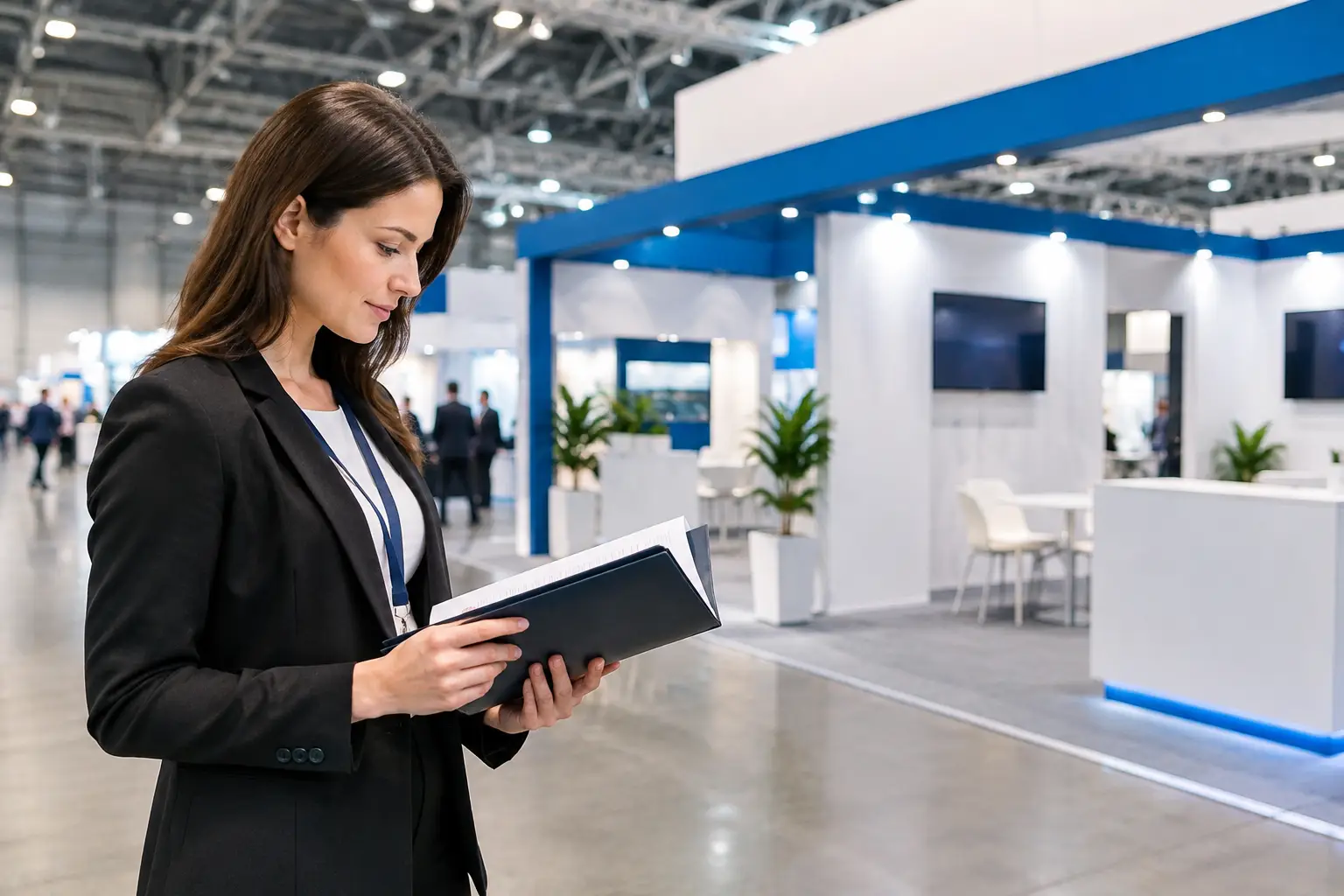

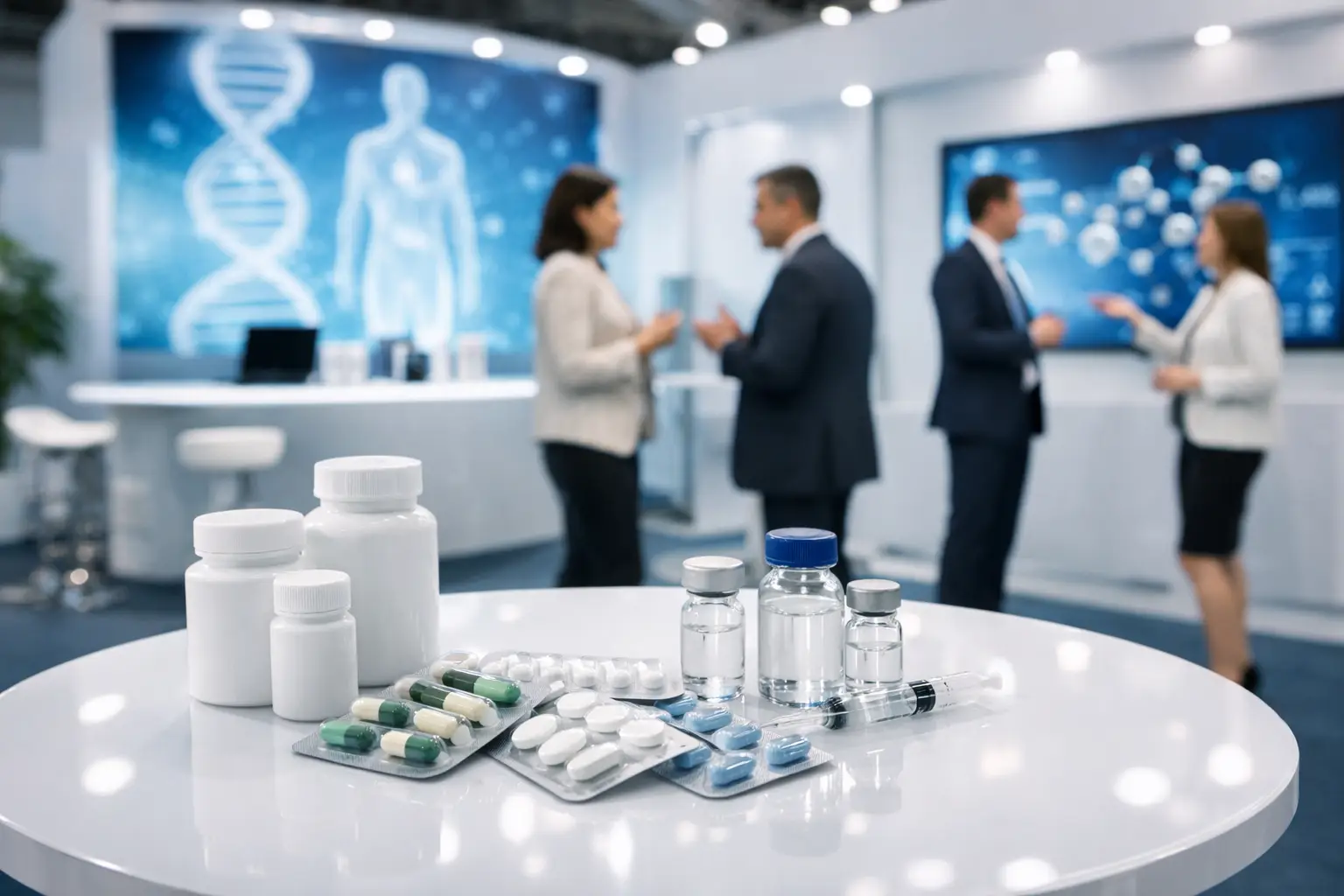

A pharma exhibition stand has to do more than look premium from across the aisle. The best pharma booth features help visitors quickly understand your therapy area, evidence, product value, and next step – while giving your medical, commercial, and event teams a controlled setting for credible conversations.
That balance matters. A booth overloaded with claims can create compliance concerns. A booth designed like a clinical waiting room can disappear on a crowded show floor. The strongest environments use thoughtful design, disciplined content planning, and dependable on-site execution to make complex science easier to engage with.
Best Pharma Booth Features Start With Clear Zoning
Pharma audiences do not all need the same conversation. A healthcare professional may want a concise clinical discussion. A distributor may be focused on market readiness and supply capability. A patient advocacy representative may need a different level of context altogether. Treating every visitor the same creates friction for both the guest and the booth team.
A well-planned stand separates these needs without making the space feel closed off. An open reception point can handle initial engagement and qualification. A central product or therapy-area zone can communicate the core story at a glance. Semi-private meeting areas give account managers and medical teams room for meaningful discussions, while enclosed rooms support confidential appointments when required.
The right layout depends on the show, the audience, and the size of the booth. At a large congress, several small meeting spaces may outperform one oversized lounge. At a broad healthcare trade show, a more open configuration may generate stronger walk-in traffic. The goal is not to fill every square foot. It is to give each interaction a purposeful place.
Make Scientific Information Easy to Absorb
Visitors should not need ten minutes to understand what your company does. Strong booth messaging begins with one clear idea visible from key approach routes: the therapeutic area, the product category, the research focus, or the patient need your organization addresses.
From there, content should become more detailed in layers. High-level messaging belongs on large fascia panels, towers, or LED displays. Supporting evidence, mechanisms of action, study highlights, and pipeline information can appear within dedicated engagement zones. This lets a visitor choose how deeply to explore rather than forcing a dense wall of information on everyone walking by.
Use visuals that explain, not decorate
In pharma, visual design earns attention only when it improves understanding. Custom medical illustrations, disease-state pathways, treatment journeys, manufacturing visuals, and data-led motion graphics can turn difficult subjects into accessible stories. They should be accurate, brand-aligned, and reviewed through the appropriate internal approval process before production.
Large-format graphics still have an important role, especially when they communicate a single confident message. But avoid using every panel as a brochure page. White space, legible typography, and a disciplined information hierarchy make a booth feel more credible and easier to navigate.
Build digital displays around a real visitor action
LED video walls and touchscreens are valuable when they earn their footprint. A large video wall can stop traffic with an animated disease-awareness story, product film, or global manufacturing narrative. An interactive display can help visitors explore a pipeline, compare treatment pathways, or access approved resources.
Technology should not become a distraction. If a screen requires staff to explain how to use it, or if its content is too dense for the time visitors have, a simpler presentation may work better. Every digital element should answer a practical question: Does it create attention, improve comprehension, capture a useful lead, or support a scheduled discussion?
Private Meetings Need to Feel Intentional
Pharma teams often arrive with full appointment calendars. Yet meeting rooms are sometimes treated as an afterthought, placed behind storage walls or fitted with furniture that feels temporary. That can undermine the quality of discussions with KOLs, partners, procurement teams, and senior stakeholders.
Private spaces should be acoustically considered, comfortably furnished, and integrated into the brand environment. Frosted graphics, architectural slats, or branded partitions can create privacy without making the booth appear unwelcoming. Good lighting matters here too. Harsh spotlights may work on a product plinth, but they are not ideal for a 30-minute business meeting.
Plan for the operational details early: power access, screen placement, ventilation, accessible routes, cleaning schedules, and secure storage for materials. A polished meeting room is not only about finishes. It is about allowing your team to stay focused on the conversation rather than solving avoidable problems on site.
Credibility Is a Design Feature
The best pharma booths do not rely on exaggerated promises or theatrical effects. They establish confidence through consistency. Brand colors, approved imagery, product naming, claims language, and supporting materials must align across every touchpoint, from the overhead sign to the tablet used for lead capture.
This is where detail-oriented production becomes commercially important. Misaligned graphics, poorly finished edges, unstable counters, or screens that fail during peak hours can distract from months of campaign preparation. A dependable exhibition partner coordinates design, fabrication, logistics, installation, and dismantling as one controlled process, reducing gaps between the approved concept and the stand visitors actually experience.
For global exhibitors, consistency also needs to travel. A brand appearing in Las Vegas, Dubai, Riyadh, or Mumbai should feel recognizable while responding to each venue’s regulations, technical services, deadlines, and local audience expectations.
Design for Conversations, Not Just Footfall
A crowded booth is not automatically a successful booth. Pharma marketing teams need relevant discussions, scheduled meetings, high-quality leads, and clear post-show follow-up. The physical environment can actively support those outcomes.
Reception counters should be positioned to welcome rather than block. Staff need enough room to speak comfortably, store materials, and direct visitors to the right specialist. Lead capture stations should be quick and unobtrusive. Where appropriate, a small consultation area close to the main engagement zone can turn interest into a more focused discussion without losing momentum.
Consider what your team will do during the busiest hour of the show. If several visitors arrive at once, can the booth handle them? Is there a visible route from first contact to content engagement to a meeting? Can a medical representative step into a quieter area when a detailed question arises? These operational questions often reveal more about stand performance than a beautiful rendering alone.
Sustainability Should Be Practical and Visible
Sustainability is increasingly relevant to pharma organizations, but exhibition sustainability should be more than a statement printed on a wall. Reusable structural systems, repurposed materials, durable furniture, modular graphic strategies, and responsible post-show handling can reduce waste without compromising impact.
The trade-off is that reusable elements may place some limits on unusual shapes or one-time finishes. For many exhibitors, that is a worthwhile exchange when the result is a high-quality stand that can be adapted for future events. The strongest approach combines reusable foundations with fresh, campaign-specific visual elements where they matter most.
If sustainability is part of your corporate story, show the work behind it. Visitors respond better to specific choices than vague claims. A concise explanation of material reuse, low-waste construction, or responsible dismantling can reinforce your brand values while keeping the message credible.
Plan Compliance Into the Booth From Day One
Compliance is not a final artwork check. It affects space planning, content formats, staffing workflows, and the way visitors access information. Medical, legal, regulatory, and commercial stakeholders should have a clear review path before fabrication begins. Last-minute changes to a large wall graphic or a custom interactive interface are expensive, disruptive, and avoidable.
Create an approved content matrix that identifies what belongs in public-facing areas, what requires staff-led discussion, and what can be shared through controlled follow-up. This helps the design team build the right information layers and prevents a booth from becoming either too guarded or too exposed.
It also protects the event team. When booth staff know which messages are approved, where to find supporting materials, and how to direct specialized questions, they can engage with greater confidence.
A successful pharma booth is not the loudest space in the hall. It is the one that makes the right people stop, understand the value quickly, and feel confident enough to continue the conversation. With experienced planning and controlled execution, LemonTree Exhibitions helps turn that standard into a physical environment your team can use with confidence from opening hour to final dismantling.