

At the arab plast exhibition dubai, visitors are not short on machinery, materials, technical claims, or supplier options. That makes a trade show stand more than a display space. It must quickly show why your company deserves a conversation, give technical buyers confidence, and support your sales team through long days of serious business discussions.
For plastics, petrochemicals, packaging, recycling, and processing brands, the strongest presence is rarely the one with the most decoration. It is the one that makes a complex offer easy to understand while delivering a dependable, well-managed visitor experience. That takes early planning, disciplined design, and an exhibition partner that can control every detail from concept through dismantling.
Why Arab Plast Exhibition Dubai Demands a Clear Strategy
ArabPlast attracts a business-focused audience that often arrives with specific requirements: a new processing capability, a material supplier, an automation partner, a distribution relationship, or a solution that can improve production efficiency. Many visitors will compare several suppliers in a single day. Your stand needs to help them identify relevance in seconds.
That starts with a decision about the job your space must do. A company launching a new resin grade needs product visibility and space for commercial discussions. A machinery manufacturer may need safe, prominent equipment presentation and a clear technical demonstration route. A company entering Gulf markets may need to build credibility first, using a polished environment, local-market messaging, and a capable meeting area.
Trying to accomplish every objective equally can dilute the experience. A large product range, multiple business divisions, and too many messages can leave visitors unsure where to begin. Prioritize one primary outcome, then let the layout, graphics, technology, and staffing support it.
Set Stand Goals Before You Approve a Design
The most productive design briefing is commercial, not purely visual. Before discussing materials, colors, or LED walls, align internal stakeholders on the visitors you want to meet and the action you want them to take.
For example, a recycling technology supplier may want qualified leads from plant owners and converters. A masterbatch brand may be focused on distributor meetings. A government trade body may need a country pavilion that gives participating companies equal visibility while still presenting one coherent national identity. These require very different floor plans.
Define how success will be measured. Useful measures include the number of pre-booked meetings, qualified leads, live demonstrations completed, media conversations, distributor inquiries, and post-show proposals issued. Lead quantity matters, but it can be misleading. Fifty contacts without buying authority may be less valuable than ten well-documented discussions with procurement or plant leadership.
Your sales team should also agree on lead qualification before the show opens. Capture details that make follow-up meaningful: application, annual volume, production challenge, market, project timeline, and decision-making role. If the team only collects business cards, the investment becomes harder to convert after the event.
Build a Visitor Journey, Not Just a Booth
A good stand guides visitors naturally from attention to understanding to action. The journey begins several meters away. Your main brand message must be visible from the aisle and specific enough to create interest. Broad statements about quality or innovation are easy to overlook. A message tied to a real business outcome gives people a reason to stop.
Once inside, visitors need a simple path. Product samples, material applications, machinery components, and digital content should reinforce one another rather than compete for attention. Put technical depth where interested prospects can access it without forcing every passerby into a lengthy explanation.
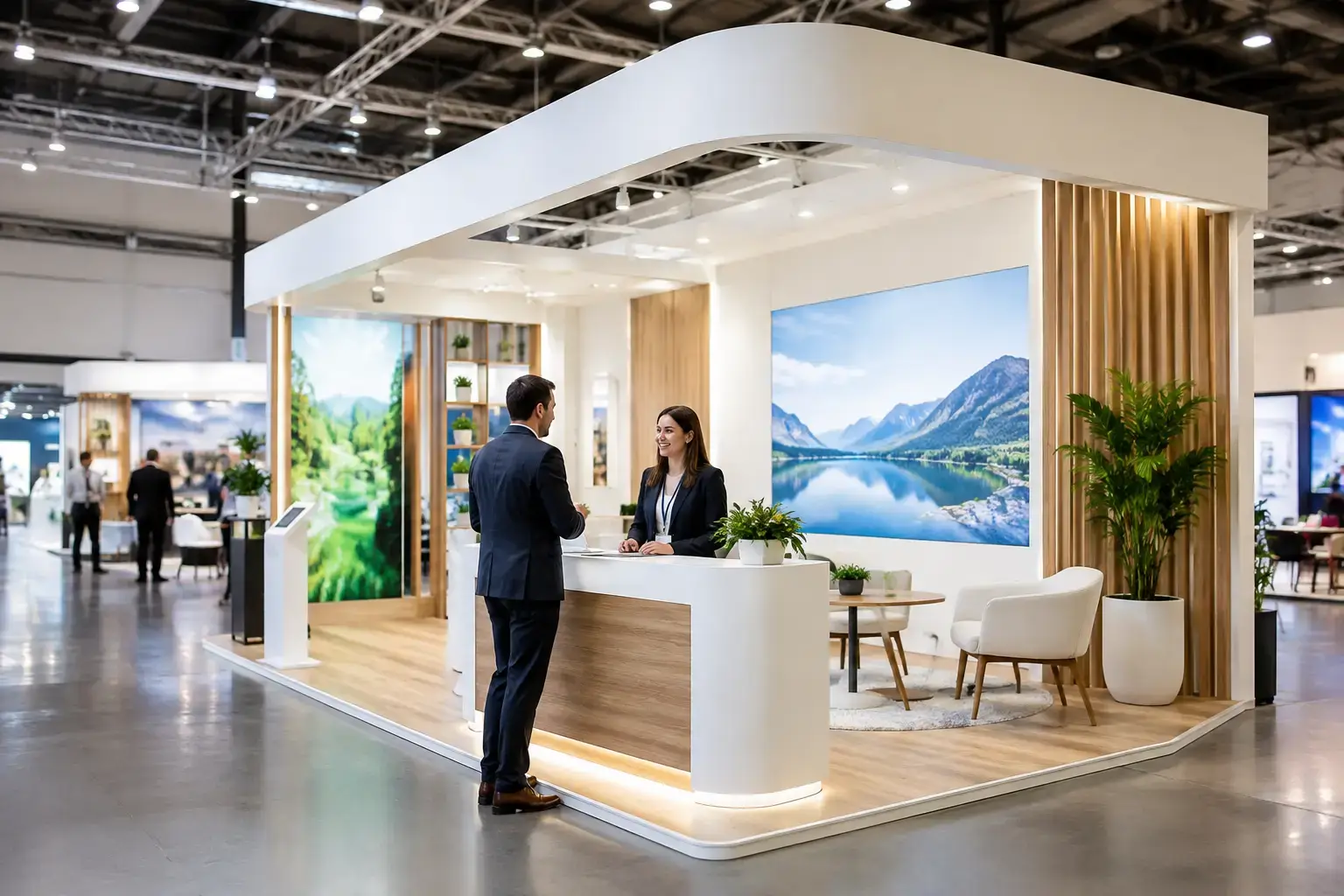
Meeting areas deserve particular care at an industrial exhibition. Open lounges help create energy and encourage informal introductions, but they are not ideal for pricing discussions, confidential specifications, or distributor negotiations. Depending on your sales model, the right answer may be a combination of a welcoming reception point, semi-private tables, and an enclosed meeting room.
For larger footprints, a double-decker stand can increase hospitality and meeting capacity without consuming additional floor space. It is a powerful option when your program includes frequent executive meetings or demonstrations below and private discussions above. However, it only makes sense when the visitor volume, budget, venue approvals, and operational requirements justify the added structure. Bigger is not automatically better if the upper level remains underused.
Make Equipment and Samples Work Harder
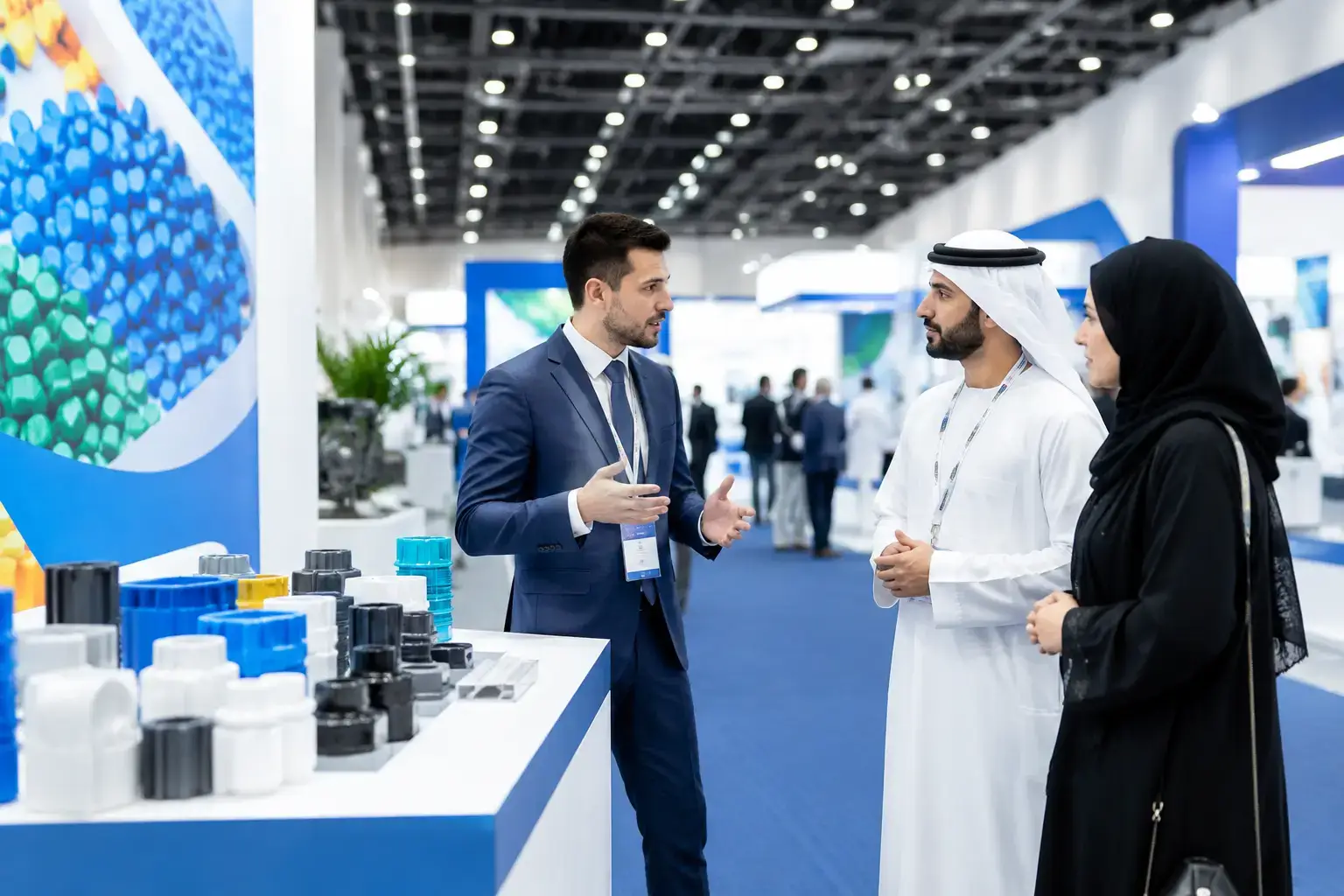
Physical products create attention, especially when they make a technical claim tangible. A molded part, film sample, packaging application, recycled material comparison, or cutaway component can turn an abstract conversation into a practical one. Equipment can have even greater impact, but it requires disciplined planning around access, power, floor loading, safety, delivery timing, and installation.
Do not place large machinery simply because it is available. Ask whether it can be seen clearly, explained safely, and connected to a commercial message. If live operation is not practical, a carefully produced video, a working component, or an application-focused display may communicate value more effectively while reducing logistics risk.
Budget for the Details That Protect Your Investment
The headline cost of a stand is only part of the exhibition budget. Electrical requirements, rigging, venue services, furniture upgrades, equipment handling, audiovisual content, staffing, travel, and cleaning can materially affect the final figure. Experienced exhibitors reserve contingency for late changes, additional technical requirements, and logistics variables.
There is also a trade-off between a highly custom structure and a modular approach. A custom-built stand gives greater freedom to shape the brand environment, integrate product displays, and create a premium architectural presence. A modular solution can be faster and more cost-efficient, particularly for smaller spaces or repeat participation across multiple markets. The right choice depends on your footprint, product story, reuse plans, and the impression needed to compete.
Sustainability should be part of that decision. Reusable structural systems, repurposed materials, durable graphics, and careful fabrication planning can reduce waste without making the stand feel generic. For brands that speak about circularity or recycled materials, the way the exhibit is built should support the credibility of the message.
Choose Execution Control Over Last-Minute Coordination
An impressive 3D concept is useful, but it is not the finished product. At Dubai exhibitions, timing, venue compliance, logistics, installation access, and on-site responsiveness determine whether the final stand matches the approved vision. This is where in-house design and fabrication capacity can make a measurable difference.
A dependable build partner should translate commercial goals into a practical layout, produce a clear technical plan, manage fabrication quality, coordinate transport, install on schedule, and remain accountable until dismantling is complete. This is particularly valuable for international exhibitors who need one responsible team rather than several disconnected vendors.
LemonTree Exhibitions approaches stand delivery as an end-to-end process, from free 3D concept development through fabrication, logistics, on-site installation, and dismantling. For a high-stakes industry event, that continuity helps protect both design quality and operational control.
Do Not Leave Staffing Until the Final Week
Even a well-designed stand can underperform if visitors are not greeted quickly or technical conversations are handled inconsistently. Decide which roles are needed: product specialists, sales representatives, hospitality staff, translators, demonstration support, or meeting coordinators. Then train the team around a shared opening question, lead process, daily schedule, and escalation path for serious opportunities.
Hostesses and event staff can improve visitor flow and hospitality, but they should complement, not replace, knowledgeable commercial staff. In technical categories, buyers expect informed answers. Ensure someone on the stand can move from a high-level introduction to meaningful detail without making the visitor wait.
Start the Sales Process Before the Doors Open
The exhibition should not be the first time key prospects hear that you are participating. Invite priority accounts to scheduled meetings, tell them what they can expect to see, and give your sales team a realistic reason to reconnect. A product launch, demonstration, market announcement, or private meeting program can provide that reason.
After each show day, review leads while the conversations are fresh. Clarify ownership, next steps, and deadlines before records become vague. The best follow-up is specific: it refers to the application discussed, answers the question raised, and proposes a practical next action. Sending the same generic email to every contact wastes the context your team worked hard to earn.
The most effective ArabPlast stand is not the one that merely looks busy. It is the one that makes qualified visitors feel understood, gives your team the right setting to sell, and leaves no uncertainty about what should happen after the show floor closes.