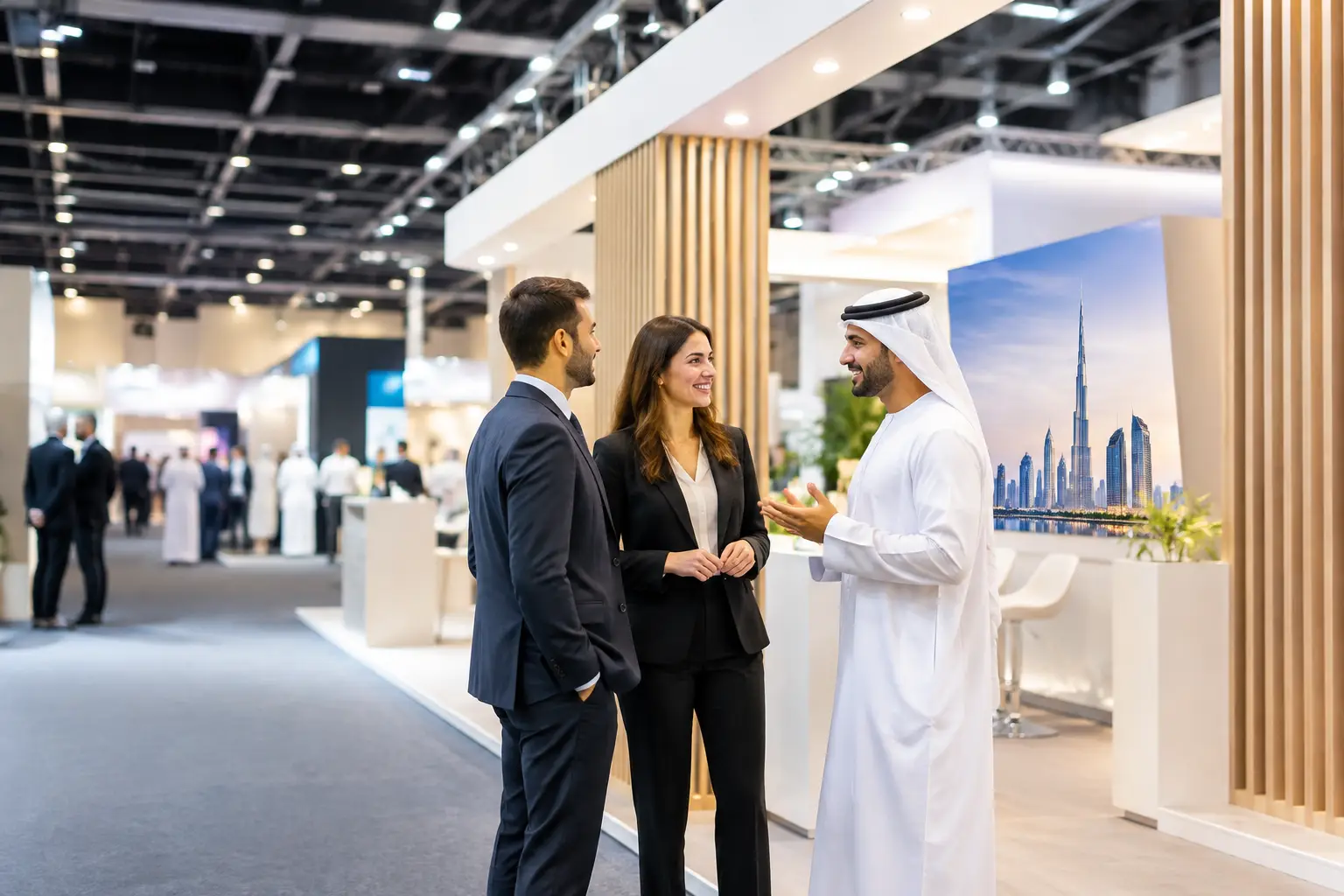

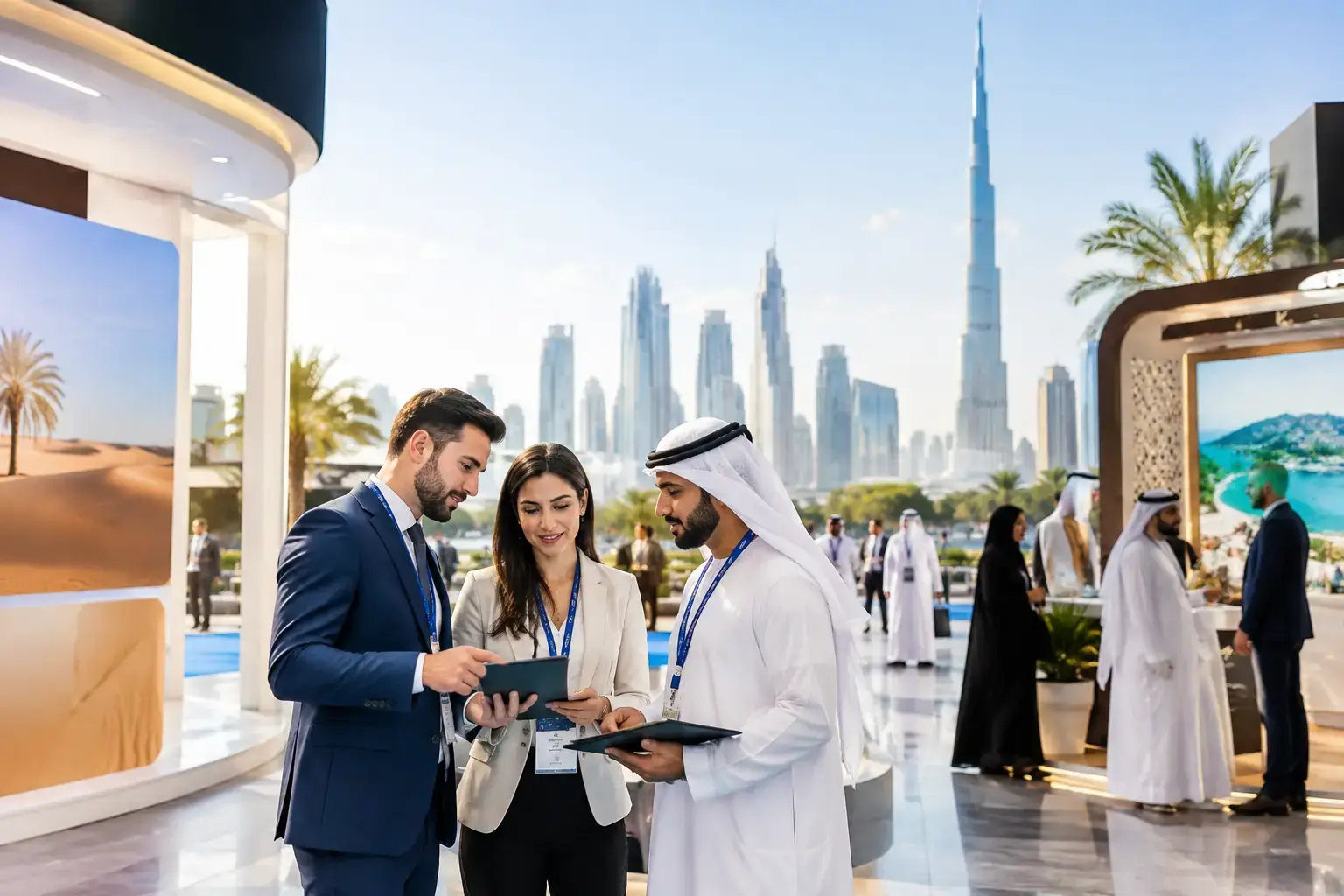

The Arabian Travel Market Dubai exhibition is not a place for passive brand visibility. It is where destination marketers, hotel groups, travel technology providers, DMCs, airlines, and tourism suppliers have a short window to earn meetings with buyers who can influence real commercial outcomes. Your stand must make the value of those conversations obvious before a visitor has taken three steps inside.
For marketing leaders and exhibitors, the challenge is balancing creative ambition with operational control. A striking stand earns attention, but it must also support private discussions, product demonstrations, lead capture, hospitality, and a schedule that rarely leaves room for delays. The strongest exhibition presence is designed around what the business needs to achieve, not simply what it wants to display.
What Makes the Arabian Travel Market Dubai Exhibition Different
Travel is an experience-led industry, so exhibitors are expected to create an environment that makes a destination, property, platform, or service feel credible and desirable. A brochure rack and standard graphics may communicate information, but they rarely create the confidence needed for high-value partnerships.
At the same time, the audience is commercially focused. Buyers and partners need to understand what differentiates your offer, who it serves, and why it is relevant to their market. A destination may need to demonstrate accessibility and investment potential. A hospitality brand may need to showcase a new portfolio, while a travel technology company must make a complicated platform easy to grasp in minutes.
That creates a useful design principle: build for both emotional impact and business clarity. Visitors should immediately recognize the brand, then find a logical path to the information, people, and meeting spaces that move a conversation forward.
Start With the Outcome, Not the Stand Size
A 30-square-meter booth can outperform a much larger space when its purpose is sharply defined. Before approving a concept, decide what success means for this particular event. It may be a target number of qualified buyer meetings, market awareness in the GCC, launch visibility for a new destination, distributor conversations, or partnership leads for a travel service.
Those goals should shape every major stand decision. If scheduled meetings are the priority, give the meeting area enough privacy and acoustic separation to support serious discussion. If product discovery is the goal, create accessible demonstration points with clear staff ownership. If your objective is awareness, invest in an unmistakable visual focal point that can be seen from the aisle and photographed easily.
Trying to serve every objective equally often produces a cluttered space. It is better to choose a primary goal and support one or two secondary goals. This makes budgeting more disciplined as well. You can spend where it has commercial value instead of adding features simply because they look impressive on a floor plan.
Match the Floor Plan to Visitor Behavior
A stand is a working environment, not a billboard. At a busy travel exhibition, visitors need to understand where to enter, where to pause, and where to speak with someone without feeling exposed. The circulation route should feel natural, particularly when there are demonstrations, refreshments, large displays, or multiple stakeholder teams sharing the space.
Open corners and a clear front-facing message generally help pull visitors in. However, a fully open layout is not always the right answer. Premium travel brands, investor-facing destinations, and companies handling confidential commercial discussions may benefit from a more controlled meeting zone. The right balance depends on the audience, the number of scheduled appointments, and how much privacy the sales team genuinely needs.
Avoid placing reception desks, large screens, or hospitality counters in ways that create bottlenecks. A crowded entry point can make a successful stand look inaccessible. Designated touchpoints for walk-in visitors, hosted guests, and scheduled meetings keep the experience organized during peak periods.
Make Your Brand Story Visible in Seconds
At a large exhibition, people scan before they stop. Your central message should be readable from a distance and understandable without a lengthy explanation. For a destination, that could mean one powerful reason to visit or invest. For a hotel group, it might be a focused statement about its properties, guest segment, or regional expansion. For a technology provider, it should explain the business outcome the platform delivers.
Use graphics to create hierarchy rather than fill every available wall. Oversized visuals, selective messaging, quality finishes, and purposeful lighting usually make a stronger impression than dense panels of copy. LED video walls can add energy and show destinations or services in motion, but the content needs to be designed for a fast-moving exhibition audience. Long brand films with small captions rarely hold attention in an aisle.
A good rule is to give each visible surface one job. It can attract attention, explain a benefit, direct visitors, or support a meeting area. When every surface tries to do all four, the message becomes harder to remember.
Plan for Meetings, Not Just Footfall
High traffic feels encouraging, but the quality of interactions matters more than a busy booth. Travel trade events often depend on pre-arranged meetings, which means exhibitors need a space that can perform like a compact business lounge without losing the energy of an exhibition stand.
Consider the ratio of open space to seating early. A brand with a full diary may need several semi-private tables, powered workstations, and a clear guest-hosting process. A company relying more heavily on walk-ins may prioritize an open welcome area and quick consultation points. Hospitality also needs practical planning: storage, waste management, staff access, and service timing should be considered before fabrication begins.
For larger delegations, country pavilions and shared destination spaces introduce another layer of coordination. Individual participants need visibility, while the pavilion must still feel like one coherent national or regional story. Strong zoning, consistent visual standards, and shared hospitality rules prevent a pavilion from becoming a collection of disconnected booths.
Budget for the Parts Visitors Do Not See
A polished render is only the beginning. Exhibition budgets need to account for fabrication, venue regulations, electrical requirements, furniture, AV, graphics, logistics, installation, dismantling, cleaning, storage, and on-site support. The exact mix depends on the stand type and the venue package, but overlooking operational line items can create unwelcome changes late in the project.
Custom stands are often the right choice when you need a differentiated brand environment, defined meeting rooms, integrated technology, or a structure that supports a major launch. Modular systems can be a sensible option for smaller footprints, repeatable event programs, or companies testing a new market. Neither format is automatically better. The decision should reflect your objectives, timeline, reuse potential, and required level of brand distinction.
Sustainability deserves the same practical approach. Reusable structural components, recyclable materials, rental furniture, and graphics planned for responsible disposal can reduce waste without compromising quality. The most effective sustainable choices are built into the design and production plan from the start, rather than added as a last-minute label.
Build a Delivery Plan That Protects Your Deadline
The exhibition deadline is fixed, so stand delivery requires disciplined coordination. Start concept development early enough to allow time for revisions, approvals, fabrication, and venue documentation. Late design changes can be accommodated in some cases, but they can affect cost, material availability, and the amount of quality control possible before installation.
Assign one internal decision-maker who can consolidate feedback from marketing, sales, leadership, and regional teams. Conflicting approvals are a common source of delay. Your exhibition partner should also confirm technical drawings, material specifications, power needs, AV requirements, logistics access, and installation schedules well before move-in.
LemonTree Exhibitions manages design, fabrication, logistics, installation, and dismantling in-house, which gives clients a single accountable team from the initial 3D concept through final handover. For a high-profile Dubai event, that control matters because small execution details – graphic alignment, lighting levels, cable management, finish quality, and meeting-room readiness – directly affect how confidently your team can host buyers.
Prepare the Team to Convert Attention Into Opportunity
Even an exceptional stand cannot compensate for an unprepared team. Before the show opens, agree on how staff will greet visitors, qualify leads, handle meeting handovers, demonstrate the offer, and record follow-up actions. This is especially important when a stand includes representatives from different hotels, destinations, product lines, or partner organizations.
Give staff a short set of conversation priorities rather than a long script. They should know the primary audience, the core message, the next action they want from a visitor, and who owns follow-up. Lead capture must be simple enough to use during busy periods, with fields that help sales teams distinguish genuine prospects from casual inquiries.
The most productive Arabian Travel Market presence combines bold visual appeal with dependable execution. Give buyers a reason to stop, give your team the right setting to have a valuable conversation, and give every detail a job. That is how an exhibition stand becomes a commercial asset rather than an expensive backdrop.