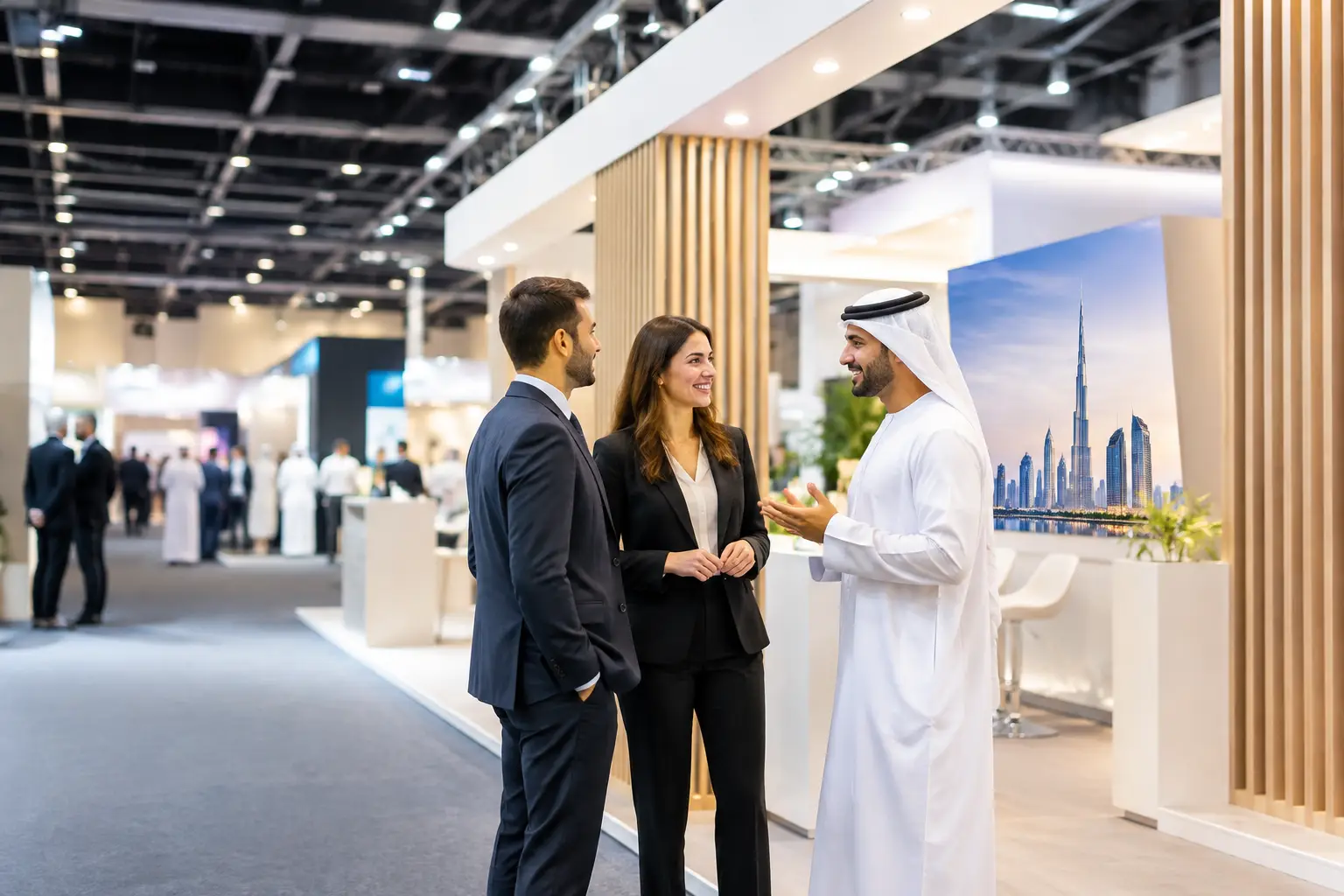

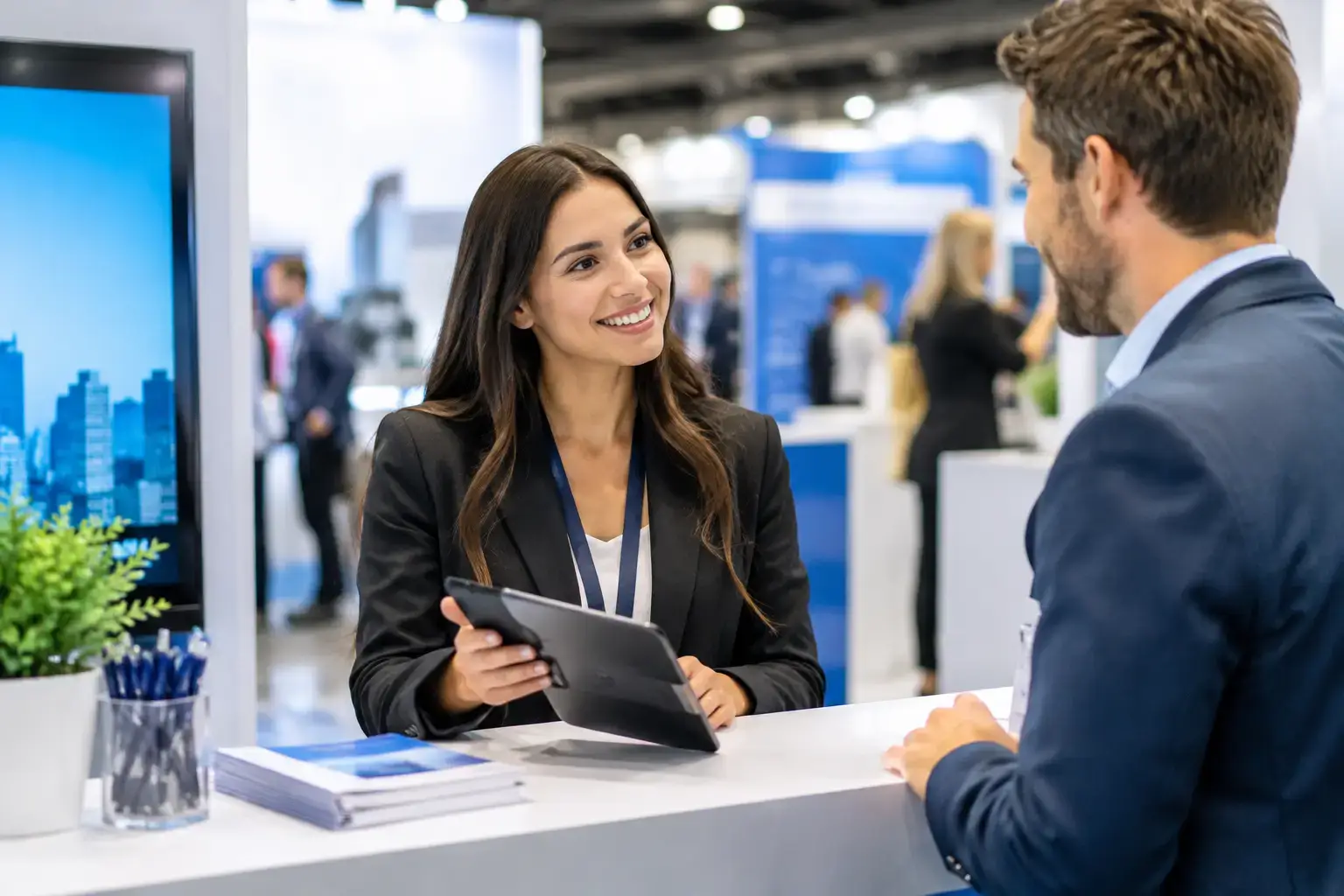

A busy aisle is not the same as a productive booth. The top trade show engagement tools are the ones that give the right visitor a reason to stop, understand your value quickly, and take a meaningful next step. For marketing teams investing in a custom stand, travel, staffing, and show sponsorships, that distinction determines whether the event produces a qualified pipeline or only a collection of badge scans.
The strongest engagement plan is rarely built around one attention-grabbing device. It combines physical design, content, technology, and confident human interaction. Each element should support a specific commercial objective: introduce a complex product, demonstrate proof, book meetings, qualify buyers, or strengthen recall after the show.
Choose engagement tools around the visitor journey
Before selecting technology, define what a successful booth visit looks like. A first-time prospect may need a fast visual explanation. An existing customer may expect a private discussion with a senior representative. A distributor or procurement lead may need technical specifications, pricing context, and a clear follow-up process.
This matters because the most impressive tool can still underperform when it does not match the audience. A virtual product configurator may be valuable for a technical manufacturing brand with multiple specifications. At a food or FMCG event, sampling and a well-designed product display can be more persuasive. At a major technology exhibition, live demonstrations and a clear schedule of expert talks may carry more weight than a game.
Think in three stages: attract, engage, and convert. Your stand architecture, lighting, and visible messaging attract. Demonstrations, screens, hands-on experiences, and staff conversations engage. Lead capture, meeting booking, and a defined follow-up path convert. A tool that only attracts without moving visitors forward can create congestion without creating value.
7 top trade show engagement tools worth considering
1. LED video walls with purposeful content
A high-resolution LED video wall can command attention across a crowded hall, particularly on large stands, double-decker structures, and country pavilions. Its value is not simply size. It gives brands the flexibility to show product applications, customer environments, launch films, live data, or scheduled presentations without filling the stand with static graphics.
Keep the main message readable from the aisle. Visitors should understand the category, benefit, or campaign idea in a few seconds. Save dense technical detail for a closer screen or a conversation. Fast-moving visuals can look polished, but they should not compete with the people trying to speak with visitors.
2. Live product demonstrations
For many B2B exhibitors, the most credible engagement tool is still a live demonstration. Seeing machinery operate, comparing material performance, testing a software workflow, or handling a physical sample answers questions no brochure can resolve.
The key is to make demonstrations repeatable. Plan a concise version that takes three to five minutes, then offer a deeper session for serious prospects. Schedule demonstrations at predictable intervals and display the timing visibly. This creates a natural reason for visitors to return and helps staff manage traffic instead of delivering the same explanation continuously.
Where a full product cannot be transported, use a scaled model, cutaway section, interactive 3D visualization, or a video demonstration supported by real samples. The experience must remain credible. A screen alone is rarely enough for a product whose appeal depends on build quality, scale, or performance.
3. Interactive touchscreens and product configurators
Touchscreens work well when visitors need to compare options independently before speaking to a representative. They can organize extensive product portfolios, technical documentation, case studies, application videos, and regional contact information in a compact format.
A product configurator is especially useful for exhibitors selling customizable solutions. It lets a prospect select features, capacity, finishes, or use cases, then creates a useful starting point for a sales discussion. However, do not ask visitors to complete a long form just to explore. The interaction should feel helpful first and capture data only when the visitor sees a reason to share it.
Plan for practical details: screen height, glare from exhibition lighting, accessibility, device security, content loading speed, and a fallback option if the internet connection is unstable. Dependable execution matters more than adding another digital layer.
4. Smart lead capture and qualification tools
Badge scanning and digital lead forms are fundamental, but they are only as valuable as the qualification process behind them. A scan without context leaves sales teams guessing after the event. Build a short form that records the information your follow-up team genuinely needs, such as product interest, purchase timeline, market, project size, and next action.
Use simple lead categories agreed upon by marketing and sales before the show opens. For example, an immediate opportunity should trigger a meeting or priority call, while a research-stage visitor can enter a relevant nurture sequence. This avoids treating every scan as equal and gives event reporting more commercial credibility.
Be mindful of privacy requirements, particularly when exhibiting internationally. Explain what visitors are opting into, avoid collecting unnecessary information, and make ownership of lead data clear when multiple partners share a stand.
5. Meeting-booking stations and private consultation areas
Some of the highest-value trade show conversations happen away from the aisle. A visible meeting-booking point can turn interest into a scheduled commitment, while a semi-private discussion area gives sales teams the setting to qualify an opportunity properly.
For premium or technical offers, include at least one area where conversations can take place without constant interruption. On a larger custom stand, this may be a closed meeting room, upper-deck lounge, or acoustically considered seating zone. On a compact footprint, a well-positioned table with clear boundaries can still improve the quality of discussions.
The trade-off is space. Every meeting area reduces open demonstration or display space, so its size should reflect your sales cycle and expected visitor profile. If your objective is distributor recruitment, investor discussions, or enterprise procurement meetings, private space is usually worth protecting.
6. Gamified experiences with a business purpose
A short quiz, challenge, simulation, or prize draw can increase dwell time and make a booth more approachable. It is most effective when the activity reinforces something visitors should remember about the brand: a product benefit, industry challenge, sustainability commitment, or technical differentiator.
Avoid generic games that draw a queue of people with no connection to your market. A large crowd can block qualified prospects and overwhelm staff. If you use an incentive, make it proportionate and relevant. A useful sample, a technical consultation, or access to a valuable resource often attracts better-fit visitors than a high-value giveaway.
7. Expert-led micro-presentations
Short presentations by product specialists, engineers, or customer-facing leaders can establish authority quickly. They work particularly well in sectors where buyers need evidence before they engage, including energy, pharma, industrial manufacturing, and enterprise technology.
Keep sessions focused on a practical question rather than a broad company introduction. A ten-minute talk on reducing production downtime or meeting a specific compliance challenge is more likely to hold attention than a slide-by-slide corporate overview. Promote the schedule on the stand and use the final minute to invite questions, demonstrations, or booked meetings.
The stand itself is an engagement tool
Technology performs better when the environment supports it. Poor sightlines, insufficient power planning, hidden entrances, crowded furniture layouts, and weak storage can undermine even the best activation. Engagement should be considered during the 3D design stage, not added after fabrication plans are finalized.
A well-designed stand guides visitors intuitively. Bold branding draws them in, product zones give them a reason to pause, and meeting areas allow the conversation to progress. Lighting can emphasize key displays, while integrated screens and concealed cabling keep the space professional rather than improvised.
At LemonTree Exhibitions, this coordination is central to how we approach custom stands. Design, fabrication, logistics, installation, and on-site details need to work as one system, especially when a stand is carrying LED walls, demonstrations, hospitality, and high visitor volumes.
Make staff the operating system behind the tools
No engagement tool replaces a prepared booth team. Staff members need to know who they are trying to meet, how to open a conversation, when to demonstrate versus when to listen, and how to record useful lead notes. A beautiful stand with passive staffing creates a missed opportunity.
Give the team a simple engagement script, but do not make them sound scripted. They should be able to ask a relevant question, direct visitors to the right experience, and recognize when a senior colleague should join the discussion. Brief event hostesses on visitor flow, appointment handling, and brand standards so they support the sales process rather than simply greeting guests.
Measure what happens after the applause
Footfall, scans, social activity, demo attendance, booked meetings, and dwell time are useful signals, but they do not tell the full story. Track the number of qualified leads, sales-accepted leads, post-show meetings, proposals, and pipeline value attributed to the event. For longer buying cycles, review performance at 30, 60, and 90 days.
This analysis should shape the next exhibition plan. If a touchscreen generated strong product interest but few meeting requests, adjust the call to action. If demos consistently produced high-quality conversations, allocate more space and staff time to them. The goal is not to bring more tools to every show. It is to invest in the few tools that help your brand create better commercial conversations.
For your next brief, start with the question your ideal visitor should be able to answer after two minutes at the booth: why should I speak with this company now? Build every engagement choice around making that answer clear.