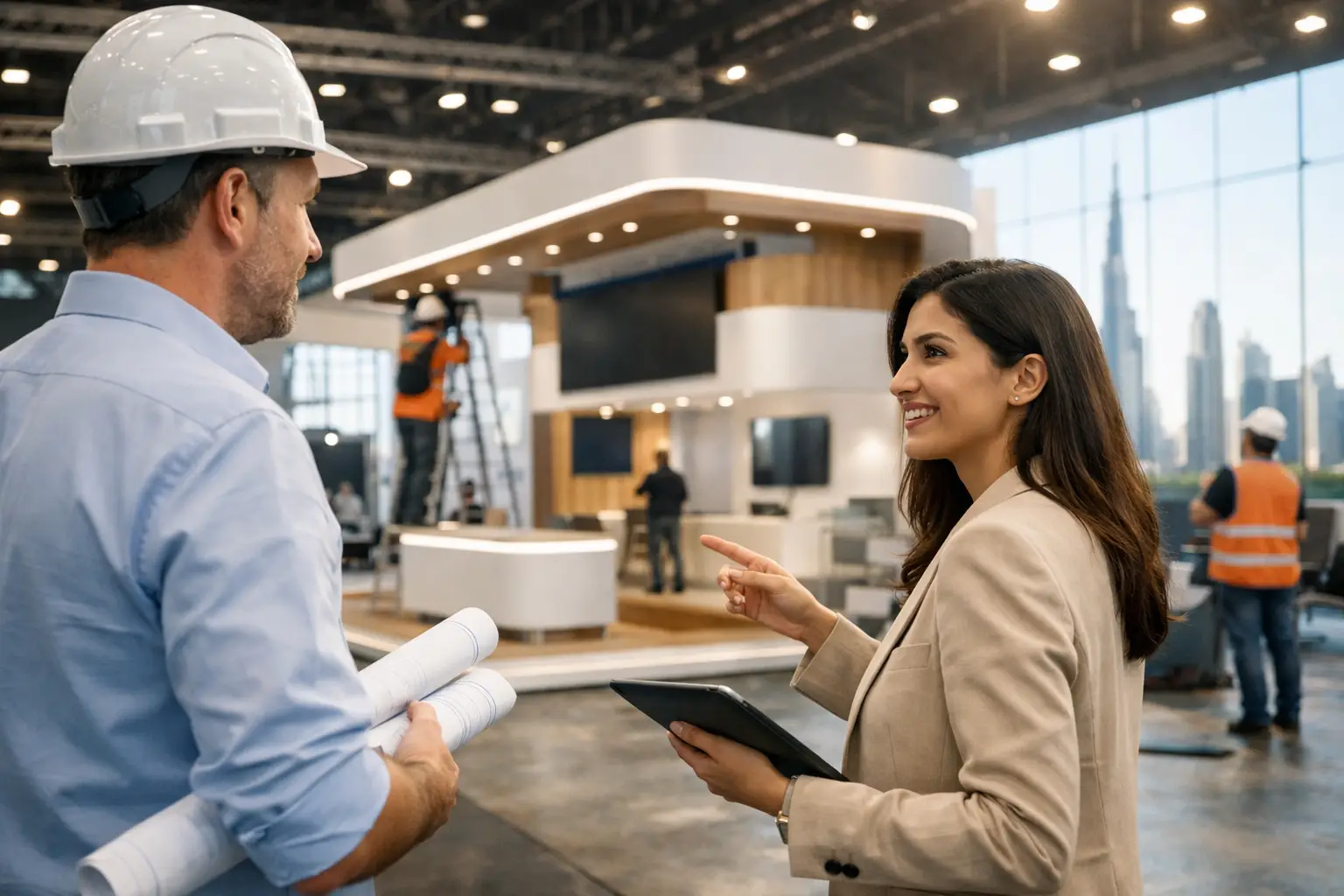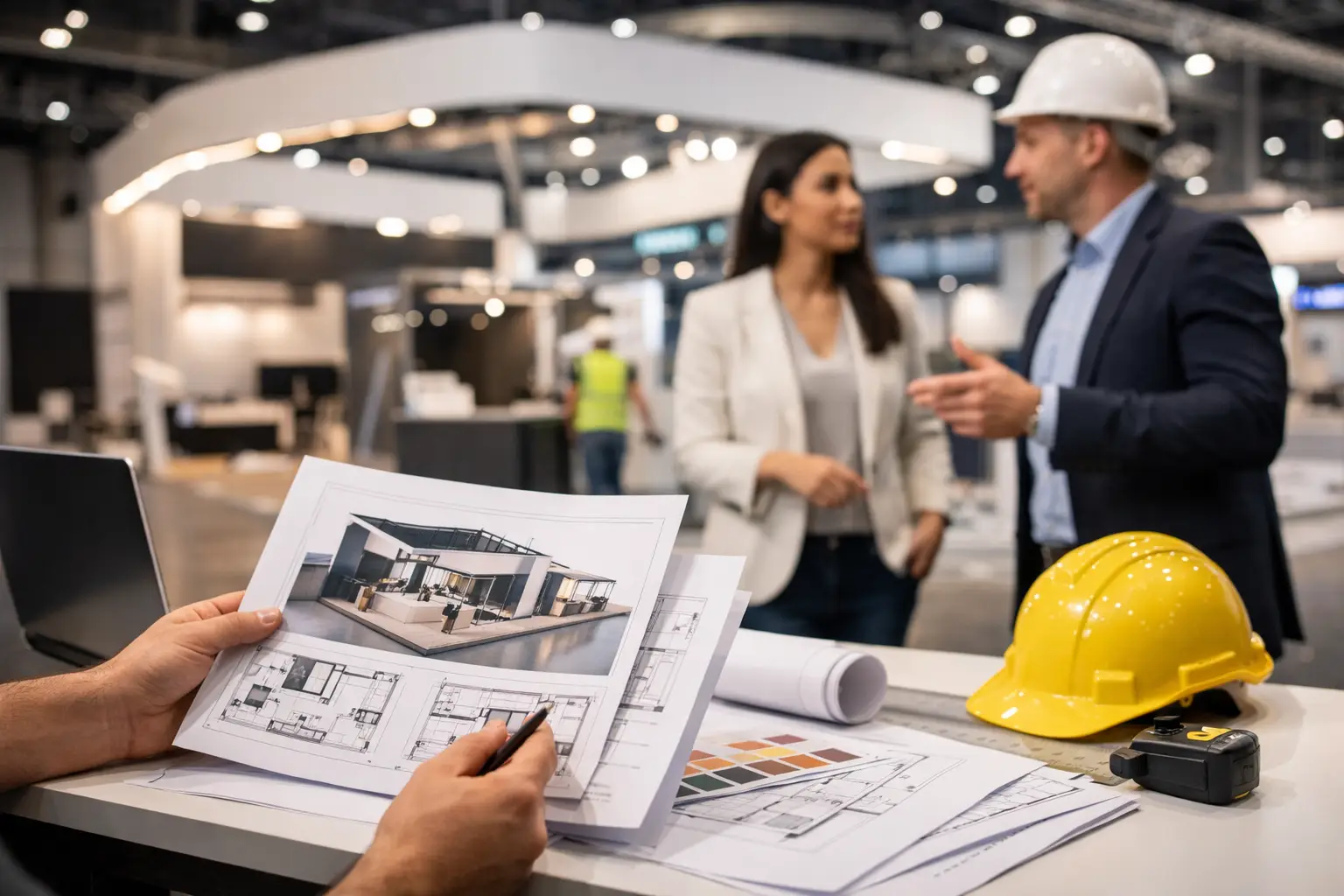



A crowded aisle is not evidence of exhibition success. The real test comes after the show: Can your sales team identify who visited, what they need, how urgent the opportunity is, and what should happen next? A strong exhibition booth lead generation strategy turns attention into a structured pipeline rather than a stack of business cards and vague post-show promises.
For marketing leaders, the challenge is balancing brand impact with commercial discipline. Your booth must stop the right people, give them a reason to engage, and make it easy for your team to capture useful information without creating friction. That work starts long before the stand is fabricated.
Build an exhibition booth lead generation strategy before design begins
Start with a commercial objective, not a floor plan. “Generate leads” is too broad to guide design, staffing, or measurement. Define the type of conversation your company needs at this particular event. It may be meetings with distributors, demonstrations for plant managers, consultation requests from procurement teams, or introductions to decision-makers in a target market.
Set a realistic target based on your stand size, location, show duration, and the complexity of your offer. A company selling enterprise technology or industrial equipment may value 20 well-qualified meetings more than 200 scanned badges. A consumer-facing FMCG brand, on the other hand, may need higher interaction volume and a different route to follow-up.
Agree on lead definitions with sales before the show. A useful framework separates contacts into three levels: high-priority opportunities with a clear need and timeline, developing prospects that require nurture, and general contacts who may be relevant later. When everyone uses the same definitions, marketing can report performance credibly and sales can act with confidence.
Design for conversations, not just visibility
A visually impressive stand earns the first glance. Its layout determines whether that glance becomes a conversation. The most effective booths create a clear visitor journey: an open entry point, a strong reason to pause, a place to explore the offer, and a quieter area for meaningful discussions.
Avoid placing every product, message, and screen at the front of the stand. Too much information can make a booth feel busy without making it persuasive. Instead, lead with one primary value proposition that a visitor can understand in seconds. Use product displays, live demonstrations, interactive content, or a relevant consultation as the next step.
Meeting spaces matter, especially for B2B exhibitors. Open lounge seating can work for early-stage conversations, while semi-private or private rooms are better for pricing discussions, technical reviews, and distributor meetings. The right mix depends on your sales cycle and visitor profile. A double-decker stand may provide valuable separation between public engagement downstairs and senior-level meetings upstairs, but only if the traffic volume and meeting schedule justify the investment.
Give visitors a reason to identify themselves
People do not hand over their details because a scanner is nearby. They do it when the exchange feels worthwhile. Build an offer around a real business need, not a generic giveaway. This could be a product assessment, an industry benchmark, a technical demonstration, a scheduled consultation, early access to a launch, or a concise expert session at the booth.
The offer should match the quality of lead you want. A broad prize draw can increase scans, but it often produces low-intent data. If your priority is procurement leaders or technical buyers, an appointment with a subject-matter expert is usually more valuable than a high-volume contest.
Make the call to action visible from the aisle and repeat it in the staff conversation. If your goal is booked demonstrations, say so clearly. If visitors can reserve a consultation slot, show the availability and remove the need for them to find a calendar later. Digital screens can support this process, but the message must remain clear even when the screen content changes.
Equip staff to qualify without interrogating
The booth team has more influence on lead quality than any badge scanner. Brief every staff member on who the company wants to meet, what questions reveal fit, and when to involve a technical expert or senior salesperson. Staff should be welcoming and curious, not overly scripted.
A simple qualification sequence often works best: What brought you to the show? What challenge are you trying to solve? Are you currently evaluating options? Who else is involved in the decision? The answers give the team enough context to tailor the discussion and assign a useful next step.
Capture short notes alongside every scan. A name, company, and email address rarely explain the opportunity. Recording the product of interest, application, buying stage, timeline, and agreed follow-up creates a far more usable record. For high-priority prospects, the next meeting should be booked before they leave the booth whenever possible.
Staffing levels should reflect the visitor flow you expect. Understaffing leads to missed conversations; overstaffing can make a stand feel crowded and passive. At major shows, assign clear roles: greeters to welcome and direct visitors, product specialists for demonstrations, sales leads for qualification, and a host to manage scheduled meetings. This structure protects both the visitor experience and the quality of the data collected.
Measure the exhibition booth lead generation strategy in real time
Do not wait until dismantling day to discover whether the plan is working. Track progress throughout the event, including total visitors engaged, qualified leads, meetings booked, demonstrations completed, and lead quality by visitor segment. A brief daily review gives the team a chance to adjust messages, staffing, or meeting availability while the show is still active.
Lead volume alone can be misleading. Calculate conversion at each stage: passersby to conversations, conversations to captured contacts, contacts to qualified opportunities, and qualified opportunities to booked next steps. If traffic is high but qualification is low, the offer or first message may be too broad. If conversations are strong but data capture is weak, the team may need a simpler process or a more explicit call to action.
Also track practical execution issues. Are visitors able to find the entry point? Is the demo area creating a bottleneck? Are meeting rooms full at peak times? Is the internet connection supporting lead capture and presentations? Small operational issues can quietly reduce commercial results, which is why stand design, technology planning, and on-site management need to work together.
Follow up while the conversation is still fresh
The exhibition is only the first stage of the campaign. High-priority leads should receive personal follow-up within 24 to 48 hours, ideally from the person they met at the booth. Refer to the specific discussion, send the promised information, and confirm the next action. Generic “great to meet you” messages are easy to ignore because they give the prospect no reason to respond.
For developing prospects, create follow-up based on interest and readiness. Someone who asked about a specific product should receive relevant material and a useful invitation, while a contact with a longer buying horizon may need a more gradual nurture sequence. Marketing and sales should review lead status together after the event rather than treating the handoff as complete once data enters a CRM.
Measure results beyond the first week. Track meetings held, proposals requested, opportunities created, pipeline value, and closed revenue attributed to the event. Longer sales cycles require patience, particularly in manufacturing, energy, pharma, and enterprise technology. The goal is not to force immediate attribution where it does not belong, but to understand the exhibition’s real contribution to the buying journey.
Make the booth a commercial asset
The strongest stands combine bold creative presence with practical selling infrastructure. They look unmistakably on-brand, but they also have the right zones, technology, storage, power planning, staff flow, and meeting capacity to support a busy sales team. That balance is especially valuable at large international events, where a premium build must perform under pressure from opening hour to final day.
At LemonTree Exhibitions, the design and build process is planned around that reality: how visitors move, where conversations happen, what the team needs on-site, and how the stand supports measurable objectives. A beautiful structure is a starting point. A well-planned environment gives your people the confidence and space to turn attention into the right next conversation.
When planning your next show, make every design decision answer one practical question: what should the right visitor do next? That clarity gives your team a better booth, your prospects a better experience, and your business a far stronger reason to exhibit.