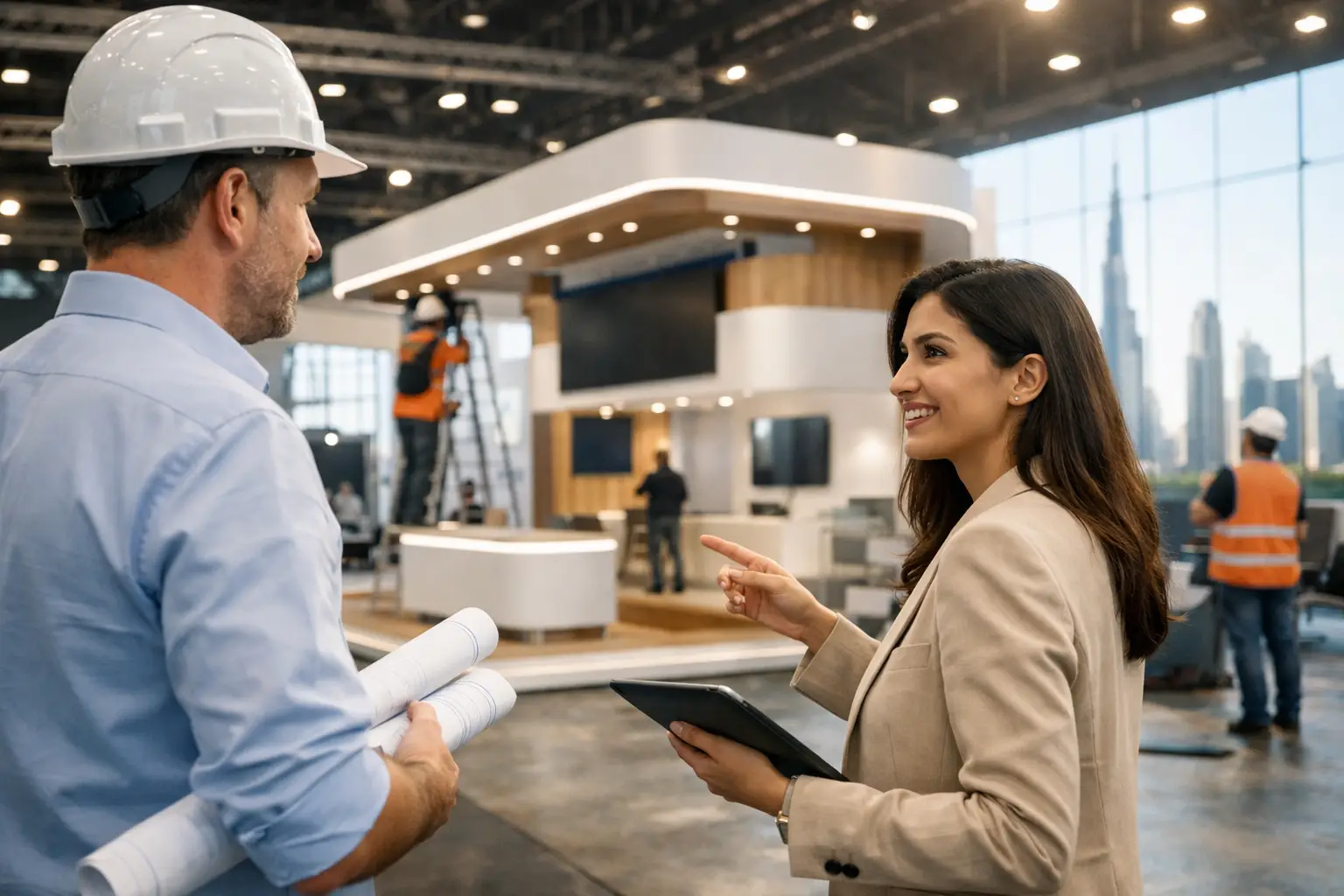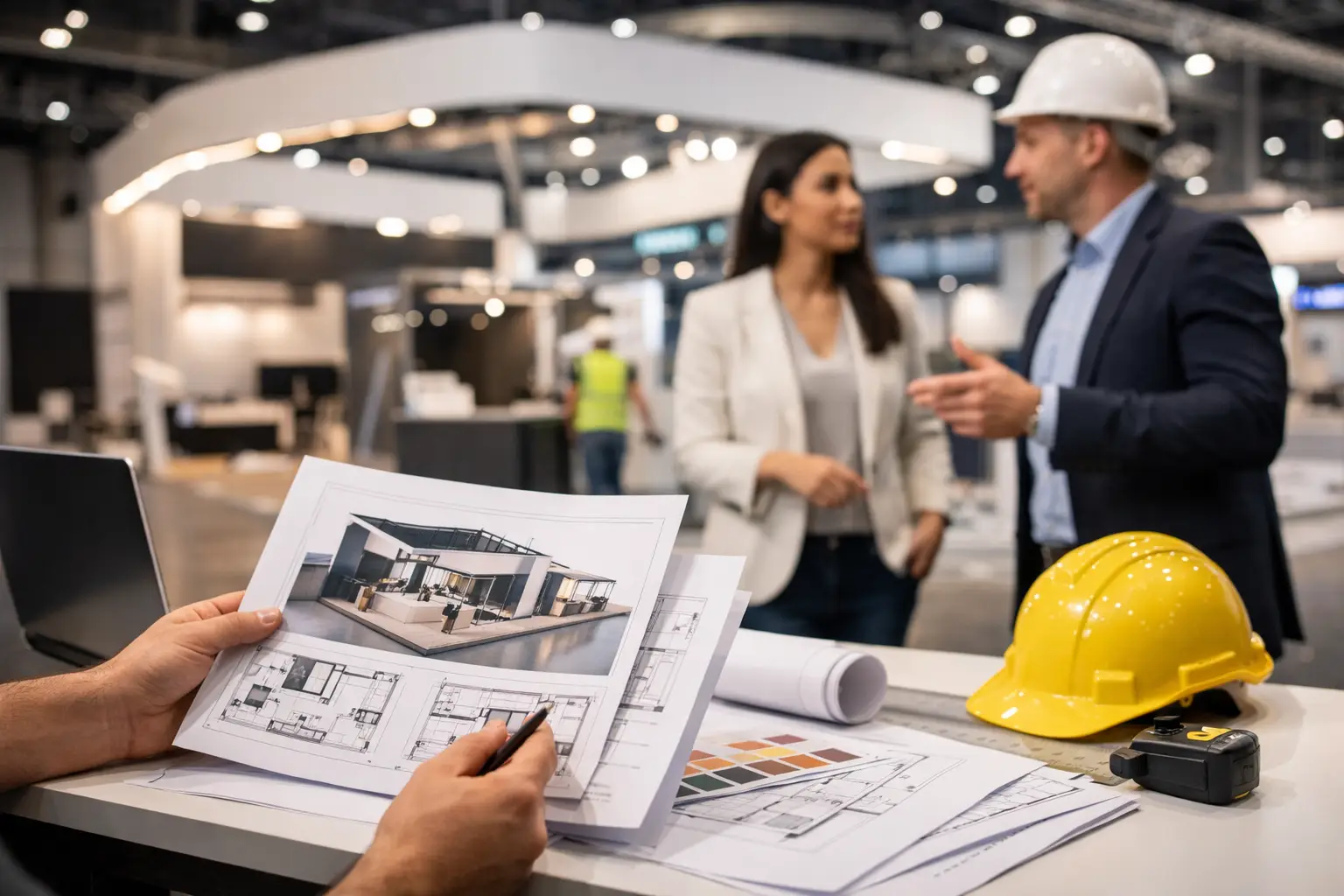

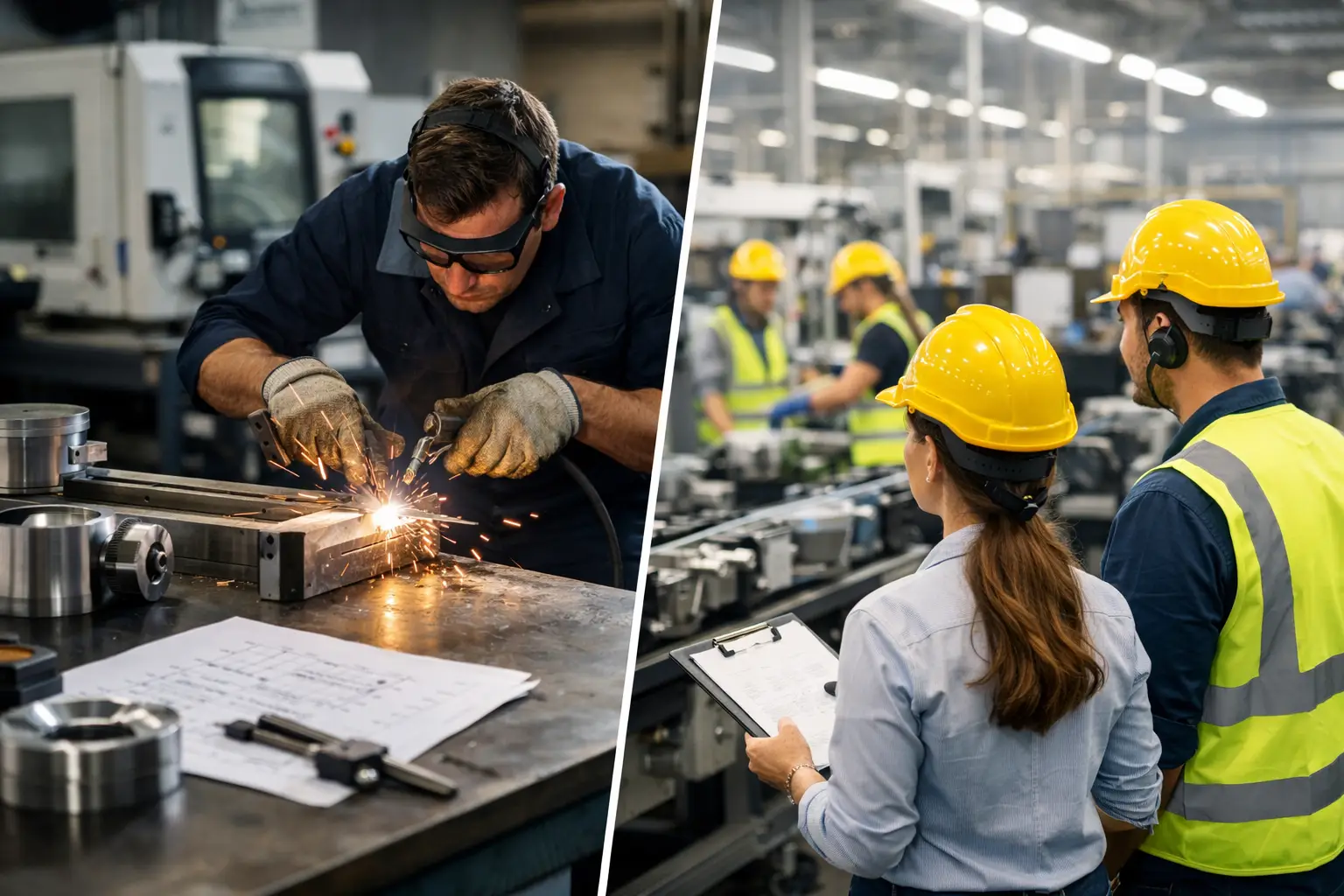

When a stand has to be approved, fabricated, shipped, installed, and show-ready on a fixed event date, the real question is not just design quality. It is whether your execution model can handle pressure. That is why in house fabrication vs outsourced production is such an important decision for exhibition teams, procurement managers, and brand leaders working against tight launch windows.
On paper, both models can deliver a finished stand. In practice, they operate very differently. The difference shows up in revision speed, material consistency, accountability, and how calmly the project is handled when timelines tighten or site conditions change.
Why in house fabrication vs outsourced production matters
Exhibition projects are rarely linear. A booth design may look finalized, then a late branding update arrives. A venue rule changes. A structural detail needs adjustment for a double decker build. A product display is added after approval. None of this is unusual.
In those moments, the production model matters as much as the creative concept. If design, fabrication, project management, and installation sit under one roof, decisions move faster and fewer details get lost. If work is passed across multiple outside vendors, every revision can trigger a chain of calls, markups, approvals, and delays.
For brands exhibiting at major trade shows, this is not a small operational detail. It affects launch readiness, visual finish, budget control, and your team’s confidence on the show floor.
What in-house fabrication really gives you
In-house fabrication means the builder controls the workshop, the production schedule, the quality checks, and often the handoff between design and execution. For clients, that usually translates into more visibility and fewer gaps between what was approved and what gets built.
The biggest advantage is control. When the design team and production team work closely together, there is less room for interpretation. Material selections, brand colors, edge finishes, lighting placement, storage integration, and structural details can be reviewed in context before they become site problems.
It also improves response time. If a graphic panel needs resizing or a meeting room wall needs reworking, the internal team can often act immediately. That speed is valuable on all projects, but especially on custom stands, country pavilions, and large-format booths where complexity is high and timing is tight.
There is also a quality benefit that experienced exhibitors recognize quickly. A stand is not judged only by its design render. It is judged by alignment, finishing, paint consistency, lighting behavior, surface durability, and how polished it looks under venue lighting. In-house teams tend to protect that quality more consistently because the same company owns the outcome from concept through delivery.
Where outsourced production can make sense
Outsourced production is not automatically the wrong choice. In some situations, it is practical. If a project is simple, highly standardized, or located in a market where local production is the most efficient route, outsourcing can help reduce overhead and expand reach.
It can also work for companies that need extra capacity during peak seasons. A builder may manage creative direction and client communication internally while relying on external fabricators for specific components or overflow work. When managed well, that model can still produce strong results.
The issue is not outsourcing itself. The issue is dependency without control. If the partner network is inconsistent, or if the primary contractor has limited oversight over materials, timelines, and final assembly, the client carries more risk than expected.
This is where many exhibition projects start to drift. The original promise remains premium, but execution becomes fragmented.
The real trade-offs: cost, speed, and accountability
Cost is often the first reason companies compare in house fabrication vs outsourced production. Outsourcing may appear less expensive at the quote stage, particularly if labor costs are lower or the contractor avoids maintaining its own workshop. But the lowest starting number is not always the lowest final cost.
When multiple vendors are involved, project costs can rise through rework, logistics gaps, rushed revisions, duplicated handling, or unclear ownership of mistakes. A delayed graphic, a misread drawing, or a finish that does not match the approved sample can all create extra charges or force compromises.
In-house production often looks stronger when you evaluate total value rather than line-item price. Fewer handoffs usually mean fewer surprises. The budget is easier to manage because design feasibility, fabrication planning, and installation realities are being considered together from the start.
Speed follows the same logic. Outsourced models can be fast when everything goes exactly as planned. In-house models tend to be faster when plans change, and exhibition projects almost always change.
Then there is accountability. If your stand partner owns design but production sits elsewhere, responsibility can become blurred when something goes wrong. With an in-house setup, there is one team to answer, one schedule to manage, and one standard to protect.
Quality control is where the difference becomes visible
Trade show visitors may not know how your stand was produced, but they can see the result immediately. They notice poor finishing, uneven branding, exposed joints, unstable structures, and lighting that makes the space feel flat instead of premium.
This is one of the strongest arguments for in-house fabrication. Quality control happens earlier and more often. Teams can inspect components during fabrication, not just after delivery. They can test assemblies, review branding placement, and catch small issues before they become expensive corrections on site.
For brands investing in a high-visibility launch, a premium hospitality zone, or a large pavilion, those details matter. The stand is not just a structure. It reflects the discipline of your business.
When your exhibition project needs in-house control
Not every booth needs the same level of production oversight. But some projects clearly benefit from an in-house model.
If your stand is custom-built rather than modular, involves multiple zones, includes LED integration, carries high visitor traffic, or must meet exact corporate branding standards, internal production control becomes more valuable. The same is true for double decker stands, international builds, and projects where procurement wants fewer variables.
Large exhibitors often care less about whether a vendor says the right things and more about whether they can deliver under pressure. That usually comes down to systems, workshop capability, technical coordination, and disciplined project management – all areas where in-house teams tend to be stronger.
Questions worth asking before you choose
If you are evaluating stand partners, ask direct questions about how the work is actually delivered. Who fabricates the stand? Who handles revisions after sign-off? Who is responsible for site coordination? Where does quality inspection happen? If a late change is needed, who can authorize and execute it?
You should also ask to see evidence of production consistency across different stand sizes and event markets. A company that can manage premium custom builds, large pavilions, and fast-turnaround projects across regions usually has stronger operational discipline than one relying heavily on third-party execution.
This is especially relevant for exhibitors showing across markets such as the UAE, Saudi Arabia, India, Germany, or the US. International presence is valuable, but only if the production model supports consistency.
A practical way to make the decision
The smartest choice is rarely ideological. It depends on what you are building, how visible the event is, and how much execution risk your team can tolerate.
If your project is straightforward, low-risk, and highly standardized, outsourced production may be good enough. If your event matters commercially, your brand standards are high, and your timeline leaves little room for error, in-house fabrication usually offers a safer and stronger path.
For serious exhibitors, the decision often comes down to this: do you want a supplier, or do you want a production partner with real control over the result?
That is why many experienced brands prefer an end-to-end model. When concept design, workshop production, logistics, installation, and dismantling are managed together, the process becomes easier to trust. It is one reason companies such as LemonTree Exhibitions continue to invest in in-house capability rather than treating fabrication as a pass-through function.
The stand your audience sees for a few days is backed by weeks of coordination they never see. Choose the model that gives your team fewer surprises, better finish, and more confidence when opening day arrives.