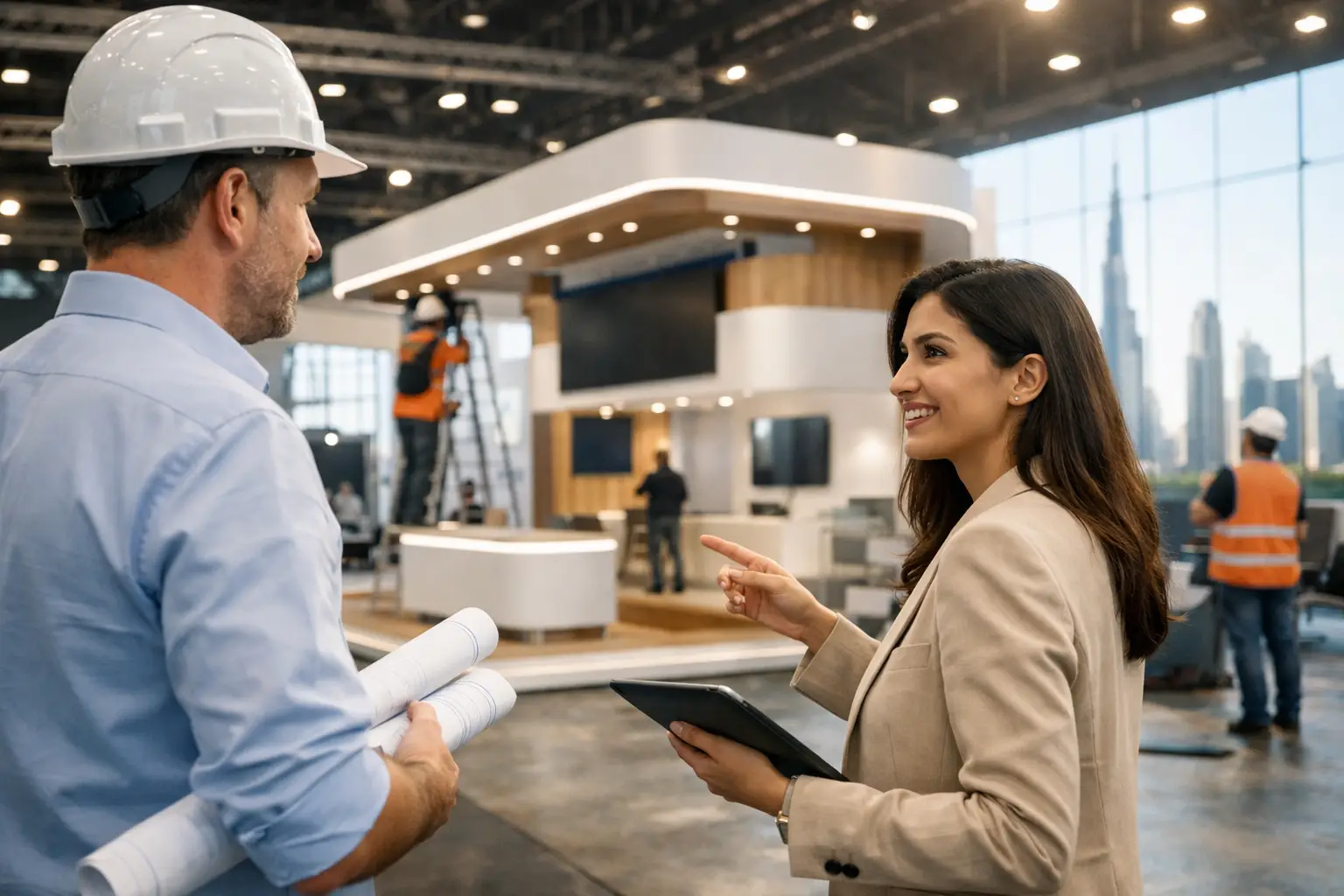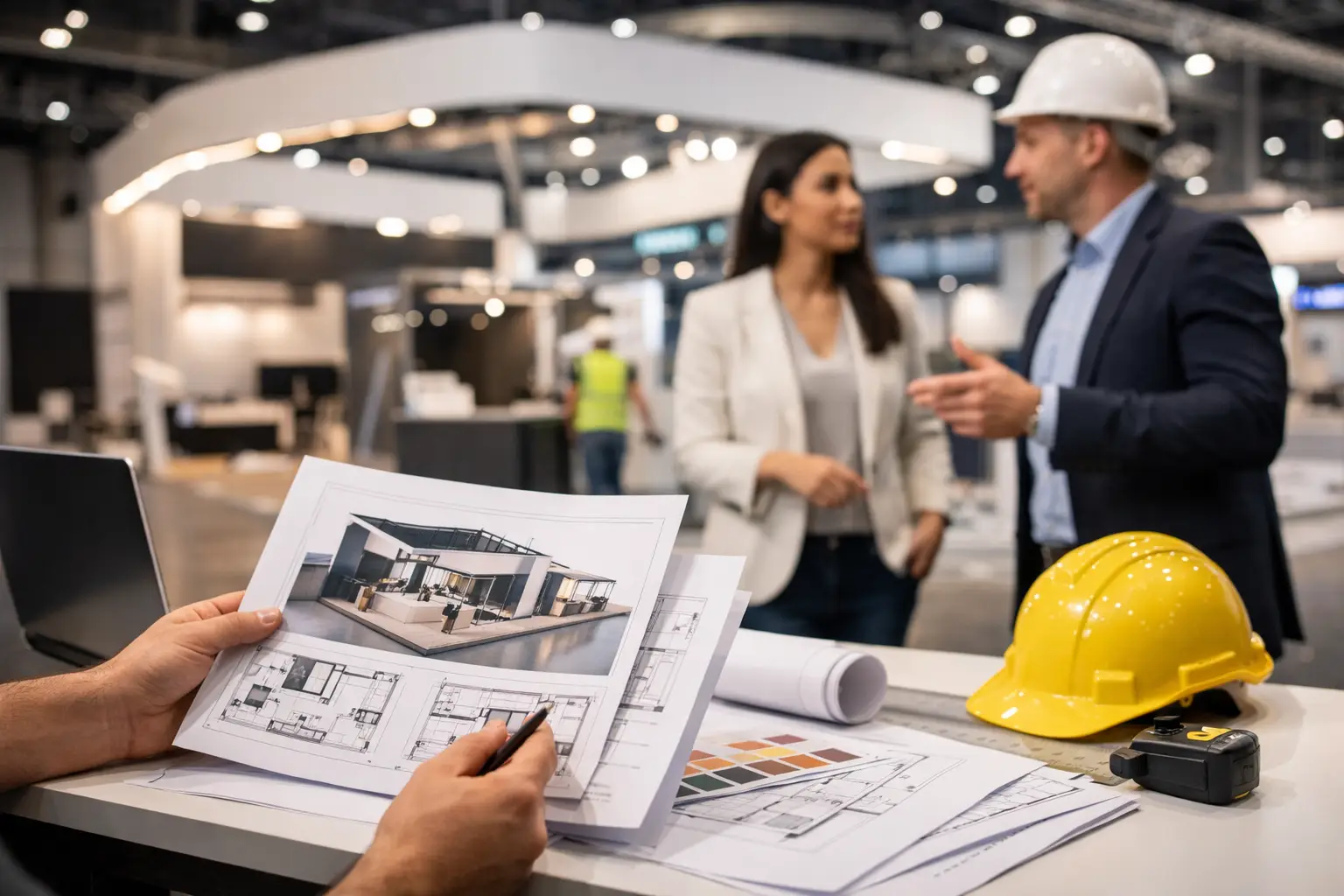

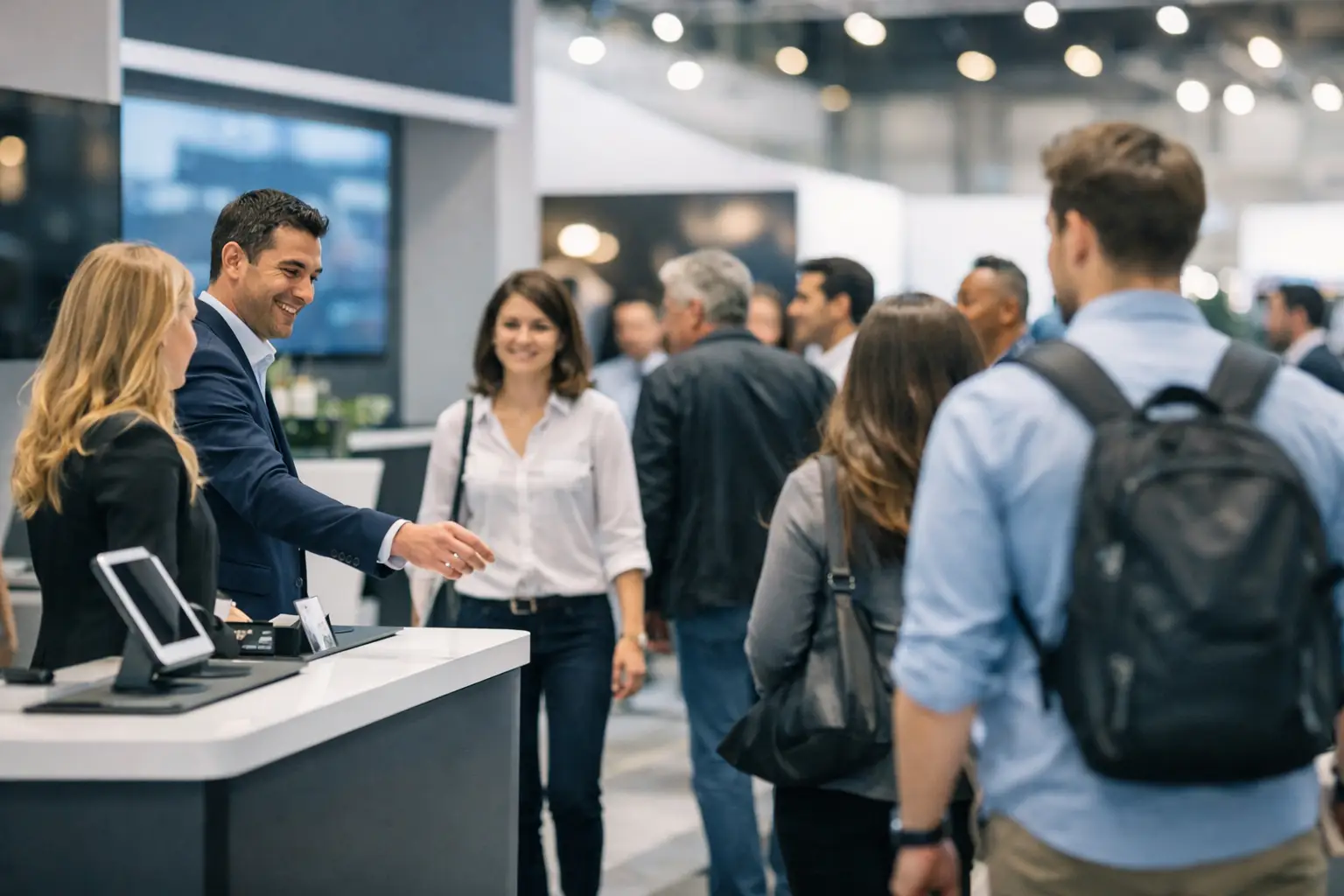

A busy aisle can still leave you with an empty booth.
That is the frustrating reality many exhibitors face, especially at major trade shows where every brand is competing for the same few seconds of attention. If you are asking how to increase booth footfall, the answer is rarely one tactic. Strong traffic comes from a combination of stand design, visitor psychology, staff behavior, and pre-show planning working together from the first sightline to the final conversation.
How to increase booth footfall starts before the event
Footfall does not begin when the doors open. It starts weeks earlier, when attendees decide which exhibitors are worth visiting and what they expect to see once they get there.
Many brands put most of their energy into the stand build and leave promotion until the last minute. That creates a common gap: a visually strong booth with no specific reason for people to seek it out. If you want higher traffic, give visitors a clear promise before the show. That could be a product launch, a live demo, an expert consultation, a market insight session, or a hands-on experience tied to their industry needs.
For B2B exhibitors, relevance beats noise. Senior buyers, procurement teams, distributors, and technical decision-makers are not walking halls looking for generic branding. They are looking for solutions, proof, and efficient conversations. Your pre-show messaging should reflect that. Tell them what they will gain by stopping by, not just that you will be present.
This matters even more at large-format shows such as GITEX, ADIPEC, Gulfood, Big 5, or Automechanika, where attendees plan their route in advance. In those environments, booth traffic often goes to the brands that communicate early and specifically.
Booth design is the first filter
If your booth is not visually open and easy to read, footfall drops before your team has a chance to engage.
One of the biggest mistakes brands make is overbuilding the frontage. A stand can be premium, bold, and highly branded without feeling closed off. Tall walls, dense graphics, dark corners, and blocked entry points may look substantial, but they often discourage casual walk-ins. People need to understand your offer in a glance and feel comfortable stepping in.
A high-performing booth usually does three things well. It creates visibility from distance, clarity at approach, and confidence at entry. That means your branding should be recognizable from multiple angles, your messaging should be concise enough to absorb while walking, and the entrance should feel inviting rather than controlled.
Good design also directs movement. Product zones, meeting areas, demo points, and digital screens should support a natural flow instead of competing for attention. If everything is important, nothing stands out. A disciplined layout makes the visitor journey easier, and easier journeys attract more traffic.
For larger booths or double decker stands, zoning becomes even more important. The upper level can support private meetings, but the ground level still has to do the heavy lifting on attraction. The stand should not look like it is reserved only for existing clients. It should signal that new visitors are welcome.
Give people a reason to stop, not just look
Visual impact gets attention. Interaction gets footfall.
Attendees move quickly through exhibition halls, often making decisions in seconds. That means your booth needs a stopping trigger. Depending on your sector, that could be a live machinery demo, an LED video wall showing real application footage, an interactive product comparison, a touch-and-feel sample zone, or a scheduled expert talk. The exact format depends on what you sell and who you need to reach.
The trade-off is worth understanding. Entertainment can attract crowds, but not always qualified traffic. A giveaway game might increase numbers, yet deliver little commercial value if the audience is not aligned with your target market. On the other hand, a technical demo may draw fewer people, but produce stronger leads. The right choice depends on whether your priority is visibility, lead quality, distributor discovery, or brand positioning.
For most B2B exhibitors, the best middle ground is purposeful engagement. Build an experience that is visually active enough to draw attention and commercially relevant enough to start a serious conversation.
How to increase booth footfall with better messaging
Most exhibition messaging tries to say too much. Visitors passing your stand do not have the time or patience to decode broad statements.
Your headline should communicate one core value fast. Not five services. Not a paragraph. One strong message that answers a buyer’s first question: why should I care?
This could be based on speed, efficiency, performance, sustainability, compliance, innovation, or cost reduction, depending on your market. Supporting messages can sit underneath, but the lead message must be obvious from aisle distance.
It also helps to speak in outcomes rather than internal language. Buyers respond better to what your solution changes for them than to abstract company claims. “Reduce plant downtime” is stronger than “advanced engineering solutions.” “Retail displays built for fast rollout” is stronger than “innovative display systems.”
When messaging is clear, your staff has an easier opening line, and that improves conversion from passerby to visitor.
Your booth staff shape footfall more than most brands realize
A well-built stand can still underperform if the team inside it is passive.
Visitors read body language instantly. If staff are seated, looking at phones, talking only to each other, or appearing overly aggressive, people keep walking. The best booth teams know how to be visible without being intrusive. They stay near entry points, make eye contact, ask simple relevant questions, and adapt quickly to visitor intent.
This is especially important for international shows where buyers may come from different markets and communication styles vary. A strong staffing plan considers not just product knowledge, but approachability, language comfort, and role clarity. Who greets? Who handles technical queries? Who qualifies leads? Who manages scheduled meetings without leaving the front unattended?
For some exhibitors, fair hostesses or event staff can improve flow and first impressions, particularly in large booths or country pavilions. But staffing support only works when integrated properly. Visitors should move smoothly from welcome to conversation to follow-up, not get stuck between disconnected roles.
Location matters, but layout can recover a lot
A prime location helps, but it is not the full story.
Yes, corner booths, main aisle positions, and spaces near feature zones tend to attract more traffic. But plenty of brands overspend on location and underinvest in experience. A poor stand in a premium position still loses visitors. A well-designed booth with clear sightlines and active engagement can outperform a better-located but static competitor.
If your booth position is not ideal, compensate intelligently. Use height for long-range visibility. Create stronger front-facing messaging. Add movement through screens or live demos. Make the edge of the booth work harder so visitors notice you before they pass. In practical terms, that means no dead frontage and no important content hidden deep inside the stand.
This is where experienced stand planning makes a measurable difference. A dependable design-and-build partner will not just create a good-looking structure. They will think about hall orientation, traffic flow, build restrictions, storage, and visitor behavior together.
Promotions should support the brand, not distract from it
Giveaways can help footfall, but only when they reinforce your value proposition.
A generic freebie may create a short burst of traffic, yet it can also crowd the booth with people who have no buying intent. For industries with longer sales cycles or technical products, that is often a poor trade. Better options include limited consultation slots, product trials, benchmark reports, application showcases, or premium takeaways tied to the actual decision-maker.
Contests and scheduled moments can also work well if they are time-bound and clearly signposted. They create micro-crowds, and crowds attract more crowds. But if the activity overwhelms your sales conversation or cheapens the brand, it works against you.
Footfall should lead to opportunity, not just movement.
Measure what actually drove traffic
If you want to improve future events, do not just count total visitors. Look at what created them.
Track which time slots were busiest, what content drew people in, where conversations started, and which visitor segments stayed longest. Compare pre-booked appointments against walk-in traffic. Review whether your demo, visuals, staffing, or positioning had the biggest impact.
This is where many exhibitors miss a valuable step. They evaluate the show by lead count alone and never separate design performance from team performance or attraction from conversion. Once those are split, the path to stronger footfall becomes clearer.
At LemonTree Exhibitions, we see the strongest results when brands treat their booth as a live business environment, not just a build project. The design has to attract, but it also has to support conversation, credibility, and movement throughout the day.
The next time you plan a trade show presence, resist the urge to chase traffic with a single gimmick. The brands that pull consistent footfall are usually the ones that look intentional from every angle – before the show, on the floor, and in every visitor interaction.