

The first five seconds at a trade show are brutally honest. Attendees do not read your strategy deck, ask about your media plan, or admire how hard your team worked to get there. They notice whether your space looks relevant, credible, and worth stepping into. That is why trade show booth design is not a styling exercise. It is a business tool that affects traffic, conversations, lead quality, and how your brand is remembered after the event.
For marketing teams, procurement leads, and business owners, the challenge is rarely just getting a booth built. It is building the right environment for the audience, the venue, and the commercial goal. A booth for a product launch at GITEX should not be approached the same way as a country pavilion at a global industry expo or a pharma presence at a tightly regulated event. Good design starts with that reality.
What strong trade show booth design really does
A well-designed booth has a job to do. It should attract the right visitors, make your message easy to grasp, support your team’s conversations, and hold up operationally from install to dismantle. If one of those parts fails, the booth may still look impressive in photos but underperform on the show floor.
This is where many brands lose value. They focus heavily on visual impact but not enough on visitor flow, meeting space, product display logic, or storage. The result is common and costly: a booth that looks premium from the aisle but becomes crowded, confusing, or inefficient once traffic starts.
Strong design balances appearance with purpose. It creates a clear line between public engagement areas and private discussion zones. It supports demos without creating bottlenecks. It gives brand managers confidence that the environment reflects the company well and gives procurement teams confidence that the structure can actually be delivered on time and within budget.
The business goals behind trade show booth design
The best booths are designed backward from outcomes. Before colors, materials, or LED walls are discussed, the real question is what success looks like. For some brands, success means generating a high volume of qualified leads. For others, it means hosting scheduled buyer meetings, launching a product, reinforcing premium market position, or representing a national industry through a pavilion.
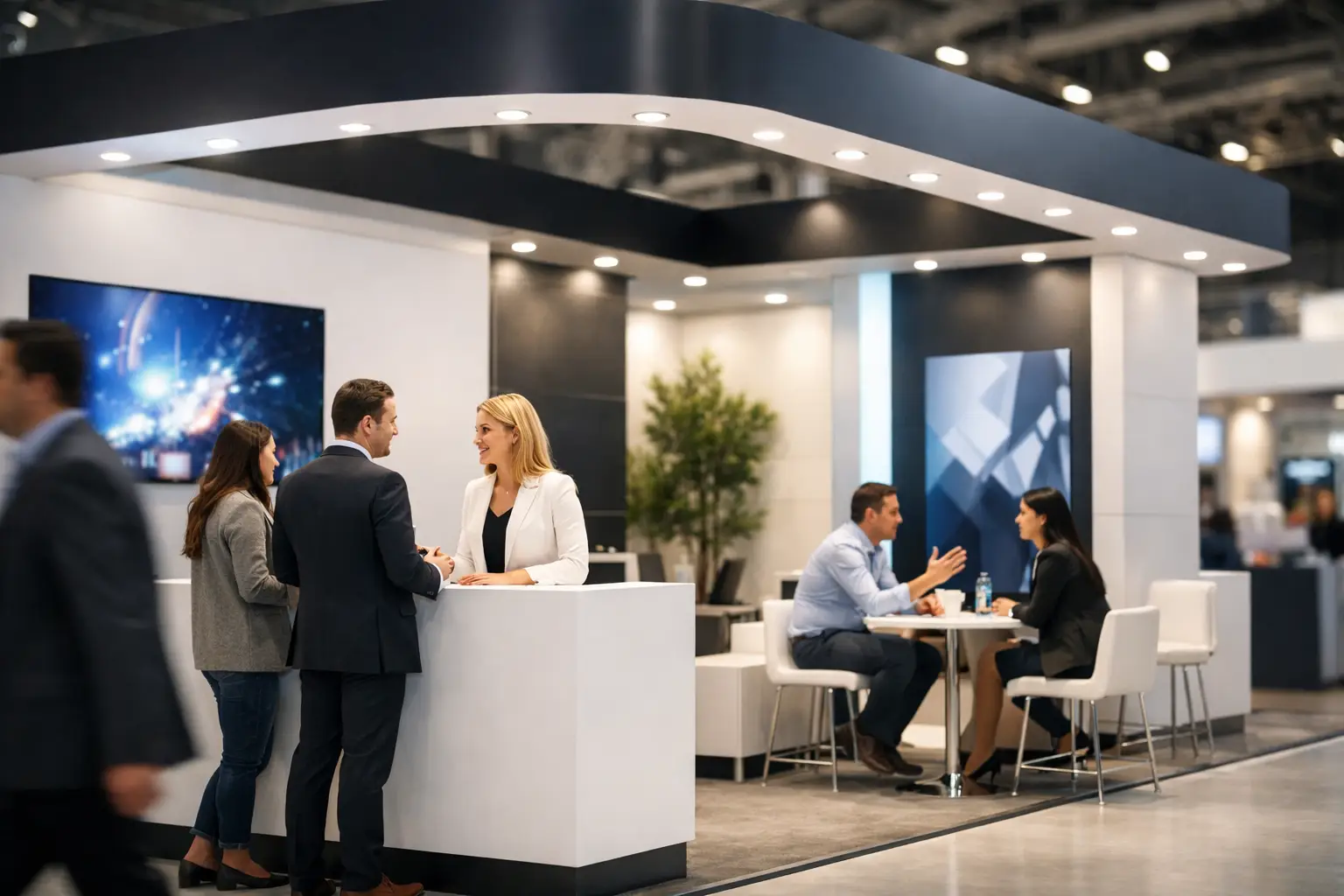
Each objective changes the design brief. A lead generation booth may need a more open front, fast engagement points, and quick demo stations. A relationship-focused booth may prioritize hospitality, seating, and acoustic control. A company with heavy machinery or technical products may need to solve for product scale, safety, and visibility. A startup with a tighter budget may need a smaller footprint that still looks sharp and established.
This is why one-size-fits-all booth concepts rarely perform well. The right solution depends on audience behavior, product complexity, stand size, and how much selling needs to happen on-site.
Key elements that shape booth performance
Layout comes before decoration
If the layout is wrong, no graphic treatment will save it. The booth has to feel easy to enter. Visitors should know where to stand, what to look at, and where to speak with your team. Dead corners, blocked sightlines, and oversized counters can quietly reduce engagement.
Open layouts often work better for high-traffic exhibitions because they reduce hesitation. But openness alone is not enough. You still need structure inside the space. Product zones, demo points, meeting tables, reception counters, and storage should be positioned with intent. A booth that invites people in but gives them no clear next step will lose momentum fast.
Branding should be visible, not overwhelming
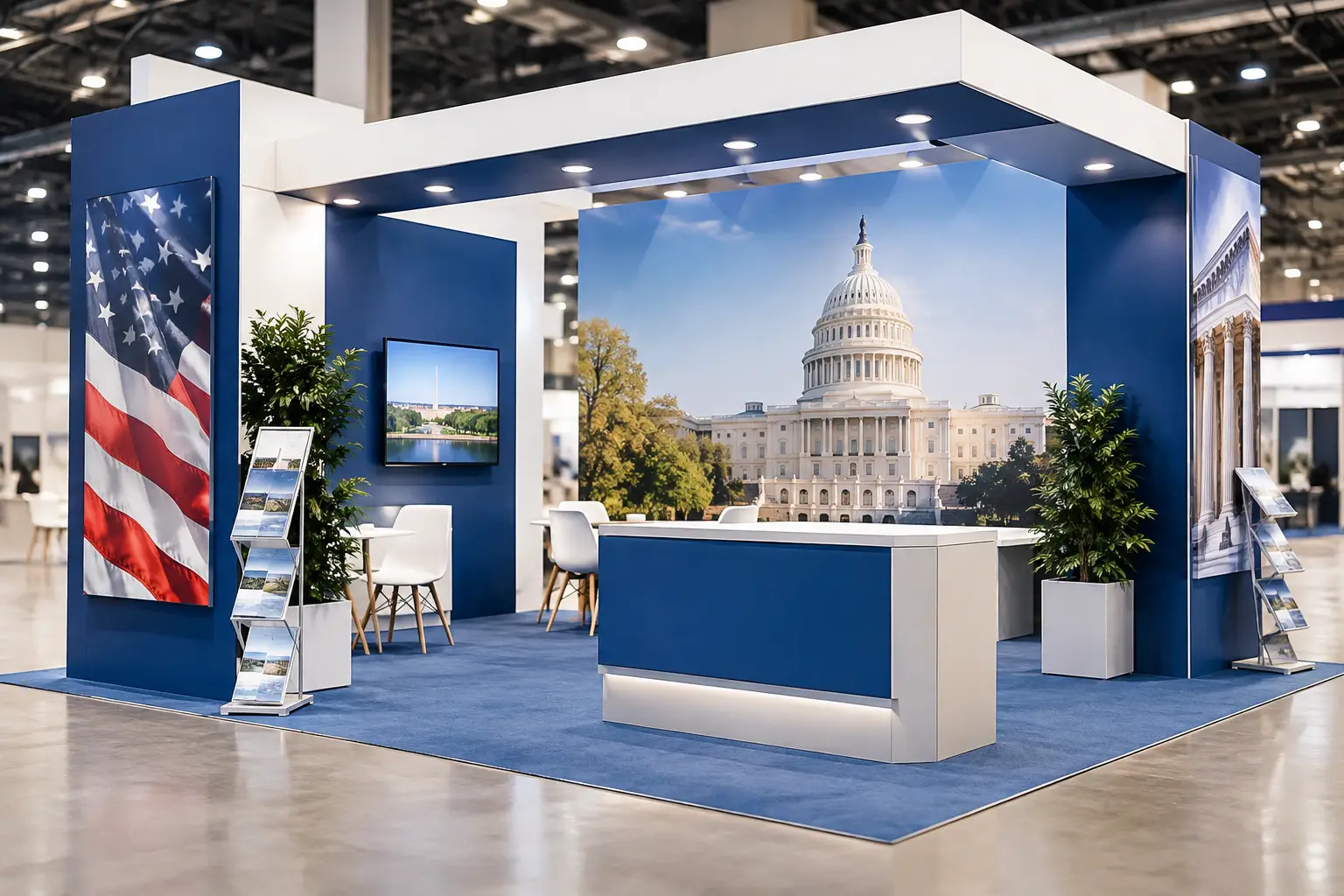
At a busy expo, your message competes with dozens or hundreds of neighboring brands. Clear branding matters, but clarity is more valuable than excess. Attendees should understand who you are and what you do from a distance. That usually means strong logo placement, disciplined messaging, and a visual hierarchy that does not force people to work too hard.
Too much text is a common mistake. Most visitors will not stop to read paragraphs on a wall. They respond better to one sharp message, one or two strong proof points, and visual cues that guide them deeper into the space.
Materials affect perception more than many teams expect
Finish quality communicates brand quality. That does not mean every booth needs luxury materials or a large budget. It means the materials chosen must be appropriate, well-built, and professionally finished. Poor joins, misaligned graphics, uneven lighting, or tired surfaces can damage credibility quickly, especially for companies positioning themselves as premium or detail-driven.
This is where experienced stand partners add real value. Design intent needs to survive fabrication, shipping, and installation. A beautiful rendering is only useful if it can be built cleanly on-site.
Lighting changes everything
Lighting is often treated as an add-on when it should be part of the concept from the beginning. It shapes mood, highlights products, improves visibility for graphics, and makes the booth look more polished overall. Even a modest stand can feel more premium with well-planned lighting. On the other hand, poor lighting can flatten displays and make a good booth feel unfinished.
Technology should support the conversation
LED video walls, touchscreens, and interactive tools can add energy, but only if they help visitors understand your offer faster. Technology that is too complex, too loud, or disconnected from the sales process can become a distraction. The strongest use of digital elements is purposeful – product storytelling, live data, case studies, launch content, or immersive brand moments that support a clear commercial objective.
Why trade show booth design is also an operations decision
This is the part many articles skip. Booth design is not just a creative decision. It is also a logistics, compliance, and execution decision.
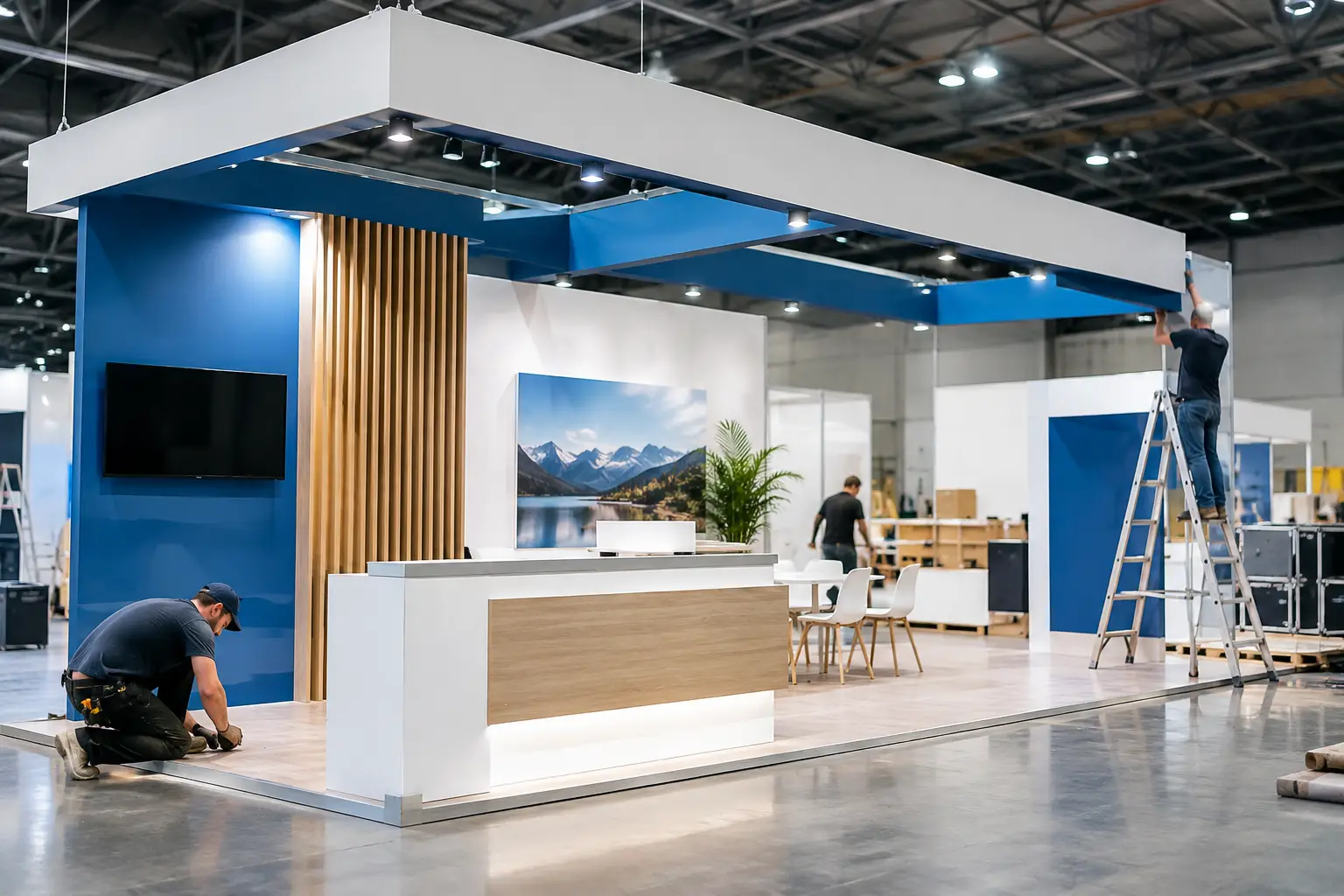
Design choices affect fabrication timelines, transport complexity, venue approvals, installation sequencing, and labor requirements. A dramatic suspended element may look impressive, but if venue restrictions are tight or approval windows are short, it can create risk. A double deck structure can transform presence and usable space, but it also introduces engineering, safety, and approval considerations that must be managed properly.
That is why experienced exhibitors often favor partners who handle design and build in-house. When the same team is responsible for concept development, production, logistics, and installation, there is usually stronger control over quality, timing, and cost. It also reduces the friction that comes from passing accountability between multiple vendors.
For brands exhibiting across regions such as the UAE, Saudi Arabia, India, Germany, or the US, this matters even more. Venue rules, shipping conditions, and on-site coordination can vary widely. The design has to work not only visually, but practically in the context of each event.
Budget, scale, and the trade-offs that matter
There is no single formula for booth budgeting because the right investment depends on event value, expected ROI, booth size, and how often the structure will be reused. What matters is understanding where budget creates visible and commercial impact.
Large spending on decorative features may not pay off if the message is weak or the layout fails. At the same time, going too lean on construction quality can be risky for brands that need to look established and dependable. The smartest budgets usually prioritize structural quality, clear branding, lighting, and the visitor experience first. Special features should come after those foundations are secure.
Reuse is another important factor. Modular thinking can improve cost efficiency over multiple shows, but full customization can deliver stronger impact for flagship events. Neither approach is automatically better. It depends on your calendar, transport needs, and how much adaptation you need from one event to the next.
Sustainability also belongs in this conversation. Reusing assets, repurposing materials, and reducing waste can support both cost control and brand responsibility. But sustainable choices still need to meet the same expectations for finish, safety, and visual impact.
What to ask before approving a booth concept
A design is worth approving only when it answers practical business questions. Can visitors understand the offer quickly? Is there enough room for the kind of meetings your team actually plans to have? Are products displayed in a way that helps sales conversations? Does the concept fit venue rules, build timelines, and local regulations? Can your team manage traffic without chaos during peak hours?
It is also worth asking how success will be measured. If the goal is lead capture, where does that happen? If hospitality matters, is the seating area positioned well? If a product launch is central, does the reveal moment have enough prominence? Good booth design becomes much easier when those answers are built into the concept rather than added later.
One reason experienced exhibitors work with end-to-end partners such as LemonTree Exhibitions is that these questions are addressed early, before avoidable revisions and last-minute compromises start costing time.
A booth should make selling easier
The most effective trade show environments do not ask your team to compensate for bad design. They make selling easier. They create confidence when clients walk in, they help staff guide the conversation, and they support the kind of brand impression that lasts longer than the event itself.
A bold booth can draw a crowd. A smart booth turns that attention into opportunity. When design, build quality, logistics, and business intent are aligned, the stand does more than fill floor space. It starts working for your brand before your team says a word.
If you are planning your next event, start there. Not with what looks trendy, but with what will help your audience notice you, trust you, and remember why they should meet you again.