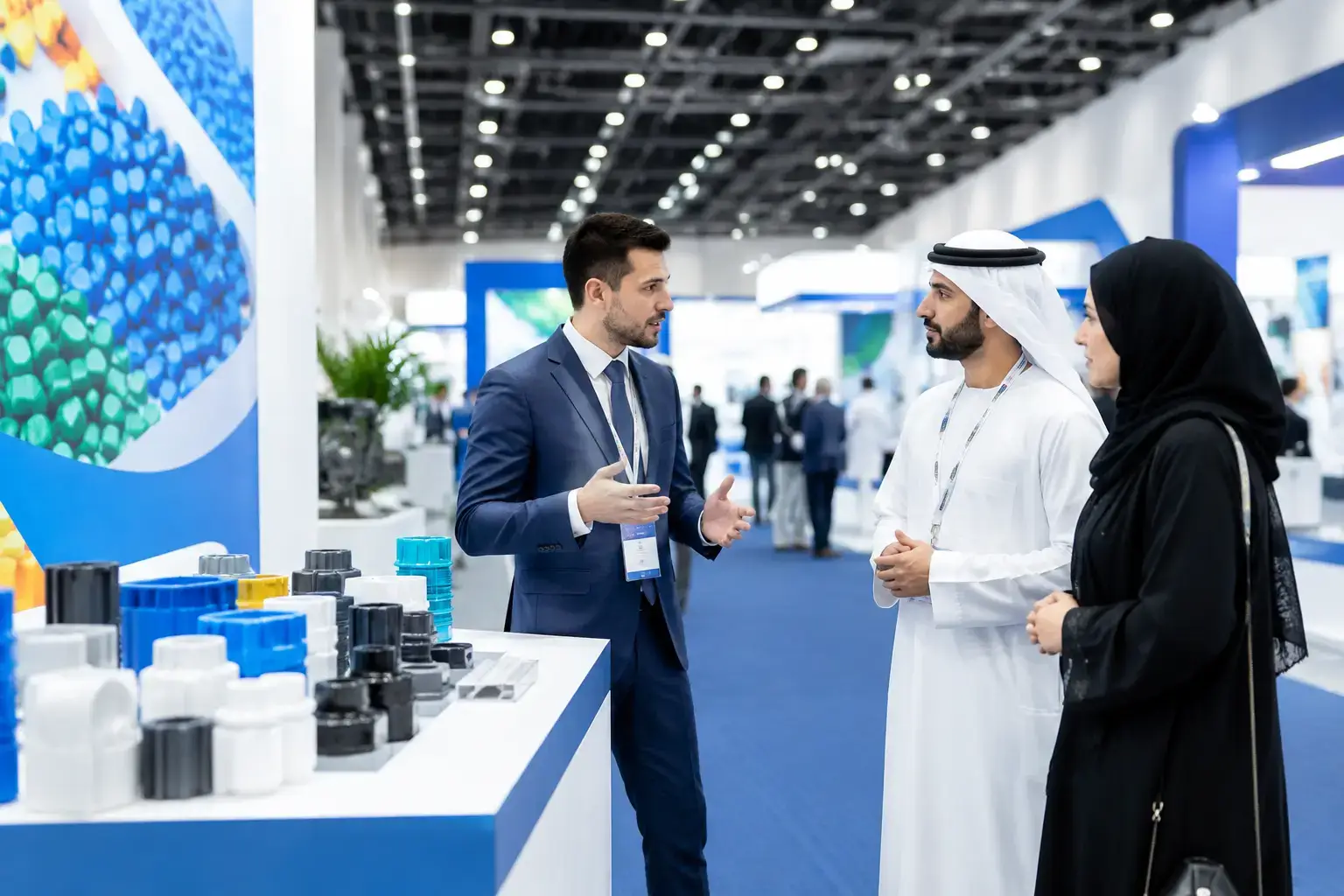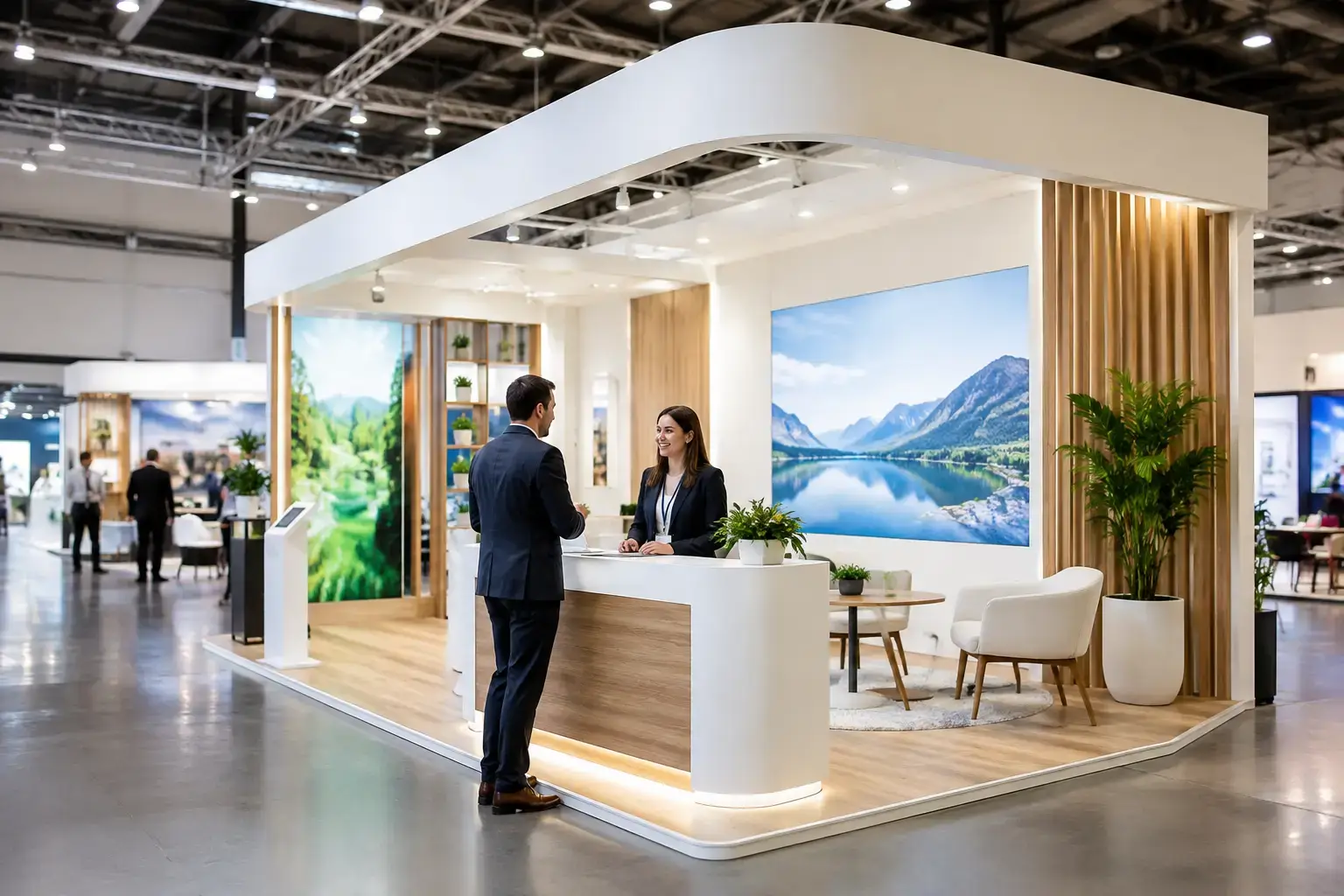

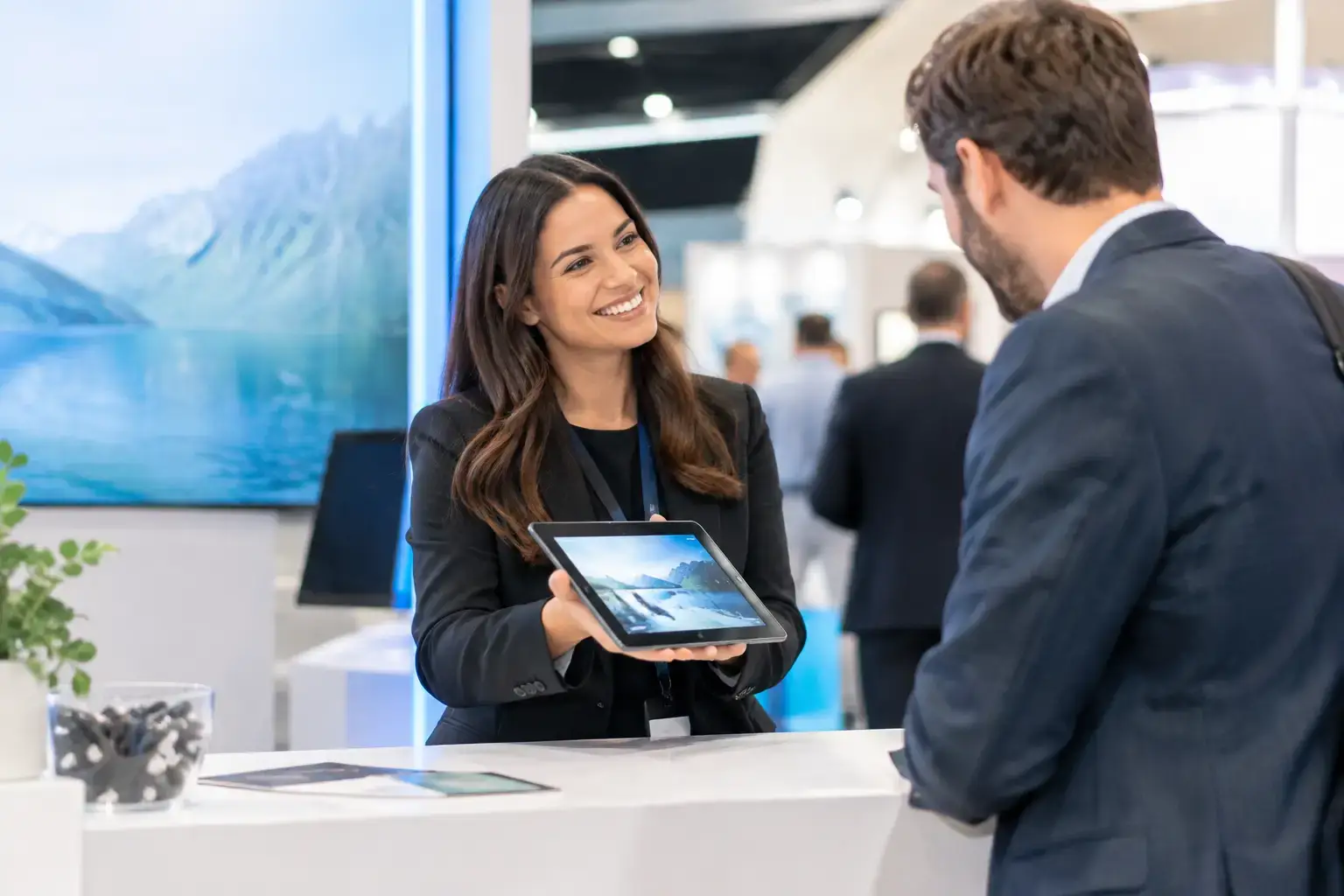

A crowded aisle is not a measure of exhibition success. A booth can attract a hundred passersby and still produce very few meaningful sales conversations. The best booth engagement ideas create a reason to stop, a reason to participate, and a clear next step for the right visitor.
For marketing teams, that distinction matters. Every activation should support a commercial objective: demonstrate a product, qualify a prospect, arrange a meeting, gather market insight, or build recall before the follow-up begins. The strongest booth experiences are not random entertainment added at the last minute. They are built into the stand layout, staffing plan, content, and lead-capture process from day one.
Start with the engagement outcome
Before choosing an activity, decide what a successful interaction looks like. A complex industrial product may need a short demonstration that makes a technical advantage easy to see. A technology brand launching a platform may need booked consultations with decision-makers. An FMCG company may need sampling and immediate feedback. These are different goals, so they need different experiences.
It also helps to plan for three visitor types: people discovering the brand, prospects comparing suppliers, and existing contacts who need a more private conversation. A well-designed stand gives each group a natural path without turning the space into a maze.
12 best booth engagement ideas for stronger trade show results
1. Make the product demonstration impossible to miss
The most reliable engagement tool is still a live demonstration, especially when it proves a claim that brochures cannot. Show the machine operating, the software solving a real task, or the material performing under pressure. Keep the core demonstration to two or three minutes so visitors can join without feeling they have arrived late.
For larger equipment or sensitive products, use a physical cutaway, scaled model, or high-resolution LED presentation. The key is to show a result, not simply list specifications. A presenter should be able to answer, “What changes for my business if I choose this?” in one clear sentence.
2. Use an interactive product selector
An interactive screen works best when it reduces a buyer’s decision, rather than acting as decoration. Let visitors select their industry, application, capacity, or budget range and receive a relevant product recommendation. Their selections give the sales team a useful opening for a more informed discussion.
This is particularly effective for brands with broad portfolios. Instead of asking visitors to navigate a catalog, the booth helps them find a starting point in under a minute. Keep the interface simple, visible, and supported by a staff member during busy periods.
3. Build a short diagnostic or assessment
A five-question assessment can turn vague curiosity into a qualified conversation. For example, an energy supplier might assess efficiency priorities, while a software company might identify workflow bottlenecks. At the end, provide a practical result such as a benchmark, recommended next action, or tailored resource.
Avoid making it feel like a form in disguise. Visitors will share information when they receive genuine value in return. Ask only for details the sales team can act on, and make the privacy approach clear.
4. Schedule micro-sessions at fixed times
A booth can become a destination when visitors know something worthwhile happens every hour. Run 10-minute expert sessions on a focused issue: a new regulation, a manufacturing challenge, a market trend, or a product use case. Promote the session times visibly from the aisle and through pre-show invitations.
Micro-sessions work well for B2B audiences because they respect limited time. They also create a reason for senior staff to be present and give sales teams a natural way to begin conversations afterward. If the event is highly technical, substance will outperform spectacle every time.
5. Create a hands-on comparison station
Let visitors compare materials, outputs, interfaces, or performance results themselves. A side-by-side setup can be more persuasive than a long sales explanation because the difference becomes tangible. A construction brand might compare finishes; an automotive supplier might show component durability; a packaging company might demonstrate strength and sustainability claims.
Design the station to withstand repeated use. Loose samples, unclear instructions, and an overcrowded counter quickly undermine a premium brand impression.
6. Use a visual challenge with a business purpose
A light competition can generate energy, but it should connect to what the company does. Think of a timed configuration challenge, a product knowledge test, a design simulation, or a problem-solving activity based on a real customer scenario. The prize should be worthwhile but proportionate to the audience and local event rules.
The trade-off is important: a generic game may increase scans while attracting visitors with no buying influence. If lead quality matters more than raw volume, make participation relevant enough that the right people self-select.
7. Offer a practical personalization moment
Personalization creates a memorable exchange when it has a clear connection to the brand. This could be a custom data report, a printed product specification card, an application recommendation, or an on-the-spot visualization of a visitor’s project. For premium B2B sectors, useful personalization usually performs better than branded novelty items.
Plan the throughput carefully. If an experience takes six minutes but only one person can run it, a busy stand will develop a queue and frustrate visitors. A good activation is designed for the expected traffic, not just the concept presentation.
8. Bring customer proof into the space
Prospects trust evidence from companies like theirs. Use concise customer stories on screens, product pods, or meeting-area displays, organized by industry or challenge. A before-and-after metric, a recognizable use case, and a strong quote can give the sales team immediate credibility.
Keep claims accurate and approved. In sectors such as pharma, energy, and government, overstatement creates risk. Specificity is more compelling than broad promises: explain the problem, the solution, and the measurable operational change.
9. Design an LED wall for participation, not passive viewing
LED video walls can stop traffic, but only when content is designed for the viewing distance and pace of the show floor. Use large visuals, minimal copy, and motion that explains a benefit within seconds. Pair the wall with a prompt that encourages a staff-led interaction, such as selecting a use case or joining a scheduled demonstration.
An impressive screen cannot repair weak messaging. The content, stand architecture, sightlines, and lighting need to work as one experience. This is where early coordination between the brand team, creative team, and stand builder protects both impact and budget.
10. Add a meeting lounge with a clear purpose
Hospitality matters, particularly at long B2B exhibitions, but a lounge should not become a place for unstructured chats. Give visitors a reason to enter: expert consultations, partner meetings, product reviews, or brief hospitality for confirmed prospects. Semi-private zones can support serious conversations without requiring a fully enclosed room.
For large stands and double-decker builds, separate the high-energy attraction area from quieter meeting space. Visitors should be able to see activity from the aisle while decision-makers can speak without competing with the show floor noise.
11. Put the right host at the first point of contact
Booth staff are often the difference between an idea that works and one that falls flat. A welcoming host can manage queues, explain how an activation works, and direct visitors to the right specialist. Product experts should not have to abandon a high-value conversation to answer every basic question.
Brief the whole team on three things before doors open: the ideal visitor profile, the qualifying questions to ask, and the exact process for recording follow-up actions. Friendly is essential, but clear handoffs are what make engagement commercially useful.
12. Make lead capture feel like the next helpful step
The last step should never feel like a barrier at the entrance. First deliver the demonstration, assessment, insight, or consultation. Then ask for contact details in exchange for the promised follow-up: a technical sheet, a tailored recommendation, a meeting, or a post-show report.
Record context, not just a badge scan. Note the visitor’s challenge, timeline, product interest, and agreed action. A smaller list with clear sales notes is far more valuable than a large database of unidentified scans.
Turn an idea into a workable booth plan
The most effective activations are decided early enough to influence the stand itself. A demonstration needs power, storage, safe visitor flow, and a viewing area. A consultation zone needs acoustic consideration and appropriate seating. An interactive display needs reliable connectivity, backup content, and staff who know what to do if the technology pauses.
This is why exhibition engagement should be planned alongside design and fabrication, not added after the structure is approved. LemonTree Exhibitions approaches the booth as a complete brand environment, coordinating creative concepts with production, logistics, installation, and on-site readiness. That executional control gives marketing teams more confidence that the experience imagined in the planning room will work under real show conditions.
Measure performance against the objective set at the start. Track qualified conversations, meetings booked, demonstration attendance, assessment completions, dwell time where relevant, and the speed of post-show follow-up. A popular activation that creates no sales opportunity may still have value for awareness, but it should be judged honestly.
The right engagement idea is the one that makes your most valuable visitor feel understood, gives your team a credible reason to talk, and leaves both sides with a clear next action.