

Chicago trade shows move quickly. A strong location on the show floor, a polished campaign, and a capable sales team can still lose impact if the booth arrives late, looks generic, or creates last-minute operational problems. Choosing a trade show booth builder Chicago marketing teams can rely on is therefore not simply a sourcing decision. It is a decision about how confidently your brand will show up when prospects, partners, and competitors are watching.
At major venues such as McCormick Place, execution requires more than an attractive rendering. Your builder must understand freight timing, venue regulations, labor coordination, material handling, electrical requirements, installation schedules, and the practical realities of exhibiting in a busy convention center. The best partner brings creative ambition together with disciplined delivery.
Why the Right Chicago Booth Builder Changes Results
A trade show booth has a limited window to do its job. It needs to stop the right visitors, communicate what your business offers, make conversations easy, and give your team a setting they are proud to use. For a manufacturing company, that may mean a working product display and meeting area. For a technology brand, it may mean a high-visibility LED wall, live demonstrations, and a clear visitor flow. For an exporter or trade body, it may mean a cohesive pavilion that gives multiple participating companies an equal but differentiated presence.
The design matters, but design alone does not create a productive exhibit. A booth with dramatic architecture but poor storage, insufficient power, blocked sightlines, or cramped meeting space can undermine the visitor experience. Conversely, a practical booth that looks like every other stand on the aisle will struggle to earn attention.
A capable builder balances both sides of the equation. They ask what the event must achieve before deciding on the shape, finishes, graphics, technology, and footprint. Lead generation, product launches, distributor meetings, brand awareness, and market entry all call for different choices.
What to Look for in a Trade Show Booth Builder Chicago
The right fit depends on your event calendar, stand size, internal resources, and the importance of the show to your commercial pipeline. Still, several capabilities separate a dependable booth partner from a vendor that only supplies structures.
Start with strategic design, not a catalog
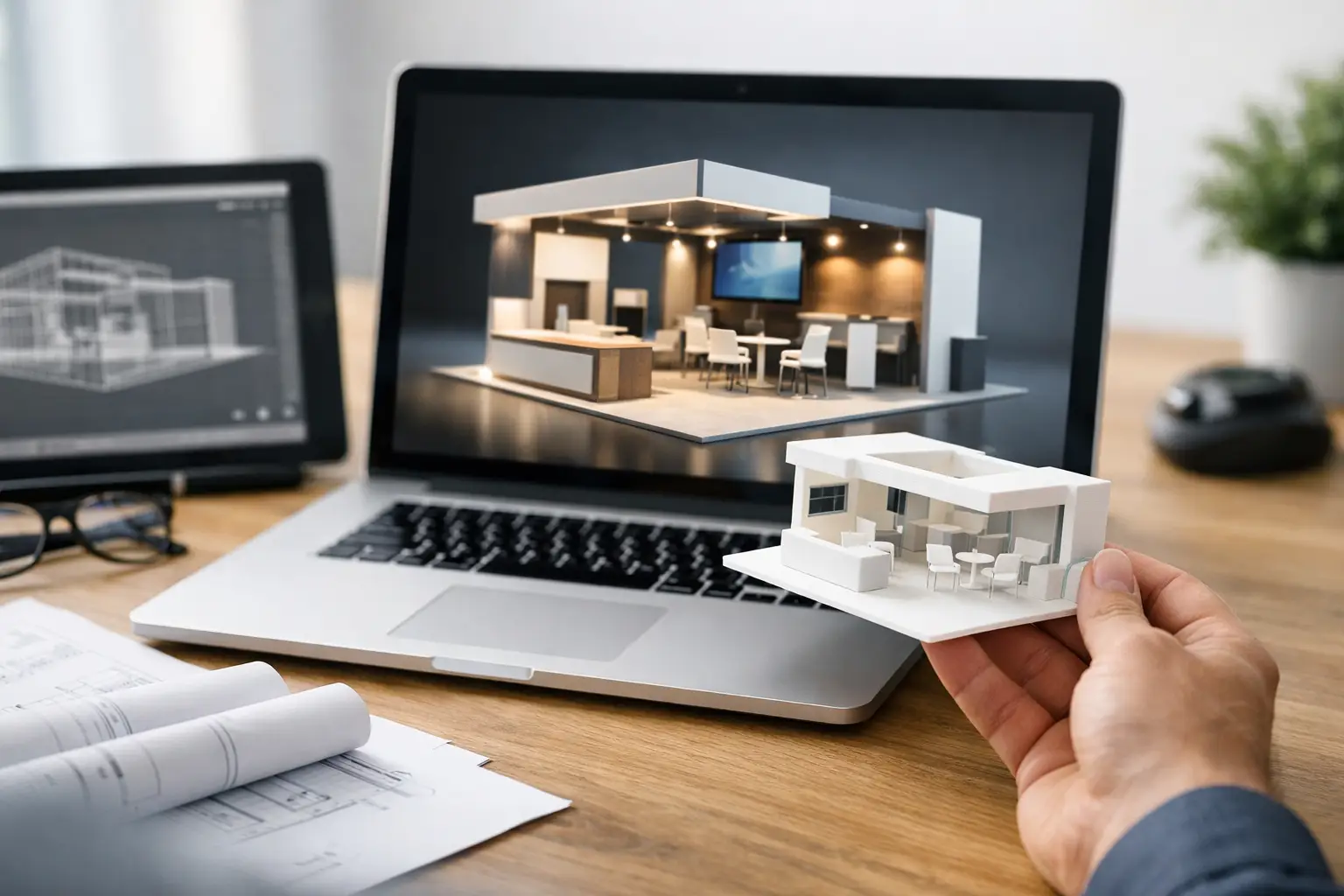
A builder should be able to create an original 3D concept around your objectives, brand guidelines, product needs, and budget. Modular systems can be efficient for smaller spaces or repeat programs, but they should not force your brand into a standard template. Custom fabrication is often the better choice when you need a distinct product experience, a premium executive meeting zone, or an environment that supports a major launch.
Ask to see work across different industries and stand sizes. A portfolio should show more than attractive photographs. Look for evidence that the team can manage open corners, high footfall, live product displays, private meeting areas, hospitality counters, and integrated digital content without making the stand feel crowded.
Verify end-to-end accountability
Trade show delivery involves many moving parts, and handoffs create risk. One company may design the booth, another may fabricate it, and a third may install it. This arrangement can work, but it demands close coordination and clear ownership when schedules change.
A full-service partner with design, fabrication, logistics, installation, and dismantling under one management structure can reduce that risk. It provides a direct line of accountability from the first concept review through show close. That is especially valuable for organizations managing a large booth, a double-decker structure, a country pavilion, or multiple international events at once.
Before appointing a builder, ask who manages venue paperwork, union labor coordination, freight scheduling, on-site supervision, and post-show dismantling. The answers should be specific. Vague assurances are not enough when a missed deadline can affect your entire event investment.
Look beyond the initial quote
The lowest proposal rarely tells the full story. A quote may exclude services that become essential later, such as graphics installation, electrical connections, rigging, storage, cleaning, furniture, audiovisual equipment, or project management. It may also rely on materials or finishes that do not support the premium presence your brand expects.
A detailed quote should identify what is included, what is optional, and what conditions could change the final cost. It should also distinguish between reusable elements and one-time components. This gives procurement teams a fair basis for comparison and helps marketing teams protect the experience they have planned.
Cost efficiency is not the same as cutting corners. It is about investing in the elements visitors notice and use while avoiding unnecessary complexity. A large LED video wall might be worth the spend for a technology launch with compelling motion content. For a product-led manufacturing exhibit, budget may be better directed toward engineered displays, demonstrations, and comfortable consultation space.
Assess responsiveness before the show starts
The pre-show phase reveals how a builder will perform under pressure. Are they organized in meetings? Do they raise practical questions about product weights, access points, visitor flow, graphics deadlines, and approvals? Do they provide a realistic project schedule with clear milestones?
Strong exhibition partners anticipate issues early. They do not wait until installation day to identify a missing power requirement or a graphic that will not fit the final structure. Responsiveness is particularly important for companies that have global stakeholders, changing product messages, or several internal approval layers.
Plan the Booth Around Visitor Behavior
The most successful booths make it easy for people to understand where to go and what to do. Visitors should be able to recognize your brand from the aisle, see a reason to approach, and move naturally toward a demonstration, conversation, or meeting. This sounds simple, yet many booths sacrifice clarity for visual noise.
Start by separating the space into functional zones. An open front area can attract visitors and support quick conversations. Product displays or digital demonstrations should sit where they are visible without creating congestion. Meeting spaces need enough privacy to support meaningful discussions, while storage should be accessible to staff without dominating the layout.
Your booth staff also deserve attention. If representatives have nowhere to keep personal items, recharge devices, access collateral, or briefly regroup, the operating experience becomes harder than it needs to be. Thoughtful back-of-house planning supports better customer-facing performance.
For larger exhibits, an upper level can create valuable hospitality or meeting capacity, but it is not automatically the right move. Double-decker stands require greater investment, venue approval, structural planning, and careful consideration of accessibility and traffic flow. They work best when the additional space serves a clear commercial purpose.
Bring Chicago Venue Logistics Into the Brief Early
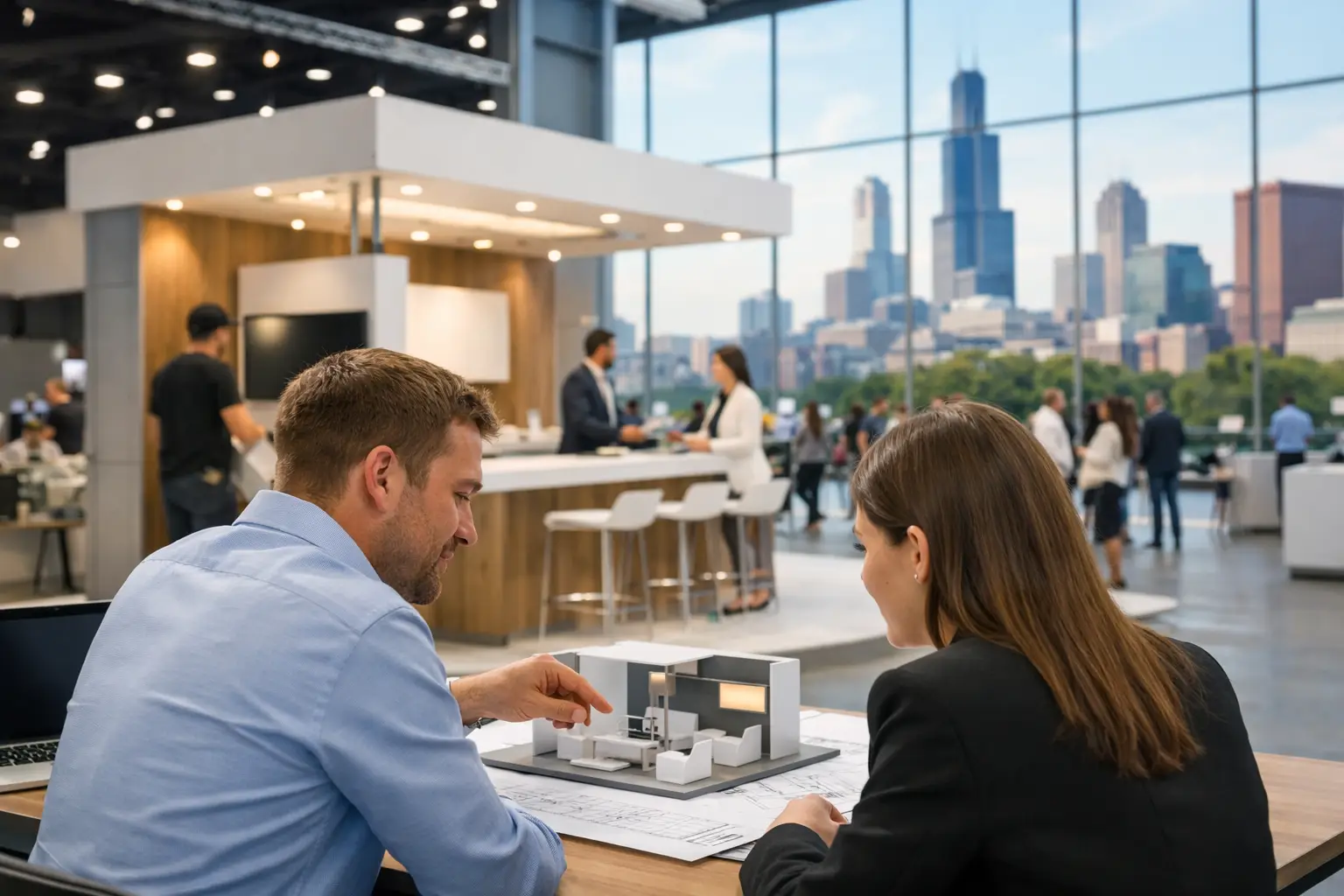
Chicago is a major exhibition market, and its venues are built to support ambitious events. That does not eliminate the need for early planning. Move-in windows, freight procedures, exhibitor service orders, labor requirements, and safety standards can all affect cost and timing.
Your booth builder should review the exhibitor manual as part of the planning process rather than treating it as an administrative task at the end. This is where design decisions become operational decisions. The height of a structure, placement of hanging signs, power distribution, flooring, AV equipment, and the method of installation may all be shaped by show rules.
If your team is traveling from outside the United States, the logistics discussion should begin even earlier. Shipping timelines, customs considerations, local storage, and contingency planning need to be factored into the production schedule. A builder with international delivery experience can help protect brand consistency while adapting the project to local requirements.
LemonTree Exhibitions supports this process through in-house concept development, fabrication oversight, logistics, installation, and dismantling, helping clients maintain control across complex exhibition programs in Chicago and beyond.
Questions Worth Asking Before You Appoint a Builder
A productive selection conversation should go deeper than price and renderings. Ask how the team will translate your event goals into a layout. Ask what they fabricate directly, how they control quality, who will be on site, and how they handle changes during build-up. Request examples that resemble your brief in scale, sector, or technical complexity.
It is also reasonable to ask about sustainability. Reusable structures, repurposed materials, durable finishes, and thoughtful packing can reduce waste without making the stand feel temporary. The best approach depends on whether the booth will travel to several events or is designed for one major appearance.
Finally, clarify success measures. Your builder cannot own lead quality or sales follow-up, but they can create the environment that supports those outcomes. Share expected visitor numbers, meeting targets, product demonstration needs, and the profile of attendees you want to attract. The clearer the brief, the stronger the result.
A trade show is too visible and too expensive to leave to a supplier who only builds walls and counters. Choose a partner that can turn your commercial goals into a bold, detail-oriented environment, then execute every practical detail with the same care. When the doors open, your team should be focused on conversations and opportunities, not on whether the booth is ready.