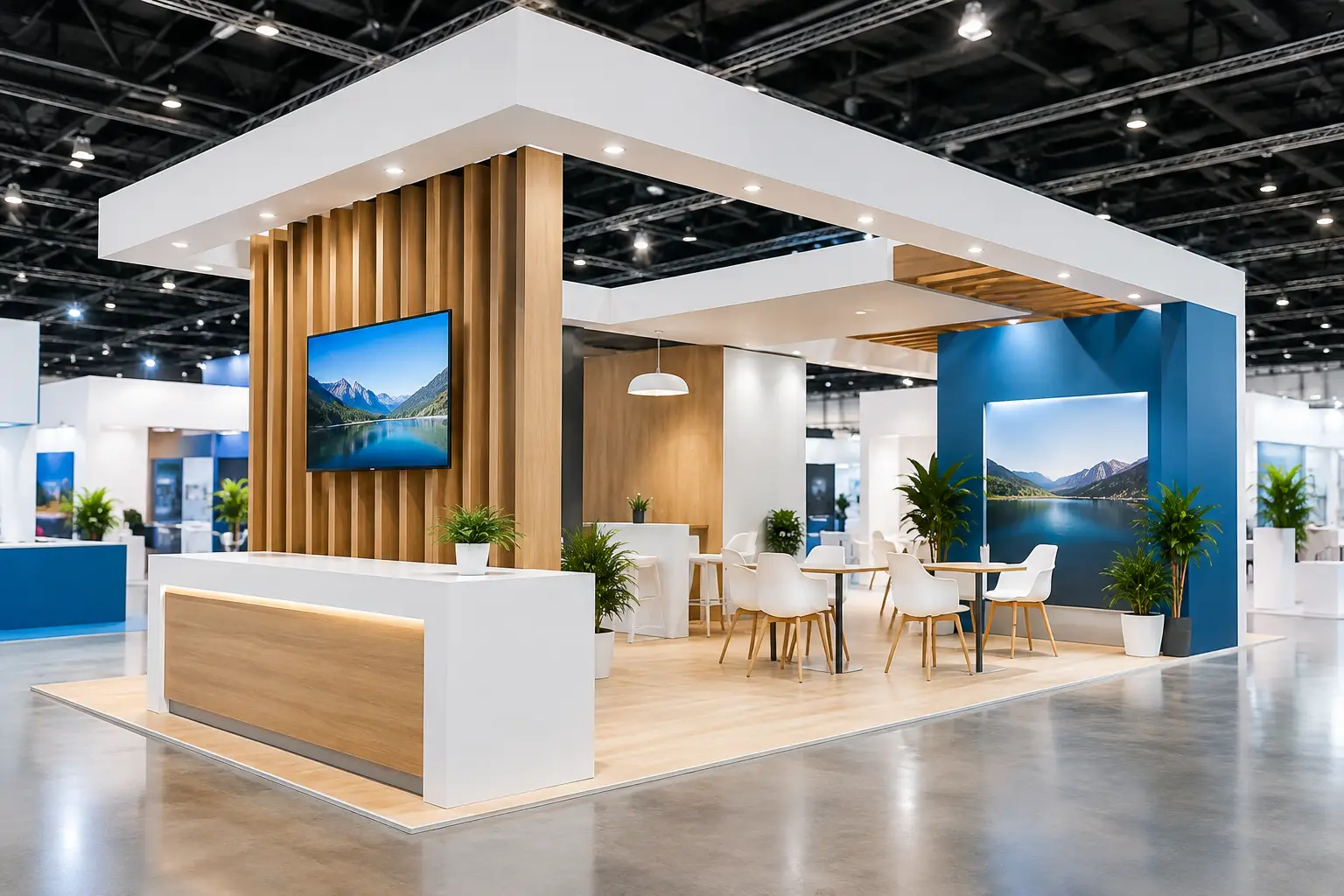

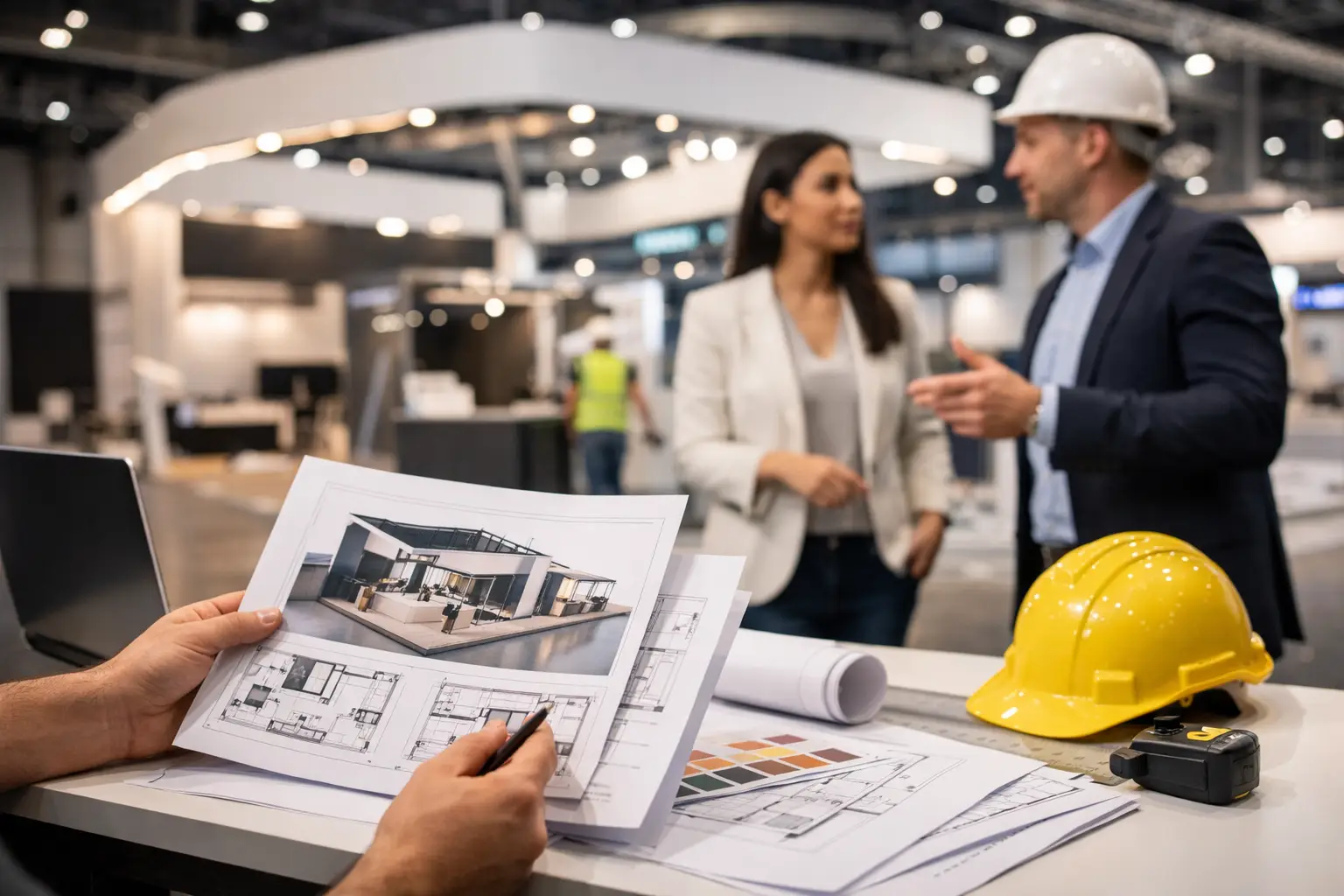

A busy exhibition floor gives visitors only seconds to decide where to stop. At GITEX, Big 5, Gulfood, ADIPEC, or Beautyworld, a stand has to do more than look polished from across the aisle. It must communicate the brand, support meaningful conversations, manage product displays, and remain fully functional through opening day. That is why choosing an exhibition stand contractor in Dubai is a commercial decision, not simply a design purchase.
The right partner brings creative ambition together with production discipline. They understand venue rules, build schedules, material choices, visitor flow, installation access, and the pressure that comes with a fixed exhibition opening. A striking concept matters, but execution is what protects your investment.
Start With Your Exhibition Objective
Before comparing concepts or quotes, define what success looks like for the event. A technology company launching a platform may need private demo areas and a large LED video wall. A manufacturing brand may need equipment displays, meeting space, and practical storage. A government trade body building a country pavilion has a different challenge altogether: creating a unified national identity while giving individual exhibitors room to stand out.
Your objective should shape the stand, not the other way around. Ask whether the priority is lead generation, distributor meetings, product launches, brand visibility, media engagement, or hospitality. The answer affects the floor plan, the number of meeting rooms, the screen strategy, lighting, furniture, and staffing requirements.
A dependable contractor will ask these questions early. If a proposal begins with attractive renderings but little discussion of audience, products, and sales activity, the design may be visually appealing without being useful on the show floor.
What a Dubai Exhibition Stand Contractor Should Control
Exhibitions in Dubai move quickly, and venue access windows are rarely generous. When design, fabrication, logistics, installation, and dismantling pass through several separate suppliers, coordination risks increase. A late graphic, an unavailable component, or an unclear approval can affect the entire build.
Look for a contractor that can manage the full process under one accountable team. This should include concept development, detailed technical drawings, fabrication, graphics, furniture coordination, transport, venue documentation, installation, and dismantling. In-house control is especially valuable when there are last-minute changes, because decisions can be made quickly without waiting for multiple external vendors.
This does not mean every project needs the largest possible production setup. For a smaller modular booth, a specialist team with strong project management may be the best fit. For custom stands above 100 square meters, double-decker structures, or pavilions, deeper fabrication capability and experienced site supervision become far more important.
Design Must Serve the Visitor Journey
The strongest stand design directs attention with purpose. Visitors should be able to understand the brand offer from the aisle, identify what is new, and find a natural route toward a conversation. That requires more than an oversized logo and decorative finishes.
Review proposed layouts for practical questions. Is the reception desk visible without blocking entry? Can sales teams speak with prospects without standing in the aisle? Are product demonstrations easy to access? Is there enough concealed storage to keep the space orderly? Can VIP meetings happen without being interrupted by foot traffic?
For larger spaces, zoning is essential. Open areas draw visitors in, semi-private spaces encourage product discussions, and enclosed rooms support serious meetings. The balance depends on your sales cycle. A brand selling complex industrial solutions may value qualified appointments over high footfall, while an FMCG launch may need a more open and energetic format.
Build Quality Shows Up in the Details
Premium exhibition presence is often judged through small details: clean joins, even paint finishes, stable flooring, aligned graphics, well-managed cables, and lighting that flatters both products and people. These elements are easy to overlook in a 3D design and impossible to ignore on site.
Ask to see completed work comparable to your planned size and format. A contractor experienced with an inline 18-square-meter booth may not automatically have the processes needed for a 200-square-meter island stand. If you are considering a double-decker stand, ask specifically about structural approvals, visitor safety, stair design, load considerations, and venue compliance.
Quality also means using materials intelligently. Some features justify investment because they define the visitor experience, such as a central product display, a high-resolution video wall, or a hospitality counter. Other elements may be better handled through efficient reusable systems. The objective is not to spend more everywhere. It is to spend where the audience will notice and where the sales team will benefit.
How to Compare Proposals Without Choosing on Price Alone
A lower quote can be attractive, particularly when exhibition budgets are under pressure. But proposals are only comparable when their scope is equally clear. One quote may include lighting, graphics, electrical coordination, furniture, permits, and project management, while another may show a lower base cost and leave these items for later.
Request a transparent scope that explains what is included, what is excluded, and what assumptions have been made. You should be able to identify the stand structure, finishes, graphic production, AV equipment, furniture, logistics, labor, venue services, and any approval-related costs. This protects procurement teams from surprises and gives marketing teams a clearer picture of what will actually be delivered.
It also helps to ask how the contractor manages changes. Exhibition plans often evolve as product launches shift, senior attendees confirm, or brand teams request additional messaging. A client-first partner will not pretend changes never happen. They will explain how revisions are documented, priced, approved, and delivered without creating confusion.
Local Knowledge Matters, Especially Under Deadline
Dubai is a global exhibition hub, which brings high standards and tight operating conditions. Contractors need familiarity with venue procedures, supplier deadlines, access restrictions, health and safety expectations, and the practical rhythm of show build-up. Experience at major regional events can reduce uncertainty before it becomes a problem on site.
For brands exhibiting across markets, local knowledge should also be paired with international consistency. A campaign that appears in Dubai, Riyadh, Mumbai, Las Vegas, and Germany should feel like one brand, even when the footprint and venue regulations differ. That calls for a partner able to adapt construction and materials while maintaining the same visual standards, messaging priorities, and quality checks.
LemonTree Exhibitions manages this balance through in-house design and fabrication, delivering more than 200 projects each year across global exhibition markets. For clients, the practical advantage is a single experienced team that can turn an approved concept into a controlled, buildable environment.
Ask the Questions That Reveal Reliability
A contractor’s response before the project often signals how they will behave during it. Ask who your day-to-day project contact will be, how often progress updates will be shared, and who is responsible on site during installation. Clarify turnaround times for design revisions and the process for approving drawings, materials, and graphics.
Also ask what happens if an issue arises during build-up. The answer should be specific. Reliable teams have site supervisors, contingency planning, clear escalation routes, and the ability to solve problems without placing the burden back on the client. The goal is not to eliminate every variable. It is to work with a partner that responds decisively when variables appear.
Sustainability is another worthwhile discussion. Reused structural components, recyclable materials, efficient transport planning, and thoughtful storage or repurposing can reduce waste without making the stand feel generic. The right approach depends on the event, the brand, and whether elements will be used again at future shows.
Choose a Partner, Not Just a Booth Builder
The best exhibition stand is built around the conversations you need to have. It gives your team confidence, makes the brand easy to understand, and holds up under the demanding realities of a live event. When assessing an exhibition stand contractor in Dubai, prioritize proven execution, clear scope, relevant design thinking, and a team that takes ownership from the first brief to final dismantling.
A well-run stand leaves your people free to focus on prospects, partners, and opportunities. That is where the real value of exhibition investment is created.