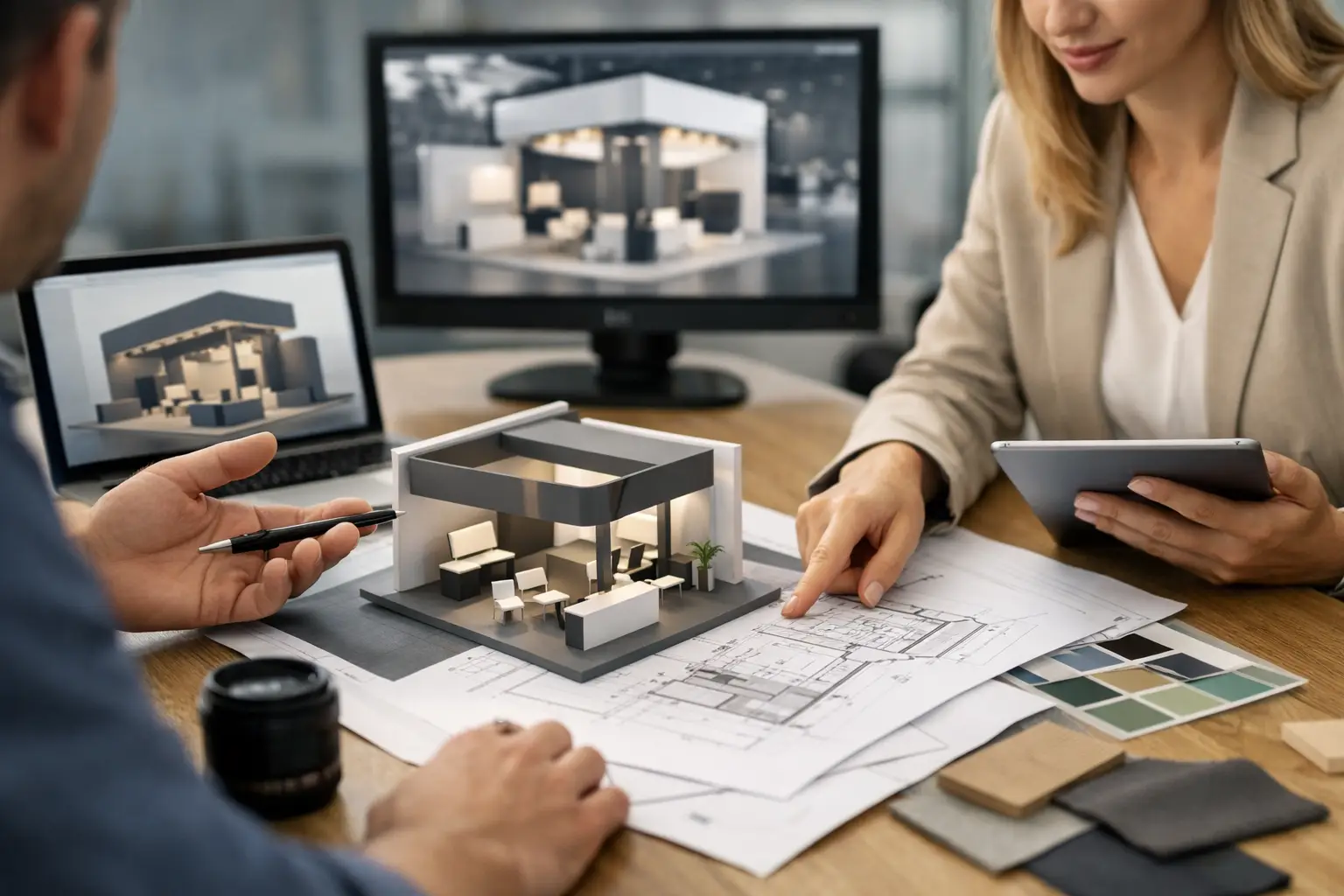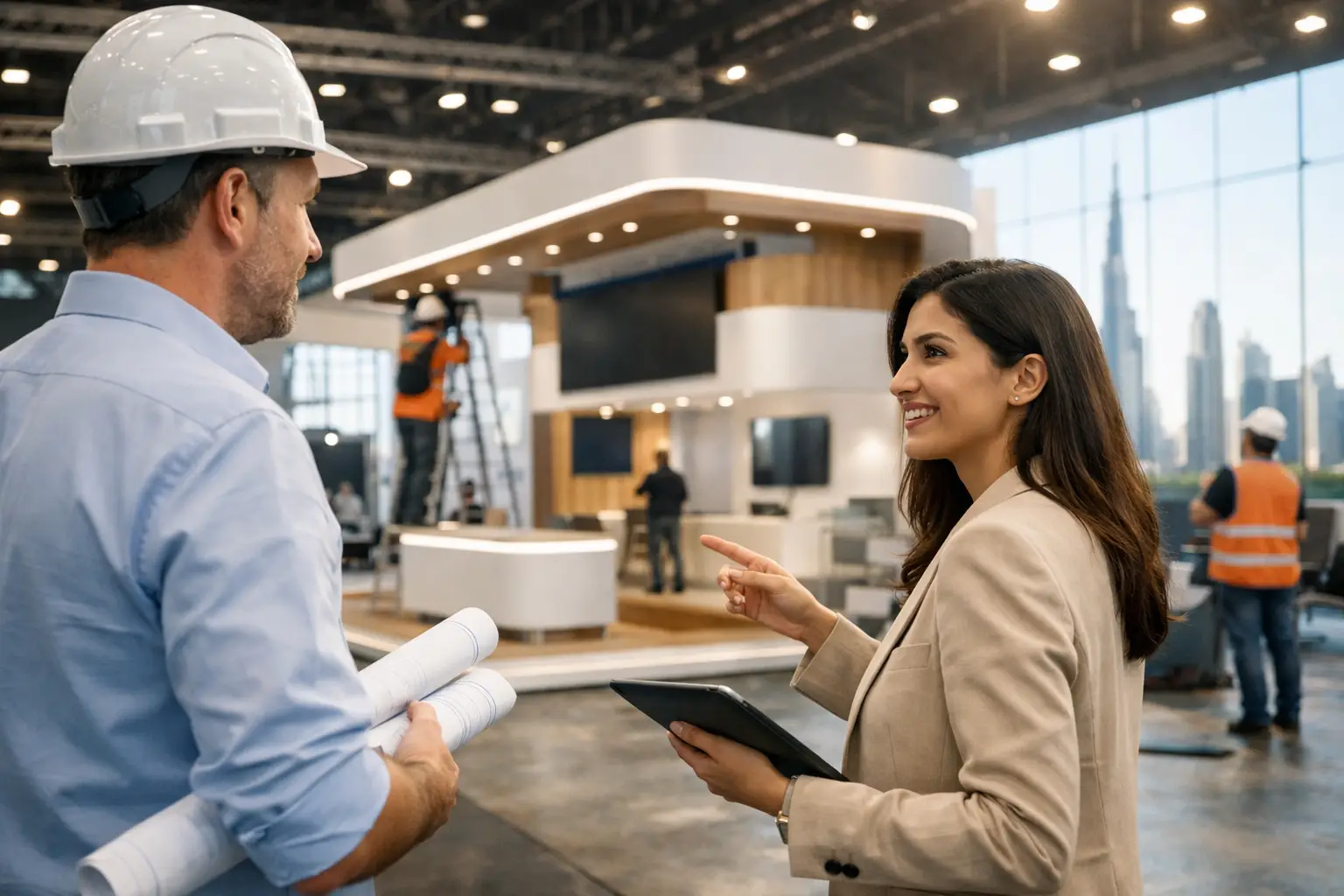

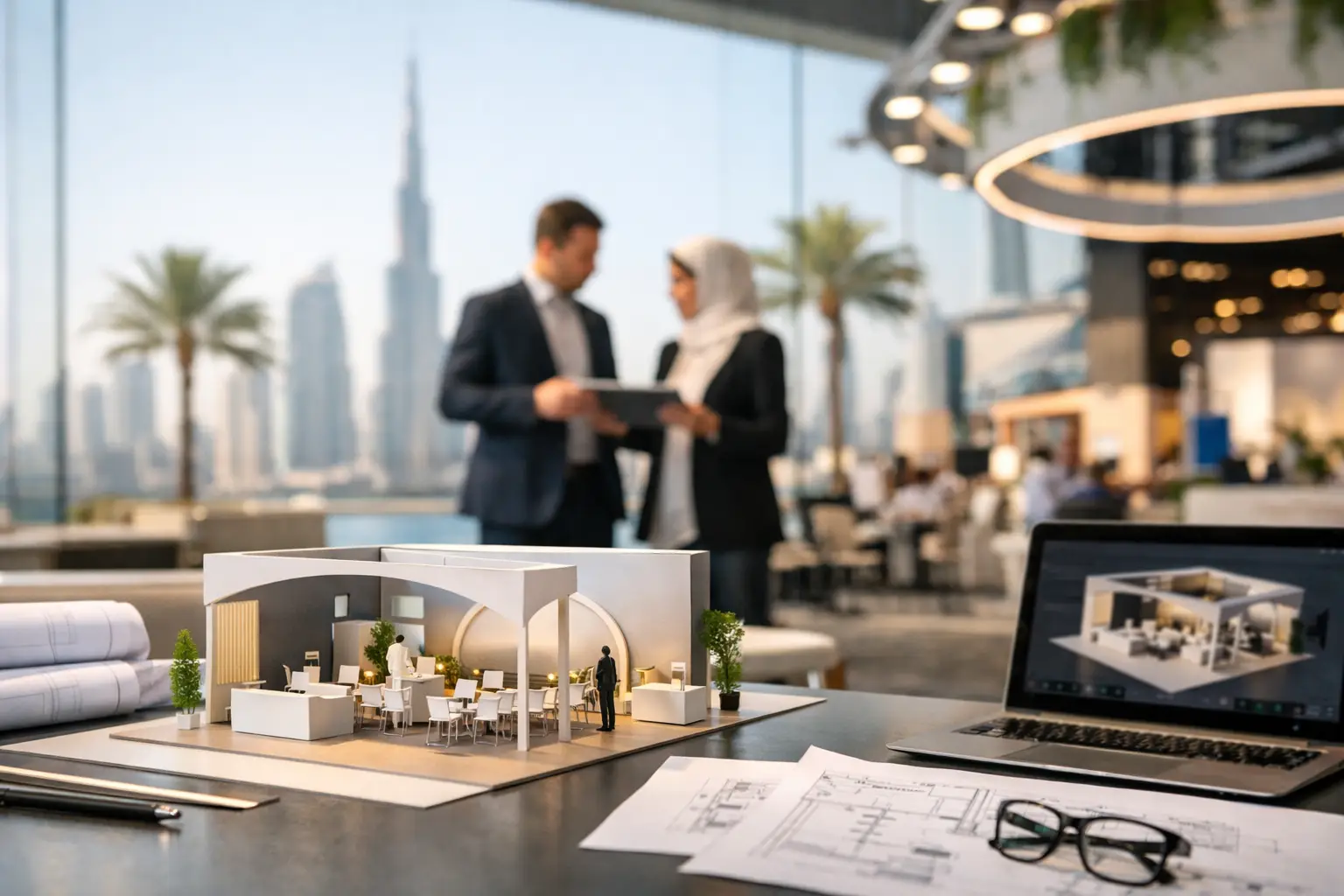

At Arabian Travel Market Dubai, a beautiful stand is not enough. Travel buyers, destination partners, media contacts, and corporate decision-makers move quickly, often with packed schedules and multiple meetings already booked. Your space must make the right audience stop, understand your offer, and start a commercially useful conversation within seconds.
For tourism boards, hotel groups, airlines, travel technology firms, and destination management companies, the event is a major opportunity to build market visibility in the Middle East and create international partnerships. The challenge is turning a finite footprint, limited build window, and ambitious brand objectives into an exhibition presence that performs on the show floor.
Why Arabian Travel Market Dubai Demands More Than a Display
Travel is a visual, experiential business. Visitors are not only assessing products and rates. They are judging confidence, service quality, destination appeal, and whether your organization feels ready to support a partnership. A generic booth with crowded graphics and nowhere to sit can undermine even a strong commercial proposition.
The most effective stands translate a brand promise into a practical environment. A premium resort group may need a calm hospitality-led setting with private meeting areas. A tourism authority may need high-impact destination storytelling, room for several co-exhibitors, and a clear national identity. A travel technology company may need live product demonstrations, lead capture points, and meeting capacity for sales teams.
These requirements can conflict. More meeting rooms reduce open visibility. A large LED wall creates impact but can dominate the message if the content lacks purpose. An elaborate architectural form may look impressive in a rendering but add cost and complexity without improving visitor engagement. The right solution depends on your audience, sales process, stand location, and measurable event goals.
Start With the Commercial Outcome
Before approving colors, materials, or screen sizes, define what a successful show looks like. “Brand awareness” is a reasonable objective, but it is too broad to guide a stand build on its own. Teams should identify the conversations they need to create and the people who need to have them.
For example, a hotel operator entering the GCC market may prioritize appointments with travel agencies and corporate travel planners. A destination pavilion may focus on partner visibility, media activity, and scheduled trade meetings. A software platform may need qualified demo requests from operators facing a specific operational problem.
This clarity shapes the floor plan. If the goal is 40 high-value meetings a day, protected meeting space and a disciplined reception flow matter more than adding another decorative feature. If the goal is broad awareness for a destination launch, an open frontage, recognizable visual landmark, and dynamic content may carry more weight.
A useful planning brief covers four connected decisions: the audience you want to attract, the action you want them to take, the brand story they should remember, and the evidence your sales team needs to capture. Once those are agreed, design decisions become faster and more accountable.
Build Visitor Flow Into the Stand Design
A stand should not make visitors work to understand where to go. The best spaces use an obvious progression: attract attention from the aisle, offer a quick reason to engage, then move qualified visitors into demonstrations, hospitality, or meetings.
Your front-facing message must be visible at walking speed. Avoid treating every wall as a brochure. One strong proposition, supported by destination imagery, a memorable visual asset, or concise proof points, is more effective than a collage of logos and paragraphs.
Inside the stand, separate casual traffic from serious business conversations. An open hospitality counter can welcome walk-ins, while semi-private tables support short discussions. Enclosed rooms are valuable when contracts, commercial rates, or sensitive partnership details are involved, but too many closed spaces can make a stand feel inaccessible.
Make meeting space work harder
Meeting areas are often where the return on exhibition investment is won or lost. They need comfortable seating, reliable power access, suitable acoustics, and enough space for laptops, brochures, and refreshments. They also need a booking process. A well-designed meeting room that sits empty because no one owns the appointment schedule is wasted square footage.
For shared country pavilions, this becomes even more important. Each participant needs sufficient visibility, but the wider pavilion must also function as one coordinated destination experience. Clear zoning, consistent visitor reception, and shared meeting management prevent the space from becoming a row of disconnected mini-booths.
Budget for What Visitors Will Actually Notice
Exhibition budgets are rarely unlimited, particularly when travel, staffing, sponsorship, samples, and marketing activity sit alongside the stand build. The goal is not to spend the most. It is to invest in elements that support business outcomes while protecting quality and delivery certainty.
Prioritize structural quality, clear branding, functional meeting areas, lighting, and content that can be understood quickly. These are the fundamentals visitors experience directly. Custom joinery, feature lighting, LED video walls, and double-decker structures can be highly effective when they solve a real visibility or capacity challenge. They are less valuable when added simply because competitors have them.
There is also a practical choice between modular systems and custom-built stands. Modular formats can support faster deployment and budget control, especially for smaller spaces or repeatable event programs. A custom build provides greater architectural freedom and stronger visual distinction, which can be worthwhile for major launches, large footprints, and premium positioning. A hybrid approach often delivers the best balance: reusable structural elements combined with custom focal features and event-specific graphics.
Ask your exhibition partner for a transparent scope that covers design development, fabrication, graphics, furniture, AV, logistics, installation, and dismantling. A low initial quote can become expensive if key items are assumed rather than included. Detailed specifications also reduce late-stage surprises when venue rules, rigging limits, approvals, or service orders come into play.
Use Content as a Conversation Starter
Large-format visuals matter at a travel show because they create emotion quickly. But the content should support the sales team, not compete with them. A looping video with no sound, for instance, should still communicate the destination, property, or platform in a few moments.
For destination brands, consider a mix of iconic visuals and practical reasons to visit or partner: new routes, landmark developments, seasonal experiences, MICE capability, sustainability credentials, or regional accessibility. For travel suppliers, show what makes the guest experience distinct and what makes the business relationship easier.
Interactive technology can help, but only if it reduces friction. Touchscreens that require an explanation or frequently need technical support may frustrate visitors. A simple interactive map, fast product demo, or short-form visual presentation is often more reliable than a complex installation. Keep printed collateral selective as well. Digital lead capture and post-show follow-up plans usually provide more value than stacks of brochures that do not reach decision-makers.
Plan Operations Early, Not After the Design Is Approved
The creative concept is only half the project. Successful participation at Arabian Travel Market Dubai relies on accurate technical planning, timely approvals, disciplined production, and on-site coordination. A stand contractor should be involved early enough to flag practical considerations before they become expensive changes.
This is particularly relevant for suspended signs, double-decker structures, custom lighting, LED walls, and large pavilions. Each can deliver strong impact, but each carries additional requirements around engineering, venue permissions, electrical planning, and build scheduling. The right partner will explain those trade-offs clearly rather than promising a concept that cannot be delivered within the timeline or venue rules.
In-house design and fabrication can give exhibitors stronger control over quality, revisions, and delivery schedules. It also makes it easier to coordinate materials, graphics, furniture, AV, and installation through one accountable project team. At LemonTree Exhibitions, that end-to-end control helps clients move from a free 3D concept through fabrication and on-site handover with fewer gaps between the original idea and the finished space.
Sustainability deserves similar early attention. Reusable framework systems, repurposed materials, durable furniture, and graphics planned for future events can reduce waste without making a stand feel temporary. The most sustainable choice is not always the smallest build. It is often the one designed intelligently for reuse, efficient logistics, and a longer working life.
Give Your Team a Stand Strategy, Not Just a Stand
Even the strongest booth will underperform if staff members are unclear about who to approach, how to qualify visitors, or where to direct them. Brief the team on the core message, meeting protocol, product priorities, and lead-handling process before doors open. Reception staff should know how to identify appointment guests and route walk-ins without creating a queue at the entrance.
Set simple daily measures: meetings held, qualified leads captured, demonstrations completed, media interactions, and priority follow-ups assigned. These numbers make it easier to assess the event beyond footfall, which can be high but commercially unhelpful.
A well-planned Arabian Travel Market Dubai presence gives your people a platform to do their best work. Make the stand easy to enter, easy to understand, and ready for meaningful conversations. When the doors open, the real test is not how the space photographs – it is how confidently your team can turn attention into opportunity.