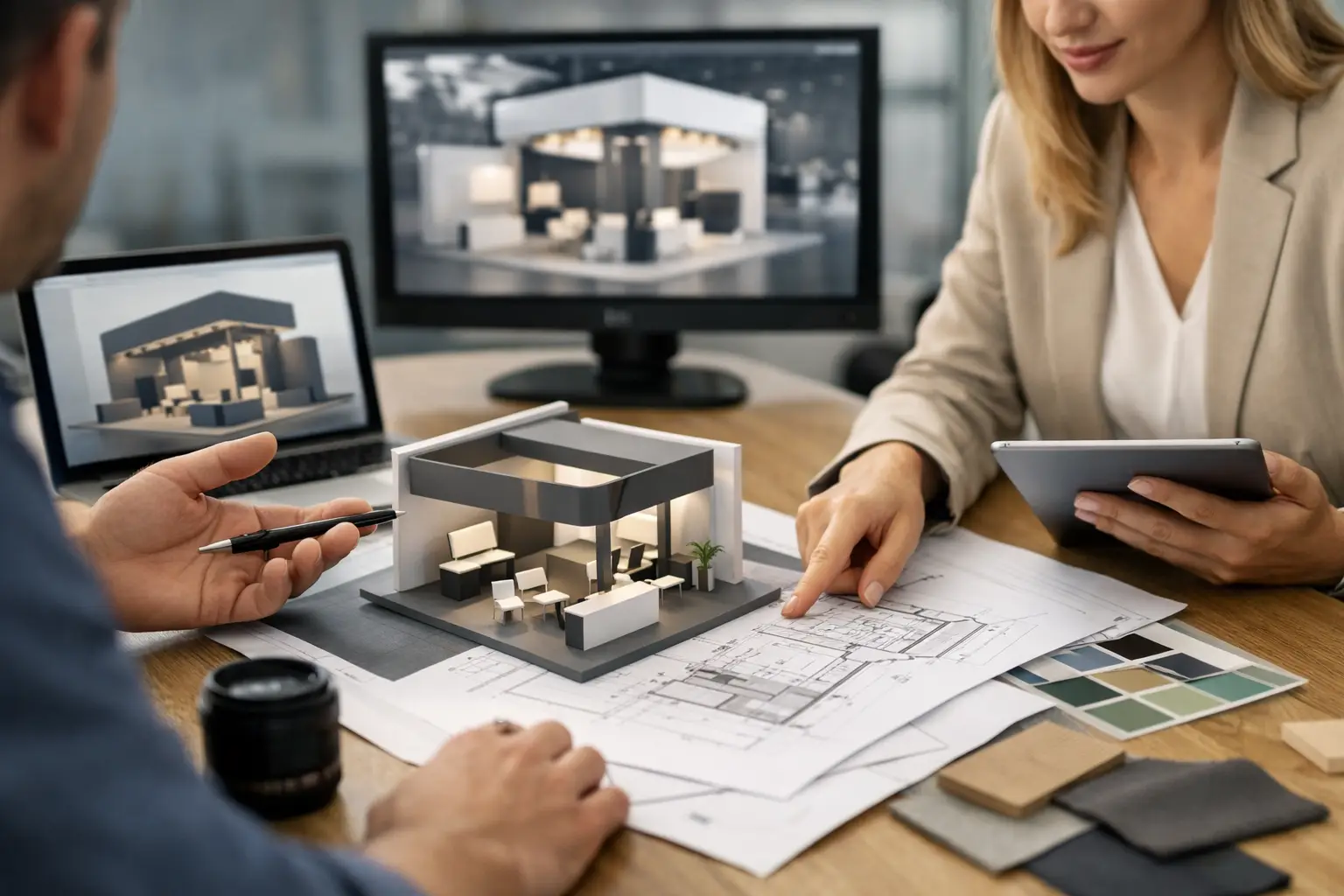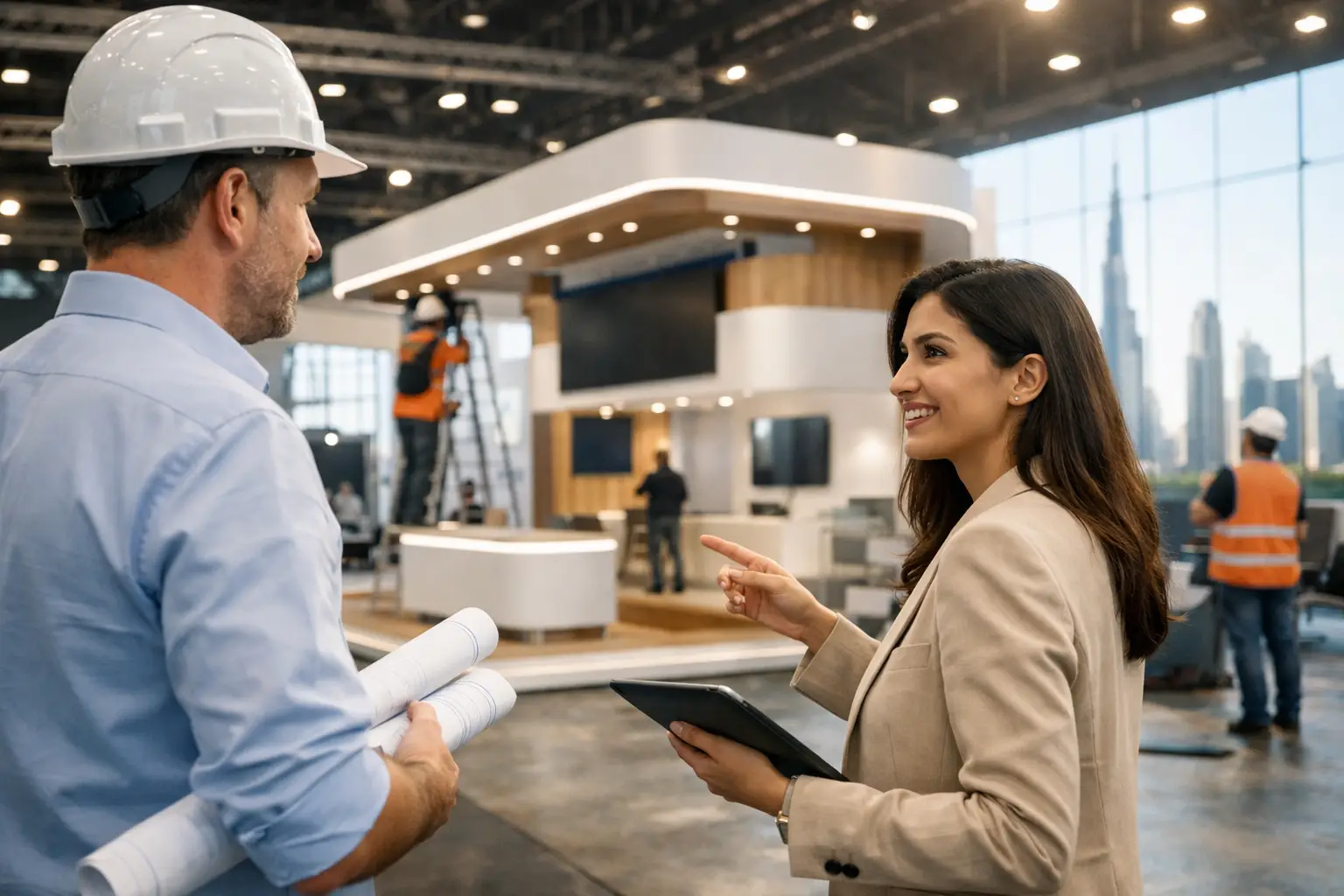

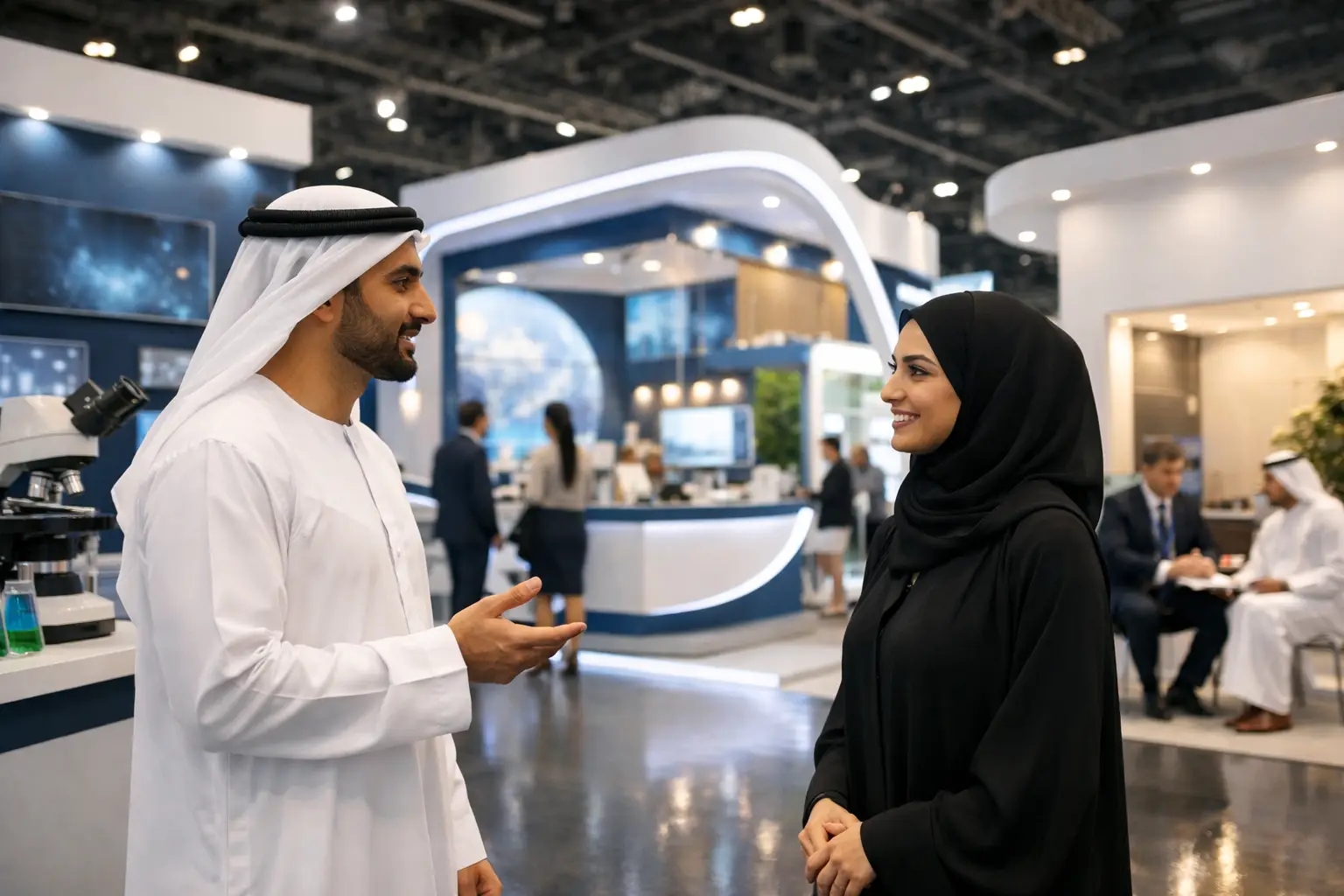

ARABLAB + puts products under a different kind of pressure. Visitors are not simply looking for an attractive booth. They need to understand what a system does, how it fits their workflow, and whether the supplier behind it can be trusted with a serious purchase. For exhibitors in laboratory, analytical, life science, environmental, and industrial sectors, the stand must turn technical capability into a clear, credible visitor experience.
That requires more than a large logo and a product display. A successful presence is designed around conversations, demonstrations, hospitality, and practical on-site operations from the first sketch.
What an ARABLAB + Stand Needs to Achieve
At a laboratory-focused exhibition, attention is valuable only when it leads to the right conversations. A stand should help your sales and technical teams quickly identify whether a visitor is a distributor, procurement lead, laboratory manager, researcher, or existing customer. The layout, messaging, and product access all play a role.
The strongest stands usually solve three commercial problems at once. First, they make the brand visible in a busy hall. Second, they explain a complex offer without asking visitors to read walls of copy. Third, they give the team a comfortable, organized setting for discussions that may involve technical specifications, budgets, or regional distribution plans.
This is why generic booth packages can be limiting. They may provide a functional footprint, but they rarely account for the physical requirements of instruments, demo workflows, meeting privacy, or the hierarchy of a multi-product portfolio. A tailored stand can be scaled to the objective – from a focused product launch to a broad regional brand presence.
Start With the Visitor Journey, Not the Structure
Before choosing finishes, LED screens, or architectural features, define what should happen when a visitor reaches the stand. If the main goal is live equipment demonstrations, the demo area needs to be visible from the aisle and designed to prevent crowding. If the priority is distributor recruitment, accessible meeting space and clear regional messaging may matter more than a large equipment platform.
A practical visitor journey often begins with a short message visible from a distance. It should answer one question: what problem does your company solve? The next layer should help visitors recognize the relevant product category or application. Only then should they reach detailed technical content, displays, or a conversation with a specialist.
This sequence matters because exhibition visitors make decisions quickly. A stand that presents every specification at the entrance can feel dense and difficult to approach. A stand that says too little may generate interest but leave visitors uncertain about why they should stop. The right balance depends on product complexity, brand awareness, and the experience level of the audience.
Make technical products easier to understand
Laboratory equipment has to look credible. Product presentation should feel precise, clean, and accessible, rather than theatrical for its own sake. Well-lit plinths, protected display zones, integrated graphics, and orderly cable management all contribute to that impression.
For larger instruments, plan the demonstration area around how the machine will actually be used. Consider power requirements, data connections, ventilation, operator access, sample handling, and storage for consumables. If a live demo cannot be run continuously, a high-quality video demonstration can support the conversation, but it should not replace the opportunity for visitors to inspect the product closely.
Screens are particularly useful when they are assigned a clear job. They can show application footage, explain a process in stages, display product comparisons, or reinforce campaign visuals. A large LED video wall is effective when the content is purposeful and readable from the aisle. Used without a content plan, it can become expensive background motion.
Choose a Layout That Supports Sales Conversations
Open stands can draw more walk-in traffic, particularly at corner or island locations. However, openness must be balanced with control. A fully exposed space may make it difficult to hold meaningful discussions, especially when the exhibition floor is busy. Semi-private meeting areas, enclosed rooms, or an upper deck can give the team a place to move qualified leads forward.
For a compact footprint, the best approach is often to dedicate one main zone to product interaction and one to meetings, with a small hospitality point for welcoming visitors. Avoid adding too many functions to a limited area. A crowded stand makes premium products feel less premium and can slow down staff movement.
Larger spaces allow more flexibility. A brand can separate equipment categories, build a central presentation zone, and include a lounge for scheduled meetings. Double-decker stands can be valuable where the floor plan needs to remain open while private meetings require more capacity. They are not automatically the right choice, though. They involve additional structural coordination, approvals, budget, and build time. The business case should be based on expected meeting volume, not only visual impact.
Build Brand Confidence Through Detail
For technical buyers, quality is communicated in small details as much as headline design. Misaligned graphics, visible wires, unstable display furniture, poor lighting, or an untidy storage area can weaken an otherwise strong presentation. These issues are avoidable when design, fabrication, logistics, and installation are planned as one coordinated process.
Material choices should reflect the brand and the practical needs of the show. Clean architectural lines, controlled lighting, durable finishes, and a considered color palette can create a premium environment without unnecessary complexity. Where possible, modular components and reusable materials can help manage cost and reduce waste across multiple events.
Graphics deserve the same discipline. Product names, application statements, certification references, and contact prompts should be checked early and approved carefully. At a show where visitors may be comparing several technically capable suppliers, clear and consistent communication is an advantage.
Plan Early for Operations That Cannot Be Improvised
The stand experience is only as dependable as the operational planning behind it. Equipment transport, venue access rules, rigging needs, electrical loads, internet requirements, installation schedules, and dismantling all need attention well before the event opens. A late design change can affect more than aesthetics – it may change fabrication timelines, packing plans, and site work.
A capable exhibition partner should clarify these requirements early and keep the process accountable. That includes confirming the size and weight of every product, planning how items enter the hall, checking whether services are sufficient for demonstrations, and creating a realistic installation sequence. The goal is simple: your team should arrive to a finished, functioning environment rather than a list of unresolved site issues.
Staffing also needs a practical plan. Sales representatives, application specialists, hosts, and stand managers should know who owns the greeting, qualification, demonstrations, meeting calendar, and lead capture process. Even a bold stand underperforms if visitors wait too long to be acknowledged or technical questions cannot reach the right person.
Measure More Than Footfall
High visitor numbers can look impressive, but they are not the most useful measure of exhibition success. Set targets that align with the purpose of your ARABLAB + participation: qualified meetings, distributor discussions, product demonstrations completed, priority accounts engaged, or post-show proposals requested.
Lead capture should record enough context to make follow-up relevant. Alongside contact details, note the visitor’s application, purchase timing, region, technical requirement, and the product or service discussed. A short but disciplined qualification process gives the sales team a much stronger starting point after the event.
The days following the show are part of the exhibition investment. Prompt follow-up, tailored technical information, and clear ownership of each opportunity help convert conversations into momentum. The stand creates the encounter; the commercial process turns it into value.
A well-executed ARABLAB + stand should make sophisticated products easier to evaluate and serious buyers easier to engage. When every detail supports that outcome – from the first sightline to the final meeting – the exhibition becomes a working sales environment, not just a branded space.