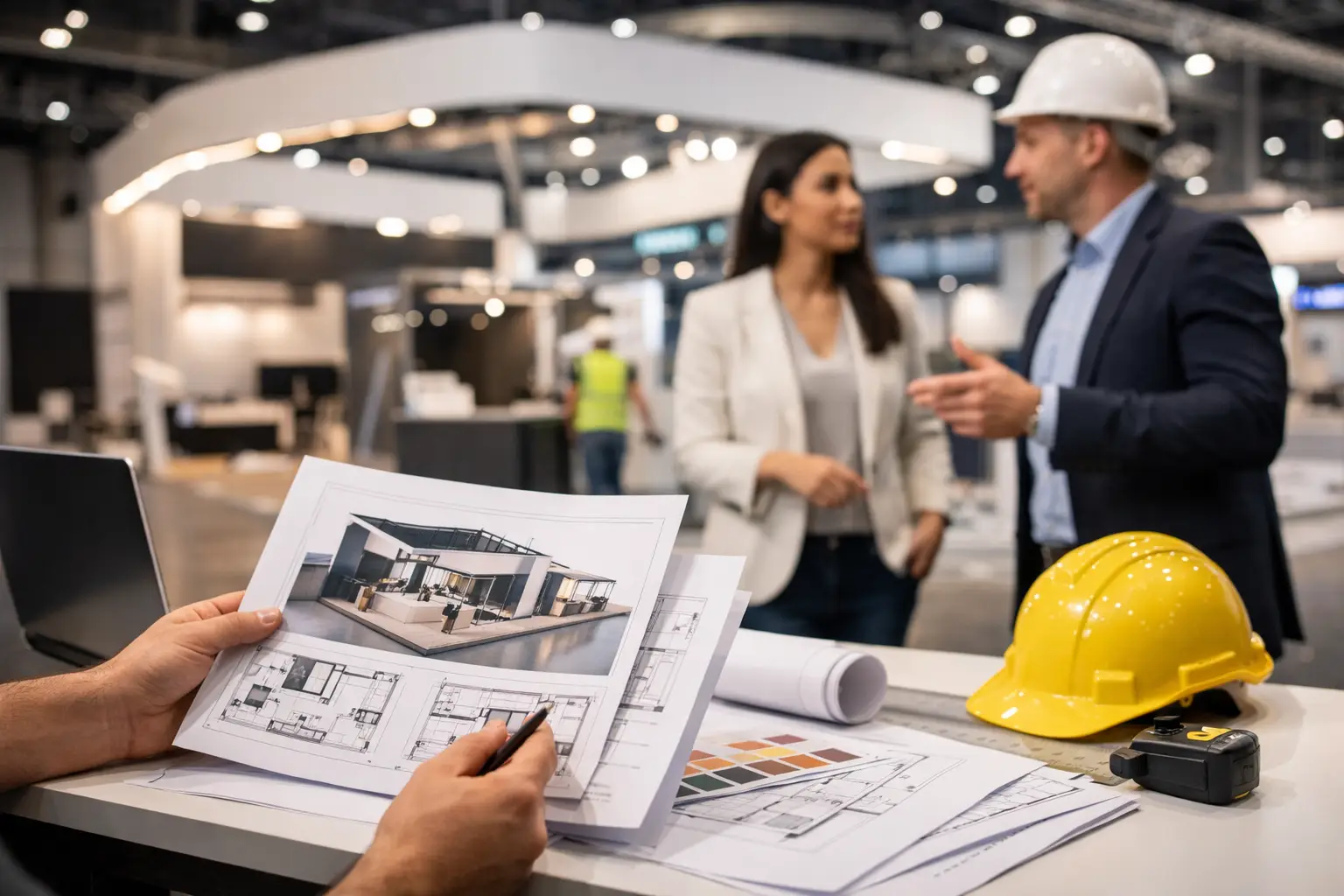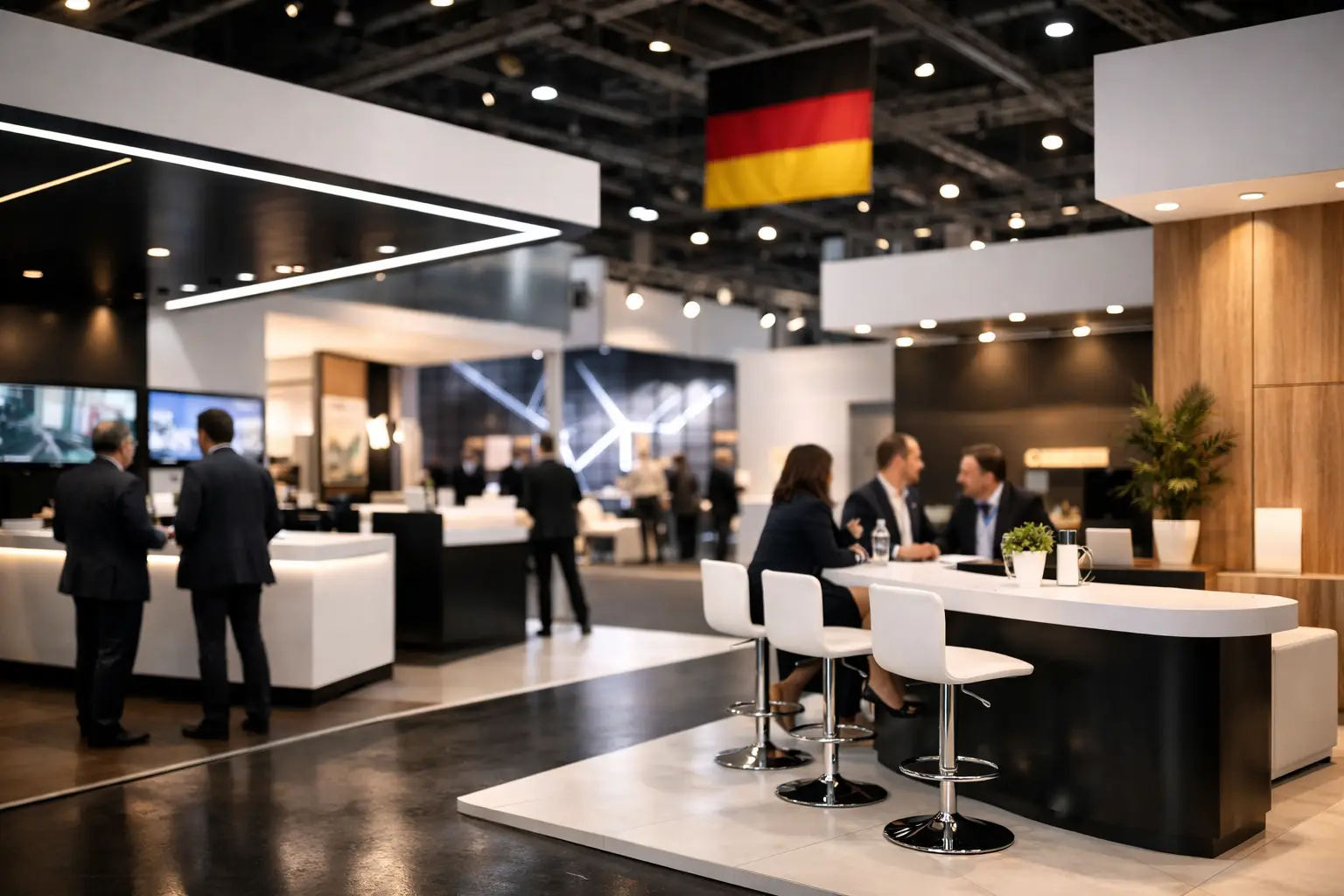

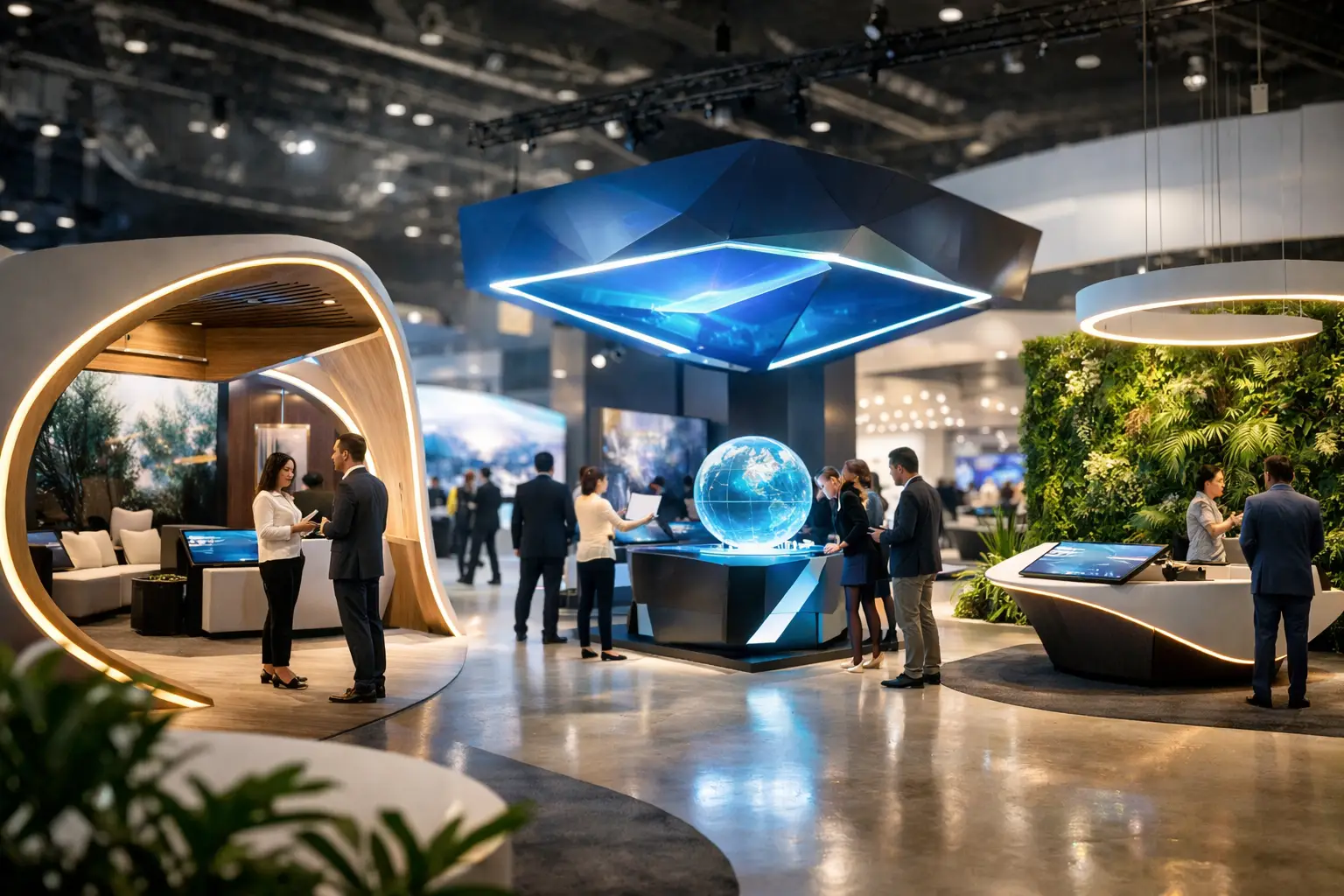

At major shows, the busiest booths are no longer just the biggest or the brightest. They are the ones that make it easy to understand the brand, move through the space, and have a useful conversation within minutes. That shift is exactly why exhibition booth design trends 2026 are less about visual excess and more about performance – how the booth works, how quickly it communicates value, and how efficiently it supports lead generation.
For marketing teams, procurement leaders, and business owners, that is good news. Better booth design is becoming more measurable. You can now look at a concept and ask practical questions: Will this stop the right visitors? Will the meeting areas actually be usable? Can the build scale across multiple cities? Will the materials and technology justify the spend? In 2026, those questions matter as much as the aesthetics.
Exhibition booth design trends 2026 are getting more strategic
The biggest change is not a single material, screen type, or shape. It is the fact that exhibitors are designing booths around visitor behavior and event goals from the start. A stand for a product launch needs a different rhythm than a stand built for distributor meetings. A government pavilion needs strong identity and coordinated navigation. A tech brand may prioritize demos, while an industrial manufacturer may need credibility, product clarity, and comfortable meeting space.
This sounds obvious, but many booths still try to do everything at once. In 2026, the better approach is sharper zoning. Open front areas attract traffic. Demo zones hold attention. Semi-private meeting spaces support real business conversations. Storage is integrated rather than treated as an afterthought. Good design now works like a sales environment, not just a branded backdrop.
1. Cleaner architecture with stronger brand cues
Minimalism is staying, but not the flat, generic kind that makes one booth look like the next. The stronger direction is clean architecture with distinctive brand assets built into the structure. That might mean a bold suspended feature, a signature curve, a strong material contrast, or a disciplined color strategy that reads from distance.
The reason is simple. Visitors make quick judgments in crowded halls. A booth has to be instantly legible. Too many visual messages reduce recall. Cleaner forms help visitors understand where to enter, where to look, and what the brand stands for. The trade-off is that minimal design demands higher execution quality. When the structure is simpler, every finish, junction, and graphic alignment becomes more visible.
2. LED integration is becoming more purposeful
Large LED walls are not new, but their role is changing. In the past, some exhibitors used screens as visual spectacle with little connection to the sales journey. In 2026, the better booths use LED with intent. Motion content frames the product story, supports timed presentations, or creates atmosphere without overwhelming conversation areas.
This is especially useful for brands with complex offerings, machinery, infrastructure solutions, or product lines that are difficult to transport. Instead of cluttering the floor with too many messages, dynamic content can sequence them clearly. That said, more screen area does not always mean better engagement. If brightness, sound, and motion are overdone, visitors move on quickly. Screen strategy needs to support the booth, not dominate it.
3. Flexible layouts for multi-show use
Budget scrutiny is not going away. One of the most practical exhibition booth design trends 2026 is the move toward systems and custom hybrids that can be adapted across different footprints and markets. A 100 sqm flagship concept may need a reduced version for a regional event. A double deck structure may work for one show, while a single-level adaptation makes more sense elsewhere.
This is where planning has become more disciplined. Brands want reusable elements, modular graphics, adaptable counters, and storage solutions that travel well. The goal is not to make every booth identical. It is to protect brand consistency while controlling cost and turnaround. When designed well, flexible builds can still feel premium. When designed poorly, they start to look compromised. The difference comes down to whether adaptability was planned at the concept stage or forced later.
Sustainability is moving from statement to specification
Sustainability in exhibitions is no longer just a messaging layer. Clients are asking more detailed questions about material reuse, transport efficiency, waste reduction, and what happens after the show. That is pushing design teams to think beyond appearance and into lifecycle.
4. Reusable materials and smarter fabrication
More exhibitors are choosing structures and finishes that can be repurposed without losing visual quality. Recyclable substrates, re-engineered frameworks, and durable components are becoming part of the specification rather than a special request. This matters for brands exhibiting across multiple regions, where repeated builds can create unnecessary waste and cost.
There is also a commercial advantage. Smarter fabrication can reduce rework, improve packing efficiency, and shorten installation time. Not every sustainable choice is cheaper up front, but many are more efficient across a show calendar. The key is honesty about trade-offs. Some highly customized features are harder to reuse. Some premium finishes are less practical for repeated transport. Good planning balances sustainability goals with brand standards and event realities.
5. Lighter builds with stronger logistics thinking
Design is being shaped more directly by logistics. Lighter structures, efficient crating, and install-friendly detailing are becoming priorities because they affect timelines, freight costs, and site risk. For international exhibitors moving between venues in the UAE, Saudi Arabia, Germany, India, and the US, that operational thinking can make a major difference.
A booth that looks impressive in a render but causes delays on the floor is not a successful booth. In 2026, clients are looking for partners who can translate creative ambition into dependable execution. That means considering access restrictions, hall regulations, engineering requirements, and dismantling plans before the build starts.
Visitor experience is becoming more intentional
The old model of handing out brochures from a reception desk keeps losing ground. Booths now need to encourage specific actions, whether that is a product demo, a meeting, a consultation, or a walk-through.
6. Hospitality-driven meeting spaces
One clear shift is the quality of meeting environments. Brands are investing more in comfortable, well-zoned hospitality areas because deals often close after the first stop, not before it. Better seating, acoustic separation, integrated charging, refreshments, and calmer lighting all help serious conversations happen without leaving the booth.
This matters even more in sectors like pharma, energy, manufacturing, and real estate, where purchase cycles are longer and discussions are detailed. A crowded stand with nowhere to talk may generate traffic but lose business value. The balance is important, though. Too much enclosed meeting space can make a booth feel closed off and reduce approachability.
7. Interactive tech with a clear job to do
Touchscreens, product configurators, AR layers, and data capture tools are still relevant, but buyers are more selective. The strongest use of interactive tech in 2026 is practical. It helps qualify leads, explain technical products, compare options, or personalize the visitor journey.
If the interaction adds friction, it fails. If it shortens explanation time and improves recall, it earns its place. This is where many exhibitors are becoming more disciplined. They are asking whether the technology serves the sales team and the visitor at the same time. If not, it is decoration.
8. Content-first graphics
Graphics are becoming simpler, sharper, and more outcome-focused. Instead of filling every wall with copy, better booths are using fewer claims with stronger hierarchy. Visitors should be able to understand the offer from a distance, then discover detail as they move deeper into the space.
This is particularly effective in large trade environments where attention is fragmented. Strong messaging is not about saying more. It is about saying the right thing at the right viewing distance. Brands with broad portfolios benefit from this most, because content discipline prevents the booth from becoming visually noisy.
9. Double deck and vertical design where ROI justifies it
In premium shows with high footfall and expensive floor space, vertical design remains a smart move. Double decker stands and elevated brand features can increase visibility, create private hospitality, and improve space efficiency. For some brands, especially those hosting distributors, VIPs, or international delegations, that added layer delivers real value.
But it depends on the event and the objective. Double deck builds require more engineering, more approvals, and more budget. They make sense when the additional meeting capacity, status, and visibility support measurable outcomes. They are less useful when the priority is fast setup, broad regional rollout, or tighter cost control.
What clients should ask before approving a 2026 booth concept
The smartest booth decisions are still made before fabrication. Ask whether the concept matches the event objective, whether it can be installed efficiently, whether the visitor flow is obvious, and whether the messaging is visible within seconds. Also ask what can be reused, what may create cost pressure later, and how the design supports the team working on site.
That is where an experienced exhibition partner earns trust. A strong concept is only half the job. The other half is making sure the final booth arrives on time, looks right under venue lighting, functions under show pressure, and supports the commercial goals that justified the investment in the first place.
The exhibition booth design trends 2026 worth following are the ones that improve business performance, not just appearance. If a booth can attract the right audience, support better conversations, and travel more intelligently from one show to the next, it is already ahead of the trend.