

A crowded show floor is unforgiving. You have a few seconds to signal who you are, what you offer, and why a buyer should stop at your booth instead of the one across the aisle. That is why a trade show booth design checklist matters long before fabrication begins. The strongest booths are not built around decoration alone. They are built around traffic flow, brand clarity, lead goals, and flawless execution.
For marketing teams, procurement leads, and business owners, the challenge is rarely a lack of ideas. It is making sure the creative concept survives real-world constraints like venue rules, installation windows, storage, staffing, and budget. A good booth can look impressive in a rendering and still underperform on-site if those details are missed.
What a strong trade show booth design checklist should cover
A booth design checklist should help you make better decisions early, when changes are still affordable. It should connect visual design with business outcomes. If your team is evaluating stand partners, it should also make it easier to compare proposals on more than appearance.
Start with purpose. Are you launching a product, generating leads, meeting distributors, hosting existing clients, or building brand visibility in a new market? Each goal changes the design. A lead-focused booth may need open access, quick qualification points, and simple messaging. A relationship-focused booth may need private meeting space, hospitality, and a calmer layout. If you try to do everything in one footprint, the design usually becomes crowded and unclear.
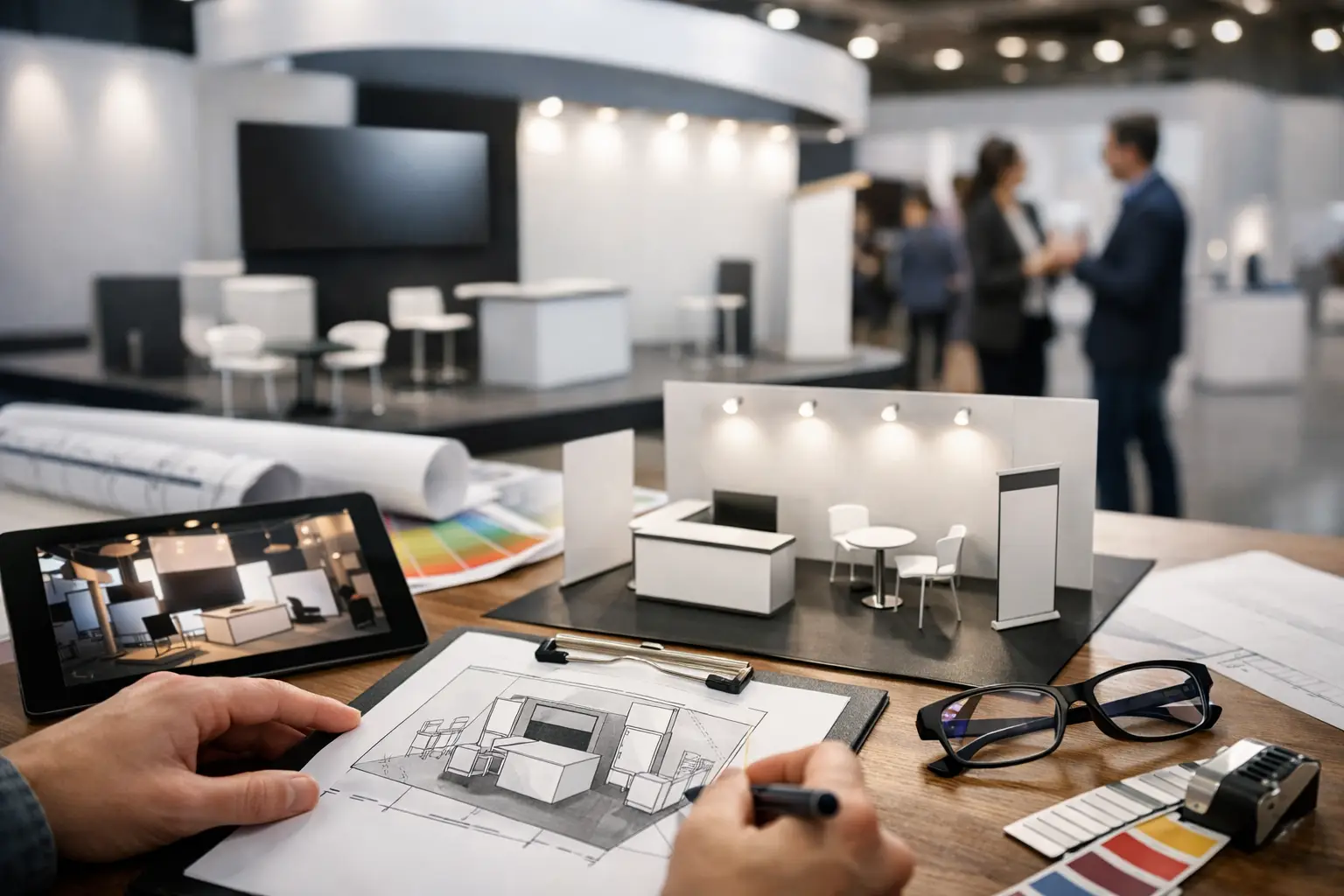
Space planning comes next. Booth size is not just a number in square feet. It determines sightlines, visitor flow, storage options, and whether premium elements like suspended signage, LED walls, or a double-deck structure are practical. A 10×20 booth needs discipline. A 30×30 booth gives you more freedom, but it also creates more risk if zones are not defined properly.
Trade show booth design checklist for better performance
The first item is brand visibility. Your logo should be readable from a distance, not buried in decorative elements. Core messaging should be short enough to understand while walking past. Most visitors will not stop to decode a paragraph. If your booth needs too much explanation before engagement starts, it is working against your sales team.
The second item is visitor flow. Ask a simple question: where do people enter, pause, engage, and exit? Good booth design guides movement naturally. Poor design creates dead corners, bottlenecks, or front-facing counters that act like barriers. Open corners usually outperform closed frontage, especially in high-traffic halls.
The third item is product presentation. If you are exhibiting machinery, samples, packaging, or digital solutions, the display method has to match the product. Physical products need touchpoints and stable display surfaces. Technical solutions often need screens, live demos, and controlled acoustics. Large equipment may need reinforced flooring, wider access, and extra safety consideration. This is where design must serve operations, not compete with them.
Lighting is often underestimated. Good lighting shapes attention and improves the perceived quality of the stand. It can direct people toward hero products, soften meeting areas, and make brand colors look accurate. Bad lighting makes even an expensive build feel flat. The right approach depends on the venue, ceiling height, neighboring booths, and whether your walls are graphic-heavy or material-led.
Graphics and content need the same discipline. A booth is not a brochure on walls. Prioritize one core message, one or two support statements, and imagery that communicates quickly. If your brand serves multiple sectors, resist the urge to show everything. Relevance wins over volume. For many exhibitors, a focused message tailored to the event audience performs better than a broad corporate presentation.
Technology should have a job. LED walls, touchscreens, interactive stations, and product films can be powerful, but only when they support engagement. If a screen simply adds motion without moving the visitor toward a conversation, it becomes expensive wallpaper. The same applies to gimmicks. They may increase foot traffic, but not necessarily qualified leads.
Meeting space is another checkpoint that deserves more thought than it usually gets. If your sales process involves serious discussions, pricing conversations, or distributor meetings, you need seating, power access, and enough privacy for people to stay. Not every booth needs enclosed rooms, but many exhibitors regret not planning a quieter area away from aisle traffic.
Storage is unglamorous and essential. Literature, giveaways, staff bags, product backups, cleaning supplies, and refreshments have to go somewhere. If storage is ignored, the booth starts to look messy by mid-morning on day one. A polished exhibition presence depends as much on hidden practicality as visible design.
Design decisions that affect budget and buildability
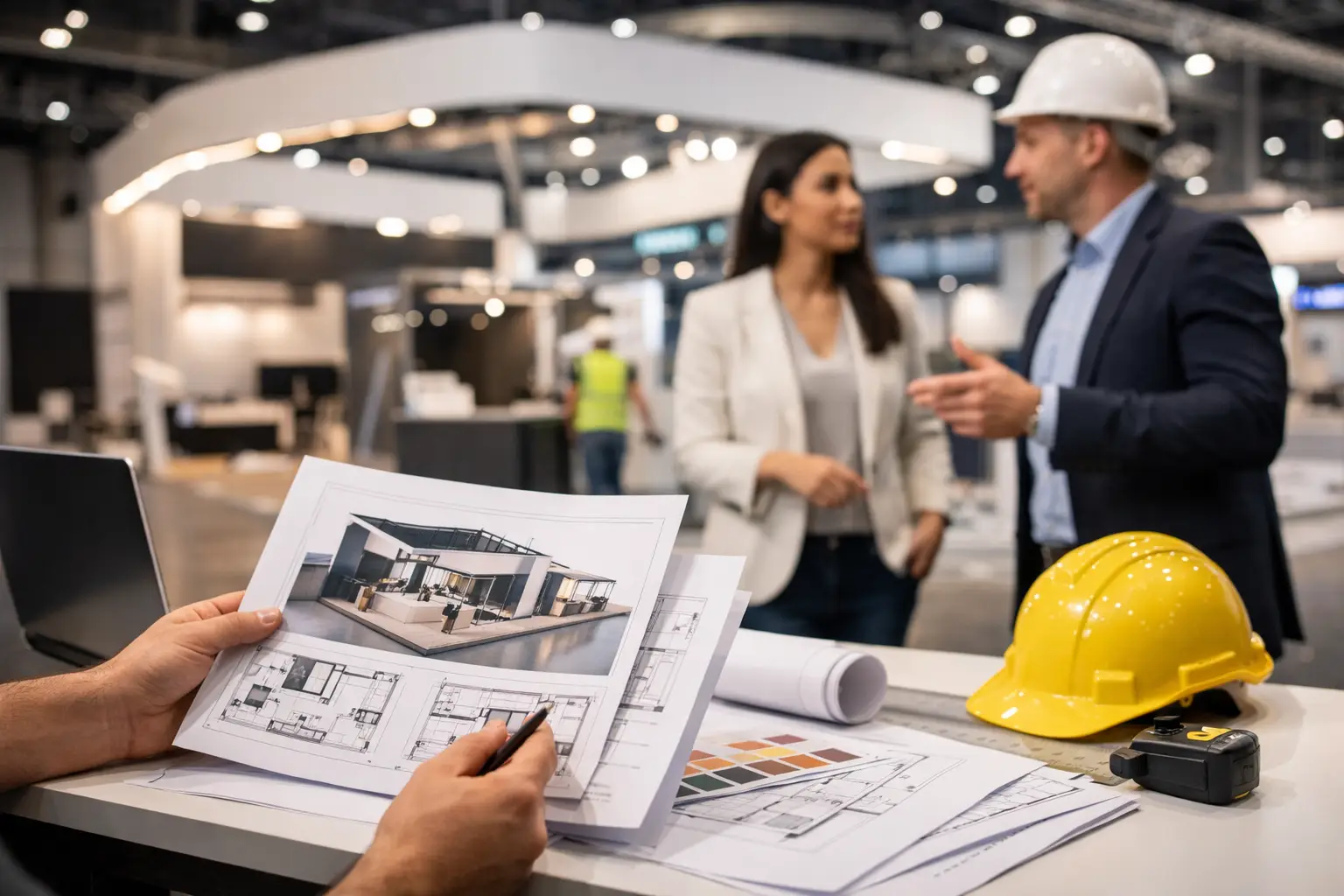
A booth concept should be exciting, but it also needs to be buildable within show regulations, schedule, and budget. This is where experienced execution matters. Custom carpentry, metal fabrication, printed graphics, lighting rigs, hanging signs, LED integrations, and flooring all have cost implications. So do shipping distance, labor rules, and whether the stand will be reused.
One common mistake is approving a concept before discussing material strategy. The finish that looks best in a rendering may not be the smartest choice for transport, durability, or reuse. Another is underestimating installation complexity. A dramatic overhead feature may look worthwhile until it adds rigging approvals, longer setup time, and higher venue charges. Sometimes the boldest decision is not adding more. It is simplifying the structure and investing in better branding and lighting.
Sustainability should also be part of the checklist, especially for companies exhibiting multiple times a year. Reusable structures, modular components, recyclable materials, and repurposed graphics can reduce waste and improve cost efficiency over time. The trade-off is that reusable systems require more discipline in planning dimensions, storage, and future adaptability.
The operational checks many teams miss
Even the best design can fail if operations are treated as an afterthought. Confirm venue guidelines early. Height restrictions, suspended sign approvals, fire ratings, power regulations, and build schedules vary widely by show and location. International events add another layer with customs, freight timing, and local contractor coordination.
On-site functionality should be checked in advance. Where will power points sit? How will cables be concealed? Is there enough access for maintenance if a screen or lighting fixture needs attention during the show? Are demo stations positioned to avoid blocking traffic? These questions sound small until they create delays during installation.
Staffing should inform design too. A booth staffed by two people needs a different layout than one staffed by ten. If you plan live presentations, product demos, or hospitality service, your stand must support those activities without feeling chaotic. Many underperforming booths are not badly designed. They are simply mismatched to the way the team actually works.
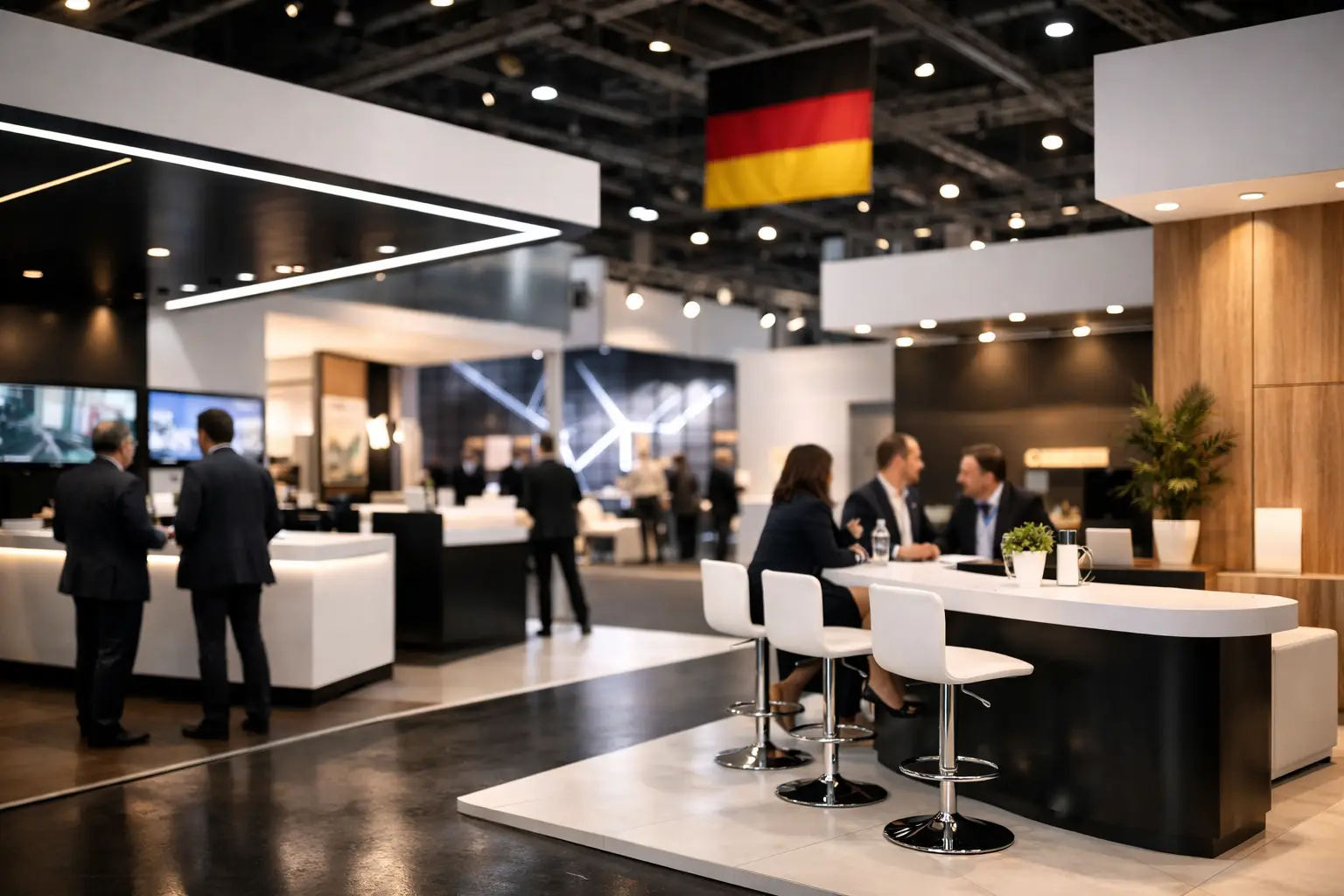
If your event includes VIP meetings, media visits, or official delegations, account for that early. Country pavilions and larger branded spaces especially need zoning that balances public visibility with controlled engagement. In these formats, design discipline becomes even more important because multiple stakeholders often want visibility at once.
How to use this checklist when choosing a booth partner
A capable stand partner should do more than present attractive visuals. They should ask sharp questions, identify risks early, and explain the reasoning behind layout, materials, and visitor flow. If a proposal focuses only on appearance, you are not getting the full picture.
Look for evidence of delivery discipline. Can they manage design, fabrication, logistics, installation, and dismantling in a coordinated way? Do they understand the demands of major industry exhibitions where timing, quality control, and on-site responsiveness are non-negotiable? For exhibitors showing in multiple markets, that operational reliability matters as much as design flair.
This is where an experienced builder like LemonTree Exhibitions can add real value, especially for brands that need a premium presence without execution gaps. Creative ambition works best when it is backed by in-house control, practical planning, and teams that know what happens on the show floor, not just in a concept presentation.
A smart checklist does not limit creativity. It protects it. When your booth strategy covers message, movement, materials, technology, staffing, and logistics from the start, design becomes more effective because it has fewer surprises to absorb later. The result is not just a better-looking booth. It is a booth that works harder for your brand when the aisle is busy and the stakes are high.