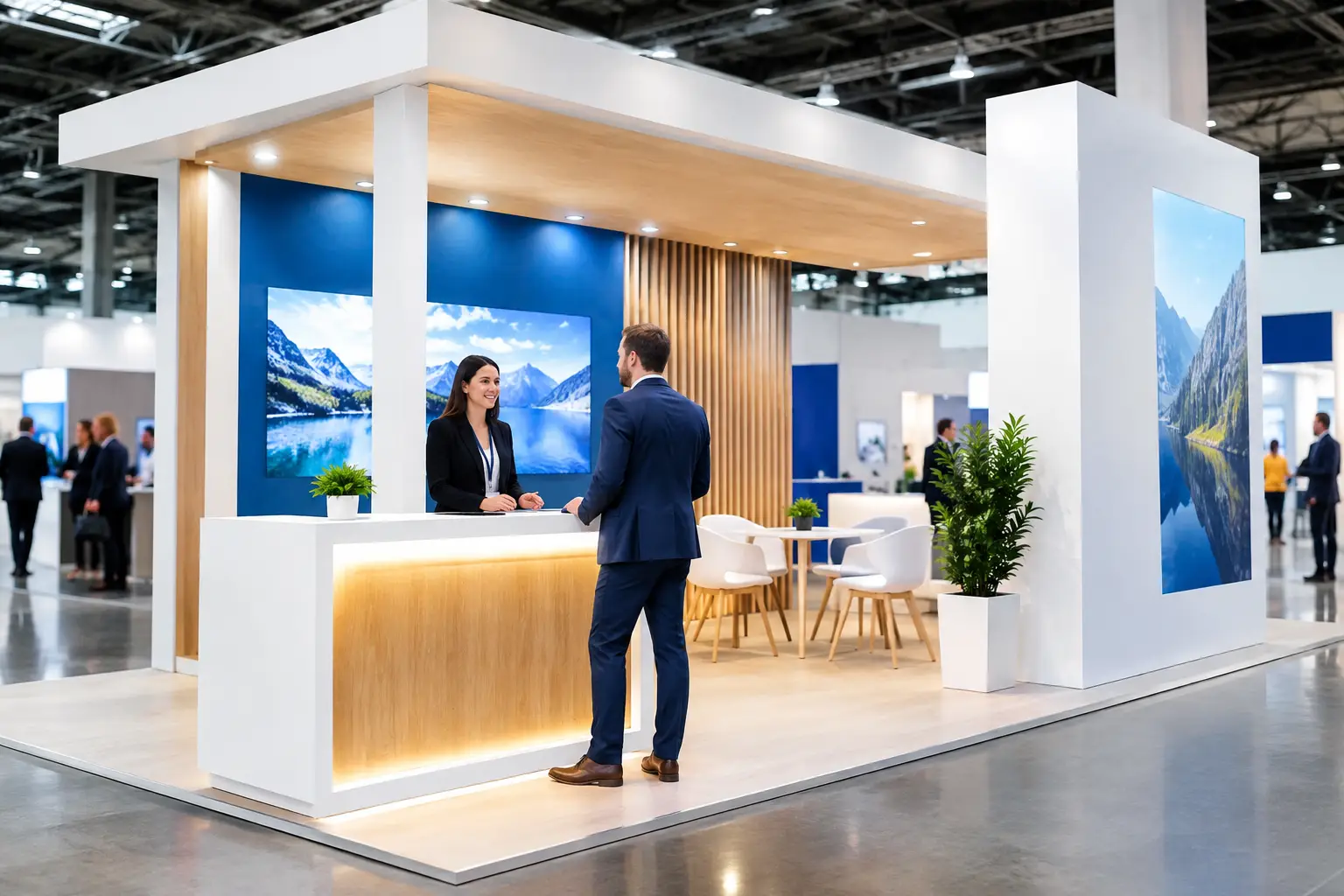

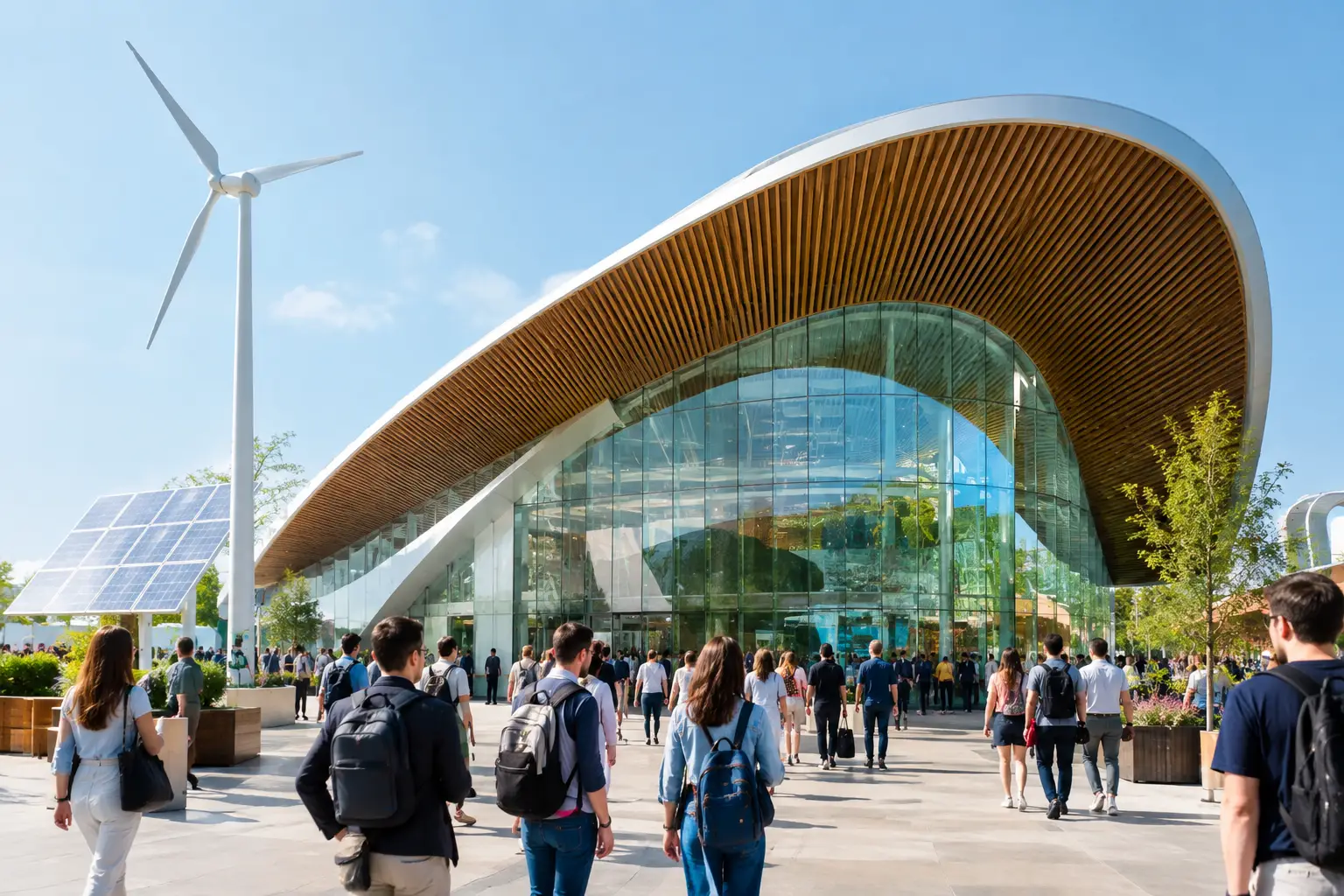

A crowded energy show floor is rarely won by the company with the most equipment on display. It is won by the brand that makes a complex proposition easy to understand in the first 10 seconds. The strongest energy pavilion examples do exactly that: they turn power generation, grid infrastructure, renewables, storage, and industrial services into an environment visitors can read, enter, and remember.
For energy marketers, the challenge is bigger than visual impact. A pavilion must support serious buyer conversations, accommodate technical demonstrations, satisfy venue rules, and project credibility to investors, government stakeholders, distributors, and procurement teams. The right concept balances all of those demands without becoming a wall of product specifications.
What makes an energy pavilion work
Energy is a broad category. A utility-scale solar developer should not present itself like an EV charging startup, and an oilfield services provider has different visitor priorities from a smart-grid software company. Still, effective pavilions share a common discipline: one clear story, a logical visitor path, and places designed for meaningful business interaction.
The architecture should make the brand’s role immediately clear. Are you demonstrating scale, innovation, reliability, sustainability, or regional capability? Trying to communicate all five at equal volume usually weakens the message. A bold overhead feature, an illuminated brand structure, or a central media installation can establish the main idea before the visitor reaches a sales representative.
Then comes proof. Physical models, working interfaces, data visualizations, project maps, and material samples all have a role when they help a visitor understand the business case. They should not compete for attention. In practical terms, this means planning sightlines, screen placement, power distribution, storage, and staffing at the concept stage rather than treating them as last-minute additions.
7 energy pavilion examples worth learning from
1. The renewable energy landscape pavilion
This format works well for solar, wind, green hydrogen, and integrated clean-energy companies with a large project portfolio. A scaled landscape model sits at the center, showing the relationship between generation assets, storage, transmission, and end users. Surrounding LED content can shift from a broad overview to individual project stories.
The strength of this approach is clarity. Visitors see that the company operates a system, not just a single technology. It is especially useful when the audience includes government bodies, developers, and potential partners who need to understand geographic reach and delivery capability quickly.
The trade-off is space. A detailed model needs room around it, and visitors need enough distance to view it without blocking circulation. For a smaller footprint, replace the large model with a tactile, simplified tabletop display and use screens for project-level detail.
2. The live operations command center
For grid management, energy software, predictive maintenance, and digital transformation providers, a command-center concept can be highly persuasive. A large video wall displays live-style dashboards, asset alerts, load trends, or maintenance scenarios, while a demonstration counter allows staff to guide visitors through the platform.
This pavilion succeeds when the content feels relevant and controlled. Generic moving graphics may look impressive, but a decision-maker will stay longer for a short, well-scripted scenario: an outage is detected, the system prioritizes action, and the operator sees a measurable outcome.
Avoid making the stand feel like a closed control room. Open sightlines, clear demo booking points, and nearby meeting areas keep it commercially useful. If real operating data cannot be displayed, build a credible simulated environment rather than showing crowded, unreadable dashboards.
3. The industrial reliability pavilion
Equipment manufacturers and engineering providers often need to communicate durability, safety, and performance. Here, the pavilion can use a hero product, cutaway component, or oversized section of machinery as the visual anchor. The message is less about spectacle and more about confidence: this is engineered for demanding conditions.
Material choices matter. Structured metal finishes, precise lighting, strong plinths, and clean graphics can reinforce quality without making the booth feel cold. Product touchpoints should be positioned where conversations can happen naturally, with technical staff able to explain the application, service model, and lifecycle value.
This format is effective at exhibitions such as ADIPEC, Middle East Energy, and industrial trade shows where visitors expect technical substance. Its risk is visual heaviness. Balance the product with concise benefit-led messaging and comfortable hospitality so the pavilion remains welcoming.
4. The energy transition experience
Some companies sit across conventional energy, renewables, carbon management, and electrification. For them, a linear visitor journey can organize a potentially complicated portfolio. The entrance introduces the current energy challenge, the middle explains the company’s technologies, and the final zone focuses on customer outcomes and future projects.
This is one of the more flexible energy pavilion examples because it can scale from a compact stand to a major multi-brand pavilion. A sequence of illuminated portals, interactive stations, or connected display zones guides visitors without relying on dense wall text.
The key is restraint. An energy-transition message can easily become vague if it relies only on atmospheric visuals and broad sustainability statements. Anchor the experience in real capabilities: capacity delivered, emissions reduced, assets managed, sites commissioned, or markets served.
5. The country energy pavilion
Government agencies, trade bodies, and national energy companies often need to host multiple exhibitors under one coherent identity. A country pavilion should give each participant visibility while making the collective proposition unmistakable – investment potential, export capability, innovation, or national energy strategy.
A central hospitality lounge, shared information desk, and landmark overhead branding create unity. Around the perimeter, individual companies can have branded kiosks or micro-stands with consistent dimensions and signage rules. This protects the pavilion’s visual order while allowing exhibitors to conduct their own meetings.
Operational planning is critical. Multiple stakeholders mean multiple approval paths, diverse display requirements, and more frequent changes. A dependable build partner will establish a graphic hierarchy, material palette, power plan, storage allocation, and installation schedule early. That control is what keeps a large pavilion polished on opening day.
6. The hydrogen and future fuels lab
Hydrogen, sustainable fuels, carbon capture, and advanced storage are often hard to explain because the process is largely invisible. A lab-inspired pavilion makes the science more approachable through illuminated flow diagrams, transparent display cases, molecular-inspired forms, and controlled interactive exhibits.
The best version does not pretend to be a research facility. It uses the visual language of precision and experimentation to make technical content easier to absorb. Visitors should leave knowing where the technology fits, what problem it solves, and how close it is to commercial deployment.
For credibility, include a clear distinction between proven solutions, pilot projects, and future ambitions. Sophisticated visitors will notice if a pavilion blurs those lines.
7. The hospitality-led major account pavilion
At some energy shows, the highest-value outcome is not a product demo. It is a scheduled conversation with a customer, investor, contractor, or government representative. In this case, the pavilion should lead with a strong public-facing brand statement and dedicate substantial space to private or semi-private meetings.
A double-decker structure can be appropriate when floor space is limited and appointment volume is high. The ground level can handle product storytelling, reception, and open networking, while the upper level offers quieter meeting rooms. It is a powerful format, but only when the expected meeting pipeline justifies the additional build, venue, and staffing requirements.
Hospitality should never hide the brand. Position the reception clearly, provide visible meeting cues, and use external-facing media or architecture to maintain energy on the aisle. A beautiful lounge with no reason for passersby to enter is expensive square footage.
How to choose the right pavilion direction
Start with the event objective, not the preferred design style. If your team needs qualified leads, prioritize a clear demo route and fast conversation points. If the objective is market entry, make regional proof, local partnerships, and meeting space easy to find. If you are launching a major technology, invest in one compelling hero demonstration rather than several competing messages.
Budget should also be tied to outcomes. Large LED walls, custom models, double-decker builds, and interactive technology can earn their place when they support the sales strategy. They add less value when they are selected simply because competitors have them. Reusable structural elements and adaptable digital content can improve efficiency across a multi-show calendar.
Execution is where ambitious concepts either hold up or fall apart. Energy pavilions often require high power loads, complex AV integration, heavy exhibits, technical approvals, and tight installation windows. Experienced in-house design, fabrication, logistics, and on-site teams reduce handoffs and help protect both quality and schedule. LemonTree Exhibitions approaches these details as part of the design, because an impressive concept only matters if it is delivered accurately on the show floor.
The most effective pavilion is not necessarily the biggest one. It is the one that gives the right visitor a clear reason to stop, a credible reason to engage, and a practical next step after the conversation ends.