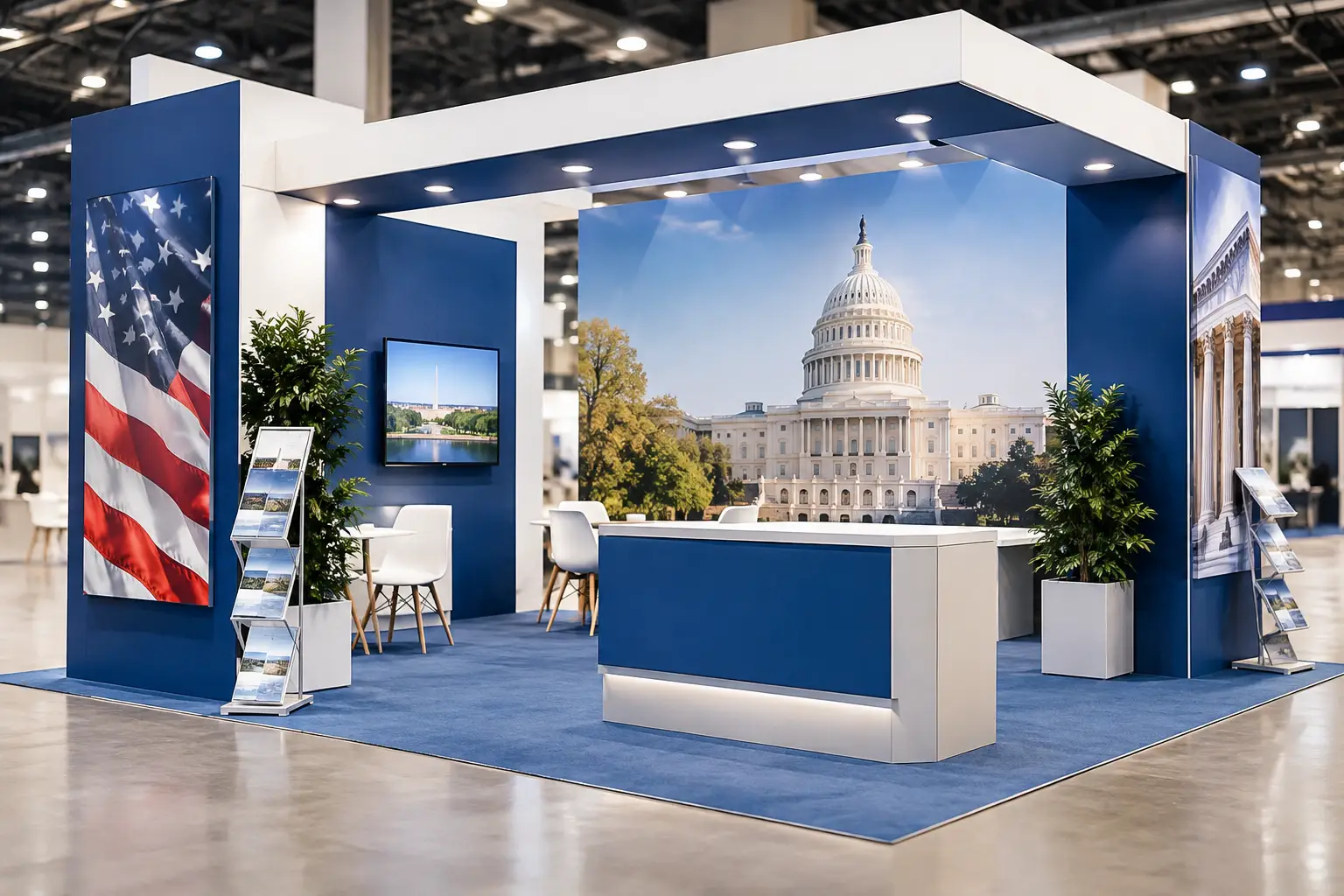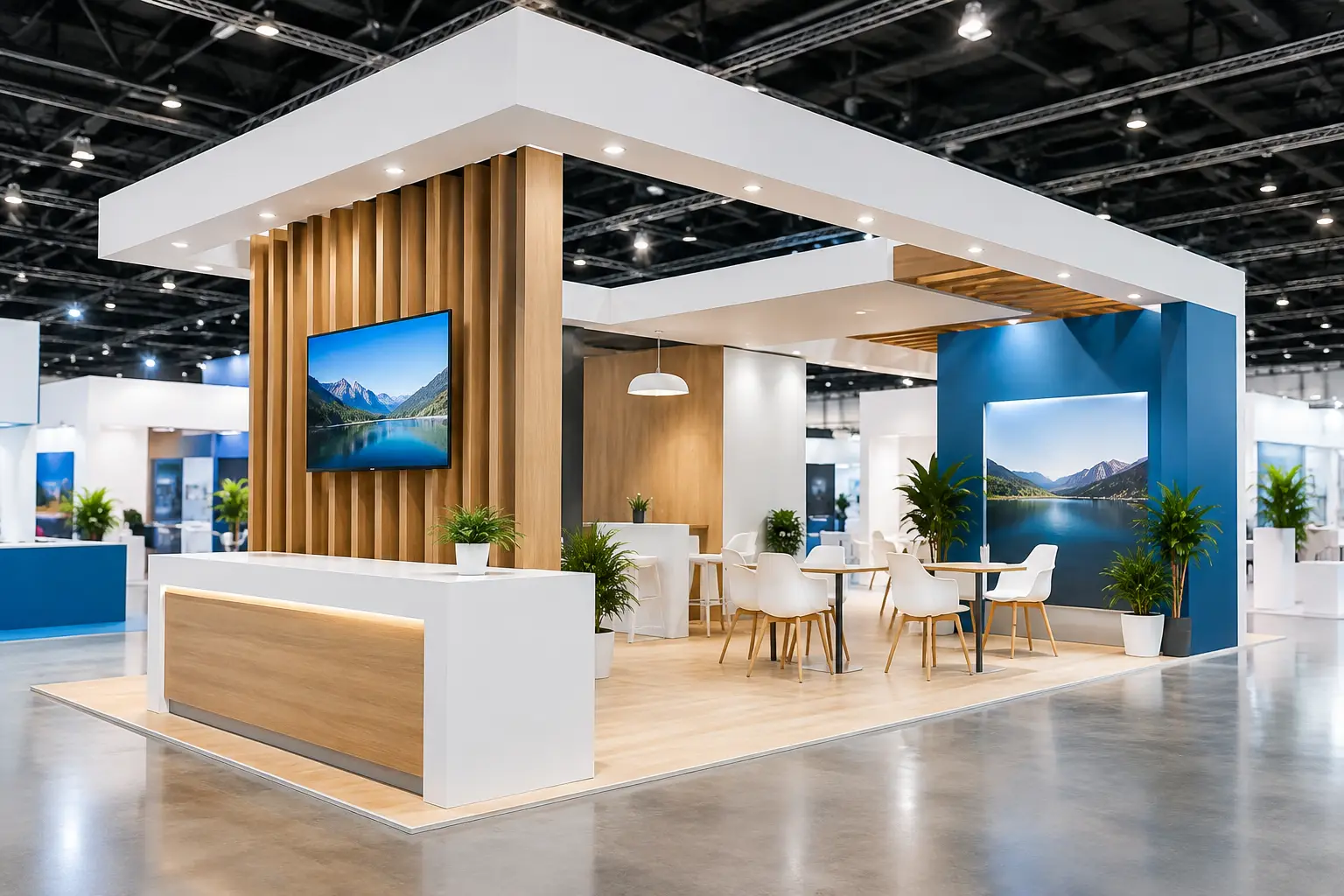


A striking 3D stand concept can win approval in a boardroom. But what visitors see on the show floor depends on a far more demanding process: turning that concept into a safe, polished, functional physical environment – often under tight venue deadlines.
So, what is exhibition stand fabrication? It is the process of manufacturing, assembling, finishing, testing, transporting, and installing the physical components of a trade show stand. It takes a design from drawing to reality, combining carpentry, metalwork, graphics, electrical systems, lighting, AV integration, flooring, furniture, and on-site construction.
For marketing teams, fabrication is where brand ambition meets execution. A stand can look bold in a render, but its impact is determined by build quality, material choices, visitor flow, finish consistency, and whether every detail is ready when the doors open.
What Is Exhibition Stand Fabrication in Practice?
Exhibition stand fabrication is not simply building walls and adding a logo. It is a coordinated production process that creates a temporary branded space designed for a specific event, venue, audience, and commercial objective.
A fabricator works from approved technical drawings and 3D visuals to produce components in a workshop. These may include custom wall panels, reception counters, product displays, meeting rooms, storage areas, suspended features, LED video wall frames, raised platforms, and double-decker structural elements. Each part is measured, finished, labeled, packed, and scheduled for delivery to the venue.
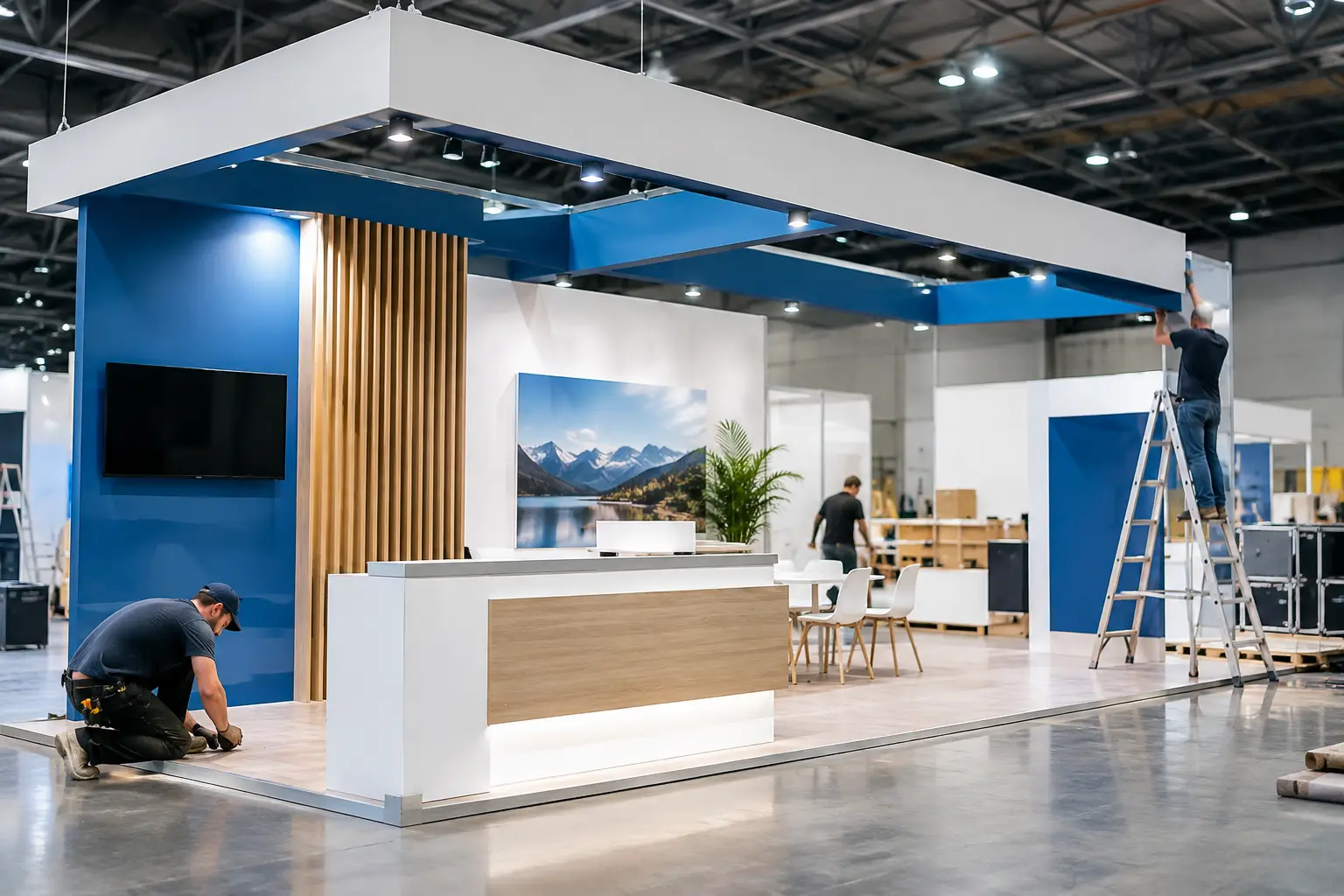
At the venue, the installation team assembles the stand according to the approved plan, connects power and lighting, mounts graphics, places furniture, tests screens, and completes final detailing. After the exhibition, the same team dismantles the structure and sorts materials for storage, reuse, recycling, or disposal.
This distinction matters because stand design and stand fabrication are related but different disciplines. Design establishes the idea: how the space should look, feel, and function. Fabrication determines whether that idea can be built safely, within budget, on time, and to the intended standard.
The Main Stages of Exhibition Stand Fabrication
A dependable fabrication process starts long before the workshop begins cutting materials. The strongest outcomes come from decisions made early, when creativity, engineering, budget, and event regulations can be aligned.
Technical development and material planning
Once a concept is approved, fabricators prepare production drawings that define dimensions, joinery, structural requirements, finishes, electrical points, AV mounting details, and access panels. This is where practical questions are resolved. Can a large illuminated logo be supported safely? Is there sufficient cable access behind an LED wall? Will a meeting room remain private without making the booth feel closed off?
Materials are selected according to the stand’s purpose, budget, event duration, and reuse potential. Wood and MDF are common for premium custom forms, while aluminum systems can support modular or reusable builds. Acrylic, glass, fabric, laminates, metal finishes, vinyl graphics, and specialty lighting are chosen to deliver the intended brand character.
There is always a trade-off. High-gloss finishes, complex curves, and custom metalwork can create a premium impression, but they require more production time and careful handling. A smart fabricator helps clients invest where visitors will notice most – facades, product zones, hospitality areas, lighting, and high-visibility brand features – rather than overspending on details with little audience value.
Workshop production and quality control
In the fabrication workshop, carpenters, painters, electricians, graphic specialists, and production managers turn drawings into finished components. Panels are cut and assembled, surfaces are painted or laminated, brand graphics are printed, counters are built, and lighting systems are prepared.
Quality control is essential at this stage. Components must fit together accurately, colors must be consistent, edges and joins must be clean, and branded elements must match approved artwork. Where practical, major elements should be pre-assembled or tested before dispatch. Finding an alignment issue in a workshop is manageable. Discovering it during a late-night venue build is expensive and stressful.
Logistics, installation, and venue coordination
A fabricated stand still has to arrive at the correct loading dock, at the correct time, with the right tools, crew, permits, and documentation. This is why exhibition fabrication is as much an operational discipline as a creative one.
Venue rules may govern build heights, fire ratings, rigging, electrical load, floor loading, working hours, and access routes. International events add freight planning, customs considerations, and coordination with local suppliers. For exhibitors attending shows such as GITEX, ADIPEC, Big 5, or exhibitions in Las Vegas and Chicago, local knowledge and disciplined project management can protect both the schedule and the budget.
On-site installation is usually fast-paced. The build team works through a planned sequence: flooring and structural elements first, then walls and ceilings, followed by electrical work, graphics, furniture, products, and final styling. A properly managed installation includes testing every light, screen, socket, lock, and display before handover.
What Makes a Well-Fabricated Exhibition Stand?
Visitors may not describe a stand in technical terms, but they immediately notice the difference between a carefully fabricated environment and a rushed one. Doors that close cleanly, graphics without bubbles, even paint finishes, crisp corners, stable counters, concealed wiring, and lighting that flatters products all communicate confidence.
Function matters just as much as appearance. A strong stand gives sales teams enough room to greet visitors without blocking aisles. It creates natural conversation areas, protects private discussions where needed, and provides storage for brochures, samples, and personal items. Product displays should be easy to understand and difficult to damage. Screens should be visible from the right angles rather than competing with direct glare.
Safety is non-negotiable. Raised floors, overhead features, stairs, glass elements, and double-decker stands require sound engineering and compliance with venue regulations. The lowest quote is not always the lowest-risk choice if it excludes appropriate structural planning, electrical work, crew supervision, or on-site problem solving.
Custom, Modular, and Reusable Fabrication Options
The right fabrication approach depends on how often a company exhibits, how much differentiation it needs, and where the stand will travel.
Custom fabrication is ideal when a brand needs a distinctive presence, a complex product demonstration area, a premium hospitality zone, or an unusually shaped architectural feature. It offers maximum design freedom and is often the best choice for flagship events, large spaces, country pavilions, and double-decker structures.
Modular fabrication uses adaptable components that can be reconfigured across multiple shows. It can reduce future production costs and shorten installation time, particularly for companies with frequent event calendars. However, modular does not have to mean generic. Custom graphics, lighting, cladding, display fixtures, and layout planning can still create a strong brand experience.
A hybrid approach often delivers the best value. Reusable structural elements can form the foundation, while custom facades, graphics, feature lighting, and product displays provide fresh impact for each event. This also supports more responsible exhibition practices by reducing unnecessary material waste.
How to Choose an Exhibition Stand Fabrication Partner
For procurement and marketing teams, selecting a fabricator should go beyond reviewing attractive renderings. Ask how the supplier controls production quality, manages deadlines, handles venue approvals, and responds when conditions change on site.
Look for a partner with in-house design and production capability, clear project ownership, documented material standards, and experience in your event sector. A pharma exhibitor may need secure product displays and controlled meeting spaces, while an energy company may require large-scale technical displays, heavy equipment planning, and rigorous safety coordination. The best solution is never one-size-fits-all.
It is also worth asking what is included in the quotation. Clarify whether it covers design development, fabrication, graphics, furniture, electrical connections, logistics, installation, dismantling, storage, and waste handling. A low initial price can rise quickly when essential operational items are treated as extras.
At LemonTree Exhibitions, projects are managed from 3D concept development through fabrication, logistics, installation, and dismantling, giving clients one accountable team across the full build journey. That control is particularly valuable when timelines are tight, multiple stakeholders are involved, or the exhibition is outside the client’s home market.
The best stand fabrication does more than make a booth look impressive for three days. It gives your team a dependable working environment, gives visitors a reason to stop, and gives your brand the confidence to make every conversation count.