

A stand can look impressive in a 3D render and still disappoint on the show floor. A counter may wobble under product samples, graphics may show visible joins under venue lighting, or a late electrical adjustment may disrupt the final setup. Exhibition stand quality is what prevents these details from becoming the visitor’s lasting impression of your brand.
For marketing teams, procurement leads, and business owners, quality is not a decorative extra. It determines whether your space attracts the right conversations, supports the sales team, and represents the standard your company wants to be known for. The strongest exhibition stands combine bold creative thinking with disciplined production, controlled logistics, and careful on-site delivery.
Exhibition stand quality starts before fabrication
Quality is often judged when the stand is complete, but it is established much earlier. The first indicator is whether the design responds to the brief rather than simply filling the allocated floor area with attractive features.
A well-considered concept should account for your objectives, product story, visitor flow, staffing needs, lead capture process, hospitality requirements, and the venue’s technical rules. For example, a technology company demonstrating software may need clear sightlines to LED screens and semi-private consultation zones. An industrial manufacturer displaying equipment may need reinforced flooring, safe access, and enough open space for meaningful product conversations.
The visual idea also needs to be buildable within the available budget and timeline. Dramatic ceiling features, high gloss finishes, complex curves, and double-decker structures can create strong impact, but they require the right engineering, materials, approvals, and installation time. A dependable stand partner identifies these realities during design, not after a concept has been approved.
A realistic 3D design is a quality checkpoint
A detailed 3D proposal should show more than colors, logos, and furniture. It should help you assess proportions, branding visibility, storage access, meeting areas, product placement, screen locations, and guest circulation. Ask what is included in the visualization and what will be fabricated as shown.
This matters because a render can conceal practical compromises. A meeting room that looks generous on screen may feel restrictive once chairs, bags, refreshments, and attendees are inside. A large logo may be blocked by a structural column or a neighboring stand. Reviewing these details early avoids expensive changes during production or at the venue.
What high-quality exhibition stand construction looks like
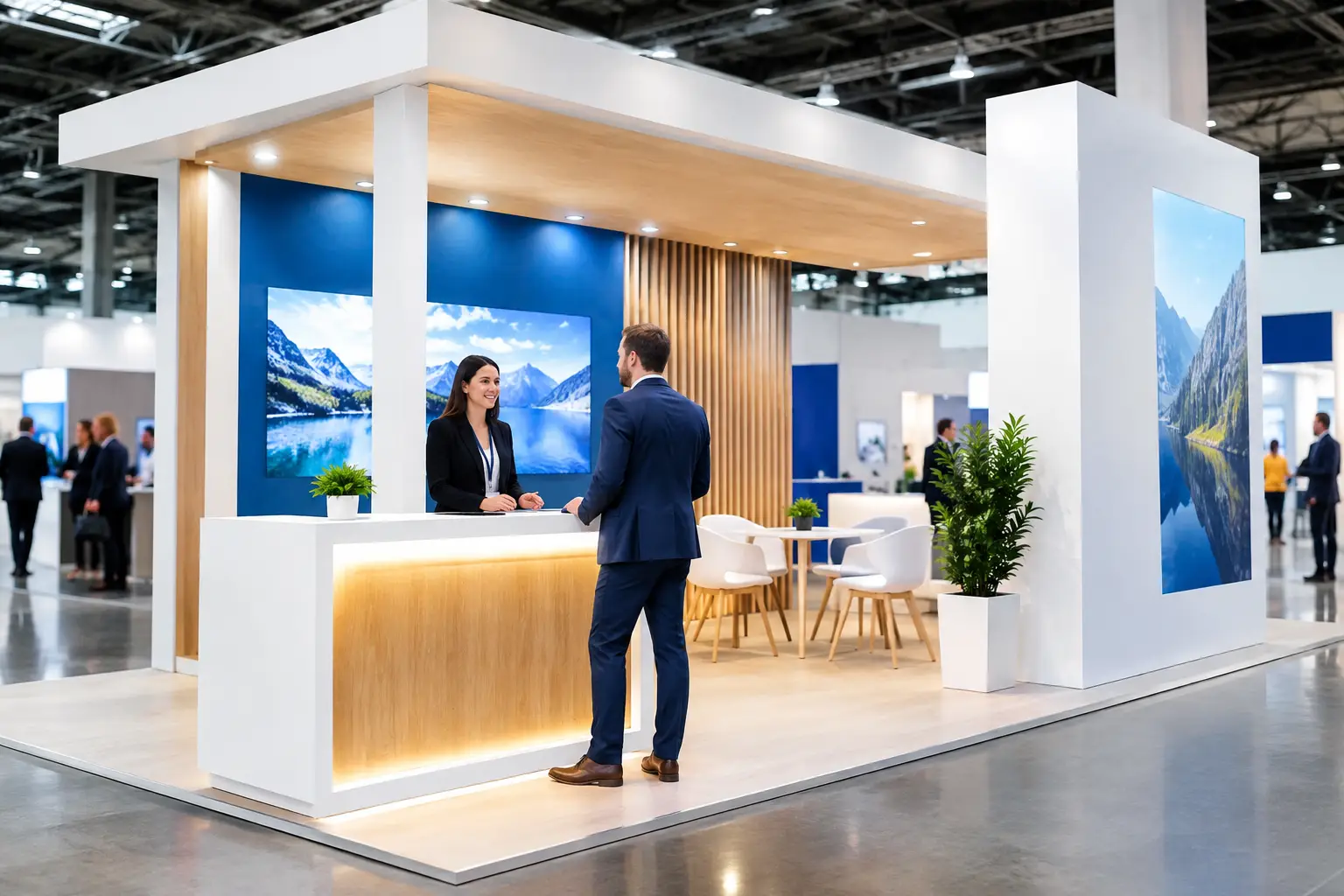
The physical build is where design intent either holds up or falls apart. Premium finish is visible in clean edges, aligned panels, consistent paint or laminate, stable counters, level flooring, crisp graphics, and properly integrated lighting. Visitors may not name each detail, but they notice the overall confidence of the environment.
Structural quality matters just as much. Walls, shelving, raised platforms, hanging elements, and upper decks must be engineered for their intended use and comply with venue regulations. This is especially relevant for larger stands, country pavilions, and double-decker builds, where safety documentation and load requirements cannot be treated as last-minute paperwork.
Material selection should fit both the brand and the event. Not every stand needs the most expensive finish. A growing exhibitor may achieve a premium result with intelligently chosen modular elements, high-quality graphics, and focused lighting. A global product launch, by contrast, may justify custom joinery, specialty finishes, immersive LED video walls, and more tailored visitor zones. Quality means making the right investment for the objective, rather than applying the same specification to every project.
The details visitors physically experience
Exhibition stand quality is often most apparent in the touchpoints. A reception counter should be comfortable for staff to work behind. Doors should close cleanly. Locks, shelves, power outlets, and storage should function without drawing attention. Screens should be mounted at a useful height, with cables managed out of sight.
Lighting deserves the same scrutiny. It should support products, graphics, and faces without creating glare on screens or harsh shadows in meeting areas. For sectors such as pharma, beauty, automotive, and FMCG, lighting can materially affect how samples, finishes, and packaging are perceived.
Flooring also carries more weight than many teams expect. It shapes the first physical impression, influences acoustics, and needs to withstand constant foot traffic. Raised floors may improve cable management and give a stand greater presence, but they also require safe edges, accessible entry points, and appropriate planning for delivery and installation.
Quality control should be visible in the process
The difference between a capable supplier and a dependable exhibition partner is often process control. A stand project has many moving parts: creative approvals, drawings, material procurement, production, graphics, electrics, freight, venue forms, installation schedules, and dismantling. A missed handoff in any one area can affect the final result.
In-house design and fabrication create a meaningful advantage because the people interpreting the drawings can coordinate directly with the people building the stand. That improves accountability, speeds up adjustments, and allows quality checks before materials leave the workshop. It is particularly valuable when deadlines are tight or when a project includes custom structures and multiple technical elements.
Before appointing a contractor, ask how they handle production checks, who owns venue coordination, and what happens if a change is needed on site. The answers should be specific. You want a clear project owner, defined approval stages, and a team that can resolve issues without shifting responsibility between agencies, fabricators, and logistics providers.
At LemonTree Exhibitions, this end-to-end control is central to how projects are delivered, from the initial 3D concept through fabrication, installation, and dismantling. For clients exhibiting across markets, it provides one accountable partner rather than a chain of disconnected vendors.
On-site installation is the final test
Trade show halls are demanding environments. Access windows can be short, neighboring stands may still be under construction, and venue regulations can change the sequence of work. A quality stand build team arrives with a coordinated plan, the correct materials, and enough experienced personnel to complete the job without rushed finishing.
During handover, inspect the stand as a visitor and as the team that will work in it for several days. Walk every route. Test doors, storage, lighting, power, screens, internet connections, and product displays. Check brand graphics from the main aisles and confirm that the reception area, meeting spaces, and pantry function as intended.
Do not overlook cleanliness and finishing. Protective films, dust, fingerprints on acrylic, loose cable ties, and poorly placed bins can reduce the impact of an otherwise excellent build. The final walkthrough is where a detail-oriented partner protects the standard promised in the proposal.
How to evaluate exhibition stand quality before you commit
Past work is useful, but evaluate it with the right questions. Look beyond dramatic photographs and ask whether the builder has experience with stands similar to yours in scale, industry, and location. A team with proven delivery on compact custom stands may be an excellent fit for a 36-square-meter space, while a country pavilion or double-decker build calls for a different level of planning and technical capability.
Request clarity on the proposed materials, graphics method, lighting plan, furniture, storage, electrical scope, and what is excluded. A lower quote may omit elements that affect both appearance and usability. Comparing proposals line by line is more valuable than comparing only the final numbers.
You should also assess responsiveness. Exhibition timelines are rarely static. Marketing messages evolve, product models change, and stakeholder approvals can arrive late. The right partner is not one that promises every request without question. It is one that explains the impact of each change clearly, offers practical alternatives, and protects the delivery date wherever possible.
Quality and sustainability can work together
A well-built stand does not have to be wasteful. Reusable structural components, modular systems, durable furniture, recyclable graphics options, and material repurposing can reduce waste without making the space feel generic. The key is planning reuse from the start.
For businesses exhibiting at multiple events, an adaptable design may provide better long-term value than building a completely new environment each time. Brand-defining elements can remain consistent while graphics, product zones, and messaging change for each market. The trade-off is that a fully reusable system may place some limits on highly sculptural forms, so the decision should reflect your exhibition calendar and campaign priorities.
The right stand should feel effortless to visitors because every demanding decision was made before they arrived. Set a clear standard, ask precise questions, and choose a partner whose craftsmanship is matched by operational control. Your booth is a temporary structure, but the impression it creates can stay with prospects long after the hall closes.