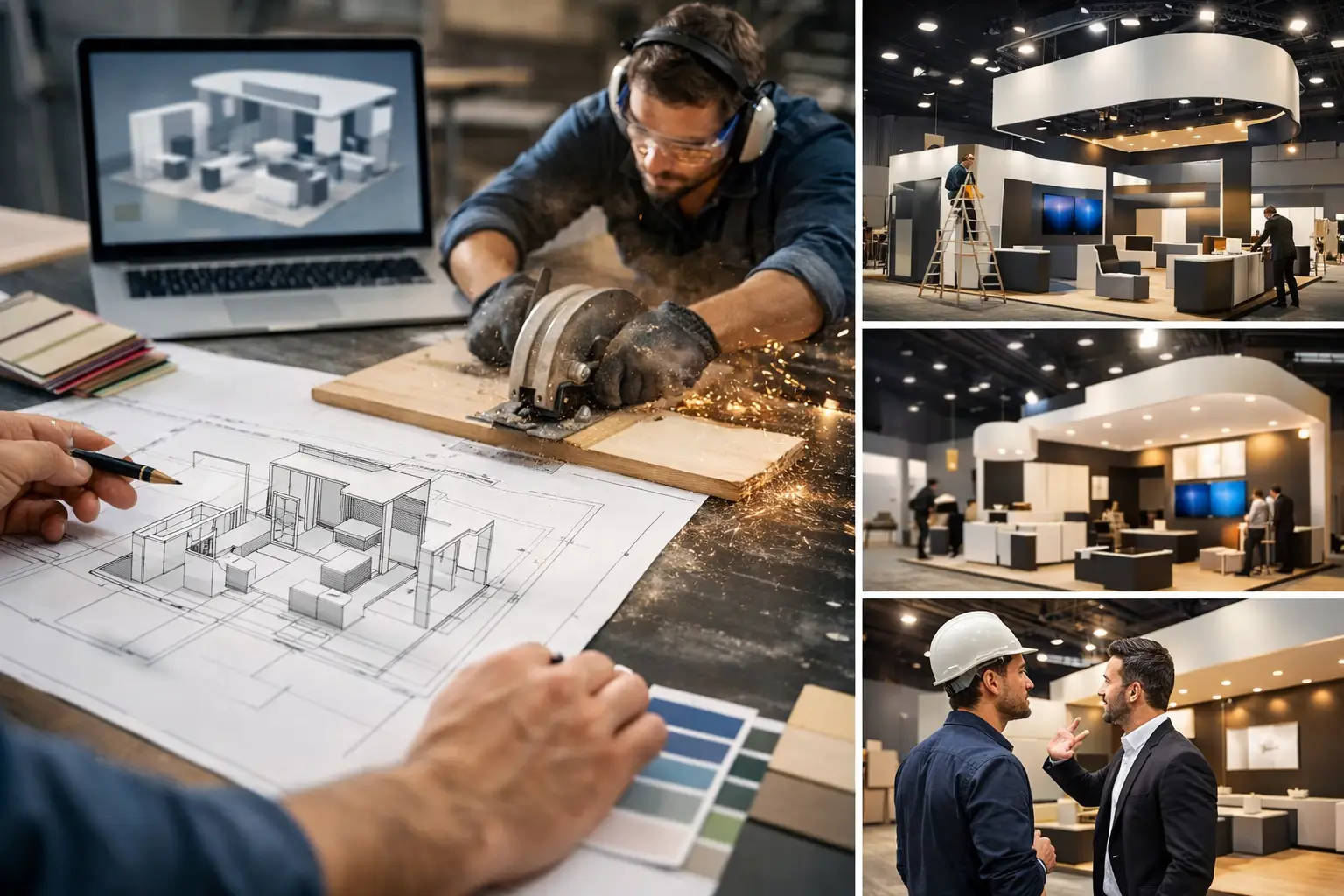



A 20-minute conversation and a logo file are not an exhibitor briefing. They are the usual reason a promising exhibition stand becomes a late, expensive compromise. Knowing how to prepare an exhibitor briefing properly gives your design and build partner the direction to create a space that attracts the right visitors, supports your sales team, and can be delivered without avoidable surprises.
For marketing managers, procurement teams, and business owners, the briefing is where commercial ambition meets operational reality. A strong one does not dictate every design detail. It sets clear priorities, shares the information that affects execution, and leaves room for creative thinking.
Start With the Outcome, Not the Stand
Before discussing square footage, coffee counters, or LED walls, decide what the exhibition needs to achieve. “Build brand awareness” is usually too broad to guide a design decision. A more useful objective might be to generate qualified distributor conversations, launch a product, host private meetings with existing customers, recruit channel partners, or position the business as a category leader.
Your primary objective determines the layout. A lead-generation stand needs visible entry points, fast product messaging, and a practical data-capture flow. A relationship-led stand may need a hospitality zone and semi-private meeting areas. A product launch may justify a central demonstration stage or high-impact video content. These requirements can coexist, but they cannot all take equal priority in a limited footprint.
State what success looks like in measurable terms. Include targets such as qualified leads, booked meetings, product demonstrations, media interactions, or visitor dwell time. Your stand builder can then recommend where to invest for the strongest return rather than simply making the largest visual statement possible.
How to Prepare an Exhibitor Briefing With Clear Context
The best briefing gives the project team enough context to make smart decisions early. Include the event name, venue, stand number, show dates, move-in schedule, and any organizer deadlines already issued. A venue in Las Vegas can have different technical procedures from a hall in Dubai or Riyadh, and those details affect build methods, labor planning, logistics, and costs.
Also share your space type and dimensions, including whether it is an inline, corner, peninsula, island, outdoor, or double-decker plot. Send the organizer’s technical manual, floor plan, height restrictions, rigging rules, electrical order forms, and approved contractor requirements as soon as they are available. These documents often contain the constraints that determine whether a design is practical.
Do not assume a stand contractor can infer your priorities from a previous event photo. Explain the audience you expect to meet. Are they engineers comparing specifications, procurement leaders evaluating suppliers, distributors seeking a partnership, or senior executives expecting a premium hosted experience? The answer shapes everything from messaging hierarchy to furniture choices.
Define the brand message visitors should remember
Visitors will not absorb an entire corporate presentation while walking an exhibition aisle. Identify one primary message and two or three supporting proof points. For example, a manufacturing company may lead with faster production capacity, then reinforce it with quality certifications and global service coverage. A technology business may lead with a specific operational outcome, supported by a live demo and customer results.
Provide approved brand guidelines, current logo files, color specifications, typefaces, campaign assets, and any mandatory legal copy. If your brand has strict rules for product claims, regulated content, or partner logos, flag them at the beginning. Pharma, energy, government, and multinational organizations often need internal approvals that affect content timing.
It is equally useful to explain what should be avoided. Perhaps the brand is moving away from a familiar visual style, cannot use certain imagery, or needs to appear more premium than its last stand. Clear boundaries prevent wasted design rounds.
Translate Activity Into Space Requirements
A briefing becomes actionable when it describes what people will actually do on the stand. Rather than requesting “a modern stand with seating,” list the activities, approximate capacity, and privacy level required.
For instance, your team may need a reception point for two staff members, a product demo area for six visitors at a time, two semi-private meeting tables, a lockable pantry, display space for three physical products, and storage for brochures and personal items. This tells the designer far more than a general request for an open-plan layout.
Consider the visitor journey. What should someone notice from 30 feet away? Where do they enter? What prompts them to stop? Where does a conversation happen, and where is a lead captured? If a demonstration creates a crowd, make sure it does not block the meeting area or the product displays.
Digital features should be briefed with the same discipline. An LED video wall can create strong visibility, but it needs purposeful content, suitable viewing distance, power planning, and time for testing. A touchscreen station may be useful for deep product information, yet it can become underused if a staff member is not available to guide visitors. Technology should support the sales conversation, not become a decorative expense.
Set a Budget Range and Explain Its Logic
A clear budget range is not a limitation on creativity. It is what allows a contractor to design responsibly. Without it, you may receive a concept that looks impressive but is difficult to value-engineer once fabrication, venue services, transport, installation, graphics, and labor are added.
Share whether the budget covers only the stand structure or also includes AV, furniture, hostess staffing, approvals, shipping, utility connections, and show-site services. If you have a fixed ceiling, say so. If there is flexibility for a high-value feature such as a double-decker meeting area or a large LED installation, identify what would justify the additional spend.
Trade-offs should be discussed openly. Custom architectural details, premium finishes, complex hanging elements, and multi-zone layouts can elevate impact, but they also affect production time and cost. For a smaller booth, it may be smarter to fund better messaging, lighting, and one memorable focal point than to overcrowd the footprint with features that dilute the experience.
Give the Team a Realistic Approval Path
Exhibition projects move quickly, particularly when a show is close. Your briefing should name the decision-makers for brand, marketing, procurement, technical compliance, and finance. Confirm who can approve the concept, quotation, artwork, and final production release.
Set a realistic timeline for feedback. If three internal teams must review a 3D design, allow for that before organizer submission deadlines. Last-minute changes to structure, graphics, or AV are possible in some cases, but they can add cost and create risk. A dependable partner will flag those risks early rather than promise an unrealistic turnaround.
For international events, add details about product shipments, customs documentation, onsite representatives, and local language needs. If products are heavy, temperature-sensitive, or require power, water, compressed air, or special handling, disclose this at the briefing stage. These are not minor production notes. They can fundamentally change the stand plan.
What to Send With Your Exhibitor Briefing
A complete briefing package saves time and protects design quality. Where available, include:
- Event manual, floor plan, stand location, technical rules, and key deadlines
- Brand guidelines, editable logo files, product images, approved copy, and campaign assets
- A list of stand activities, staffing levels, meeting needs, products, and demonstrations
- Your budget range, scope inclusions, approval process, and decision timeline
- Photos of past stands you liked or disliked, with a short explanation of why
Reference images are useful, but they should not become a copy request. A photo may show a finish, layout, lighting mood, or visitor flow that you admire, while its structure may be unsuitable for your own venue, footprint, or brand. Explain the reason behind the reference so the design team can create an original solution with the right intent.
Ask Questions Before Design Starts
A capable exhibition partner should respond to a briefing with questions, not just a quotation. They may ask how many salespeople will be present at peak times, whether conversations are confidential, what products need secure display, or whether your brand requires reuse across multiple shows. These questions show that the team is planning execution as well as appearance.
At LemonTree Exhibitions, this early discovery is what connects creative 3D concepts with fabrication, logistics, installation, and dismantling plans. It is particularly valuable for high-traffic international shows, country pavilions, and projects with tight production windows, where one overlooked detail can affect the entire schedule.
A well-prepared exhibitor briefing is not paperwork for its own sake. It is a decision-making tool that helps every contributor work toward the same commercial result. Give your partner a clear objective, honest constraints, and timely approvals, then let good design and disciplined execution do their job when the show floor opens.