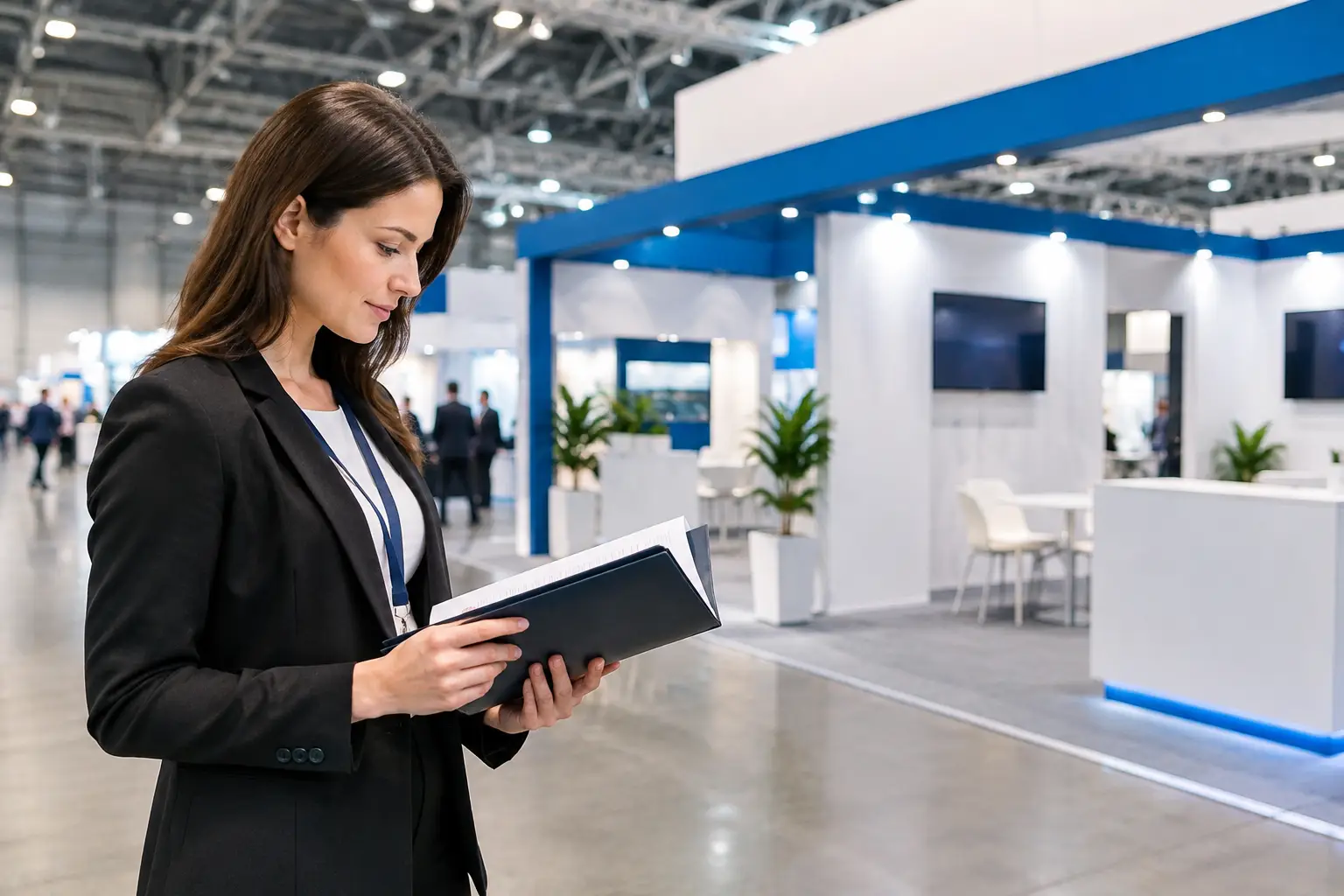

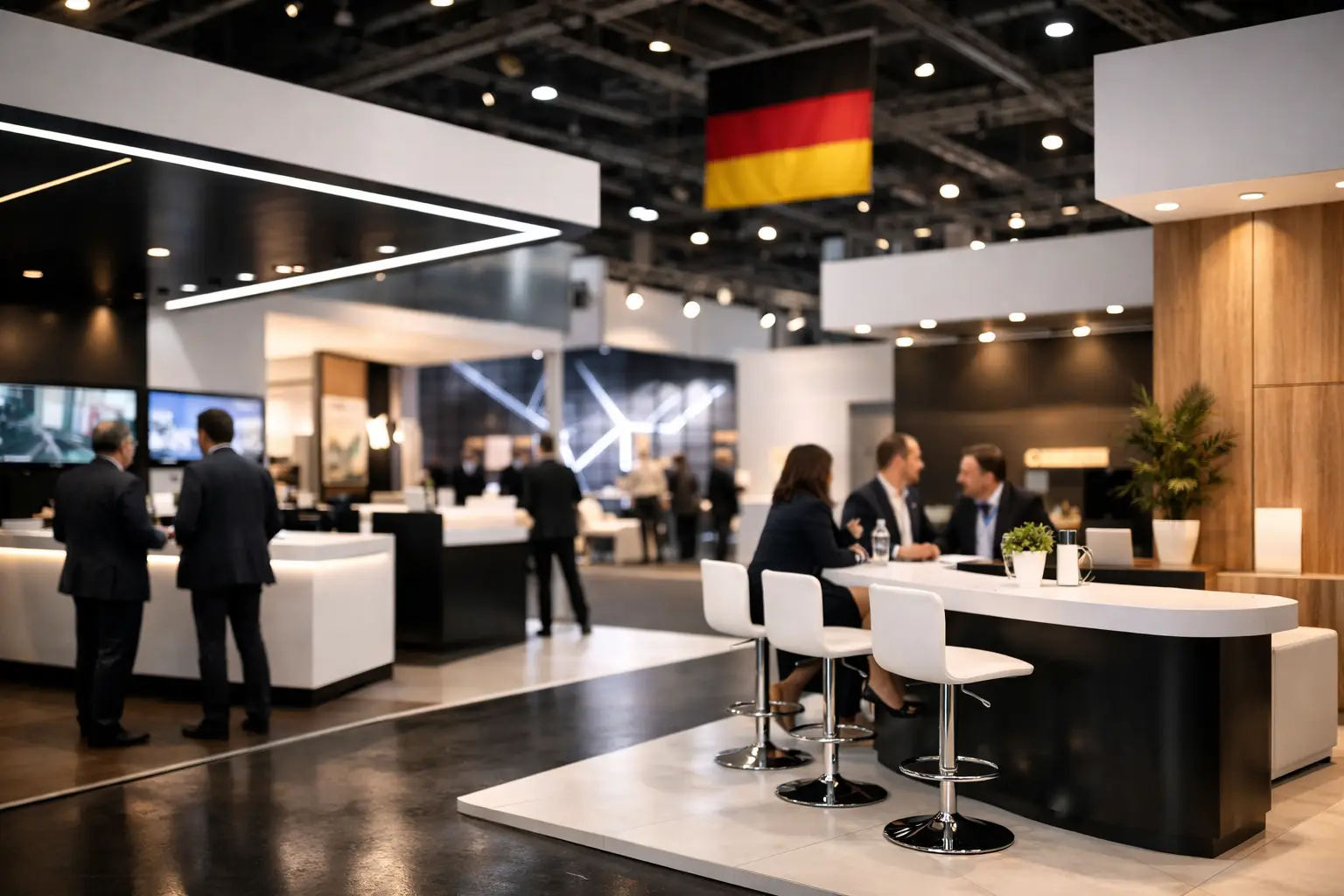

A major German trade fair gives buyers very little time to decide where to stop. Your exhibition stand Germany strategy must make the value of your brand clear before a conversation even begins. At events such as Hannover Messe, Automechanika Frankfurt, BAU, MEDICA, and Interpack, the strongest stands do more than look polished. They direct traffic, support serious product conversations, and give sales teams a controlled, credible environment to work from.
For international exhibitors, the challenge is not simply choosing a stand size or adding a large LED screen. Germany’s exhibition market is highly organized, venue requirements are exacting, and visitor expectations are high. Success comes from combining bold brand presence with detailed planning, practical build decisions, and dependable on-site delivery.
What a High-Performing Exhibition Stand in Germany Must Do
A stand should be designed around the commercial job it needs to perform. A technology company launching a new platform may need live demo stations, a theater-style presentation zone, and lead capture built into every interaction. A machinery manufacturer may require clear product sightlines, hospitality space for distributors, and secure access around equipment. A government trade body may need a country pavilion that gives multiple exhibitors a unified identity without making smaller brands disappear.
The design should answer a few questions quickly: Who is this brand for? What is the main product or message? Where should visitors enter? What should happen after the first conversation? If those decisions are unclear, even an expensive custom build can feel crowded and unfocused.
The best layouts balance openness with purpose. Open sides invite traffic, but too much openness can make private discussions difficult. Enclosed meeting rooms create space for serious negotiations, but they also reduce visibility if positioned poorly. There is no universal floor plan. The right answer depends on your visitor volume, product type, sales process, and the location of your allocated space within the hall.
Start With the Hall Plan, Not the Render
A strong 3D concept is valuable, but it must be grounded in the realities of the venue. Before creative development begins, assess the stand position, neighboring exhibitors, aisle traffic, ceiling height, column locations, rigging possibilities, utility points, and sightlines from key approaches.
A corner stand might benefit from an open welcome area and a tall branded feature visible from two aisles. An island space can support a more immersive circulation path, provided visitors can understand where to enter and what they will find inside. For a smaller inline stand, one high-impact focal point is often more effective than trying to display every product and message at once.
This early planning also protects the budget. Moving a meeting room, changing a raised platform, or adding a hanging sign after technical drawings are prepared can affect engineering, power distribution, approvals, and labor. Good exhibition execution is not about limiting creativity. It is about making creative choices early enough to build them properly.
Design for Conversations, Not Just Footfall
Footfall matters, but attention without engagement rarely delivers qualified leads. Build deliberate zones into the space: an area that attracts passersby, an area that explains the offer, and an area where the sales team can move conversations forward.
Product demonstrations should be visible without blocking circulation. Screens need content designed for a busy hall, where visitors may only look for a few seconds before deciding whether to approach. Meeting areas need comfortable seating, sensible acoustics, and enough separation to make confidential discussions feel professional.
For brands with complex offerings, a clear visitor journey is especially useful. Start with the main brand promise, then move visitors toward the relevant product category, demonstration, or expert. This approach gives the stand a natural rhythm and helps your staff avoid repeating the same broad introduction to every visitor.
Budget for the Whole Project, Not Only the Structure
When comparing exhibition stand quotations in Germany, the lowest construction figure does not always represent the lowest project cost. A realistic budget considers design, fabrication, flooring, lighting, graphics, AV, furniture, freight, installation, dismantling, venue services, storage, and contingency.
The format of the stand has a major effect on investment. A custom stand creates the strongest opportunity for brand differentiation and can be tailored to your product and visitor journey. A modular solution can be an efficient choice for repeat participation, smaller spaces, or a brand testing a new market. A double-decker stand offers valuable hospitality or meeting capacity where floor space is limited, but it also requires more planning, engineering, approvals, and time.
Materials also involve a trade-off. Premium finishes, complex joinery, and large-format LED displays can create a commanding presence, but each should earn its place in the design. A well-composed stand with confident graphics, considered lighting, and durable finishes often makes a better impression than a space overloaded with features.
Ask potential partners how they manage scope changes, venue coordination, and final on-site costs. Clear answers at this stage prevent surprises during the final weeks before opening day.
German Venue Rules Demand Early Coordination
Trade fair venues in Germany operate with strict technical and safety standards. Depending on the hall and stand design, approvals may be needed for structural elements, suspended features, double-decker construction, electrical installations, fire-rated materials, and enclosed rooms. Deadlines can be firm, and late changes may become expensive or impractical.
This is where an experienced design-and-build partner adds real value. The team should translate venue rules into decisions that protect the original design intent, rather than treating compliance as an afterthought. It should also coordinate drawings, technical submissions, access schedules, contractor timing, and handover checks with discipline.
Logistics deserve the same attention. International exhibitors need a practical plan for shipping samples, machinery, graphics, technology, and promotional materials. Customs timing, delivery windows, storage requirements, and return freight should be considered alongside the build schedule. A stand is only ready when every operational detail is ready with it.
Make Sustainability Visible Through Smart Choices
Sustainable exhibition practice is increasingly relevant to procurement teams, corporate ESG commitments, and German trade fair audiences. The most credible approach is not decorative green messaging. It is reducing unnecessary waste while maintaining the quality expected of a premium brand environment.
Reusable structural elements, modular components, recyclable materials, energy-efficient lighting, and graphics planned for future use can all reduce the footprint of a project. For exhibitors attending multiple events, designing selected elements for reconfiguration can create both environmental and financial value.
Sustainability has limits, and those limits should be discussed honestly. A one-off product launch may need highly specific visual elements. A large machinery display may require specialized flooring or crating. The objective is to make informed choices, reuse what can be reused, and avoid disposable elements that add little commercial value.
Choose a Partner That Controls the Details
A polished render is not evidence of dependable delivery. When selecting a partner for an exhibition stand in Germany, look beyond creative presentation and examine how the project will actually be managed. Who develops the technical drawings? Where is fabrication controlled? Who manages installation crews? How are last-minute changes handled? Who is accountable on the show floor before opening?
LemonTree Exhibitions manages the process from 3D concept design and fabrication through logistics, installation, and dismantling, giving clients one accountable team across complex international projects. That control is particularly valuable when a brand is coordinating stakeholders across different time zones while preparing for a high-stakes European event.
The right partner will also challenge assumptions when needed. If a feature risks slowing visitor flow, exceeding a realistic timeline, or stretching the budget without improving outcomes, you should hear that early. Client-first service is not agreeing with every request. It is protecting the result.
Prepare Your Team for the Space You Build
Even the most impressive stand cannot compensate for an unprepared team. Before the event, brief staff on the visitor journey, priority products, meeting areas, demonstration timings, and lead qualification process. Make sure everyone knows the purpose of each zone and the next step they should offer a promising visitor.
A short on-site rehearsal can make a meaningful difference. Test presentations from the aisle, check screen visibility, sit in the meeting rooms, walk the visitor path, and confirm that sales materials are accessible without cluttering the stand. These small checks turn a finished structure into a working sales environment.
The most effective German exhibition presence feels effortless to the visitor because the hard work happened earlier: the message was focused, the design served a business purpose, and every construction detail was handled with care. Build for that moment when the right buyer stops, understands why your brand matters, and decides to stay for the conversation.