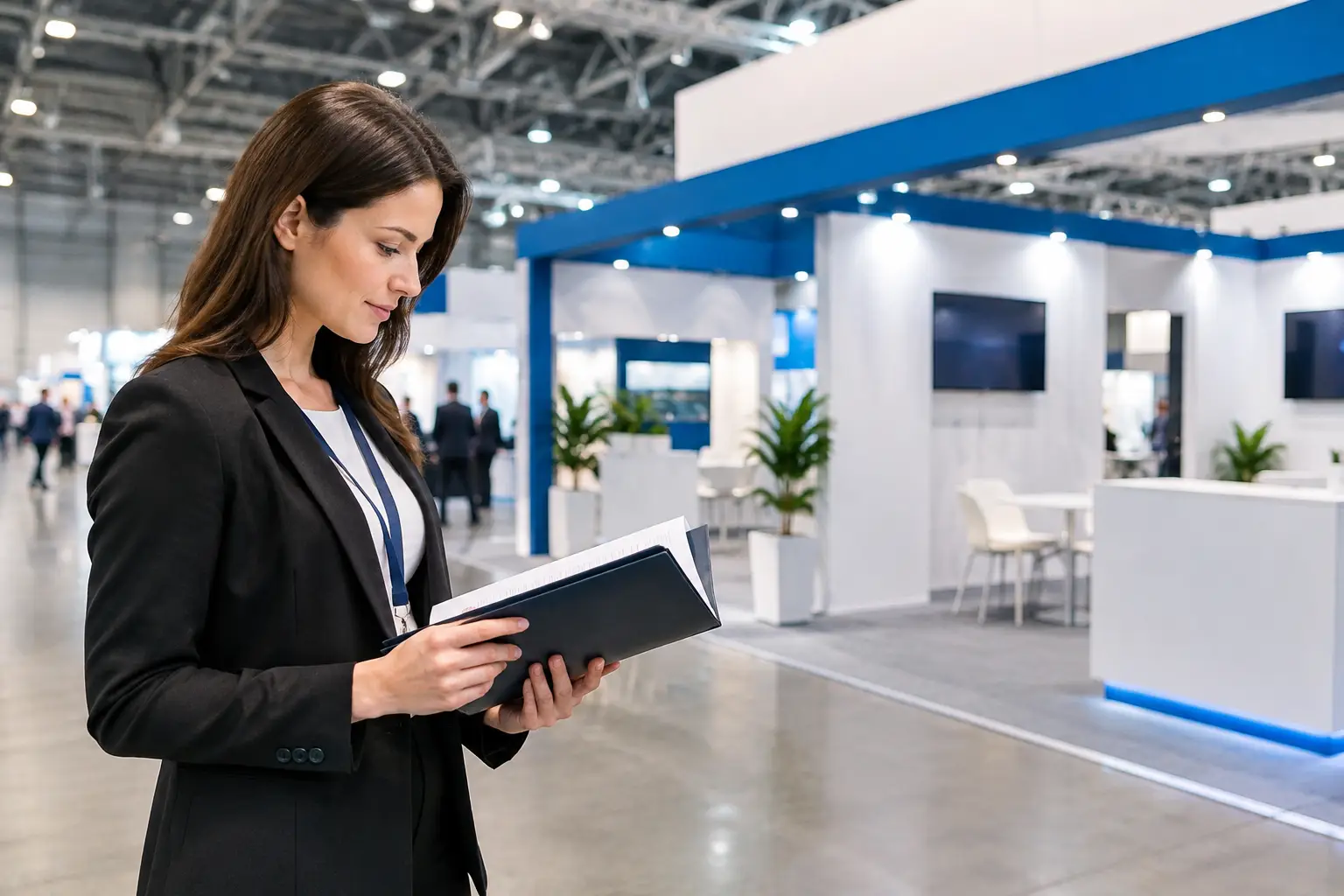


A major trade show in Dubai or Abu Dhabi gives a brand only a few seconds to earn attention. The right exhibition stand builder in UAE turns that brief moment into a considered visitor journey – one that draws the right people in, starts relevant conversations, and supports the commercial goal behind the event.
For marketing teams and procurement leads, choosing a builder is not simply a matter of comparing attractive renderings. A stand must reflect the brand, meet venue requirements, arrive on schedule, and work properly once the doors open. That requires creative thinking backed by disciplined production, clear communication, and dependable on-site control.
Start With the Outcome, Not the Structure
Before requesting a proposal, define what exhibition success should look like. A product launch needs a different environment from a lead-generation campaign. A technology business may need private demo areas and integrated screens, while an industrial manufacturer may need open sightlines for machinery, meeting tables for distributors, and storage that keeps the space organized.
Set the priorities early: visitor volume, qualified meetings, product demonstration, hospitality, media visibility, partner engagement, or brand positioning. These decisions shape the floor plan, the materials, the AV requirements, and the staffing approach. They also prevent a common problem: approving a visually impressive concept that does not support how the sales team actually works.
Stand size matters, but it is not the whole brief. A well-planned 36-square-meter space can perform better than a larger stand with no clear focal point or circulation plan. Conversely, a 100-square-meter-plus stand may need several zones to avoid feeling like a large, expensive backdrop. The builder should ask practical questions about audience, product, sales process, and budget before proposing a solution.
What a Dependable Exhibition Stand Builder in UAE Should Control
The most reliable partners manage the project as one connected process. Design, fabrication, logistics, installation, and dismantling affect one another. When these elements are fragmented across several vendors, accountability can become unclear when timelines tighten or on-site changes are needed.
An experienced builder should be able to explain who owns each stage, how approvals are managed, and what happens if a detail needs adjustment shortly before the show. This is especially important for busy exhibitions such as GITEX, Big 5, ADIPEC, Gulfood, Beautyworld, and Middle East Energy, where venue access windows and installation schedules are tightly managed.
Look for control in four areas:
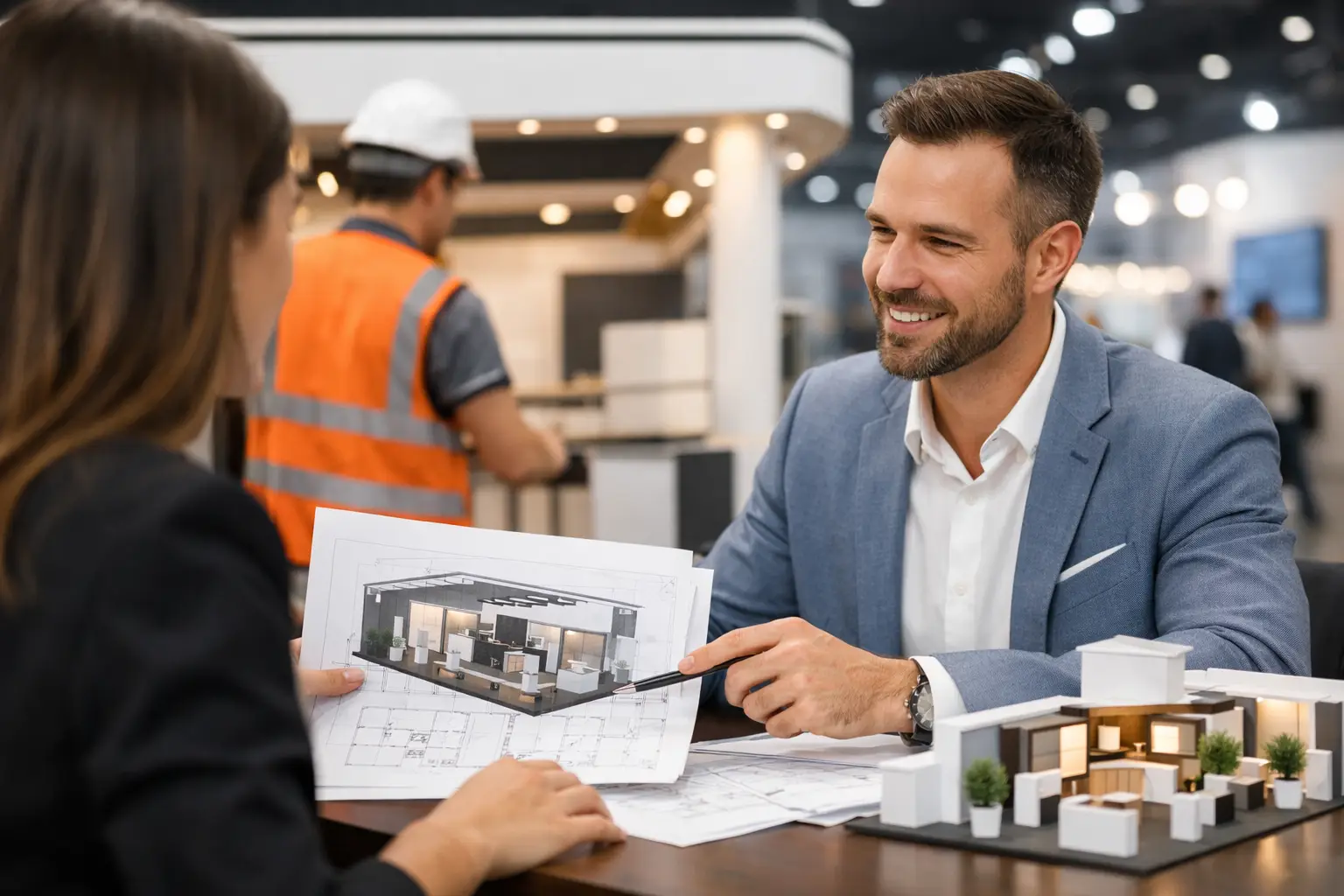
- Design development: The team should turn your brief into a practical 3D concept, with clear branding, visitor flow, product placement, and meeting requirements.
- In-house fabrication: A dedicated workshop gives the builder greater control over finish quality, timing, and last-minute coordination than a model based entirely on outsourced production.
- Logistics and site delivery: Materials, graphics, AV components, furniture, and crew schedules must arrive in the right sequence, not simply arrive at the venue.
- Installation and dismantling: A capable site team protects the final quality of the stand and closes the project efficiently after the event.
Ask to see evidence of this control. Recent project photographs are useful, but they are only part of the picture. Request examples that are similar in scale, complexity, and show environment to your own. If you need a double-decker structure, a country pavilion, a large LED wall, or a product display for heavy equipment, experience in that format matters.
Evaluate the Design for Business Use
A 3D design should do more than make an impression in a presentation. It should show how visitors enter, where they pause, what they see first, and where meaningful conversations happen. The strongest concepts make the brand visible from key approach angles without filling every surface with messages.
Consider whether the design creates a hierarchy. Your primary message, hero product, or demonstration should be immediately clear. Secondary content can reward visitors who spend more time on the stand. Too much text, too many screens, or too many competing focal points can dilute the brand rather than strengthen it.
Meeting areas deserve particular attention. Open tables encourage approachable conversations, while enclosed rooms support sensitive discussions and longer negotiations. Neither is automatically better. It depends on your sales cycle, product complexity, and the type of visitors expected. A builder who understands this trade-off will recommend a layout that serves the team on the floor, not just the visual brief.
Technology should also have a purpose. LED video walls can create real energy and improve long-range visibility, but only when the content is readable and the screen placement supports the overall architecture. A screen cannot compensate for an unclear message or an awkward stand layout.
Budget Transparently for the Full Project
The lowest initial quote rarely tells the full story. Exhibition budgets are affected by size, structural complexity, custom fabrication, surface finishes, lighting, graphics, AV, furniture, electrical requirements, transport, labor, and venue services. A proposal that appears economical may exclude essential components that surface later.
Ask each prospective builder to separate the major cost drivers and identify assumptions. This makes it easier to compare proposals fairly and decide where investment will create the greatest impact. For example, a premium reception counter or a carefully finished product display may add more value than decorative elements that visitors barely notice.
There is also a practical choice between reusable modular components and a fully custom-built environment. Modular systems can support speed, consistency, and repeat use across several shows. Custom stands offer more freedom in form, materials, and brand expression. Many successful programs combine both: a flexible core with custom focal features tailored to each event.
Sustainability can fit into this decision. Reusing structures, repurposing materials, selecting durable finishes, and reducing unnecessary single-use elements can lower waste without making the stand feel generic. The best approach is not to add sustainability as a last-minute claim, but to consider it during design and production planning.
Test Communication Before You Appoint
The pre-show period is often crowded with internal approvals, changing product information, and multiple stakeholders. Your builder should make this easier, not create another layer of project management. Pay attention to how quickly the team responds during the proposal stage, whether questions are specific, and whether changes are documented clearly.
A strong project process typically includes a confirmed brief, design approvals, production drawings where needed, a production timeline, site plan, logistics coordination, and a clear point of contact. Procurement teams should also confirm what is included in the scope and how variation requests are handled. Clear detail upfront protects both budget and delivery.
For companies exhibiting across markets, consistency adds another layer of value. A partner with international experience can help retain the core brand environment while adapting dimensions, local regulations, visitor behavior, and show objectives. This is valuable for exhibitors moving between the UAE, Saudi Arabia, India, Germany, and the United States.
LemonTree Exhibitions delivers this end-to-end model through its design studio, fabrication workshop, and on-site teams, supporting custom stands, double-decker builds, country pavilions, LED walls, and event staffing across global exhibition programs.
Ask Questions That Reveal Real Capability
The final selection should come down to more than a portfolio and price. Ask who will manage your project day to day, where fabrication takes place, how quality is checked before dispatch, and who will be present during installation. Ask how the team has handled a compressed build schedule or an on-site revision in the past.
Also ask what the builder needs from your side. Brand guidelines, artwork deadlines, product specifications, electrical needs, staffing plans, and meeting requirements all affect the final result. A client-first builder will be candid about these dependencies rather than promising a friction-free project without understanding the details.
The right partner makes a complex exhibition program feel controlled because the preparation is thorough. Choose a builder that can balance bold creative direction with disciplined execution, then give the team a clear commercial brief. Your stand will have a better chance of becoming the place where the right visitors stop, engage, and remember your brand.