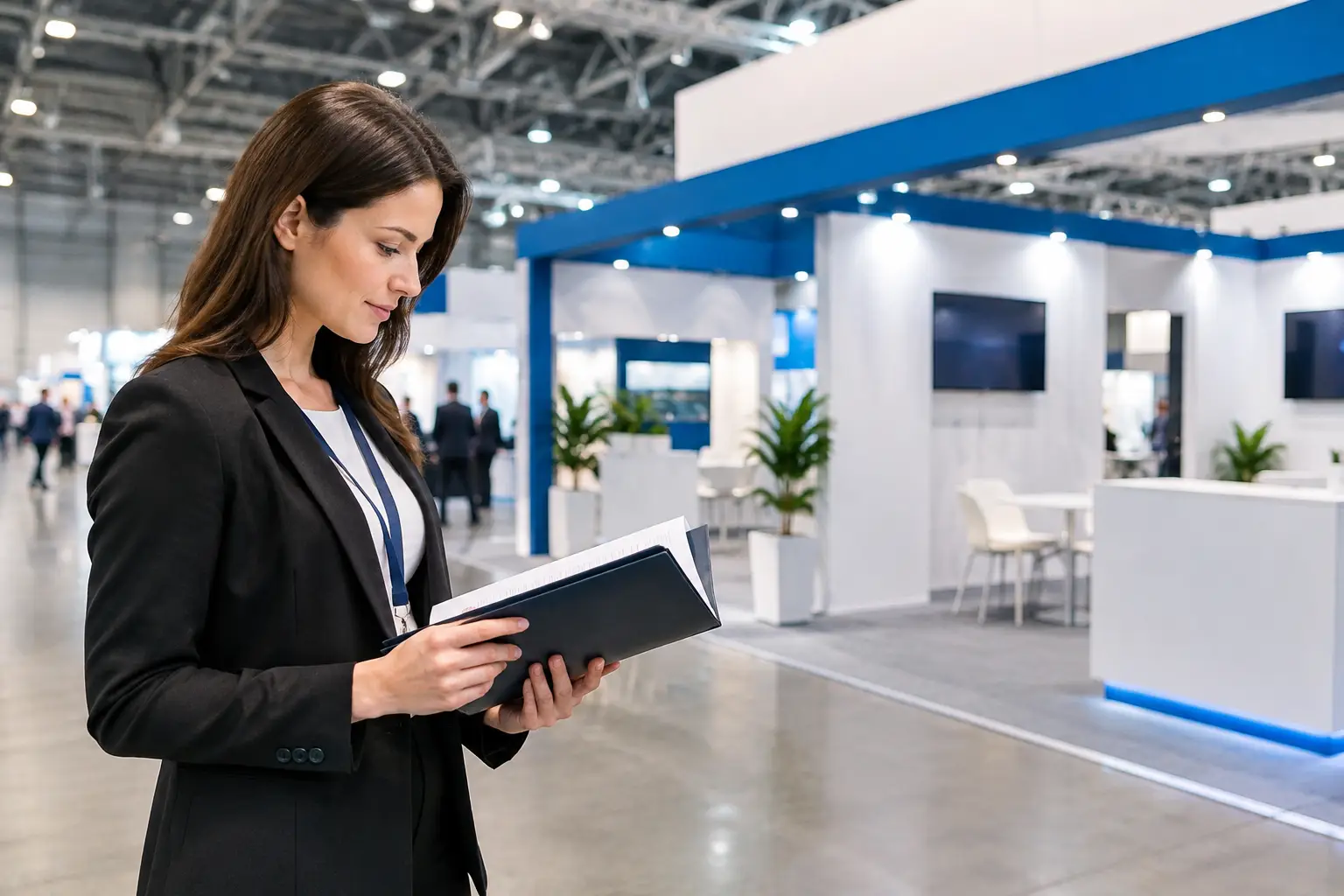

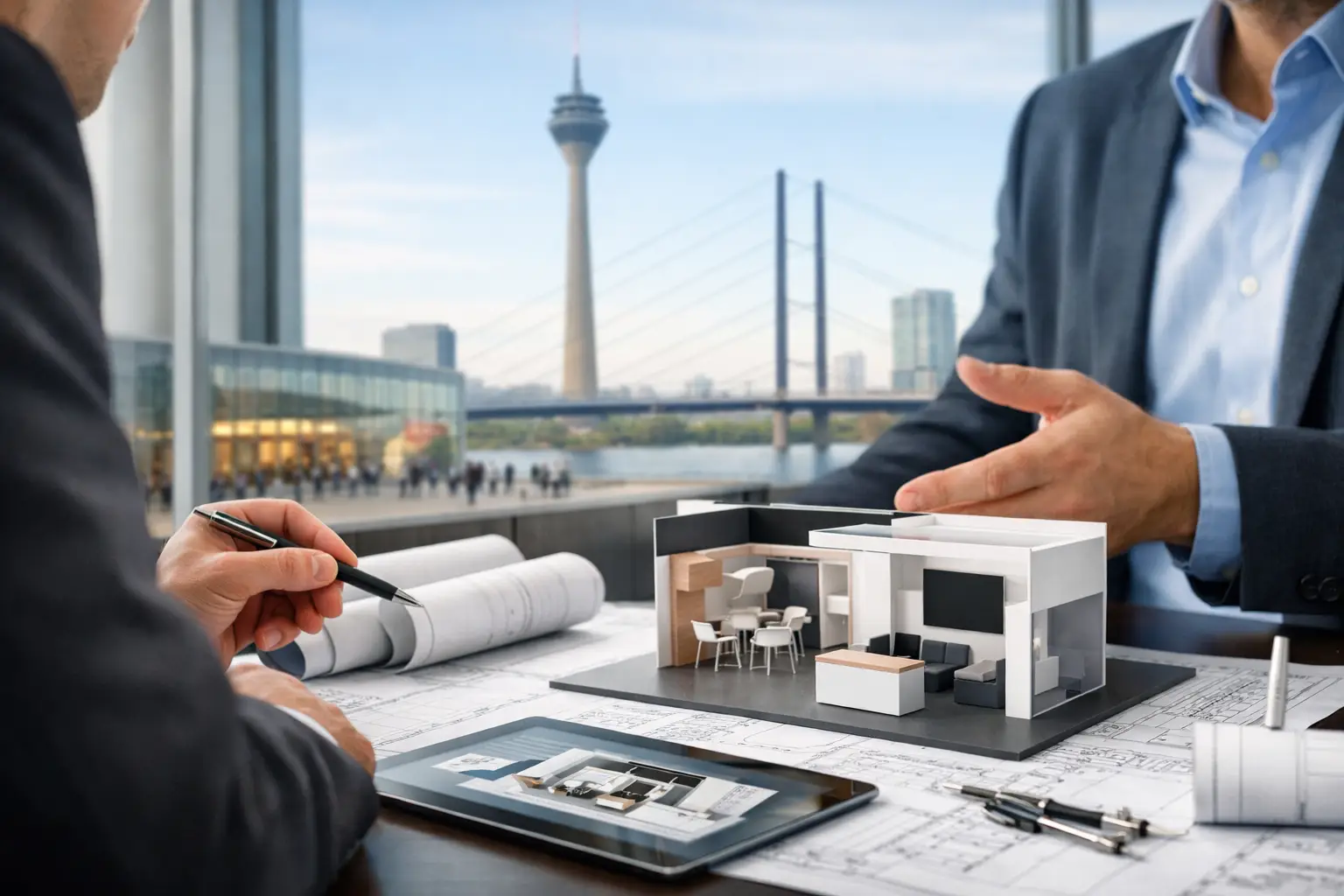

A crowded hall at Messe Düsseldorf gives visitors seconds to decide where to stop. Your stand has to make that decision easy: clarify what you offer, create a reason to enter, and give your sales team a setting that supports real conversations. Choosing the right exhibition stand builder in Dusseldorf is therefore not simply a sourcing task. It is a decision that affects brand perception, lead quality, budget control, and how calmly your team reaches opening day.
Dusseldorf attracts serious international audiences across manufacturing, healthcare, packaging, retail, energy, and technology. The expectations are high, and so are the operational demands. A strong partner combines bold creative thinking with disciplined project management, understanding that an impressive rendering means little if the finished stand arrives late, looks different on the floor, or lacks the practical details your team needs.
Start With the Outcome, Not the Structure
Before comparing stand builders, define what success should look like at the show. A product launch needs a different environment than a distributor meeting program. A company selling complex machinery may need live demonstrations and space for technical discussions. A pharmaceutical or technology brand may need privacy, controlled messaging, and hospitality areas for scheduled meetings.
This early clarity helps a builder recommend the right format rather than defaulting to the largest possible structure. A 36-square-meter stand with excellent sightlines, focused graphics, and a well-planned meeting area can outperform a larger space that tries to communicate too much. Conversely, a double-decker stand can be a smart investment when you need prominent visibility below and private meeting capacity above.
Share the commercial brief, not just the floor plan. Explain your target visitors, priority products, expected visitor flow, number of staff, lead-capture process, and any hospitality needs. The more a builder understands the job the stand must do, the more useful the design and budget recommendations become.
What a Dependable Exhibition Stand Builder in Dusseldorf Controls
Trade show projects have many moving parts: venue rules, technical approvals, materials, transport, electrical connections, furniture, graphics, installation schedules, and dismantling. When responsibilities are spread across too many vendors, gaps become expensive.
The best exhibition partners take ownership of the full delivery path. That should include concept design, detailed technical drawings, fabrication, logistics, site installation, and dismantling. It does not mean every project must be built in one location. For international exhibitors, a supplier may use regional production and local delivery teams. What matters is clear accountability, consistent quality standards, and one project lead who can resolve issues without passing them back to the client.
Ask direct questions about control. Who produces the structure? Who handles venue paperwork? Who is present during installation? How are last-minute changes approved and costed? What happens if a graphic is damaged or a component fails on site? Specific answers signal an experienced operational team. Vague assurances do not.
A well-managed project also protects your internal team. Marketing managers should be reviewing meaningful milestones and approving creative decisions, not chasing freight updates or trying to interpret venue regulations two days before the show.
Evaluate Design for Visitor Behavior
A custom stand should be memorable, but it must also work hard. Strong exhibition design directs attention in layers. From a distance, attendees should recognize the brand and a clear reason to approach. At the edge of the space, they should understand where to enter and what is happening. Inside, they should find product stories, demonstrations, meeting areas, and hospitality positioned without friction.
When reviewing a concept, look beyond the visual impact of the 3D render. Ask where visitors will queue for a demonstration, where staff will store brochures and personal items, whether the reception desk blocks entry, and how confidential conversations will be protected from aisle noise. Check whether screens can be seen in real exhibition lighting and whether key messages remain readable from multiple approach angles.
There is often a trade-off between openness and privacy. An open stand can draw more spontaneous traffic, while enclosed meeting rooms support longer, higher-value discussions. The right balance depends on your sales cycle and visitor profile. A capable builder will explain the implications rather than treating every square foot as decorative space.
Compare Quotes on Scope, Not the Lowest Total
Two proposals may appear similar but include very different levels of delivery. A lower price can exclude items that later become essential: flooring upgrades, lighting, electrical consumption, furniture, graphic installation, rigging, cleaning, storage, or dismantling. A detailed quote may seem more expensive at first because it exposes the true scope early.
Request a line-by-line proposal that separates the build, graphics, audiovisual elements, furniture, logistics, labor, and venue-related charges. You do not need to negotiate every line item, but you do need to understand the assumptions behind the total. Ask what is fixed, what may change, and which venue costs remain outside the builder’s control.
For repeat exhibitors, discuss reuse from the beginning. Modular structural elements, reusable lightboxes, adaptable counters, and refreshed graphics can lower future event costs without making the stand feel generic. Reuse is not appropriate for every brand or event. A flagship launch may justify a fully bespoke build. But for a multi-show calendar, a system designed for adaptation can protect both budget and sustainability goals.
Look for Evidence of Relevant Delivery Experience
A polished portfolio is useful, but relevant experience is more valuable than a collection of attractive photographs. A builder that has delivered large country pavilions understands coordination across multiple stakeholders. One that has built premium stands for manufacturing or energy exhibitors will better anticipate the weight, power, and demonstration needs of complex products. Experience with technology brands may signal strength in LED video walls, interactive displays, and content integration.
Ask to see projects similar in size, complexity, and sector to your own. Pay attention to finish quality, joinery, lighting, brand consistency, and the practical spaces within each stand. Photos should show more than a perfect empty structure. They should demonstrate that the environment works when it is filled with products, staff, and visitors.
It is also reasonable to ask how many projects the company delivers each year and how it maintains quality at volume. LemonTree Exhibitions, for example, delivers more than 200 projects annually across more than 22 countries, pairing creative stand design with in-house production oversight and site execution. For brands exhibiting across several markets, that combination can reduce the inconsistency that comes from appointing a new supplier in every city.
Plan Early Enough to Preserve Choice
The most avoidable exhibition cost is the late decision. Early planning gives your builder time to explore alternatives, secure materials, coordinate approvals, and fabricate carefully. Late planning tends to narrow the solution to what can be produced quickly, shipped urgently, and installed with little margin for correction.
For a custom stand, begin the conversation as soon as your space is confirmed. The exact timeline depends on stand size, venue requirements, technology, and whether the project involves international logistics. Larger double-decker structures and pavilions need more lead time than a compact shell-scheme upgrade. Your builder should provide a realistic schedule with design approvals, production deadlines, site build dates, and client sign-off points.
A disciplined timeline is not bureaucracy. It is what allows the creative team to solve problems before they become emergencies. It also gives your sales, product, and marketing teams time to prepare the content and visitor experience that make the physical stand worthwhile.
Questions Worth Asking Before You Appoint a Builder
Use the first meeting to test how the partner thinks, not only what they can make. Four questions can reveal a great deal:
- How would you translate our exhibition objective into visitor flow and stand zones?
- Which parts of this concept would you fabricate, source, and manage directly?
- What budget items are commonly missed at this venue or show?
- Who will be accountable on site from move-in through dismantling?
The answers should be practical, transparent, and specific to your brief. A capable builder will challenge an unclear requirement, flag a risk before it becomes a problem, and offer options that match your commercial priorities.
The right stand builder gives your brand more than a visually impressive space. They give your team the confidence to arrive focused on customers, meetings, and measurable results. Choose the partner that brings creative ambition, detailed execution, and calm ownership to every stage of the build.