

At Gulfood Manufacturing, a beautiful stand is not enough. Your space has to earn attention in a hall full of processing equipment, ingredients, packaging systems, automation platforms, and serious buying teams working to tight schedules. The strongest Gulfood Manufacturing exhibitors treat their stand as a commercial environment: a place to demonstrate capability, start qualified conversations, and give prospects a clear reason to continue the discussion after the show.
For marketing leaders, exporters, and procurement teams, the challenge is balancing visual impact with operational reality. Large equipment needs access. Product samples need safe handling. Demonstrations need power, storage, and staff who can keep conversations moving. A successful exhibition presence brings these details together without making the space feel crowded or difficult to navigate.
Start With the Business Outcome, Not the Floor Plan
Before approving a stand concept, decide what success must look like on the show floor. A packaging machinery manufacturer may need scheduled demonstrations for plant managers. An ingredient supplier may be focused on sampling, distributor meetings, and credibility with regional buyers. A technology business could need private areas to discuss integration, pricing, or production data.
These objectives shape the stand more than any color palette or architectural feature. If lead quality is the priority, build in a meeting zone that feels purposeful rather than hidden away. If product education matters most, place the demonstration area where passersby can understand the value within seconds. If the goal is market visibility, a tall, open structure with clear messaging and an LED video wall may be the right investment.
It depends on your product and sales cycle. A compact stand can perform exceptionally well when the message is focused and the visitor journey is disciplined. A large island stand can create strong presence, but only if its scale supports meaningful engagement rather than empty floor space.
Design a Gulfood Manufacturing Stand Around Visitor Flow
Trade show visitors make decisions quickly. They should be able to identify what you offer, understand why it matters, and find the right person to speak with without being stopped by furniture, equipment, or a busy reception desk.
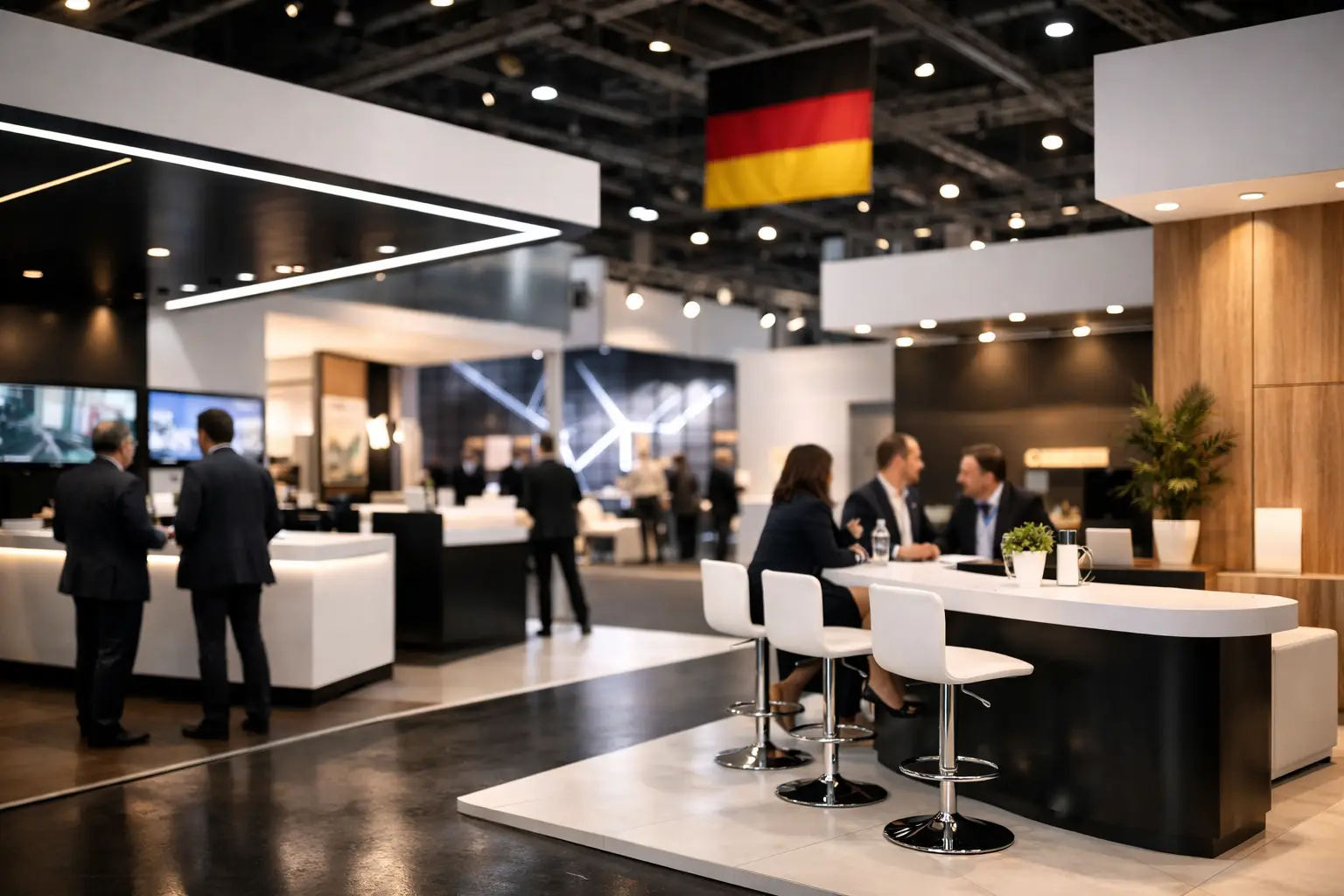
A practical layout usually creates three distinct zones: a high-visibility front edge, an active product or demonstration zone, and a quieter space for qualified meetings. These do not need walls between them. The transition can be created through lighting, flooring, display placement, ceiling elements, and the direction of the visitor pathway.
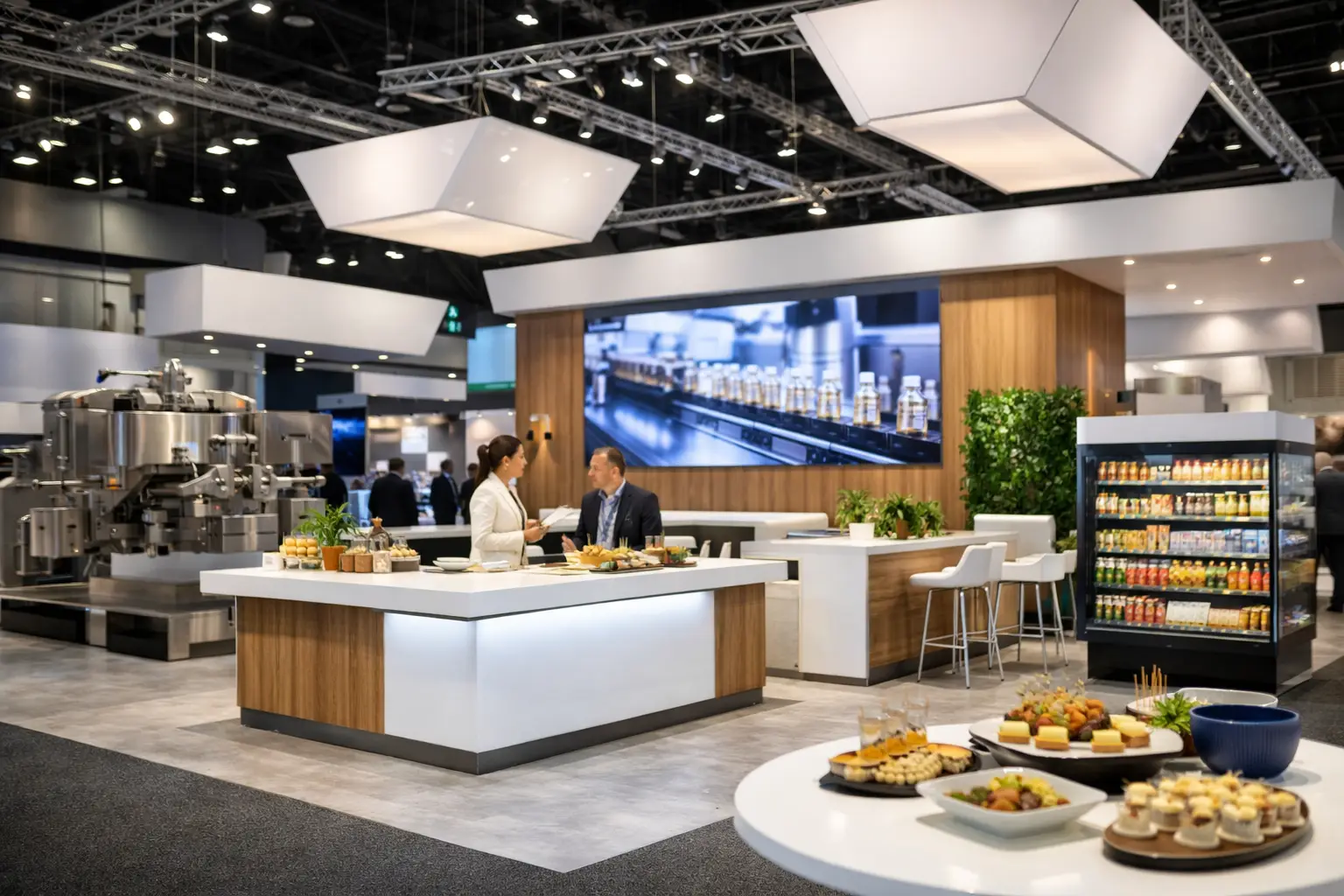
For equipment-led exhibitors, avoid putting the machine in a position that blocks entry or traps visitors in a dead end. Give the machinery room to be viewed from more than one angle, while protecting the operating area and keeping cables, storage, and technical controls out of sight. If live operation is not possible, use clear product storytelling, working subassemblies, video demonstrations, or touchscreens to show the process without reducing the stand to a static display.
For ingredients, food safety, and packaging businesses, sampling areas deserve equal planning. A tasting counter can attract traffic, but it can also create congestion and leave sales teams competing with queues. Position it to invite people in while keeping the main product message, lead capture point, and meeting area accessible.
Make the Brand Message Legible From the Aisle
At a busy manufacturing exhibition, visitors will not read a paragraph from 20 feet away. Your primary message needs to be brief, specific, and visible from the main aisle. “Complete packaging solutions” is broad. “High-speed filling systems for dairy and beverages” tells the right visitor immediately that they are in the right place.
Use one central promise, supported by a few proof points such as production speed, material efficiency, certifications, export capability, or service coverage. A hierarchy of information matters. The stand should communicate its core offer first, then give interested visitors reasons to stay longer.
Build for Demonstrations, Meetings, and Real Operations
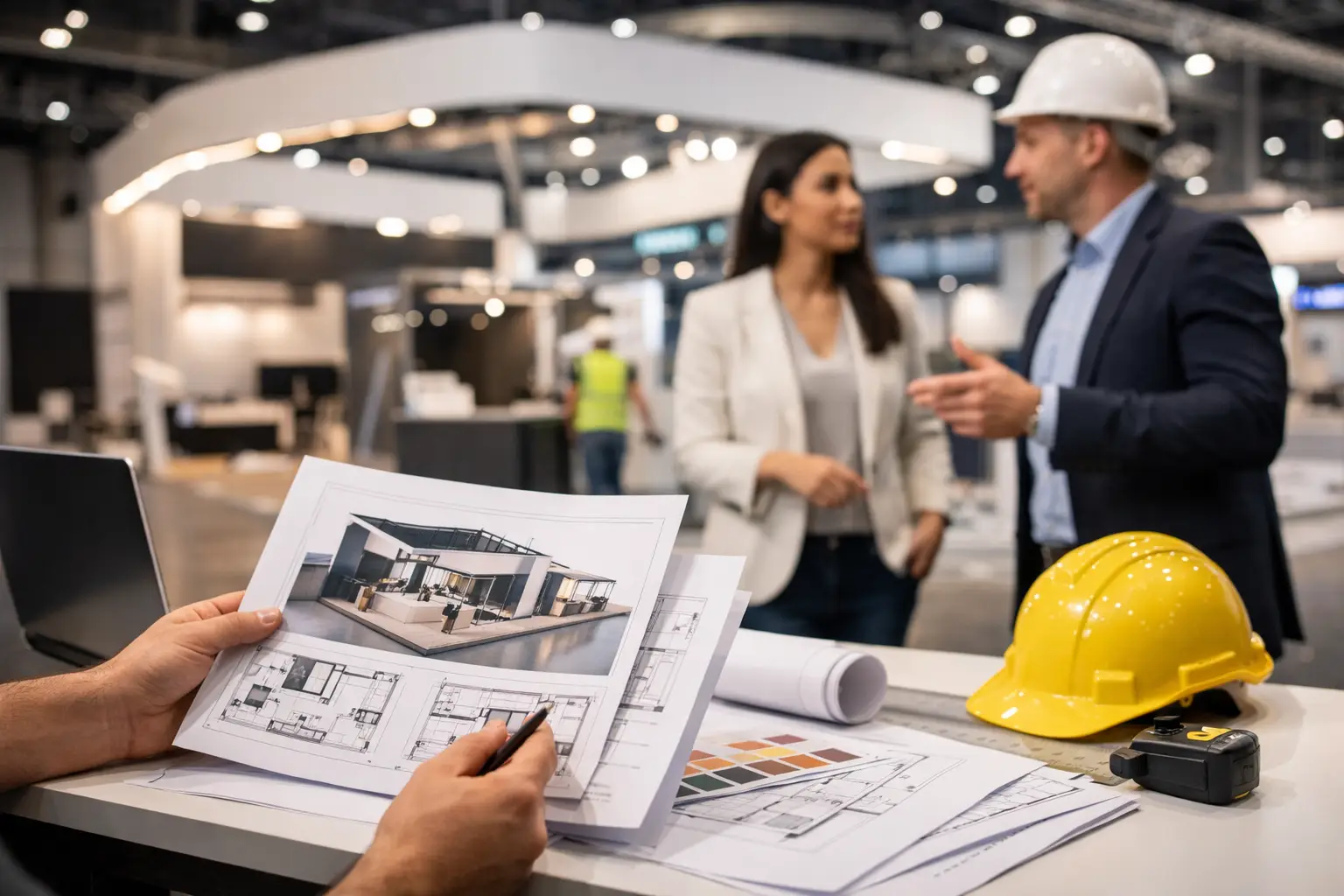
The most impressive render is only useful if it can be fabricated, transported, installed, and operated safely on site. This is where exhibition planning often becomes expensive or stressful. Late changes to power loads, hanging requirements, machine weights, refrigeration, water connections, or storage can affect both the budget and the build schedule.
Bring your exhibition partner into the planning process early, particularly if you are displaying machinery or creating a working food experience. They can assess floor loading, access routes, electrical requirements, service points, rigging restrictions, and build regulations before the design is locked. That early coordination protects the creative idea while reducing avoidable on-site compromises.
Back-of-house space is another detail that visitors may never see but your team will feel all day. Catalogs, giveaways, personal items, cleaning supplies, samples, tools, and refreshments need a home. Without adequate storage, even a premium stand can look disorganized by lunchtime. A well-designed utility area keeps the visible environment polished and allows staff to focus on visitors.
For larger footprints, a double-decker stand can separate public engagement from private business discussions. The ground level can host equipment, samples, and high-volume traffic, while the upper level supports scheduled meetings. This format can be highly effective for established brands with a full appointment calendar, though it requires appropriate budget, permissions, structural planning, and sufficient staffing to make both levels feel active.
Choose Materials That Support the Message
Sustainability claims carry more weight when the stand itself is planned responsibly. Reusable structural systems, repurposed elements, efficient lighting, modular graphics, and material choices that limit waste can support a credible sustainability story. The goal is not to make every stand look temporary or stripped back. It is to make intentional choices that preserve quality while reducing unnecessary disposal.
Materials should also suit the category. Premium finishes, precise joinery, illuminated branding, and clean detailing can communicate reliability for a processing or automation brand. Natural textures and carefully presented samples may suit ingredient or food innovation companies. In every case, durability matters. Exhibition surfaces are touched constantly, carts move through service areas, and stands must continue to look sharp through multiple show days.
LemonTree Exhibitions approaches this balance through in-house design, fabrication, logistics, installation, and dismantling, giving clients greater control over quality, timing, and last-minute coordination. For exhibitors, that control is valuable because the show floor rarely rewards a fragmented handoff between multiple vendors.
Plan Staffing as Carefully as the Stand
A stand can generate traffic and still underperform if the team is not prepared to qualify visitors. Assign clear roles before the event: who welcomes visitors, who runs demonstrations, who handles technical questions, and who moves senior prospects into meetings. Staff should know the key message, the ideal customer profile, and the next step expected from a promising conversation.
Hospitality staff can help maintain a professional first impression, especially on larger stands, but they should support the sales process rather than replace it. The right greeting is warm and efficient: identify the visitor’s role, understand their interest, and connect them quickly with the appropriate specialist.
Lead capture should be simple enough to use during peak traffic. Capture the information your sales team will actually act on, including the visitor’s application, timeline, market, and level of purchase influence. A large list of vague contacts is less valuable than a smaller set of well-qualified opportunities with clear follow-up actions.
Protect the Timeline and Budget
The best way to control exhibition spend is not to reduce every specification. It is to make high-value decisions early. Confirm the space-only or shell-scheme package, stand location, open sides, height limits, venue services, product display requirements, and approval deadlines before finalizing the concept.
Keep a realistic allowance for items that are often missed: venue utility connections, rigging, special cleaning, equipment handling, graphics revisions, onsite labor, furniture, technology support, and local permits. If budget is tight, prioritize clear branding, visitor flow, lighting, and a well-executed hero feature over a long list of small decorative additions.
A dependable stand builder will be transparent about what is included, what depends on venue rules, and where alternatives can preserve impact without inflating cost. That clarity is especially useful for international exhibitors managing a project from another country.
The Gulfood Manufacturing opportunity is won in the moments when the right buyer stops, understands your value, and feels confident enough to begin a serious conversation. Build every part of the stand around making that moment easier – from the first aisle-facing message to the final follow-up after the halls close.