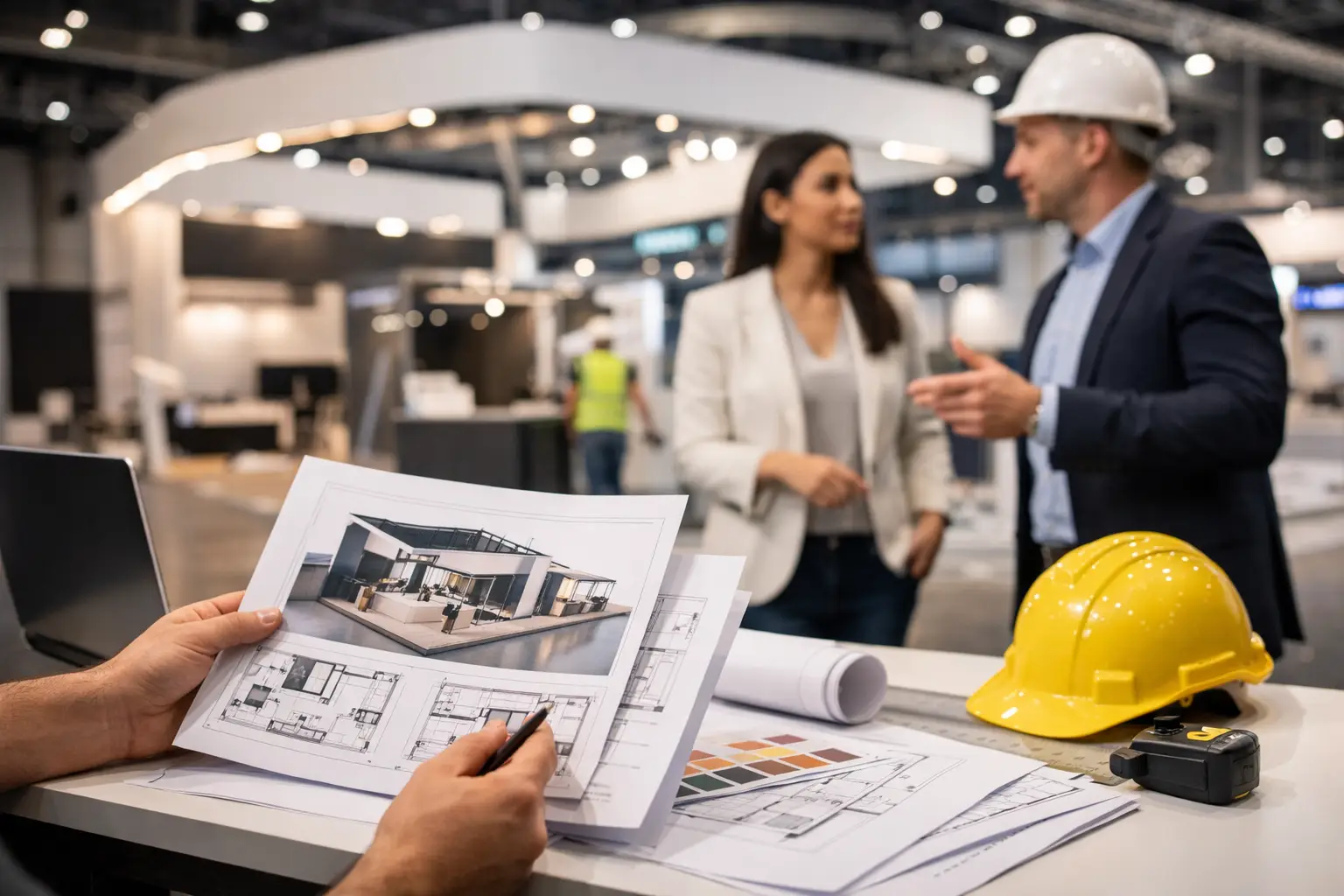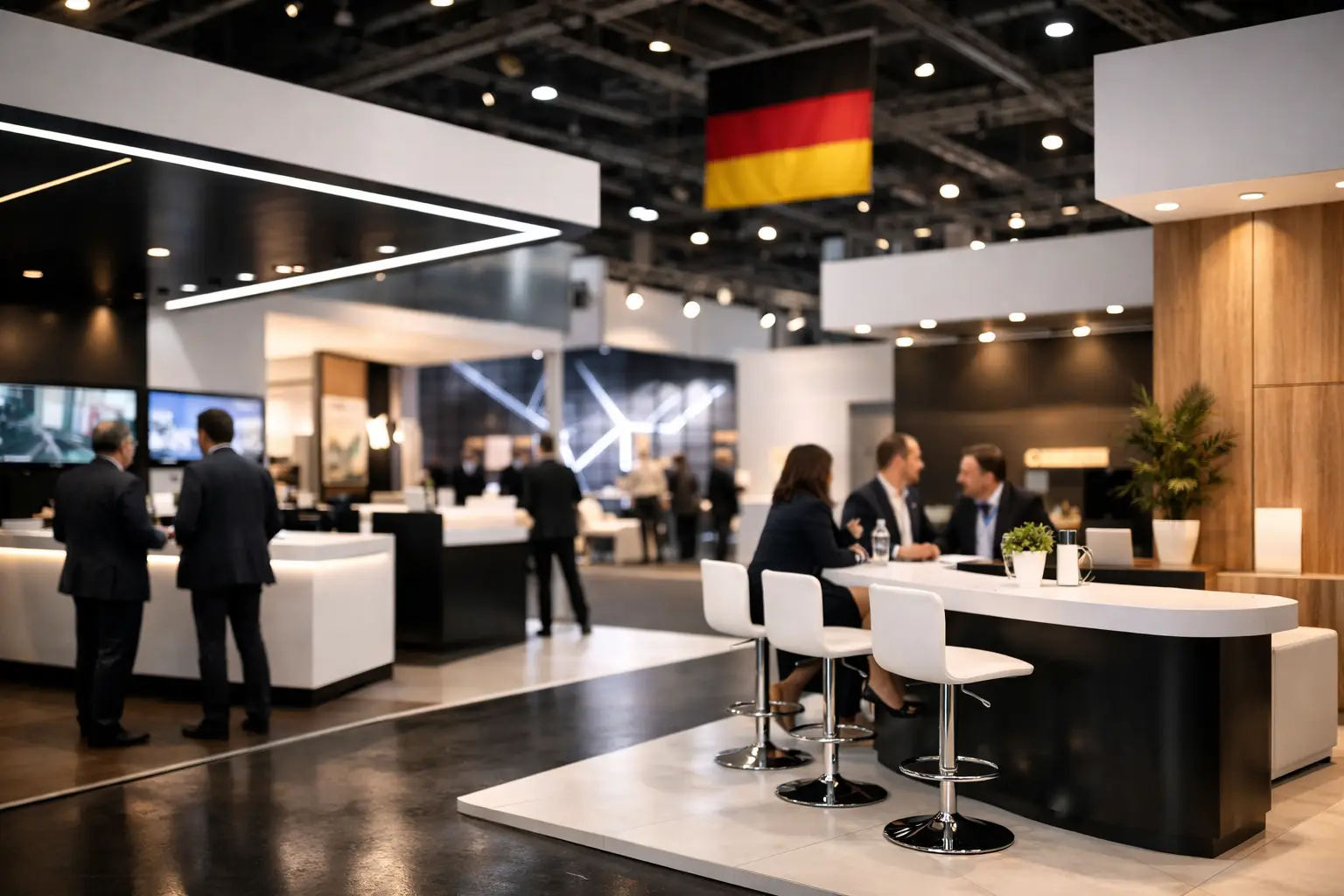

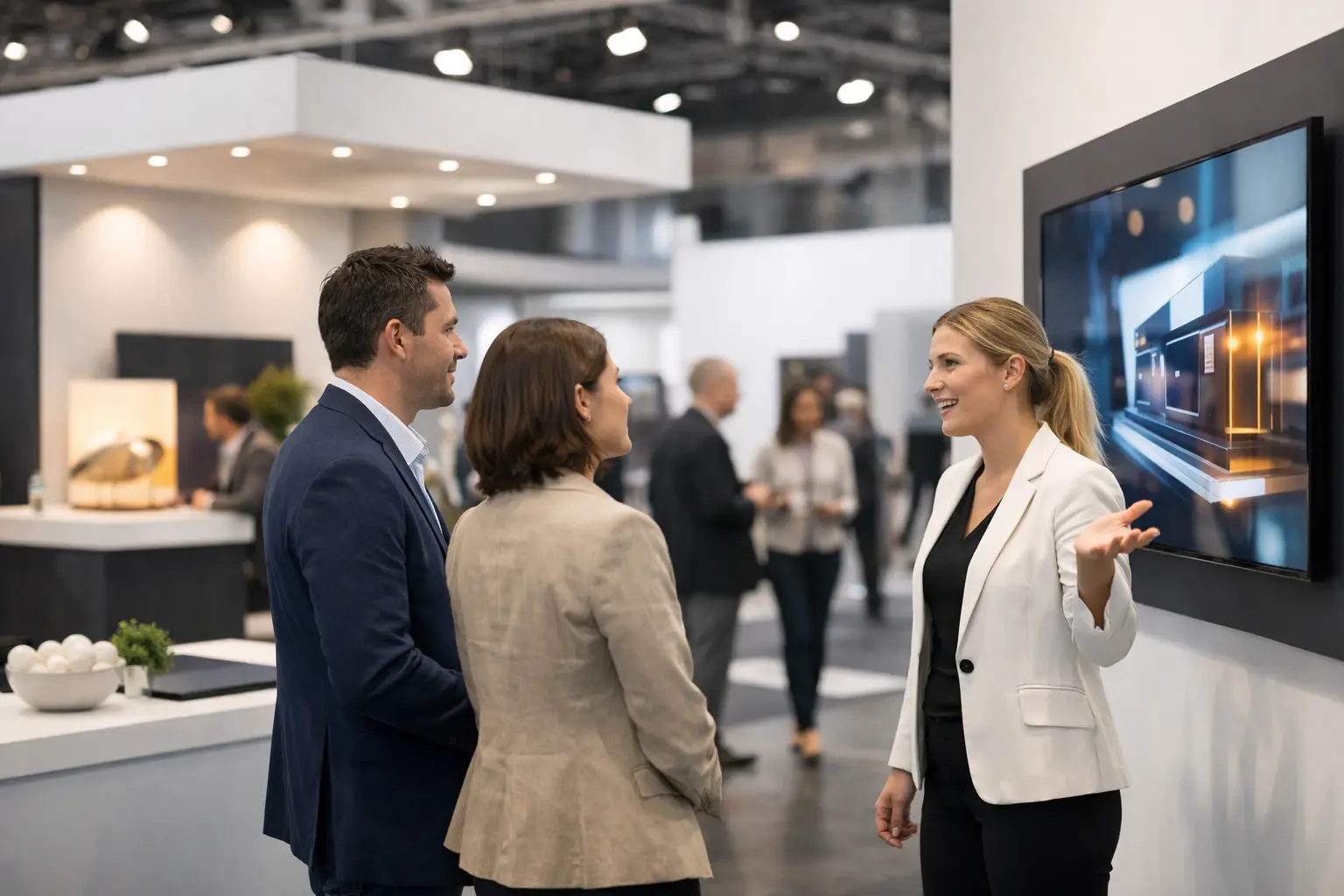

A busy exhibition hall gives you only a few seconds to earn a second look. Buyers are moving between meetings, competitors are making equally strong claims, and a large investment in floor space can disappear into the background if the experience is unclear. What makes a successful exhibition stand is not simply an impressive structure. It is the ability to turn attention into relevant conversations and conversations into measurable commercial opportunity.
For marketing leaders, business owners, and procurement teams, that changes the planning question. Rather than asking, “How can we make the stand look good?” ask, “What does this stand need to achieve, for whom, and how will we know it worked?” The strongest exhibition environments answer those questions through every design and operational decision.
What Makes a Successful Exhibition Stand?
A successful stand brings brand, visitor behavior, sales activity, and practical execution into one focused environment. It must be recognizable from the aisle, understandable at a glance, comfortable enough for meaningful discussions, and dependable under the pressure of a live show.
The balance depends on the event. At a technology show, a live product demonstration or LED video wall may be the main draw. At a pharma or manufacturing exhibition, credibility, technical clarity, and private meeting capacity may matter more than spectacle. A startup may need a compact, premium presence that makes a strong first impression, while a global enterprise may need distinct zones for multiple product lines and senior buyer meetings.
The common thread is intention. Design becomes commercially valuable when every prominent feature supports a visitor action: notice, enter, understand, engage, meet, or follow up.
Start With an Outcome, Not a Stand Size
Floor area is a constraint, not a strategy. Before approving layouts, establish the primary objective for the show. It may be generating qualified leads, launching a product, meeting distributors, reinforcing market leadership, recruiting partners, or hosting government and trade delegations. Most stands support several aims, but one must lead.
That priority influences the plan. A lead-generation stand needs a visible invitation to engage and a quick method for capturing details. A relationship-led stand needs enough hospitality and meeting space to allow conversations to develop. A product-launch stand needs a clear reveal moment, visible proof points, and staff who can explain the offer consistently.
Set practical measures before design begins. These could include the number of qualified meetings booked, product demonstrations completed, scanned leads meeting a defined profile, media interactions, or post-show opportunities created. Attendance alone can be misleading. A packed stand with no space for serious conversations may produce less value than a quieter stand that welcomes the right decision-makers.
Create a Message Visitors Can Understand in Seconds
A visitor should not have to decode what your company does. From the aisle, the stand needs a simple hierarchy: who you are, what you offer, and why it matters. Your brand identity establishes recognition, but the central message gives people a reason to stop.
Avoid covering every surface with product names, technical specifications, and campaign statements. When everything competes for attention, nothing leads. Choose one primary promise, support it with two or three proof points, and use detailed content where visitors can engage with it during a conversation or demonstration.
This is especially relevant for companies with complex B2B offerings. Instead of leading with a long list of capabilities, translate the offer into a buyer outcome. Savings, compliance confidence, production efficiency, speed, performance, or market access are easier to grasp quickly. Technical depth still matters, but it should be available in the right moment rather than forced on every passerby.
Design for Distance, Then for Detail
Successful graphics work at three distances. From across the aisle, bold architecture, a strong color field, lighting, and elevated branding create recognition. At the stand edge, a clear message and visible product category explain relevance. Once inside, smaller graphics, screens, samples, and staff conversation provide the evidence.
This layered approach prevents a common mistake: designing a stand that looks excellent in a close-up 3D render but disappears in a crowded hall. Review the concept from the main visitor approach, neighboring aisles, and likely sightlines around venue columns or larger competitor structures.
Make the Visitor Journey Easy
An exhibition stand is a working space, not a showroom frozen in time. Visitors need to know where to enter, where to look, and what to do next. Open edges, unobstructed access, and visible focal points usually invite more traffic than a design that feels enclosed or overly precious.
A practical layout often separates the stand into natural zones: an attraction point at the aisle, a discovery area for product or brand stories, a demonstration or consultation point, and a quieter setting for qualified meetings. The scale of these zones should match the expected footfall and sales process.
There is a trade-off between openness and privacy. Too much openness can make confidential meetings difficult. Too many enclosed rooms can make a stand look unwelcoming and reduce visible energy. The right answer depends on whether the event is driven by high-volume discovery, scheduled executive meetings, or both. Glass-fronted meeting rooms, semi-private lounges, and thoughtful acoustic treatments can protect conversation without closing off the entire stand.
Do not overlook storage, staff circulation, power access, refreshments, and cleaning needs. These details rarely appear in campaign photography, but they shape how professionally the stand operates over three demanding show days. A hidden storage room can prevent boxes, brochures, personal bags, and catering supplies from disrupting the customer experience.
Give People a Reason to Stop and Stay
Bold design draws attention, but interaction builds recall. The best engagement device is not always the largest screen or the most complicated activation. It is the one that makes sense for the audience and gives staff a natural opening line.
For an industrial equipment manufacturer, that may be a working model, material sample, or scheduled live demonstration. For a software company, it could be a short use-case presentation that answers a specific operational problem. For an FMCG brand, a tactile product experience or concise sampling moment may work better. Digital displays can add energy and flexibility, but they should support the story rather than replace it.
Plan the engagement around visitor time. Many attendees will give you 20 seconds before deciding whether to continue. Make the first interaction easy. Then provide a reason to spend three minutes, followed by a clear route toward a longer meeting for qualified prospects. This gradual commitment feels more natural than asking every passerby for a full sales conversation.
Put the Right People Behind the Design
Even a beautifully built stand can underperform if the team is passive, inconsistent, or unable to manage demand. Staff should know the stand objective, the priority audience, the core message, and the next action expected after each conversation.
A simple briefing can make a substantial difference. Agree on how to greet visitors, how to qualify interest without sounding scripted, how demonstrations are handed over, and how leads are recorded. Sales teams also need scheduled breaks and a clear rotation plan. When peak traffic hits, an unattended demo point or empty reception counter sends the wrong signal.
Event hostesses or support staff can improve the visitor experience when their roles are clearly defined. They can welcome guests, manage meeting schedules, guide traffic, and keep hospitality running smoothly. Product and commercial conversations, however, should remain with properly briefed brand representatives.
Build Quality Is Part of Brand Quality
At major exhibitions such as GITEX, ADIPEC, The Big 5, or Automechanika, visitors notice finish quality quickly. Uneven graphics, poor lighting, unstable furniture, visible cables, or late adjustments can undermine a premium message. This is why the design concept and the build plan cannot be treated as separate projects.
A dependable exhibition partner considers venue regulations, rigging limits, electrical loads, fire and safety requirements, installation schedules, logistics, and dismantling from the start. For international events, local venue knowledge and coordinated production matter even more. A design that cannot be fabricated accurately, shipped efficiently, or installed on time is not a successful design.
In-house design and fabrication teams provide tighter quality control because the people developing the concept understand how it will be constructed. They can also identify cost-saving alternatives early, rather than reducing quality late in the process. LemonTree Exhibitions applies this end-to-end discipline across custom stands, double-decker structures, and country pavilions delivered in global exhibition markets.
Spend Where Visitors Feel the Difference
A larger budget does not automatically create a better result. The goal is to invest in the elements that support the event objective and protect the brand experience. High-impact architecture, strategic lighting, a strong product display, quality materials in customer-facing areas, and comfortable meeting furniture often matter more than adding decorative features with no visitor purpose.
Sustainability should be considered in the same practical way. Reusable structures, recyclable materials, modular components, and repurposed finishes can reduce waste without making the stand feel temporary. The best approach depends on brand requirements, freight routes, venue rules, and whether the stand will travel to multiple events. Planning reuse early is usually more cost-effective than attempting to make last-minute changes after fabrication has begun.
Treat the Show Floor as the Beginning of the Campaign
The stand is only one part of exhibition success. Promote meetings before the doors open, give sales teams a clear invitation to share with prospects, and prepare follow-up ownership before leads arrive. After the show, speed matters. A thoughtful response while the interaction is still fresh has more value than a generic email sent weeks later.
The most successful exhibition stand is the one that makes your business easier to remember, easier to understand, and easier to do business with. Build around that standard, and every square foot has a job to do.